Tag Archives: understanding

Let it Go

There are times when tenacity, that is the ability to firmly grip something and not let it go, is admirable.  Also, there are times when letting go is the better option.

The balance between determinedly following a course of action (e.g. a personal career path) and changing direction (taking a new career path) is not always an easy one to follow.

Just Move On

Holding on relentlessly can cause internal anxiety for you but can also color other peoples perspectives of you in a negative way.  Being perceived as the stubborn or intractable is a negative spin, it is better to be seen as firm or tenacious.

Managing how others view you is an important life skill.  Recognizing when to drop something is a key part of this.  That does not necessarily mean acquiescence, but rather closing a topic in a way acceptable to everyone that is involved.

Often, to do this, you need to be able to recognize when it makes sense to just let it go.  When arguing or ongoing discussion is clearly just fostering continued disagreement it is likely time to shut it down.

Not Giving Up

It is important to distinguish between letting go and giving up.  These are very different approaches, albeit they can appear to have the same outcome.

Giving up will lead to personal baggage and potentially you will feel bad about yourself.  Letting go is about recognizing that hanging on is painful to you and getting nowhere.

Releasing the pent up emotion which is eating away at you for something that is unlikely to change can be resolved simply by accepting the way it is and moving on.

Understanding

When used as an adjective the term understanding refers to the ability or practice of being sympathetically aware of other people’s feelings and using that sympathy to be tolerant and forgiving.

As a noun, the word is broadly about comprehension.  Being understanding of others does require comprehension of their situation so the adjective usage is consistent.

Empathy and Understanding

The practice of understanding is key to being empathetic.  To share how others are feeling and be sympathetic to it, we need to be able to have an understanding of what they are feeling.

Using empathy is key to being able to engage and interact with other people in the most effective way.  The key to practicing empathy is not to lose sight of the fact that while it is all about you, being understanding of others actually helps you.

For most of us, living as a hermit is not enjoyable.  We need to enjoy interacting with others and being empathetic will help you to do that.

So treating others with understanding is required even for self centred people.    It might be all about you but without positive interactions others you probably won’t be happy.

Not Charity

What I am suggesting is basic respect for others. This is not being charitable by assisting those in need or acting favourably toward them.

Understanding others is a bi-directional practice.  Your understanding coupled with their understanding leads to healthy and happy relationships.  These are enjoyable and after all is that not what we seek.


Knowing Yourself

Before you can understand others you must understand yourself.  In basic terms, self-understanding is your own awareness of and ability to understand the rationale for your taking of an action and reasons behind your reaction to actions taken by others.

This is not to imply that others will only act within the realm of your value system and personal motivations.  Being aware of your self provides a framework to map another person’s behaviors against, for understanding, not for judging.

Not Judging

Of course, we all judge ourselves, sometimes to our determent and often this extends to judging others.  Understanding is not about judging, rather it is knowledge.

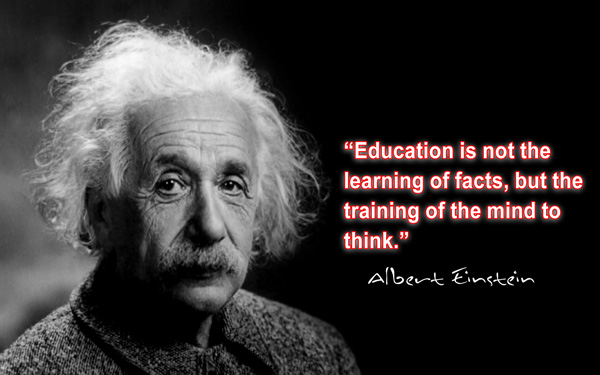
Knowing the facts, information, and skills applicable to the situation, derived through experience or education, enables us to gain either a theoretical or practical understanding of others.

Your own experience and education are the foundation from which you can assess others behaviors and most importantly respond accordingly.

By not judging, rather, using an informed and therefore highly accurate knowledge-based assessment to understand why others do what they do your response can be measured, reasonable and most likely well received.

More than Seeing Yourself

Self-understanding goes beyond just viewing yourself in a mirror.  The view you see in a  mirror show what you look like only superficially and real understanding is much deeper than that.

How you think and behave is really what matters for ongoing interactions with others.  Understanding yourself at a deep inner level is key to being able to manage your responses to another’s behavior in the most effective way.

That is, to react in a way that will create a positive experience for everyone involved you need to understand why that would be the case.


Coaching

When we are lucky enough for someone to take the time to instruct or train us on how to improve the way we act or behave in order to enable us to attain greater achievements, we should embrace the opportunity.

People in these roles are often called coaches or mentors.  Surprisingly many of us resist a coaching or mentoring opportunity.  To some extent, this is due to personal pride and a strong feeling of independence.

I Don’t Need Help

Unfortunately or maybe it is fortunate, we all need help.  Humans are described as social animals for a reason.  With few exceptions, we need to interact with others.

None of us are so great as to not benefit from others knowledge and ideas.  This does not mean we need to accept or adopt them but sharing/collaborating has been demonstrated in study after study to lead to better results.

Even the outstanding individual athletes require and also have coaches.  Filtering what helps and what does not is a task for the coachee, not everything is of value but if you refuse the instruction or training you miss the chance to be the best.

Coaching Quality

How we coach or mentor others very much determines the receptivity to the teaching.  Not just knowing what is the best method is needed for good coaching.

More importantly, you need to know how to communicate in a way that is understood.  Providing clear benefits in a way that is understood will motivate the trainee much better than telling them to “just do it” or as some coaches are want to be “just fucking do it”.

Figuring it Out

Not knowing the answer is to a problem or issue is a normal state of affairs.  A large portion of our lives is spent on figuring things out.  Though it does not always feel like it, figuring it out is exciting and invigorating.

Without the need to determine what and how to act, basically seeking purpose, our lives would be boring and to a large extent meaningless.   We need the challenge of not knowing.

Approaches

There are many ways to figure things out.  These range from just passively following along to proactively analyzing options and planning a course of action.

Typically there is some balance between passive and proactive actions geared toward figuring out what to do.  Detailed analysis and planning can be overkill while coasting along and hoping for the best can be very risky.

Optimism

Recognizing that figuring things out is both natural and satisfying helps to address issues or problems where we often ask “why?” or ‘why me?’.

Actually, the need to determine what to do, that is, how to best spend your time, how to create pleasure and enjoyment for yourself, is really just what living is all about.

You will be able to figure it out, we always do, although the outcomes may not be fully desirable, ultimately they will be acceptable (You just need to figure out what acceptable looks like.)

To quote the lyrics of popster Bobby McFerrin’s hit song from the 1980s, “Don’t worry, be happy”.    The key to making this mantra a reality for yourself is believing there is nothing you can’t figure out.


Let it Grow

The simple pine cone on the ground seeks only reproduction of its species.  Let it lie.  This sentiment speaks volumes towards human interference with both human and the earth’s ecology (don’t do it).

By interfering with intrinsic growth processes great damage can be done.  This applies whether the object is plant or animal.  In the case of humans letting development occur naturally is the optimal approach.

Normal Growth

Normal physical or mental growth (aka natural development) in humans varies by individual.  As we age, our chosen activities (both physical and mental) dictate the type and magnitude of personal development.

From youth to an adult much of our growth is a mix of pre-programmed genetic factors and our environment which can be largely manipulated by the adults around us.

As time goes on our ability to make our own development choices grows.  However, even in adulthood, sometimes others try to direct and constraint our choices.

Helping Others Grow

If humans were mushrooms putting them in a dark room and feeding them shit would lead to sustained growth.  Unlike mushrooms, people need light and opportunity to develop best.

Providing guidance coupled with an enabling environment will allow others to make choices that fit their needs and thus are more likely to lead to positive results.

Framing expectations and funneling the learning opportunities can restrict development and actually be detrimental.  When assisting others with personal growth, share your knowledge, provide support and guidance but do not direct.

This approach may not cause mushrooms to flourish but it works wonders for humans.

Steadily Seeking Serenity

Without purpose, life can be boring.  The balance between a state of stress and being calm, peaceful, and untroubled is founded on a belief in your own self-worth.

There is a multitude of ways for us to value ourselves.  On the whole assessment of our worth as a human being is subjective.  However, how we view our intrinsic value is key to how we feel.

To feel serene you must believe in yourself, that is you must believe the value you bring to human life is substantive and you are comfortable with it.

It is about you

Self-worth leading to personal serenity is about who you are, not what you do.  Each of us develops personal values beginning from the day we are born.

Being fully comfortable with your values, using them to underpin your behaviour and, in essence, form the core of who you are, is the first step to attaining a state of serenity.

A Balanced Approach

Being in a constant state of serenity is not the goal, it must be balanced with things that challenge.  When your actions are founded on a state of serenity you are more likely to succeed in meaningful ways.

Thrusting forward through a state of stress without taking a pause to recharge can lead to a breakdown.   Moments of calm and peace enable to work through the periods of stress and concern.

A well-rounded approach to the way you live your life, having full confidence in yourself and your personal contributions to human life will enable achievement of a state of serenity when desired.

Continuous Understanding

Understanding requires knowledge of the facts and information about a thing.   Knowledge is based on skills used to acquire information through experience or education.

A key aspect of continuously improving your knowledge (and thus your ability to understand) arises from sharing, without sharing a vacuum can be created.

Don’t you want to share what you know and thus build on the quality of your understanding of things, rather than keep it to yourself and live in a fantasy world?

Communicate Openly

Two-way communication is a critical requirement for building knowledge and creating understanding.   You can initiate this by being completely open, regularly sharing all you know.

This practice, sharing openly with others, encourages others to share openly with you.  Your knowledge and experience increase leading to a greater level of understanding.

Filtering

As you gain perspective from the stories and facts others pass on to you it is important to remember, the interpretation of the shared information is owned by you, subject to your filters.

The value of what you learn by listening and observing others, whether spontaneously shared or prompted by your own sharing behaviours, is yours to determine.

You need to apply your own personal knowledge base against that of others to generate new unique and useful knowledge.

The most valuable knowledge is not that you copy or assume from others but rather that you work out yourself by thinking through the facts and information you have gathered.


Fewer words

Communication is a key to personal success. Understanding the information you receive and having information you provide interpreted as intended is not easy.

When listening or observing we interpret we filter the input and the result is not always as intended. Similarly when we communicate verbally we regularly say more than is needed.

Filtering

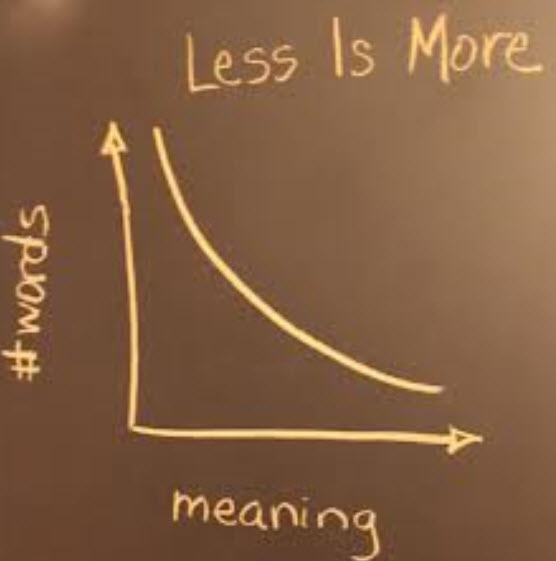
It’s virtually impossible to communicate, whether incoming or outgoing without some level of filtering affecting the result. When sending a communication you can reduce the risk of filtering through brevity.

Many mistakenly believe detail will support clarity. In reality, the more information provided, the more filtering occurs on the recieving end and thus a greater likelyhood of misunderstanding.

Few words, carefully selected and crafted into short uderstandable groupings are far more likely to be interpreted as intended.

In fact, more information, longer explanations including many supporting details frequently just get filtered out. The multitude of words are simply are not heard.

Although there may appear to be receptivity on the the part of the listener, the filtering going on in their brain is invisible to you, but it is definately present.

Wait

Start with a few words and wait for a response. This is doing the listener a favour, they have less filtering to do (fewer words on your part) and more time to digest, absorb, analyze and understand.

Your pause should prompt a response which will give an idea of the level of understanding. These allows you to craft your next set of few words (if needed) in way targeted to enhance understanding.

Improve your communication, use fewer words and longer pauses inbetween. You’ll beamazed how quickly it works.

Understanding

Don’t just wonder about the things around you, figure it out.  If knowledge is lacking, create personal understanding proactively.

In the words of Lennon/McCartney (Beatles songwriters) “There’s nothing you can know that isn’t known, Nothing you can see that isn’t shown” 

Take Charge

If you are puzzled, wondering why something works the the way it does (or doesn’t work, but should) don’t passively accept it. 

Take charge of your life, seek knowledge and understanding of everything.   Others can help with this but you need to ask.  

Motivation

There is a strong rationale for building your personal knowledge base.  Understanding the underlying explanations for all things can enable proactive response.

This really falls into the root cause discussion.  To act appropriately, reacting to the symptoms can provide positive results) or it may not but typically they would not be sustainable. 

Understanding the real nature of things provide a framework for action.  Just wondering and accepting things as the way they are will not provide the benefits of exploration, that is research. 

Integrating with Others

Spending the time to understand why things work or behave the way they do allows us to plan the best and most beneficial response. 

Seeking a broad understanding is not a one time exercise but rather a constant quest. 

Knowledge can make your interactions with others become both more rewarding for everyone as well as raising your own profile.

So, don’t be passive, embrace the opportunity to expand your understanding of the world.  Seek answers, figure it all out.