WIC

Acronyms can make a simple thought or activity seem more meaningful than it is.  They are also not bad for grabbing attention.  Today I an going to explore WIC.

What is that you say.  Whose In Charge? (WIC).  This can be the bain of collaboration.  Even for the most effective collaborative efforts, failure is on the horizon if WIC is unknown.

Everyone or No One

The extreme cases are the issue, as is so often true.  If the answer to WIC is at either extreme (everyone or no one) little will be accomplished.

To be clear, without a full understanding of the leadership model there might be a lot of churn and burn and as a result solutions or outcomes will be etherial.

This is not to condem either dictating or anarchical approaches, both might have some validity in some context (although I can’t imagine when).

Rather, as is so often the case, a balanced approach is needed.  Albeit the question as to who is in charge, whether shared or through consensus or even a third party, must be clearly understood and bought into by all.

Everyone is important

Understanding who is in charge does not overrride the key principle of collaboration, that is “Everyone is Important”.  The key is focusing the energy and drawing out the best in everyone.

This is not to imply the leader is better or more important than anyone else but rather just to say the action of “herding the cats” is critical to achieve results.

The cat herder is necessary but not of special importance.


Using Power Wisely

There is an interesting battle underway between the Albertan oil Corporations and the University of Alberta.  The educational instittue has chosen to recognize an enemy of the oils sands through the granting of an honorary degree.

The Corporations which operate and develop  oil sand operations have threatened to stop donating to the University and even requesting some funding to be rebated or stopped before completion.

Exercising Power

The Corporations are fully within their rights to decide whether to donate or not.  Of course stopping previous committment or retrieving past donations raise the spectre of broken promises and there are some integrity issues with that.

Exercising your power using the money card to achieve your goal, that is stopping the recognition of David Suzuki (dyed in the wool environmentalist) is fair.  After all few donations are for truly altruistic purposes, they are a means to an end.

The University considers this to be an abuse of power directly impacting their independence.  As public institutions they are beholden to act according to the publics wishes.

To do this in a way that is not only fair but is perceived as fair, major institutional decisions are undertaken by the independent board of governors.  In this way the faculties and research areas are isolated from these key decision (for example whom to award honorary degrees).

Under these circumstances, the Corporate donors recognize their threats are unlikely to change the decision around granting of an honorary degree to Dr. Suzuki.

Publicity

The  real objective of the Corporations is actually nothing more than gaining publicity around a key issue.  It is taking the opportunity to once again make a public case against allowing the environmentalists to mercilessly attack our economic well being.

After all, most stories do have two sides.  So I say, speak out, make your case but do be careful how you wield your financial power, using money as a lever really works against the capitalist philosophy in the same way political maneuvering works against the environmentalists.

Chill, why can’t we all be friends.


Solving Problems

I had a very interesting discussion today about the generic process for getting things done.  At a very high level, all objectives are problems to be solved.

Philosophically, whether you are performing a service, investing, building products, communicating or any  other action focused on achieving a goal,  the outcome solves the problem that motivated the action in the first place.

So conceptually we are all problem solvers.

Basic Methodology

Step one is to gather information.  What do we know about the problem.  This is basic data gathering that enables us to formulate what we are going to do (our objective) to solve the problem.

This step in standard project methodology is the initiation phase.

Step two is to solution development.  What actions are we going to take to solvethe problem.  This step includes data analysis, feasibility, resource and scheduling.

This is the planning phase.

Step Three is executing the plan from the previous step.  This is the build phase where the work is undertaken  to develop/ produce whatever is needed to actually solve the problem.  This includes intangible solutions, like a service or intellectual property development.

In project methodology this is the execution phase.

The final step is completion.  That is releasing the solution so it is put in practice and the problem is solved.

This is known as the closing phase in project methodology.

Not neccessarily a project

Although I have made references to project methodology this generic problem solving process can be personalized effort, operational or any other underlying drive.  It might not be projectized but the methodology described is an orderly way to increase the probability that the problem will be solved, i.e., the goal achieved.


Strategy and Tactics

Strategy is a widely misunderstood term.  Simply put, strategies are directional and include the objective and the approach.  They are a guide but not the detailed recipe.

Todays post focuses on some exaggerated examples of strategy and tactics to illustrate the concepts.  These are a bit outlandish and only intended to frame the difference between strategy, tactics and the associated planning approaches.

How should I dress?

My approach to dressing starts with a basic strategy.  This can range from bare bones (naked) to fully dressed and all  points in-between.  The strategic statments could be things like:

  • Our strategic approach to dress, is to be free and unencumbered.  Minimal use of garments is both environmentally focused, cost effective and beautiful.
  • Our strategic approach to dress is to be fully clothed protecting our bodies from the weather and other naturally occuring hazzards that could be harmful.  Our beauty is expressed through our clothing.

Tactics

To implement these strategies we may proposes activiites like purchasing black wool pants and comfortable sweaters.  These form the requirements to achieve the objective.

Obviously the specific clothing requirements support the second strategy whereas tactics in support of the first might include finding tanning saloons that can be leveraged to enhance the beauty of the exposed body.

Planning

Both the strategies and the tactics can have plans outlined activities, schedule and resources.  The main difference in strategic and tactical plans is the level of detail.

The value equation

Strategies, tactics and underlying plans form the recipe for sucess.  Without them you might create a tasty dish, but with them the probability of a successful meal is higher.

Structure

In its verb form structure is very much about creating an arrangement or organization of interrelated elements.  The structure forms the underlying foundation.

Unstructured activities are more on the innovative or creative side but have a greater risk of failure. When a structure is in place progress is planned, governed and results are far more likely to be both consistent and sustainable.

Governance

Rules, regulations, policies and processes are all structural components of any organization.  Without these in place to some degree, governance is not possible.

Governance practices are guided by the level of structure. The greater the flexibilty or lack of structure the harder it is to control the outcomes.

For example, if the plan is to complete an objective within six months or a year, versus a clearly defined exact six months, it is hard to measure,track and be confident the objective will be achieved as schedule. (It is hard to govern the result)

With the lack of structure the outcomes become a bit of a moving target.  Of course the flexibility increases the chance of being able to claim a successfull achievement.

Structured Process

How an activity or task is completed, the way the goal is attained can  be well defined or loosley structured.  If, for example, the structure requires documentation and validation the likelihood of producing consistent outcomes is enhanced.

To Structure or Not to Structure?

Sounds like structure has value, on the other hand the greater  effort, time and reduction in creativity can belie the positive benefits.

Like most practices a concious carefully balanced approach to the amount of structure exercised is ultimately the best approach.  One option, very structured or very unstructured and every thing in between, is rarely optimal.

Consider the desired results, pro’s and con’s and customize your structure to best feet the environmental requirements.

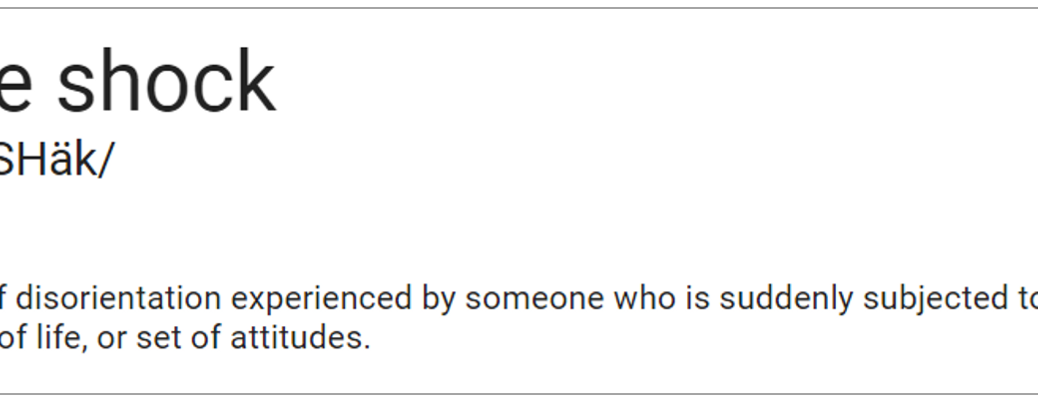
Shock

My son, who lives in Toronto, sent me a text earlier today saying that he was not injured by the rampage of a vehicle down Yonge street between Finch and Leslie.

My reaction to this sudden upsetting and surprising event was shock.  I lived in Toronto for 20 years, worked at Sheppard and Young for many years and walked the attack zone daily.

Senseless Murder

Of course, senseless mass murder of the innocent is not unknown to the world, fortunately though, it is uncommon.  Also, until today, the  mass incidents have been in  in foreign countries.

That is not to say there have not been attempts in less populated  Metropolitan areas of Canada ( Edmonton, and Halifax) but fortunately these were foiled.

Shock has it’s merit

We can only hope terrible occurences don’t become so comonplace they are no longer shocking.  In fact the goal is zero.  So far though, and certainly in Canada the frequency leads to shock.

In some wartorn countries like Syria or Beirut violent attacks have become the norm resulting in little shock, peehaps to some degree almost acceptance.

As   a nation we must never allow ourselves to reach that point.  We must contain and stop totally these shocking events, we cannot allow their occurence to increase in an upward spiral.

The perpretators, while evil, should not be our main targets though but rather the instigators.  Those that promote senseless harm to the innocent truly need to be eliminated.


Skill or Capability

If you have expertise or experience you should be able to complete a task in an acceptable way.  The better your skill or experience the greater the efficiency or quality.

For example if you have both training and practical experience you can probably perform a plumbing repair more quickly and with less risk than I could, I am not greatly experienced in plumbing.

This is not to say I can’t do plumbing work (in fact I have on a number of occassions) but it has seldom been fast and when problems were encountered I have needed help.

Capability

In the plumbing example, while I do not have extensive skills and experience with plumbing I am capable of doing the job. The extent to which I have the power and willingness to complete a task is my capability.

Selecting Leaders, Group/Team or team members

If you are interesting in a winning combination, when building a team   (sports or otherwise) a business or other organization the mix of skill and ability is critical.

Unfortunately there is no absolutely correct mix of skill and capability.   The best balance varies widely depending on numerous factors.

These include the nature of the role, the overall complexity of the activities, envionmental factors and well, just about everything else.

The key is recognizing that the balance between skill and ability needed in any given situation varies and should be analyzed and determined before selecting someone to tale on the assignment.

This is not an easy task but a very worthwhile one which increases your chance of selecting the best resource for any given role.

Marketing Yourself

When you promote something for gain  (personal or otherwise) your action can be described as marketing.  The thing you are marketing can vary from a  common product or service to actually promoting your own specific skills and capabilities.

Marketing yourself can be classified by some as arrogant, conceited, pompous, overbearing and so on.  The list of synonyms related to arrogance is surprisingly large.  Humans really like to quantify that type of behavior and on the whole, it is not considered complimentary.

Marketing yourself is probably exclusively for your personal gain and this is why it could be perceived as selfish.  Our culture pretends to value selflessness although the real priority for most people is “what’s in it for me – wiifm”

Balance

Promoting yourself successfully requires not only targeted messages which convey the value and rationale your abilities provide, i.e., the reason to engage with you – but also most importantly you must not be perceived as arrogant, this would only be detrimental.

Marketing your personal brand requires not only creating an understanding of how exceptional you are but doing so in a way that displays great humility (a trait is considered of value though most don’t even know why it is of value.)

It’s not the message, it’s how it is conveyed

The balance of arrogance and humility is surprisingly easy to achieve.  The key here is not the content but rather the way in which the content is communicated.  Self-depreciating humor allows the message to be made with clarity but in a way, the recipient can accept without the danger of perceived conceit.

Along the same lines delivering the message with care being aware of the recipients reaction and stepping back if and when your target is losing receptivity.

Bottom line, don’t hesitate to market yourself but do so intelligently with care.

There is a way

If the path to your goal is blocked, seek other ways.  Philosophically, I sometimes muse on the fact whether anything is possible.  The answer always seems to be in the interpretation.

For example, while I cannot walk on the water of a lake if I build a hidden underwater catwalk I could look like I was walking on water, although certainly not in the biblical sense.

Effort and Duration

With unlimited effort and duration possibly any goal is attainable however realistically could I avoid death regardless of how much time and effort was involved?

Taxes maybe.

To some extent the limitation to overcoming blockages lie in your mind.  For  example the train in  “The Little Engine that Could” (a popular childrens story) accomplished the impossible task only when it thought it could.

Make the Attempt

For me the key is not having an absolute believe in success, maybe I cannot do everything; However,  making the attempt only requires attitude and that is something completely in my control.

This is not to say your attitude should be without constraint, obviously attempting anything could have some negative concequences.

The point is more; don’t not try to find a way to overcome a blockage for fear of failure, rather take this approach when the risk of concequence is too great.

So can I do anything?  The jury is out,  but I am pretty sure I can make the attempt if motivated to do so.

What is time?

Time is a concept created by humankind and translated linguistically.  Taken from a common dictionary definition time is defined as “the indefinite continued progress of existence and events in the past, present, and future regarded as a whole.”

In fact, time is a construct created by humankind as a tool for control of behavior.

Without the concept, does time exist?

The Amondawa is an Amazonian tribe first exposed to outside influences in 1986.  Until then the tribe was, in essence, a force unto itself without any external influences.

Studies of the tribe determined the language included no concept of time.  Ideas like “working through the night” for example could not be expressed.

The association of time with events and process cannot be communicated using the native language of Amondawa.

Chaos!

Many would cringe at the concept of a world without time. How can we schedule our activities or work?  On the surface, the idea seems very anarchical.

On the other hand, is not time an arbitrary restriction?   In a sense wouldn’t the lack of measure (What time is it?, What should I do now?) provide a sense of freedom and lack of worry and stress that ultimately would be massively liberating?

Is Time Beneficial?

The Amondawa tribe lived (until the discovery by the civilized world) in pleasurable bliss.  The lack of time constraints and associated worry and stress caused no negative problems.

In our cultures, the measure of and adherence to time is a basic foundational behavior.  We are schooled in time from the day we are born, yet to what purpose?