Tag Archives: data

Continuous Understanding

Understanding requires knowledge of the facts and information about a thing.   Knowledge is based on skills used to acquire information through experience or education.

A key aspect of continuously improving your knowledge (and thus your ability to understand) arises from sharing, without sharing a vacuum can be created.

Don’t you want to share what you know and thus build on the quality of your understanding of things, rather than keep it to yourself and live in a fantasy world?

Communicate Openly

Two-way communication is a critical requirement for building knowledge and creating understanding.   You can initiate this by being completely open, regularly sharing all you know.

This practice, sharing openly with others, encourages others to share openly with you.  Your knowledge and experience increase leading to a greater level of understanding.

Filtering

As you gain perspective from the stories and facts others pass on to you it is important to remember, the interpretation of the shared information is owned by you, subject to your filters.

The value of what you learn by listening and observing others, whether spontaneously shared or prompted by your own sharing behaviours, is yours to determine.

You need to apply your own personal knowledge base against that of others to generate new unique and useful knowledge.

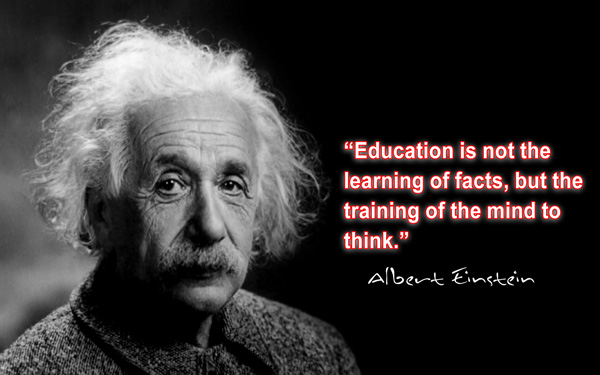
The most valuable knowledge is not that you copy or assume from others but rather that you work out yourself by thinking through the facts and information you have gathered.


Search or Navigate

Finding information involves two activities, and only two.  Both techniques could be used, or just one but you either search or navigate.

These approaches apply to all information gathering in general, however the internet (basically an enormous data store) can serve as a good example of applying these two techniques.

Searching

An extremely popular way of finding information on the internet is through search.  Many different search engines have been built for this purpose (e.g., google, yahoo)

The specific methods used vary by search appliance (i.e., how it works to find what you are looking for.)  In general though, you enter what you are searching for and the search engine trolls the internet data sources and provides a list that matches your query.

The way these search applications interpret your search terms varies, also how deeply they troll the data. Some times you need to try various terms before the results map to what you were actually seeking.

Navigating

Navigation starts on a web page.  The information on the page provides links to other pages or data sources which may in turn have other links.

You navigate through the links to find the information you seek.  There are various techniques for describing the information the link will take you to.  These techniques help the navigator determine which links to follow.

Helping people find the information they seek

Recognizing information is retrieved through search, navigation or a combination of these two methods is key to being able to help data/information providers optimize the ability for their data to be found.

Simply put, design your data retrieval capabilities with both search and navigation in mind.