
Tag Archives: information

Missing Pieces

Sometimes we do not have all the information needed to determine the best course of action.  After all, this is about things we don’t know, which can include things we don’t even know we don’t know.

These missing pieces are not always important but sometimes they are critical in such a way that it is impossible to do the right thing or succeed without considering them.

Is Something Missing

Looking for missing information begins with assessing the completeness and accuracy of what you know.  Putting together the known facts can lead to questions.

This concept is the foundation of a good mystery novel.  As the author unfolds the story facts are withheld but the information provided is enough for the hero of the story to determine that something is missing .

One of the pleasures for the reader is to match wits against the story detective and figure it out as well, before the author discloses all.

Looking for the Missing Piece

Knowing something is missing helps the search for it.  If you are convinced things don’t add up and a reasonable conclusion cannot be achieved without more info you are more likely to be motivated to search hard.

Believing something unknown exists drives us to search until we find it.  Giving up is frustrating and rare.  When we believe there is an answer most of us will hang in their until we find it or at least believe we have found it.

Watch out for the red herring.

Be Wary

When making an assessment, before concluding give careful consideration as to wether you have the complete picture.  It can save you from grief and missteps.
 

Continuous Understanding

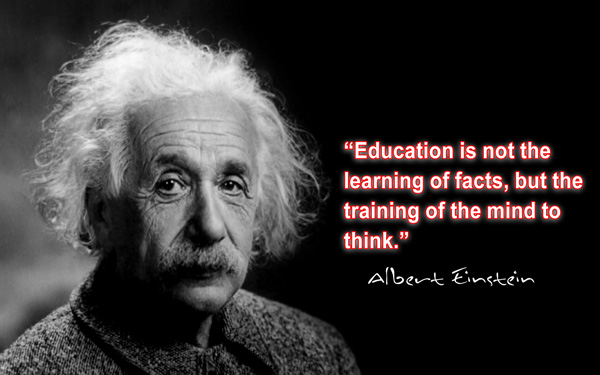
Understanding requires knowledge of the facts and information about a thing.   Knowledge is based on skills used to acquire information through experience or education.

A key aspect of continuously improving your knowledge (and thus your ability to understand) arises from sharing, without sharing a vacuum can be created.

Don’t you want to share what you know and thus build on the quality of your understanding of things, rather than keep it to yourself and live in a fantasy world?

Communicate Openly

Two-way communication is a critical requirement for building knowledge and creating understanding.   You can initiate this by being completely open, regularly sharing all you know.

This practice, sharing openly with others, encourages others to share openly with you.  Your knowledge and experience increase leading to a greater level of understanding.

Filtering

As you gain perspective from the stories and facts others pass on to you it is important to remember, the interpretation of the shared information is owned by you, subject to your filters.

The value of what you learn by listening and observing others, whether spontaneously shared or prompted by your own sharing behaviours, is yours to determine.

You need to apply your own personal knowledge base against that of others to generate new unique and useful knowledge.

The most valuable knowledge is not that you copy or assume from others but rather that you work out yourself by thinking through the facts and information you have gathered.


Secret Information

Information generally falls into one of four categories.

  • things you know that others do not (potentially restricted information)
  • things others know that you do not (potentially restricted information)
  • things you know and others know (public information)
  • things nobody knows, you do not even know you don’t know in some cases (the unknown)

Why Restricted?

The first two categories (info you know or info known by others) can be shared but that is not always the case.  In cases where it is knowingly withheld, it becomes restricted or secret information.

In the case of restricted information, people may be aware it exists but some people are purposely denied access to this information based on specific criteria.

The restriction principle is based on a belief the information could be misused or cause undesirable results if broadly or publically disseminated.

Secret Information

Secret information is actively hidden.  The subtle difference between this and restricted information is the intent is the information owner not only restricts access to the information but also supresses awareness that the information even exists .

Leveraging Restricted and Secret Information

Secret and restricted information exist for the purpose of manipulation.  That is,  limiting the availabilty of information is solely for the purpose of influencing or manipulating outcomes.

For me, this raises an interesting question.  Is there really any value to restricted or secret information.  Would not results be more collaberative and of a higher quality if everyone had a chance to participate?

Isn’t the practice of withholding or hiding things you know, more for your personal agenda (self interest) than for the protection of others?  Universal sharing reduces fear of the unknown and can make the job of influencing or manipulating more difficult.

The old saw, information is power, becomes less overarching a principle within environments where all information is shared openly.

Search or Navigate

Finding information involves two activities, and only two.  Both techniques could be used, or just one but you either search or navigate.

These approaches apply to all information gathering in general, however the internet (basically an enormous data store) can serve as a good example of applying these two techniques.

Searching

An extremely popular way of finding information on the internet is through search.  Many different search engines have been built for this purpose (e.g., google, yahoo)

The specific methods used vary by search appliance (i.e., how it works to find what you are looking for.)  In general though, you enter what you are searching for and the search engine trolls the internet data sources and provides a list that matches your query.

The way these search applications interpret your search terms varies, also how deeply they troll the data. Some times you need to try various terms before the results map to what you were actually seeking.

Navigating

Navigation starts on a web page.  The information on the page provides links to other pages or data sources which may in turn have other links.

You navigate through the links to find the information you seek.  There are various techniques for describing the information the link will take you to.  These techniques help the navigator determine which links to follow.

Helping people find the information they seek

Recognizing information is retrieved through search, navigation or a combination of these two methods is key to being able to help data/information providers optimize the ability for their data to be found.

Simply put, design your data retrieval capabilities with both search and navigation in mind.

Using Information

Simply put, data and knowledge are the fundamental inputs to derive information.  In today’s world the data is stored in a digital form, more often or not.

Storing and then extracting , transforming and loading (ETL) the digital data for intent of review and reporting are the basic concepts of information management .

Using Knowledge to Create Information

Knowledge is the most critical part of the information creation process.  The application of knowledge applies across all steps.

While data is a key input to information creation, knowledge is required to understand what data is needed, where it is so we can extract it, rules to transform it to formats and relationships that are meaningful and finally we need to load it into our reporting tools for analysis.

There are no right answers to the interpretation of the data.  As we apply our knowleddge to the groups of data we loaded, the most critical step is being able to explain our conclusions.

That is explain the information we have derived in a way the audience can understand.  Using your knowledge to derive data but being unable to share the information with clarity is of little value.

You personally may fully understand the information at hand, however, if the intent is to drive action based on this information illustrating and getting support for the actions requires getting others to apply their knowledge and derive the same information.

Sometimes this persuasion can require time and perhaps even additional data and the discovery process can become somewhat iterative.

In summary, careful application of your knowledge is often the key to effective use, analysis, and presentation of information.