The Seasons Spirit

With the global pandemic affecting public health in all corners of the globe, I wondered if the holiday season spirit would still thrive as we approach the many significant widely recognized celebrations that occur this time of the year (e.g., Christmas, Hanukkah, Kwanzaa).

In many locales social gatherings are banned or severally restricted this includes restrictions on many traditional festive gatherings both religious and otherwise.

Human Spirit Prevails

It appears the strength of the human spirit is able to overcome adversity.   My observation is that everyone’s practices are taking different forms  to account for public health needs but the spirit of the season is still very apparent.

In a time when joy, peace and happiness are badly needed, we are  arising to the occasion.    Gift giving traditions and social interactions, meals and parties are muted and restrained but the spirit of joyous celebration is breaking through.

Once a year around the globe humans celebrate their own humanity and that of others.  This is a designated time (just after the winter or summer solstice depending on which hemisphere you reside) when we all get together, raise our tolerance levels and unite as one.

Humanity Prevails

The benevolence at the root of humanness is not always apparent and times of stress don’t usually bring out the best of us.  It appears the overriding sentiments of this traditional festive season overcome the extreme challenges of our current circumstances.

For me this is just evidence that at the heart of each human is a base of decency, love of others and desire for everyone to be joyous.  This designated time of year is a terrific opportunity for us to take advantage of and pandemic or not we will.

Keep on Learning

Is a post secondary education degree worth attaining after retirement?  As a proponent of life long learning my opinion is a resounding yes.

Using the degree to support your own employment aspirations is an unlikely objective (although possible) in the case of entering a degree granting program in the latter part of your life.   Still though there is value in just the opportunity for knowledge growth.

Learning Opportunities are Endless

The value in gaining new (i.e., previously unknown to you) facts, information, and skills  through experience or formal education to enhance your theoretical or practical understanding of a subject does not stop until you die.

Learning can have both a direct value and an indirect one.  On the direct side for example enhanced skills can form the foundation for improved work and compensation opportunities.

The indirect benefits are harder to quantify but just as impactful if perhaps not even more so than the obvious gains associated with an enhanced work environment.  Keeping your brain healthy will enhance and elongate your life yet it is not fully measurable.

Effort Required

The most common description I hear about peoples retirement aspirations is “take it easy, relax, enjoy yourself”.  While learning can require significant effort it also can be fun, relaxing and enjoyable.

In fact even the most common retirement activities like golfing, fishing or playing games (like chess)require skill.  To continually improve and hopefully enjoy the “play” more constant learning is needed.

Post retirement formal degree focused education does not have the same win or lose attributes associated with it as when you are younger and can be just as much fun  (depending on your attitude perhaps more fun) as the more traditional retirement activities.

Give it a try, you may be surprised.

Even the best made plans …….

Sometime things just do not work out.  Your expectations might not be met or others make mistakes which results in additional effort on your part.

Even when you carefully analyze the requirements, follow any instructions provided to you and clearly communicate your needs and expectations something might not happen the way you planned for it to.

Overcoming Frustration

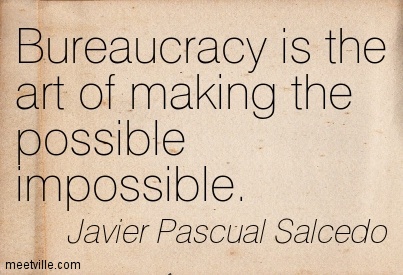
I find bureaucracy is a great driver of situations where re-work is needed.  The issue is small discrepancies which really have little impact on the outcomes can be triggers for the pompous bureaucrat to exercise their authority. simply because they can.

Recognizing frustrating moments can and will occur regularly is important in managing your way through them.  Personally I learned long ago that most often acquiescence and submissions works best toward ultimate achievement of your goal.

Of course this is not really my go to behavior but rather a learned one based on experience.   The pain caused by being forthright about how you feel (e.g., saying things like seriously this is your mistake) just is not worth it.

Win Win

After enmeshing myself in greater difficulty by seeking even demanding others be reasonable, an approach that might make me feel good, I often found it does not necessarily result in getting what I need.

By accepting things do not always go as expected no matter how well you have planned your actions, I find the best approach is to just go with the flow.

I have come to realize overcoming frustration by succeeding is often the best way to go.   Why fight it, ultimately you win and those responsible for the difficult process get what they want so I guess it is a win win, not that the others deserve it.

Have Patience my Friend

All of us has some capacity to accept or tolerate delay, trouble, or suffering without getting angry or upset.  How much capacity varies both by each individuals personality (go to behaviours) and perceived circumstances.

If your expectations were set through a hard commitment you may have little patience with delays however even in these cases you may be able to accept poor performance.   A lot depends on the personal impacts, i.e., is it painful or just annoying?

A Virtue?

Some associate patient behaviour with high moral standards and thus patience is often classified as virtuous.  Basically your tolerance and ability to accept the failings of others is a positive value.

For me this is not an absolute value but rather, as with so many things, patience needs to be a balanced behaviour.  There are times to act on your frustration, but with appropriate thought.

In other cases the results will turn out better and most likely be sustainable if you wait.  Exercising patience is best managed through a self assessment.

Eating Away at you.

When something does not occur in accordance with your expectations you may well be feeling of upset or annoyed, especially when you are not readily able to change something or achieve your goal.

Caution is recommended to avoid acting in a ways which  moves you further from your goal.  Granted the delay be upsetting but your first approach should also ways be to pause and reflect.  Waiting a little longer is probably not going to be a disaster.

Responding too quickly could well make things worse.  This is not to say patience will lead to resolution.  Balance your frustration with an appropriately timed plan of action.


Maturity is not about age

Behavioural maturity is benchmarked against characteristic behaviour of a well balanced human adult.  While subjective to a degree mature individuals are able to practice interpersonal skills in ways that lead to consistently positive results.

Maturity is learned through observation and strongly environmentally influenced however the basic behaviours are mainly logical and intuitive.

Acting with Maturity

Although education and experience are cornerstones of mature behaviour this doesn’t necessarily mean older people will behave in a mature manner and younger people are not yet able too.

Selecting the most appropriate way to interact with others or respond to any specific set of circumstances is improved by background knowledge and understanding of what is acceptable  or not but common sense and intuition are also key skills.

Choosing the best ways to react requires a basic understanding of human nature and associated best practices but also relies  on the ability to be patient, empathetic and prudent.

Interactive versus Reactive

A basic tenant of mature behaviour is recognition all interpersonal reactions contain a social component to some extent.  Although the extent of socialization is dependent on the nature of the interaction it is always present to some degree.

Acting in a way that clearly recognizes and respects the needs of others (i.e., social requirements)  is a key sign of mature behaviour.  Recognizing normal behaviour requires consistent and complete repect of both yourself and others (the core of maturity).

Mature behaviour also needs to be intrinsic to the way you think and act and otherwise will be easily recognized by others as superficial.

Are you Annoyed?

Sometimes we are angry or irritated.  This can be a mild form of annoyance to the more extreme case where a person could be described as being “fit to be tied”

Historically this expression relates to constraining a bull so that it can be handles.  Bulls are known for expressing their annoyance, or perhaps it could be called anger, in very physical ways thus the need for constraint.

Keep Control

When you are feeling annoyed this is often readily reflected in your behaviour and can result in less than optimal outcomes.  In these situations allowing our annoyance (although perhaps very valid for us to be annoyed), causes us to act more based on emotion.

Our feelings are real to us and a very important aspect of both our individuality and overall humanity however it can cloud our logical thinking processes leading to emotional satisfying but truly illogical behaviour.

Consider Outcomes

The best approach to using your annoyance in a positive way is to take the time to consider outcomes.   Acting precipitously based on what are powerful feelings can make you feel good in the moment, but the key question is “Will you regret it.”

I occasionally wonder the value of strong emotions as they can result in actions we question afterwards and perhaps even really regret.

However, there is real value in our ability to portray emotion for others to understand how we feel but this is best done in a way that does not lead to an adverse response.  Emoting works best when used in a practical way.

So next time you are annoyed consider the best way to use those feeling to achieve your goals and resolve whatever is annoying you in the first place.


Is it you?

Many times through out our lives we will experience conflict.  At times our exchange of information with others will appear adversarial.

We may be criticized or perceive others behaviour to be rude or unfriendly.   Often in these cases we assign fault to the others and use this determination to justify our own righteous behaviour.

Solution Based Action

Regardless of the cause, which usually involves every one to some extent, overcoming unpleasant situations is most easily done by avoiding blame and focusing on behaviours that will resolve the conflict in a way that everyone wins.

When we are wronged or at least believe we have been wronged it is relatively easy to focus on ourselves and our needs We are in the right and dam it others need to know they have wronged us.

This approach results in us acting in ways that do not defuse conflict but rather result in escalation.  Although not our intention we become a contributor to the problem.  And through our actions the problem becomes worse.

Get over it

Perhaps you are not at fault, perhaps you have been mistreated by others.  Reacting to their rudeness or inappropriate actions in a retaliatory way might be good for you but it is unlikely to lead to a resolution.

Most likely your actions lead to a response which will just make the situation worse.  Accepting that shit happens, focusing on ways to work with others to achieve a state of happiness for everyone is a far more logical approach.

Work Together

Is it you, is it me, who cares.  Conflict is best resolved through joint actions.  Lashing out in spite might give you a brief satisfaction but it will not be sustainable.

Are we in control?

I have had a frustrating day from a technology perspective.  Both Microsoft and Apple have forced me to spend a significant part of the day waiting for their software updates to finish.

This is annoying not just from the perspective of the time required for the updates to finish but aggravated by the fact I cannot use the computers while the updates take place.

Inconvenience

For me and my wife, these regular updates have quite the impact given the multitude of hardware we have, although I will note Android and Linux updates are not forced on you.

Although you can select manual control of Windows, OSX and IOS updates the processes are designed to, shall we say, “encourage” you to download and install precipitously.

With more than 10 different hardware devices affected by these regular updates some which can take a couple of hours and entail downloading multi-gig-a-bytes of data (e.g. last major OSX upgrade) this is really becoming annoying.

Push at Night

Of course both Apple and Microsoft recommend you do auto-updates overnight.  Sounds brilliant, yet, it never works right for me and I end up spending the morning adjusting and recovering.

Maybe I am just targeted by their dev teams, somehow they got my IP and make my updates more difficult.  Who knows, although I am just a humble guy with technology as a hobby, why on earth would they pick on me.  Aah, I remember it is user error.

Security Matters

The driving force for these updates seems to me to be keeping the operating system current as it is less likely to be hacked and is therefore more secure.

The other feature enhancements are mostly just annoying, albeit interesting but really there is a very small value equation.  Do I really want to spend 5 to 8 hours every month keeping my devices secure?

Rethorical question – emfatically NO!

Pandemic Restrictions

In Canada various public health restrictions have been in place across the country since March of this year.  As the year comes to a close the rules for protecting our health are in some cases escalating beyond those enacted in March.

Following the aptly names first wave of covid 19, as the case numbers reduced and the “curve” dropped (that is the rate of increase of new cases) the restrictions lessened.

The Second Wave

Even at the end of the first wave a second perhaps even worse one was predicted.  A friend of mine likened the loosening of  covid 19 restrictions as the rate of infection falls to skydiving with a parachute.

He quipped since the parachute was working and slowing the decent perhaps we could take it off.   What a great analogy and very accurate description of how Canadian governments have failed their populations.

For me it is just common sense, the risk mitigation practices that lessen the chance of catching the virus need to remain until we reach the ground.  Anything else is just silly.

At a Cost

One of the arguments which are frequently shared about the cost of restricting individual freedoms it diminishes the individuality and freedoms  of each of us for the good of the whole (duh) .

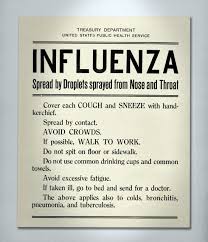
Yet a quick browse of history shows virtually the same practices were in place during the Spanish flu outbreak of the 1918 to 20.

Following processes to keep us safe as a whole and defeat the disease are basic common sense.  I seriously question the intelligence of those unable to grasp the simple concept – “Taking the parachute off before you are on the ground is deathly.”

Changing Workplace

Both my father and father in-law grew up in a work environment when selecting a career and taking a job for life with a single employer was the norm.

In the decades beginning with the 1960’s and extended to today economic expansions (and contractions) coupled with increased pace of technological development this has changed.

Opportunity

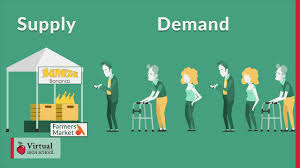
Just like the housing market, the supply and demand equation has a very real impact on the continuity of employment as it relates to a single employer.

As the supply of jobs increases workers are more likely to move between employers taking opportunities of greater compensation or most often seeking increased satisfaction.

Likewise due to the economy, technology or other efficiency improvement methods the job roller coaster can cruise downward and for these periods the ability to remain in a single job for life might not exist.

The Economy and Technology

Job supply is often linked to the robustness of the economy but also strongly affected by technological and efficiency improvements in the way things are done (or perhaps not done any longer).

The rollercoaster up and downs in supply and demand over the decades since 1960 have been the single most impactful factor in replacing jobs for life with the more current environment of basically taking a job for the moment.

The change is the workforce from a high percentage of relatively stable long term employment to the current “gig” economy is evolutionary and did not occur overnight but it is becoming more the norm every day.

The Future

Given the cost to employers of managing turn-over and the shrinking work force (as a large portion of baby boomers retire world-wide) things may change.

It is very possible even with the economic and technological pressures we may see a return to a higher percentage of long term, lifetime association with a single employer simply because the worker supply will begin to .

I wonder?