Foundation of Leadership

Great personal satisfaction can be obtained through the action of helping others fulfill their potential.  This applies to both the helper and the helpee.

Leaders do many things.  Whether you are a designated leader with a granted power base or you lead from behind larger using earned power helping others is the cornerstone behavioral attribute  (or of course some combination of earned and granted power).

Excellence in Leadership

Many behavioral practices come into play to influence the quality of leadership.  These do not need to be present in equal quantities and in some cases perhaps a particular aspect of emotional intelligence is low or not present at all (e.g., empathy). That is okay.

However, without the ability to facilitate growth in others, you are not a leader ( whether practiced actively or passively).  This is a baseline required behavior of all leaders.

Simply put leadership is not about you, it is solely about others.  The things you impart to others helping raise the potential bar continuously can be self-applied but must at a minimum focus on others first and foremost.

Emotional and Intellectual Intelligence (IQ&EQ)

The quality and effectiveness of a leader can be predicted by the levels of IQ and EQ they demonstrate.  The higher the score in both these categories, the better the overall performance.

Of course, IQ and EQ must be balanced and if individually each does not meet the minimum level (even if one area excels) probably the leader will not be exceptional.

These attributes aside if the aspiring leader does not focus on growing other capabilities they will never achieve greatness in the role of leader.
No Regrets

We make decisions every day.  In some cases, our decisions can have positive results and in other situations,  negative consequences.  Warnings can influence our decisions but are not necessarily the deciding factor.

Taking heed of a dire warning could cost you time, effort or financially but the risk of not doing so needs to be carefully weighed.  If the worst happens can you live with it?

For Example

This is a simple scenario but illustrative of the principle.  I needed a gas fill-up yesterday.  On the way to the station, I noticed my window washing fluid seemed to be coming out low and slow.

Around this time of year in the northerly clime, I live in when the weather warms up a bit the roads become messy and spit a lot of dirt on the windshield.

Without adequate windshield fluid, your view can become so clouded that you actually need to stop driving, get out and manually clean it.

The Decision

Since I was stopped for gas anyway, I asked myself should I acquire some more windshield clean fluid to be ready to add when it actually runs out?  It seems like too much time and effort, a mild warning was there but not cataclysmic so ignored.

Less than 1km from the gas station my cars visual and very annoying audio warning about low fluid happened.  Yikes I made a bad decision.

But No Regrets

Now I had to go somewhere and get fluid or I would really regret it.  So if you are going to ignore the first warning signs be sure you are okay with what happens next.  No regrets.

Where does the money go?

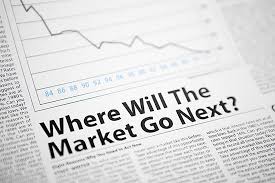
The last two days stock market indexes around the world have fallen significantly.  For many, the lost value of the last couple of days simply represents unrealized gains.

In a lot of cases, the value of a stock on Friday was far less on Tuesday leading to announcements of great losses.   The question is is the loss of an unrealized gain really a loss.

What is it worth?

If in the past year your portfolio value rose by say 20% and in the last two days the marketed dropped by 15% it is arguable that you have not really lost anything (this is a macro perspective for illustrative purposes – specific situations will vary)

As long as the original investment together within any paid dividends or interest is less than what the stock is valued today the only change is what people think your holdings are worth (not necessarily what they are really worth).

Paper Loss

An interesting thing about accounting is the value written on paper is indicative of what’s going on but does not necessarily represent hard reality (e.g., actual cash in hand).

In the equity market, the value can appear and disappear in moments the only thing that really matters is the value at the time of realization (i.e., when you buy or sell).

From a cynical perspective, money only has value when it is used to attain a physical benefit, for example, food, housing, clothing.   These are the things we need to stay alive.

Using equity markets to increase or decrease your supply of money can be a fun game and seem to have value, but the true value only comes at the time you spend the money on something you need.


Eradicating Evil

I have just begun watching the new Amazon Prime video series “Hunters”  and it reminded me of the large capacity humankind has for evil.

People’s inhumanity to other people has long surprised me.  Why are profoundly immoral and wicked acts allowed?  This seems like a simple fix, don’t allow anyone to practice evil.

The Eternal Idealist

For me, a world without evil seems to represent an ideal state.  For some, the lack of angst and stress might be missed, I am not one of those people.

Unfortunately, idealism often represents the practice of forming and pursuing goals which are especially unrealistic.  The question becomes why is the eradication of evil unrealistic?

Tales of the Holocaust

The genocide of some six million people of the Jewish faith in the 1940s has been labeled the holocaust.  The events of the holocaust are presented in the Hunters.

Perhaps, in a somewhat exaggerated form, the show highlights the insanity that was perpetrated by our fellow human beings.   This is the stuff of nightmares.

What is Reality?

I salute all those involved in creation and presentation of the Amazon show for taking a difficult topic and spreading the message.  The tale unfolds without bias, it is just a story told in a way that allows us to draw our own conclusions.

It is kind of a good against evil story but is it?  If good practices immoral and wicked acts to defend themselves have they become evil?

For me though the real question is still, why does evil exist in the first place.


Share your View

I am very fortunate to live in a country (Canada) which errs on the side of freedom of expression.  Here you have to be pushing decency and legality to the limit before restrictions take effect.

The balance between expressing your views openly and aggressively, whether written, oral or broad action such as a protest march or blockade is waited heavily toward freedom.

Drawing the Line

Over the last three weeks a small group of activists have clearly expressed their opposition to the Coastal Gas link pipeline in B.C.   To draw maximum attention they have blockaded the Canadian National railways (CNR) main line.

This blockade has been allowed to continue for more than three weeks even though it has been ruled unlawful and ordered to stop by court injunction.

Causing Harm

One of the principles of free expression must be avoidance of violence and in particular not allowing the innocent to be harmed. That is the deliberate infliction of injury on others.  (Self injury should be prohibited as well)

Actions which make  a statement and are constructed to gather maximum attention/awareness for your cause, by doing so in a dramatic way, is okay; harming others through your actions is not.

Act Now

Our government, although fully within their legal right to end this blockade which is causing serious impacts (from goods shortages, job losses to financial hardship) has chosen not to do so.

The harm being caused by a few who are exercising their right of open expression against the silent many gets larger every day.  A fair balance between the right to express oneself and avoiding harm to others has been exceeded, clearly so.

It’s time to shut  the blockade down.

Aging

Growing old is inevitable.  Growing wiser is a choice.  Leveraging years of experience to gain wisdom is not a default practice but it is a wise one.

You may be older but you are only wiser if the information you gathered along the way was treated as an opportunity to create personal knowledge.

Knowledge

Knowledge is created through use.  Through collaboration and interaction with others, you convert information into knowledge.  This is a process of self-education.

Your knowledge is supported by relevant information and data acquired over time. In turn, this serves as building blocks in the creation of new knowledge.

Older is Better

Being older does not equate to better or wiser by default but the opportunity for becoming personally better and wiser is fully available to you, but it does require some effort and you need to make the choice to do so.

You cannot choose to stop the aging process but you can embrace all the things life offers you, right up to the very end.  There really is no motivation not to use every moment to build up your wisdom.

Longer Life

Treating the creation of wisdom as a life long exercise has an effect on your life force.  In and of itself this can be a motivation to live and you live longer without even noticing.

Most importantly wisdom be used to guide you toward happiness.  Knowledge based decisions are far more likely to have beneficial results than otherwise.   Aquire knowledge, build your wisdom and enjoy.

The Secret Cave

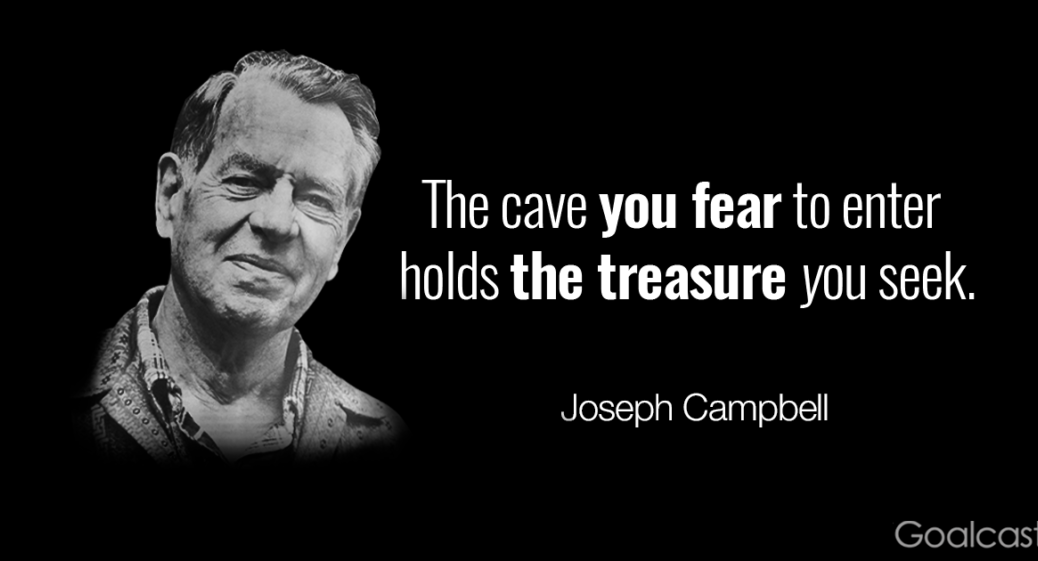
Building on yesterday’s post which focused on a metaphor today’s musing is about an analogy.  Do not be afraid to enter the secret cave to find the answers you seek.

The secret cave is analogous to the hidden knowledge we don’t have.

The cave is ominous and a little scary.  Should we enter it to find out the things we don’t know.  There is an appropriate quote by the character Yoda from the Star Wars movie, Return of the Jedi.

During a scene where Luke Skywalker is hesitant to enter the cave lest he finds out things he does not want to know, Yoda prompts him  “Find the answers you seek, enter you must”.

Fear of the Unknown

Caves are dark.  We cannot see what awaits us inside.  It could be dangerous, even life-threatening.   Overcoming this fear is necessary if we want to unlock the knowledge within.

Of course, this does lead to the very pertinent question, is there knowledge within?  Otherwise, why would I waste my time and take the risk of proceeding into a potentially dangerous situation?

Motivation to overcome the fear of the unknown is sometimes hard to achieve because you are not sure if the reward will be there.  Is it worth the risk, is it worth the effort?

Enlightenment

Unfortunately, sticking with the analogy, you need to enter the cave if you want to achieve enlightenment.  To paraphrase the earlier quote in order to find the answers you seek you must enter the cave.

It is the only way.

Driving with your eyes closed

Back in 1984, Don Henley, guitarist and former member of the rock group the Eagles, issued a tune he wrote, titled “Drivin With Your Eyes Closed”.

I view this as a metaphor, that is a figure of speech which is not literally applicable but is more symbolic.  Sometimes we do proceed with an action without fully seeing the consequences.

Danger

Intuitively, actually driving with your eyes closed in a literal sense is a very dangerous activity.  You might hit something or someone and cause damage.

Your life could be considered somewhat analogous to a journey.   How you drive forward is probably most effectively managed if you keep your eyes wide open.

Impulsive Behaviour

Undoubtedly, there are occasions when a case can be made for blindly stampeding ahead.  The adrenalin and excitement associated with such a choice can be exhilarating.

Sometimes not seeing ahead is an advantage.  Full visual could well block us from proceeding, of course, in some cases this could be a good risk management approach, saving us from awaiting disaster.

What do you see?

Another question of course, “Are you seeing the real thing?”  What we see does not alone create an absolute shield against danger, but it sure does help.

This is not a strong supporting reason for moving ahead without seeing where you are going (who cares, I might not be viewing it correctly anyway), however, in any case, the danger still exists.

To boldly go where no man has gone before or wait until you can see everything clearly, that is the question of balance we must consider before leaping onwards.


The Champion

The definition of champion in the context of sports or competition is the undefeated or grand winner.  In the context of achieving goals, a champion is a person who fights or argues for a cause or on behalf of someone else.

Whether the goals belong specifically to us or are part of a group effort, failure is almost guaranteed without a champion.  We can act as champion ourselves however typically the more granted power the champion has the more effective they will be.

Motivation

Objectives that can be fully achieved on our own without support from anyone else rely on us being our own champion.  Our level of motivation and desire directly contributes to the overall level of achievement.

These completed self-contained goals are however quite rare.  Think even of a foot race.   How you perform might seem to be all about you.  What about coaching, financial and moral support.

Our internal motivation can be raised and improved through leveraging a support network or even just knowing someone is routing for us – our champion.

Cooperation

Getting things done often requires the cooperation of others.  There are many personal impact and influence techniques you can and should use to elicit cooperation.

That being said I am not averse to using the momentum that can be provided by a champion in a position to exercise their granted power.

This is a great supplement to the effort required by you to influence change on your own.  I advocate combining and balancing both approaches.

In fact, as noted earlier in this post, without a “power” champion of some sort the risk of failure to achieve your goal definitely rises.  Remember as well a good champion is not just helpful to influence others but you too.

The Third World

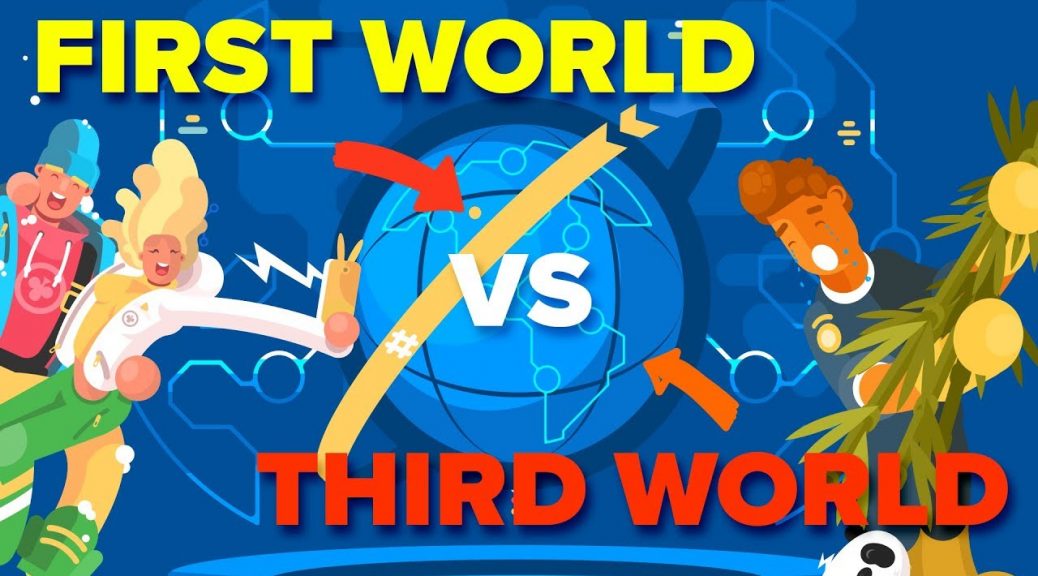
During the cold war Western largely democratic and capitalistic economies were referred to as the first world.   They were aligned against the Eastern/ Asian communist bloc which were referred to as the second world.

The Asian, African and Latin american countries not specifically aligned with either bloc and largely representing developing countries were classified as the third world.

Stereotypical

This classification, primarily instigated by first world leaders  was a clear example of bias and stereotypes in action.  The pompous first worlders assigned themselves status by using a numerical superior label (i.e., first).

Following the cold war, we continued with the need for unnecessary classification, where politics and market economies figure prominently in the grouping.

The third world is still a popular term for developing countries while emerging economies is now applied to countries with capital markets more stable than those of developing nations but still having a ways to go  before being robust first world countries.

BRIC

Leading the emerging economies is the BRIC block, that is Brazil, Russia, India and China.  Our need to classify as if one size fits all never seizes to amaze me.

A big problem with these broad groupings is they contain attached broad perceptions which are really unfair in some cases and clearly inaccurate in others.

I am sure we are all aware of impoverished war zones throughout the US with some  area of major cities no go zones for the police and other authorities.

Many so called third world and emerging market countries have well developed areas.  This mass labeling based on perceptions is really a poor practice.