Tag Archives: relax

Patience

Patience enables the fallen to become mighty once again.  All of us will experience highs and lows throughout our lifetimes.  Remaining permanently at the bottom of a cycle is unlikely.

Sometimes just exercising our capacity to accept or tolerate delay, trouble, or suffering without getting angry or upset is all that is needed before we rise up again.

Hope/ Optimism

Being hopeful about future outcomes leading to confidence in your future success is key to the practice of patience.  Waiting for good things to happen is easier when you are confident they will.

You may not be positive you will rise again to a level of greatness you once had or even exceed that of the past.  Pushing hard to achieve this might work however there is likely a time when a combination of patience and well-timed effort will serve you better.

Savour the Opportunity

There is a common English saying “what goes around, comes around”.   This, of course, can refer to both good and bad things returning but it does underscore the point that patience will probably lead to something.

Your objective is for your plans to lead to something good.  Careful consideration and planning makes achievement of your goals more likely and the patience to plan is a key part of that.

Take your time, remain optimistic, most likely things will come around.  Your time to rise and be mighty will arrive.  Wait for it, be patient, watch for the opportunities and take them when when it makes sense.

Steadily Seeking Serenity

Without purpose, life can be boring.  The balance between a state of stress and being calm, peaceful, and untroubled is founded on a belief in your own self-worth.

There is a multitude of ways for us to value ourselves.  On the whole assessment of our worth as a human being is subjective.  However, how we view our intrinsic value is key to how we feel.

To feel serene you must believe in yourself, that is you must believe the value you bring to human life is substantive and you are comfortable with it.

It is about you

Self-worth leading to personal serenity is about who you are, not what you do.  Each of us develops personal values beginning from the day we are born.

Being fully comfortable with your values, using them to underpin your behaviour and, in essence, form the core of who you are, is the first step to attaining a state of serenity.

A Balanced Approach

Being in a constant state of serenity is not the goal, it must be balanced with things that challenge.  When your actions are founded on a state of serenity you are more likely to succeed in meaningful ways.

Thrusting forward through a state of stress without taking a pause to recharge can lead to a breakdown.   Moments of calm and peace enable to work through the periods of stress and concern.

A well-rounded approach to the way you live your life, having full confidence in yourself and your personal contributions to human life will enable achievement of a state of serenity when desired.

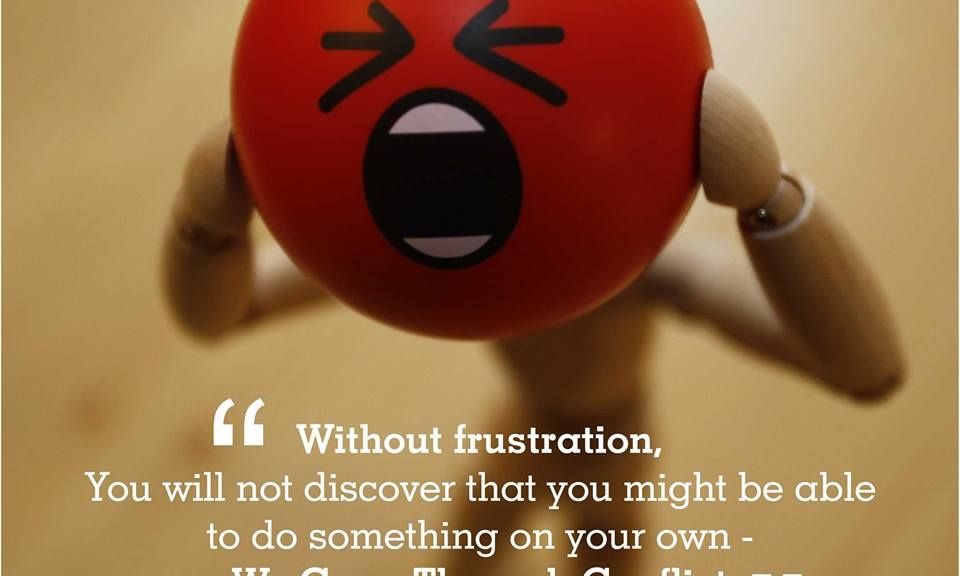
Frustration

Frustration describes a state of mind which is exists when you are upset or annoyed because of your inability to change or achieve something.  As a general rule, frustration does not lead to productive behaviour. 

Most if not everyone experiences frustration on and off.  Obvious examples are things like how you felt in a long line waiting for something or the when the actions of other drivers lead you to anger (road rage). 

bAnimosity

At the core of the frustrating experience is desire and caring.  You are seeking a result and unhappy it is not readily attainable or perhaps not attainable at all.  

Animosity, dislike or hostility toward your objective makes it less appealing and your desire to change something or achieve a goal diminishes.

That is, anomisty toward something, a repulsion to it, will diminish your frustration although it may turn to anger.  Developing anomosity may eliminate frustration but anger driven behaviour is probably not optimal.

Root Cause

Frustration derives from a barrier.  You are blocked from a sought after change or achievement.  There must be a cause of this barrier.

Determining the underlying reasons for your inability to succeed is the first step toward resolving them.  Of course you can just let anomosity kick in but I suspect removing the cause of your frustration will be more satisfying.

This does require a pause, analysis, a plan and then action to confront and remove the cause of your frustrations.  My recommendation would be to employ finesse.

The direct approach can work but often has some negative side effects.  

Humour Me

Much of our daily activities are conducted in a serious way.  We believe they matter and demand careful consideration before acting.  While being funny gives more behavioural flexibility and is, well “fun” it is often considered inappropriate for “serious” subjects.

Humour arises from a genial mood, it is very unlike the serious approach.  Being funny, as a general rule feels good both to the comedian and the audience.

Why Serious

If humerous behaviour is more relaxed and pleasant why do most of us spend the majority of our time in serious mode.  Most of what we deal with day in and day out is just routine.

That is not to say everything we do is not meaningful in some way, or why would we do it.  This is more about the way we go about getting things done.

In general any message or action can be couched in humour and as a rule this allows the recipients to be more relaxed and receptive.  This is not to say the humourous approach always succeeds but certainly success is more likely.

The key here is how the all parties feel.  When actions are relaxed and genial (the basic principle  of the humerous approach) everyone is more likely to feel good, this helps grease the wheels.

I prefer the lighthearted approach and work hard to make this my behavioural standard whenever possible.  Many view this approach as frivilous but then, overall, they probably don’t have as much fun as I do.

Relax,enjoy

Most people allow themselves to become, angry, fearful, nervous, annoyed, upset and so on.  These emotions can elicit unpleaseant results.

For example, it is clear that some anger related behaviours can dissaffect others.  Often the outcomes can lead to regret, dissappointment or even internal anger for acting the way you did.

Unfortunately, it is most likely these behaviours cannot be erased.  The impact could be diminished or the situation resolved and it could be an improvement.

Most likely though the journey was not pleasent.

Why get Angry?

I am focusing on anger but the points I raise here can generally apply to any negative emotions.  External factors trigger the emotions, some very real, some only percieved.

I sometimes wonder whether the emotion I experience is totally witin my control.  Linked to this of course, is the question of whether the emotional experience was of value.

If it was fully in my control would I have stopped myself from getting angry (or annoyed)?  Would I have behaved more effectively as a result of tighter emotional control?

Managing how you feel

Managing how you feel, being aware of how others percieve you are in fact key life skills.  This is the principal at  the core of the iconic book by Dale Carnegie, “How to make Friennds and Influence Others”

In my view, a simplistic summary of the book is that it  covers behavioral skills you can use to ultimately manage your emotional reactions and the associated reactions.

It’s hard to practice these skills, but when you successfully avoid the unpleasant , the reward is great.