Building Resilience

At various times in our lives, virtually everyone goes through a process of adapting in the face of adversity, trauma, tragedy, threats, and other significant sources of stress.

Situations that require the practice of resilience as a major part of perseverance through the unsettling change are unavoidable.  Our ability to adapt and move to the other side has a natural and learned component and strengthening this skill enables us to move on.

Get Through It

While it is important to get past a change without adverse effects on our health (mental or physical) this is not a process to be rushed nor ignored.

Just hoping it will resolve itself with time often leads to the deeper internal stress which festers.  Likewise rushing to get it over with does not address the root cause and again might not really resolve problems.

We need to move through the change leveraging planning, communication, and problem-solving skills to help us overcome the stressful and adverse impacts.

Focus on Opportunity

Our innate resilience can be a counter to change resistance.  However, it is important to bolster your level of resilience by behaving in ways that enhance the change experience.

Ask questions, seek clarifications, speak out clearly (but calmly) about how you feel.  Sharing can elicit helpful feedback from others which can guide you in ways to help yourself.

Plan how you will behave rather than react.  This gives you time to think through scenarios and is more likely to result in positive responses from others, as opposed to them experiencing explosive behavior on your part.

Studies have shown we can enhance and grow our resilience skills.  Change is inevitable, strong resilience will be needed from time to time and you will thank yourself for being ready.

Obligations

Sometimes we are morally or legally bound to do something, it is our duty or a commitment we made.  Are we obligated to work based on the explicit or implicit contract we made both with our employer and those we serve?

A case in point is the recent wild cat strike by health workers in the Province of Alberta.   Classified as a wild cat strike because it was not officially sanctioned as a union activity by the leadership but rather just an uprising by the rank and file.

In this time of a worldwide pandemic when medical support is critical do, the workers have a duty or commitment to the general public?

Freedom of Expression

In countries with democratic based political structures, we are fortunate in the ability of an individual or group of individuals to express their beliefs, thoughts, ideas, and emotions about different issues relatively free from government censorship.

However, there are boundaries, some structures, and rules, and it is the administration of these that is not always either exacting or easy.  We do have structures to make the assessments of fairness (e.g., our legal system) but sometimes the results are contentious.

Is it a right to express our dissatisfaction with our employer (in the case of health workers the employer being the government)?  Generally yes but what about when it affects the public good?

A Fine Balance

Freedom does not equate to anarchy and sometimes the separation of the two states can be a fine balance.  Groups (union members) have rights but does that mean they can be righteous?

The answer to this question is sometimes a real moral dilemma.  I support the right to express disagreement with the government policies but also the need to maintain public health services (particularly in times of crisis) is critical.

There probably is no clear answer to this situation, fortunately, we do appear to be muddling through with some civility.  Yeah for democracy.


It’s all about the People

Throughout our lives we both belong to and interact with many different organizations ranging from government through corporate, small business and non-profit.

The public’s opinion overall for some organizations is a strong positive sentiment (e.g.,  like 100% for a good movie on rotten tomatoes) while others are disliked or badly thought of.

It is often the way the organizations people behave that is the first place this opinion becomes formed.

Who is the Organization?

For all these organizations how they operate is key to their success, regardless of their product or service, although the nature and quality of the products and services do matter.

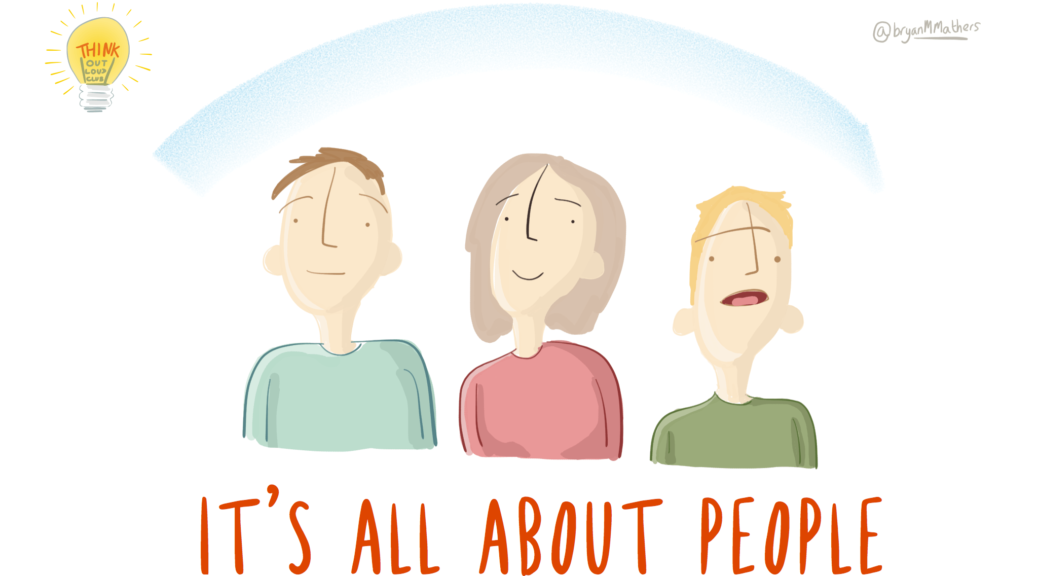
People make organizations great, nothing more, nothing less, it is all about the people.  An organization, regardless of it’s purpose, is basically first the people who are part of it and secondly what it does.

Sadly, I find this simple fact, that is your organizational identity is formed by those who are work to achieve it’s objectives.  I find this basic truth  is often overlooked by a focus on the institutions financial viability.

Less People More Profit

Cutting costs to get more done with less is admirable whether the organizations main purpose is financial profit or just to improve the quality of life.  Less cost mean more resources to allocate, grow and get better.

Typical salary costs are most easily reduced (and often the largest cost) However, fiscal benefit can be outweighed by reputation  costs and this impact should be carefully weighed when deciding to affect your organizations human resources.

Remember your brand opinion will not be positive if the people that make up your organization are not viewed positively both by those who avail themselves of your products and services as well as their colleagues.


Working together

Working with others is typically more difficult than just doing it yourself.  Frank Sintra’s iconic anthem which struck a chord with millions of fans “My Way” really describes how most of us prefer to operate.

The song celebrates the joys of doing things “My Way”.  My own experience is the extra time and effort required to find collaborative solutions is much more likely to produce sustainable results over the long term.

Let’s All Just Work Together

Cooperation versus competition leverages the skills of everyone and provides the opportunity to leverage the diversity of the group without contention.  Relying on an individual creates the potential for a single point of failure.

Given the benefits of working together, one might wonder why it is not the default approach but rather something we must work at.  Humans are social animals for sure, the majority of us seek, in fact, require contact with others.

Social interaction is not the same as working together which requires us to suppress the natural urge to do things my way.  This behavior trait may be stronger in some but to some extent it exists in everyone.

Worth the Effort

While difficult and time-consuming putting in the effort needed to listen (really listen and pay attention to others) has been demonstrated through numerous psychology studies to provide higher quality and longer-lasting results.

The benefit can be demonstrated intellectually but is not always apparent to us from an emotional perspective.  Hence high performing groups are more the exception than the rule.

The next time you have an opportunity to collaborate put in the effort to be cooperative you will probably be surprised by the excellence of the outcomes.

Effectiveness

Do you ever wonder about your own ability  to utilize all of your skills, talent, and energy to reach a self defined goal or set of goals you set from time to time?

If you are not the goal setting type and just meander from event to event depending on the way the wind blows your level of personal effectiveness is probably not top of mind or even in your mind.

How Effective Am I?

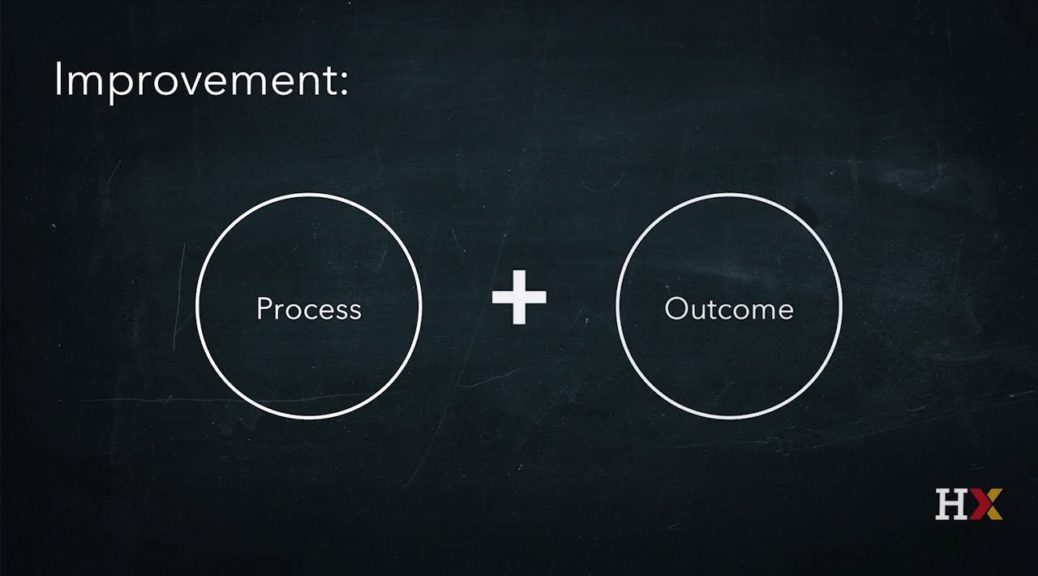
Measuring effectiveness entails more than examining outcomes.  How you arrive at your goal can be both as important and fullfilling as the actual achievement.

There is a piece of ancient wisdom that concludes “getting there is half the fun”.  Being efficient typically refers to how you achieve your goals  with minimum wasted effort or expense.

In essence this is a personal value equation.  That is, things that cost less but provide the same satisfaction, growth opportunities or net worth, versus equivalents that cost more, have the greatest value.

Defining Your Effectiveness

Likely if you leave a trail of bloody and dead bodies behind you in the course of pursuing your objectives, although, you might be satisfied with the accomplishment, will others be?

Examining your own morale’s and personal values may well even cause you to view your achievement as a pyrrhic victory.   You would need to be a bit sadistic to enjoy the carnage around you.

Was I effective?

Measuring your own effectiveness begins with being clear about your own personal behavioral expectations.  Things that are most important to you like clarity in communication, empathy for those you are interacting with, etc.

Once you know your key behavioral limitations defining measures that demonstrate your adherence to these practices can begin.  The results can help you modify the way you get things done, thus improving your personal effectiveness.


Get Off – Jump!

Sometimes it is time to exit a situation.  Unfortunately, that is not always easy to do and if there is a sense of urgency it can be even more challenging.

Will you know when it’s the right time to jump from a moving train.  Is there ever a right time?  My opinion is there is always a right time to get off, although usually not when travelling at speed.   I would try to slow it down or wait until it slows down.

It’s Your Choice

Whatever the circumstances, whether career or family related or just personal preferences you always have the choice to terminate or exit.  Although sometimes it is a very hard choice to make and there can be tons of reasons to avoid the decision.

We do have a limited time in our earthly lives, being stuck in or carried along by a situation that is undesirable to us doesn’t make sense (i.e., in the context of life is short).

A messy exit is not recommended and if you realize it is time to make a change making the effort to plan how to effect the outcomes you seek with the least negative impact is the best approach.

Avoid Precipitous Action

You may feel is time to separate from your family or employer, shut down your business, even just add thrills to your life.   These are just some of the many examples of exits you may wish to undertake.

Making any of these changes precipitously (before you are sure it is the right thing) could cause more harm than good so do give it some thought before acting.


Fullfillment

The other day a former colleague of mine posed an interesting question, ” If you were guaranteed success, as an entrepreneur, what business would you start?”

The purpose of this question is not to identify a personal opportunity that was just feasible, (i.e., something you could)  but rather the thing you want to do.

Bonne Chance

Selecting the road well-traveled may be safer but choosing something you really desire is far more likely to be fulfilling.  There is a good chance you will succeed even if it is only personally satisfying not necessarily financially.

Unfortunately, there is never a guarantee of success, the purpose of this question is to remove the doubt which arises from uncertainty so you can identify a business or other opportunity that really resonates with you.

This is not to say fiscal and feasibility considerations are not really important and should be discounted.  Rather ask yourself what you would do if there were no constraints to help filter out default opportunities (those that are just there).

Because it’s there

I have always felt the rationale for climbing a mountain peak needed to be more than because I could (Although that is some people’s answer).

Results are much more satisfying when motivated by a strong feeling of wanting to have something or wishing for something to happen.  Choosing a career path or entrepreneurial opportunity simply because you can might pan out, and maybe it won’t.

If you seek entrepreneurship, asking yourself what that looks like without constraint followed by the application of reasonable constraints might result in a decision not to proceed.

In and of itself this would not be a bad thing.  Doing something just for the sake of doing it often just does not pan out.

Being Good

It is good to have the ability to empathize with other people, to feel compassion for them, and to put their needs before your own, if necessary, sacrificing your own well-being for the sake of others.

Being bad usually is usually associated with disastrous or detrimental effects,  characterized by discomfort, inconvenience,  or uneasiness.  Bad often is associated with annoyance or disagreeable and unpleasant circumstances.

However, I believe it is good to be bad sometimes or at least inevitable.  Figure that one out.

Keep it Real

It is unlikely someone would be good all the time.  In fact, as evidenced by the TV show “Breaking Bad” given the proper motivation even a good person might explore bad behavior.

There is a real and distinct difference between bad behavior and being profoundly immoral and wicked (i.e., evil).   Being bad can morph into evil if we are not careful.

In reality, setting aside truly evil people, most of us balance bad and good every day.  This can form a moral dilemma for us, do we do what is right (good) or what makes sense (e.g. cook amphetamine to get money to support our spouse when we die).

Choosing Wisely

When we bend or even break our personal values by behaving in ways that appear or could be perceived as contrary to our normal standard, it is critical our decision is well thought out with motivation being carefully considered.

The choice to be bad for a reason needs to be tempered by the realization that moving into the realm of evil (as the main character of Breaking Bad did) could have some pretty dire consequences and we should be on guard to avoid going beyond bad and becoming evil.

Being Ghosted

With the advent of a multitude of social media technologies over the last decade, that enable us to connect with others quickly and easily, a new descriptive term has arisen “ghosting”.

While ignoring contact attempts from others with whom you wanted to severe relations has long been a human behavior, ghosting adds the twist that you are being ignored but can see the object of your communication attempts continuing to connect with others.

Accidental or Intentional

This is not just you perceiving being ignored.  You can see they are present and chatting/responding to others.   Ghosting is a definite signal you have been cut off.

Normally, keeping in contact with someone is a two-way street, traffic needs to flow in both directions for it to be effective.  Ghosting ends that definitively.  A silent message is sent to you.

Social Media Dangers

Not only can you see that you have been ghosted but so can others.  What was once a private matter which you could deal with internally now becomes very public.

The ability to communicate with a broad audience rapidly and openly has many benefits, sending a message you no longer like or want to associate with someone is probably not one of them.

Returning the Message

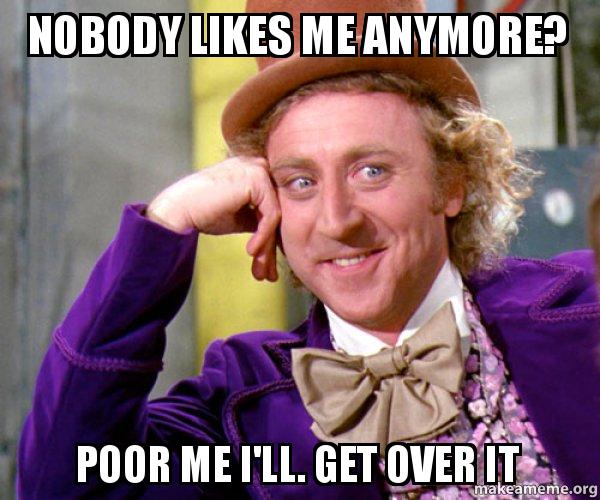
When you have been ghosted by someone the opportunity presents itself to return the message.  Take a picture of yourself smiling and in a happy posture and send it with the text, “Nobody likes me anymore – Poor me, I’ll get over it”

The critical point here is don’t let ghosting depress you, it really is not about you but rather the insensitive and rude behavior of the ghoster.


Certainty

The other day a colleague advised me he was absolutely certain about something.  The implication was he knew his information was for sure, in his mind it had been established beyond doubt.

The things we know are likely never an unqualified certainty and so cannot be fully relied on.  This particularly applies to future happenings.

Blind Faith

Relying on certainty as an absolute indicates some lack of perception, awareness, or discernment.  That is, blindly believing a thing without recognizing the unknown always exists and can lead to the unexpected is a bit myopic.

That is not to imply our plans and actions should always take into account the potential things will not unfold as we expect.  While this is a possibility the types of impact-driven by uncertainty will vary with the situation.

For example, planning a wedding taking into account the very real possibility it may be called off by the happily engaged couple is certainly a way to mitigate the frustration and costs of standing down.

However, it is unlikely to occur.  Most engaged couples do proceed.

Be Prepared

Preparing for uncertainty should begin with an assessment of likelihood.  If things are likely to proceed as expected, based on past experience, current state, and what is known about the future, planning to address the uncertainties can do more harm than good.

It is important to recognize being prepared to address uncertainty can both save us from pain and stress as well as cause us pain and stress (as we focus on the uncertain).

Strike a balance

The best approach to managing the uncertainty is to conduct a thorough analysis, test assumptions to the greatest degree possible, and ignore uncertainty with on the face of it is unlikely to have any impact or if it does minimal impact.

Balance what you know with what you don’t with a modicum of common sense.