Tag Archives: knowledge

Answers begin with the Question, or do they?

When we don’t have all the information we need or are not sure of it’s validity we will elicit additional information from other sources, that is human, virtual, experimentation and so on.

Hopefully this process of investigation will yield the answers we seek in response.  Sometimes the answers are not the information we seek.  This can be because the question is wrong, and there is the rub,

Question or Answer/ Chicken or Egg

Without some information we can not be sure what the question is and without the question information is lacking.  The question answer dance is founded on what we know when we begin.

Neither the initial question or subsequent answers is the starting point, rather, what we know about what we don’t know is the best place to begin.

Assuming questions are intended to gather things we don’t know or validate information we are uncertain of the beginning is not to seek answers or formulate questions but rather understand what it is you don’t know.

Understanding Requirements

The process of seeking information using questions as the prime technique begins with understanding what you seek.  Valid quality questions begin with requirement, that is defining what you seek.

Formulating the question is often best managed as a multi-step process building on the information uncovered during the journey for answers.  Critical to the success of this journey is the starting point, the first question.

Seeking Information/creating Knowledge

Asking questions and analyzing the answers will provide you with the information you need to create knowledge.  The value of knowledge to you depends on your requirements.

Asking questions is only of value when you have a solid understanding of why you are asking them.  What is the information you are lacking and why is it of value should always be the starting point of your interrogations.


 

Navigating the Fog

Woke up this morning to a layer of low lying fog.   Fall weather is coming.  My summer this year was fairly temperate so not much to complain about.

I did take some inspiration from the weather conditions this morning. My thought of the day, “Peering through the early morning fog, look carefully for that glimmer of enlightenment.”

The Answer is Out There

Stealing the key tag line from the conspiracy theory-laden TV series the X-Files, I do believe it is generally true if we look closely we can uncover the reality.

That is, with attention and focus we are able to make the foggy mist dissipate.  Then the answer will lie before us.  Like the fictional FBI agent in the aforementioned series, practicing determination can uncover the secrets.

State of Mind

Blowing away the fog requires effort and so a compensating level of motivation is needed.  It begins with believing the answers exist and we have the skills and capability to find them.

However, the key motivating factor it a thirst for knowledge.  This is a personal choice, you need to want it in order to make the effort to find the answers.

The acquisition of knowledge is not effortless and sometimes appears to be an awesome challenge which raises the question, “Is it worth the attempt”?

And there’s the catch

Gaining knowledge is by definition an activity through which we acquire a new understanding of facts, information and skills.  We do not know in advance what we are going to find out.

Therein lies the rub is it worth spending the effort for something we are not really sure what it is.   You just won’t know until you lift that fog and find out what was hidden there.


Aging

Growing old is inevitable.  Growing wiser is a choice.  Leveraging years of experience to gain wisdom is not a default practice but it is a wise one.

You may be older but you are only wiser if the information you gathered along the way was treated as an opportunity to create personal knowledge.

Knowledge

Knowledge is created through use.  Through collaboration and interaction with others, you convert information into knowledge.  This is a process of self-education.

Your knowledge is supported by relevant information and data acquired over time. In turn, this serves as building blocks in the creation of new knowledge.

Older is Better

Being older does not equate to better or wiser by default but the opportunity for becoming personally better and wiser is fully available to you, but it does require some effort and you need to make the choice to do so.

You cannot choose to stop the aging process but you can embrace all the things life offers you, right up to the very end.  There really is no motivation not to use every moment to build up your wisdom.

Longer Life

Treating the creation of wisdom as a life long exercise has an effect on your life force.  In and of itself this can be a motivation to live and you live longer without even noticing.

Most importantly wisdom be used to guide you toward happiness.  Knowledge based decisions are far more likely to have beneficial results than otherwise.   Aquire knowledge, build your wisdom and enjoy.

The Secret Cave

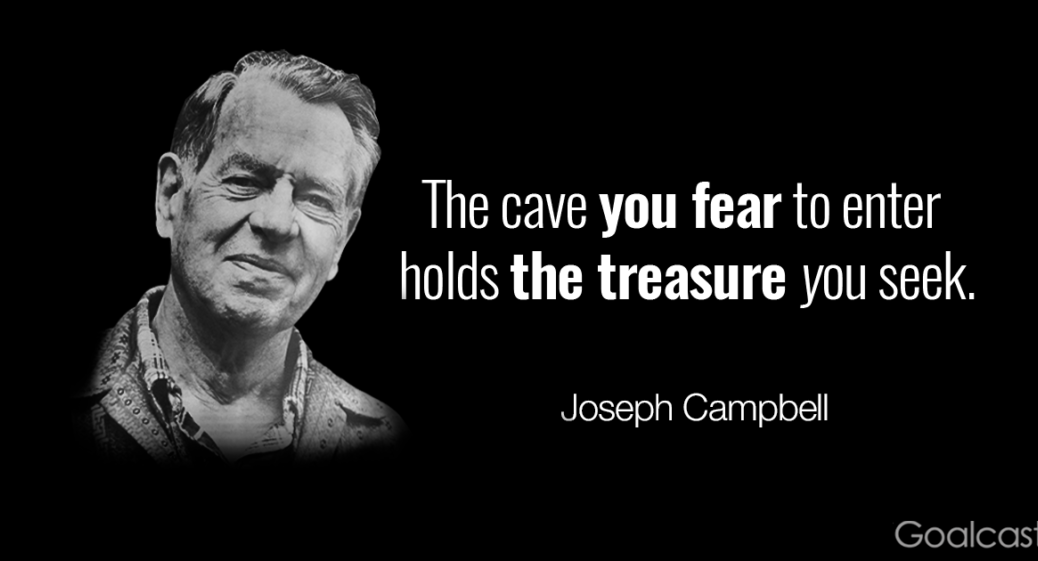
Building on yesterday’s post which focused on a metaphor today’s musing is about an analogy.  Do not be afraid to enter the secret cave to find the answers you seek.

The secret cave is analogous to the hidden knowledge we don’t have.

The cave is ominous and a little scary.  Should we enter it to find out the things we don’t know.  There is an appropriate quote by the character Yoda from the Star Wars movie, Return of the Jedi.

During a scene where Luke Skywalker is hesitant to enter the cave lest he finds out things he does not want to know, Yoda prompts him  “Find the answers you seek, enter you must”.

Fear of the Unknown

Caves are dark.  We cannot see what awaits us inside.  It could be dangerous, even life-threatening.   Overcoming this fear is necessary if we want to unlock the knowledge within.

Of course, this does lead to the very pertinent question, is there knowledge within?  Otherwise, why would I waste my time and take the risk of proceeding into a potentially dangerous situation?

Motivation to overcome the fear of the unknown is sometimes hard to achieve because you are not sure if the reward will be there.  Is it worth the risk, is it worth the effort?

Enlightenment

Unfortunately, sticking with the analogy, you need to enter the cave if you want to achieve enlightenment.  To paraphrase the earlier quote in order to find the answers you seek you must enter the cave.

It is the only way.

Without Questions there are no Answers

It is simple and intuitive but surprising how often we don’t adhere to the simple imperative.   Answers start with the question.  Determining the question can in itself be a significant task.

Those seeking post-graduate designations at institutions of higher learning are quite familiar with this concept.  Selecting a research topic (i.e., the question) is the first step to conducting research.

Value-Based

Seeking a worthwhile question is a great way to get answers.  Just raising a question for the sake of the question itself can waste time and effort and ultimately has little value.

Quora (quora.com) is a forum for raising questions of any type or category and drawing on the memberships collective knowledge for answers.  Quora has an interesting model to encourage participation.

By invitation only, selected members are asked to become Quora partners and get paid for asking questions.  (Full disclosure, I am a Quora partner so am fully familiar with this process.)

Question is King

Quora recognizes their answer forum is of little value without an ongoing stream worthwhile questions (Unless of course, you are playing Jeopardy which is all about answers).

Post-secondary educational institutes which focus on research recognize the same.  Without questions to answer, there is no research to do and doctoral programs are largely unnecessary.

Caution

One of the things I observe with the Quora forum is the compensation model can and does lead to some frivolous, low-value questions.  I wonder why they are being asked.

Often these valueless questions accumulate zero answers as respondents do not want to waste there time. Compensation is based on answers and reviews so it does act as a mitigating factor though, no point in asking a question that earns no cash.

Understanding

Don’t just wonder about the things around you, figure it out.  If knowledge is lacking, create personal understanding proactively.

In the words of Lennon/McCartney (Beatles songwriters) “There’s nothing you can know that isn’t known, Nothing you can see that isn’t shown” 

Take Charge

If you are puzzled, wondering why something works the the way it does (or doesn’t work, but should) don’t passively accept it. 

Take charge of your life, seek knowledge and understanding of everything.   Others can help with this but you need to ask.  

Motivation

There is a strong rationale for building your personal knowledge base.  Understanding the underlying explanations for all things can enable proactive response.

This really falls into the root cause discussion.  To act appropriately, reacting to the symptoms can provide positive results) or it may not but typically they would not be sustainable. 

Understanding the real nature of things provide a framework for action.  Just wondering and accepting things as the way they are will not provide the benefits of exploration, that is research. 

Integrating with Others

Spending the time to understand why things work or behave the way they do allows us to plan the best and most beneficial response. 

Seeking a broad understanding is not a one time exercise but rather a constant quest. 

Knowledge can make your interactions with others become both more rewarding for everyone as well as raising your own profile.

So, don’t be passive, embrace the opportunity to expand your understanding of the world.  Seek answers, figure it all out. 


If the box fits

For most, our daily lives are framed by constraints.  For example, you  get up at specific times based on committments  or perhaps lack thereof.  You go to bed based on the constraint of when you are getting up.

This framework can form a box (metaphorically speaking) which you comfortably fit into.  The question is, just because the box fits, should you wear it?

Personal Satisfaction/Enjoyment

Routine can be relaxing and followed with ease, in short comfortable.  It might not be the best approach to maximizing your personal pleasure even if it is probably the easiest path to follow.

Going to bed at different hours , changing up your travel routine, trying different daily activities are more likely to challenge you and psychology studies indicate stepping out of the box and mixing it up increases the  probability of self satisfaction (albeit the studies seem to employ somewhat subjective measures.).

Breaking Out

Extreme practices, for example consistently stretching or breaking the box that surrounds you is not being recommended.  As with most things a judicous balanced approach is most likely best.

That is some combination of routine and impulsive behaviour, is more likely to  result in making you feel better over time.

Consistent routine might result in lost opportunities to accelerate your personal pleasure while an reckless approach might be invigorating it could be too stressful.

Give it some concious thought, break away from the unconcious routine, to some extent and check the results. You might surprise yourself.


Education for all

With the growing expanding scope of Massively Open On line courses you can study almost anything for no cost.  This education is of value to you personally as a way to enhance your knowledge and skills.

So far, the impact on your employment/ carreer is relatively negligible.  Organizations still look at the documented degree or certificate as the value piece.

If an institution with a recognized brand (e.g. Harvard) issues you a degree or certification it can be leveraged to raise your professional standing.

If you take a free series of on line courses, which were created by the same recognized institution (and are the same as those taken by the paying students) , you obtain the knowledge and skills, but not the certificate.

Sadly without the documentation, the free learning won’t earn you more status or money, but the knowledge is what counts, right.

Business Model

Post secondary education is a big business in most countries we classify as developed and just a important in all the other areas of the world but generates less revenue in the less developed regions as there is less funding available.

Free education, in regions with less money to allocate to education works in providing skill and knowledge that get put to use by the populous whether that can prove it with a piece of paper.

The action is the proof.  If you have the skill and put it to use, how you got it and being certified as having it are not critical factors.

Education for the public good

Over time we can only hope that education will migrate from a profit model to focus on improving the human condition, worldwide.  It’s a dream.

Only speak when illuminated

I travel up to my office using the same elevator bank every day.  This morning a sign in the elevator caught my attention.  “Speak when illuminated”

The reference was to the elevator call box.  It is a one way system and the light indicates when your mic is live.  Still, the instruction  got me thinking philosophically.

Illuminate

One definition of illuminate is to enlighten, as with knowledge.  Or to throw light on a subject. So adding “only” to the phrase creates a thought provoker.

“Only, speak when illuminated”  This could be interpreted as an instruction to hold your counsel unless you had some item of knowledge or clarity to share.

Wisdom in timing

Usually the prime objective of sharing information with others is to create the opportunity for development of knowledge.  A key to achieving this goal is the others receptivity so timing is really important.

Although the syntax of the phrase is not exactly right, the sentiment is.  That is, don’t try to illuminate others till you are ready yourself. When the context for sharing is properly staged, receptivity is more likely.

When you are clear, that is fully illuminated yourself, the time to talk has arrived, but not before.  Most importantly, when you are clear yourself the time to enlighten others has arrived.

If you are not ready, the chances of sharing your personal enlightenment are not good.

So by happenstance, I came across and interesting thought, “Only speak when illuminated”


Skill or Behaviour

Many organizations, whether business, government, non profit or charitable, consider the skill bar to represent the price of entry, but ability to engage in interpersonal relationships is the prize.

Once it’s clear the minimum skills (knowledge, education, experience) are met, the focus is on relationship capabilities.  That is, the ability to inspire and be inspired by others.

Whether it is joining an organization or moving through successively senior roles the determining factor is how well you interact with others.

Who would you hire?

In this hypothetical scenario you are a hiring manager.  All the cadidates demonstrate through their resume, interview and skill tests they meet your minimum requirements.

Three of the candidates excel in the area of skills, education and experience far exceeding the minimum in these areas. One candidate just meets the skill expectations.

On an interpersonal level all interact well with you during the interview and you include some meetings with other members of your organization and the feedback is favourable.

Of the four candidates one stands out relative to the so called “soft skills” Everyone liked them immediately.  This candidate is the one whom met but did not exceed the knowledge/experience reqiurements. The others are just average in this area.

Who would you hire?

Rhetorical Question

Obviously since this blog allows one way communication only, I am going to provide my answer which I already knew before asking (but I encourage you to think about what you would do).

Hire the candidate that was well liked.  They will far succeed your expectations.  While it is true both knowledge based skills and those underpinned by emotional intelligence can probably be learned, the emotional skills are probably harder to develop.