Tag Archives: control

Using your Inner Voice

Sometimes it is not appropriate to express publically what we are thinking.  Doing so creates the risk of negative outcomes.  In these cases, the thoughts and feelings we choose not to express outwardly can serve to seem to warn, self-criticize, or influence our actions.

Using our inner voice can be a powerful tool, aiding us to behave in ways that will lead to the best results.  However, since only you can challenge your inner voice caution does need to be exercised.  The guidance you are giving yourself might not map to reality.

Let it Go

Active use of the inner voice may lead to frustration.   Typically these thoughts are negative or bridge on the more harmful emotions (e.g., anger, hate, sadness, frustration) frequent use can mire you in negativity.

Unquestionably there are occasions when the use of your inner voice can defuse a situation.  This should not become your “go-to” approach though as you will become disillusioned and basically tend to checkout.

Present as Humor

Sometimes the things you are thinking need to be said but blurting them out or boldly stating what you really think can often cause more damage than good.

Couching your ideas in humor, stating them in an offhand way and then perhaps saying something like “Oops, inner voice” and laughing can defuse the situation but still enable both making a point and letting off a little personal steam.

Use it, Don’t abuse it

Our inner voices can be very valuable in helping us behave appropriately outwardly without ignoring the issue.  When overused they can cause us to be morose and inwardly focused in ways not beneficial to our mental help.

Use you inner voice but exercise care to use it to the best effect.

 

Behaviour Governance

You have the authority over your personal deportment, that is your behaviour or manners.  Self governance does not mean you can act any way you wish.

It simply means you chose (under your personal authority) which boundaries apply to you.  This decision must be undertaken with consideration paid to the influence of social and cultural norms ( both legally defined, and common sense ).

Impact and Influence

Your personal choices which guide your daily deportment define how others perceive you.  Taking control of these choices and being sure to practice good governance is a simple way  ensure others view you in a positive context.

Acting in the moment or solely according to your personality (i.e., your go to behaviours) without applying some level of constraint can result in others discounting your value to some extent.

Conforming to both your needs and others

Individuals perceived by others to provide  high levels of value typically are under control.  That is their behaviours satisfies everyone (including themselves).

They  have developed an inner code of personal behavioural governance which allows them to tailor their action most appropriately both to the situation and to other peoples needs.

Not a Bad Word

Often I run into people that describe governance as a necessary evil.  Something to avoid if possible.  While this is usually focused on corporate governance it does apply to the concept of governance holistically.

I respectfully disagree, the practice of good governance will almost always, if practiced judiciously, lead to positive outcomes.  Personal governance underpins personal greatness.


Feeling Good About Yourself

Empowerment is an important way to help yourself become stronger and more confident, especially in controlling your life and claiming what is yours by right.

I have posted before around the importance of leaders creating a framework that enables others to be empowered.  Today’s post will focus on individual empowerment.

Ask for Forgiveness

A key way to exercise empowerment is to proceed with confidence whether explicitly authorized or not.  If questioned about your actions, in the worse case just apologizes for overstepping and ask for forgiveness.

There are boundaries to this approach that must be adhered to.  If explicitly forbidden from taking a specific action or if the action borders on improper behavior (e.g., illegal, immoral and so on) don’t do it.

If you plan to ask for forgiveness post mortem (per-say) it is critical you have a solid justification and realistic support for your actions.

Empowerment not Anarchy

Taking control of your life does not mean at the expense of all else.  Doing anything you want is a form of anarchy and is not being advocated here.

Taking charge when it makes sense to do so and in doing so enhance your own self-worth and build personal confidence is strongly advocated.   But, be sure to apply a large dose of common sense before acting, perhaps recklessly.

Better Results

Acting based on the directions given by others can be demeaning and also typically will have reduced buy-in by you relative to the matter at hand.  For the sake of your own self worth take personal accountability and responsibility whenever you can.  Empower yourself.

Destiny

Do we have an inescapable fate?  Are things just meant to be?  Destiny refers to things that will necessarily happen to us in the future.  Out of our control is implied.

Although it is outside of the intended meaning of the work I wonder if we can create our own destiny through action.  The concept is based on acting in a strategic and visionary way such that your pre-determined fate is actually morphed.

Pragmatic Approach

It is important to deal with things sensibly and realistically in a way that is based on practical rather than theoretical considerations.  If something is inevitable however you behave won’t change that.

However, sometimes we can be too pragmatic in our approach.  Stretching into the area of theoretically possible things and believing in them means we do have a chance to overcome our destiny.

It may be easier to believe in the pre-ordained, that is there is nothing I can do to make a change so why try?

Taking Action Works

The history of humanity seems to demonstrate an inevitable destiny is not reality.   Events throughout history have clearly changed the course.

While we cannot yet travel back in time and change the actions and behavior to see if the results would actually change we can logically and intuitively visualize this to be the case.

The outcome of world war two is a simple and straightforward example of this re-imaging.  Numerous treatise has been written about what-if scenarios and outcomes if different political and warfare actions were undertaken.

Destiny is within our grasp, we just have to be clear what we seek and plan the best approach to achieving our goals.


Empowerment

Increasing empowerment in your life is a process of becoming stronger and more confident, especially in controlling one’s life and claiming one’s rights.

Almost all of us serve somebody.  It is those leaders or authority figures that can be a potential roadblock to personal empowerment. We must interact with them effectively if we want to increase our empowerment.

Force or Influence

There are two main ways to exercise your personal power.  Forcefully or through the art of finesse.  That is the practice of getting things done in a subtle and delicate manner but getting them done.

How you behave directly influences the way you build confidence with those you serve.  Ultimately this is directly related to the level of empowerment you are able to attain.

The use of influence type behaviours is usually more effective and longer-lasting but on occasion being forceful is what is expected and being too meek may cause others to take charge.

Cautious Balance

It is important to be careful not to be categorized as either forceful or too restrained.    The behaviour balance you choose is best tailored to the target audience.

In the case of building empowerment that is those you serve.  But this should not be interpreted as being servile.  In fact, it is very much the opposite.  Servile behaviour is unlikely to increase your empowerment.

The key is to balance the way you act in such a way you are at neither end of the spectrum but rather more centred.  That is not to say the forceful or the meek do not attain their goals but the middle ground is more often the route to success.

Bad Behaviour

No matter what kind of soap you use, or how much, it is unlikely you can clean up the impacts of bad behavior.   The best way to ensure there is no fallout from the way you behave is to not behave badly in the first place.

Sometimes we stretch our behavioral limits beyond both cultural and social standards.  When acting outside of the norms you can be viewed as behaving badly (albeit a somewhat subjective measure).

Impacts/ Consequences

Our behavior has a real impact.   We can negatively (or positively) affect how others view us but also we could act in ways that cause others pain or harm them in some way (of course we can do good as well).

The things we do and how we act matter.   In some cases, these actions can have irrevocable results.  Bad behavior usually leads to negative outcomes while we may work hard to make amends or fix the damage, in reality, the past status quo can never be truly restored.

The results of bad behavior can never be fully cleaned up, regardless of how apologetic or remorseful we are.  It is more effective to avoid acting in ways that could harm your reputation.

The Simple Approach

Most often, if not always behaving badly stems from emotional override.  Our logic and restraint are overridden by a flood of emotions.

We feel it coming on and know what we are experiencing but for many, we are unable to hold back our passion, excitement, anger, frustration, etc.

The simple solution is to adopt a personal belief bad behavior has no value or benefit and must be avoided at all costs.  When you start to cycle up the bad behavior curve, stop, ignore everything around you.

Force yourself into a state of relaxation, take several deep breaths and then start again from the bottom – and stay there.

Tell me

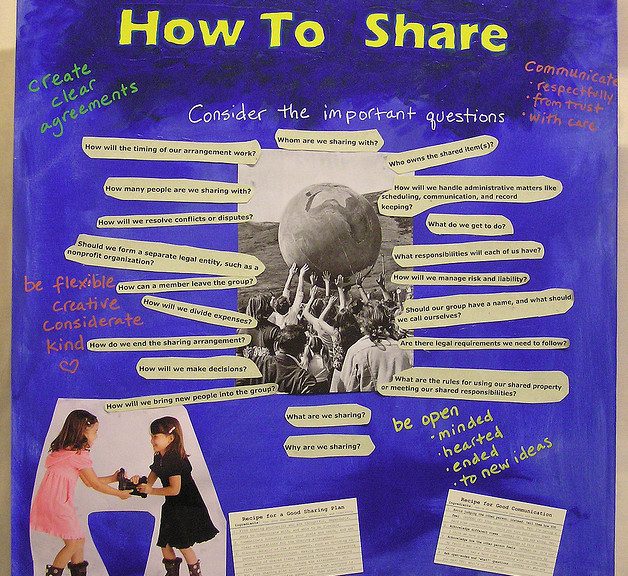
Sharing information could result in a loss of control.   This principle is intuitive and is a key underlying factor in shaping our behavior when it comes to telling others stuff.

The catchphrase “Information is power” refers to using it as a lever to enable increase our capacity or ability to direct or influence the behavior of others or the course of events (i.e., exercise power).

Associating the loss of control with a lessening of personal power is a reason information is often not shared.

Overcoming the Loss of Control

While it can often open opportunities for collaboration leading to better results, given the impacts on both our control and power base it is more likely to hold back providing others information freely.

Strategic dissemination of information is often viewed as the best approach largely because of fear.  That is fear of loss of control.  In reality, giving up this control and frequently lead to better results.

The power of diversity comes into play when we leverage ideas and support of others.  Harnessing different thinking can be a great way to resolve the issue or come up with innovative approaches.

Share and Get Rewarded

Although our instinctual behaviour is to be cautious when sharing our personal information the downside is missing on the potential rewards by sharing freely.

Taking advantage of others resolves the dangers of the unknown things that you don’t know but others do.  Share with others and they will tell you what they know.

The advantage gained by sharing usually far exceeds the cost of giving up some control.


Let it Go

There are times when tenacity, that is the ability to firmly grip something and not let it go, is admirable.  Also, there are times when letting go is the better option.

The balance between determinedly following a course of action (e.g. a personal career path) and changing direction (taking a new career path) is not always an easy one to follow.

Just Move On

Holding on relentlessly can cause internal anxiety for you but can also color other peoples perspectives of you in a negative way.  Being perceived as the stubborn or intractable is a negative spin, it is better to be seen as firm or tenacious.

Managing how others view you is an important life skill.  Recognizing when to drop something is a key part of this.  That does not necessarily mean acquiescence, but rather closing a topic in a way acceptable to everyone that is involved.

Often, to do this, you need to be able to recognize when it makes sense to just let it go.  When arguing or ongoing discussion is clearly just fostering continued disagreement it is likely time to shut it down.

Not Giving Up

It is important to distinguish between letting go and giving up.  These are very different approaches, albeit they can appear to have the same outcome.

Giving up will lead to personal baggage and potentially you will feel bad about yourself.  Letting go is about recognizing that hanging on is painful to you and getting nowhere.

Releasing the pent up emotion which is eating away at you for something that is unlikely to change can be resolved simply by accepting the way it is and moving on.

Behave Accordingly

As I have noted in many past posts how  you and others view you is determined by your behaviour.  How your behaviour is interpreted varies based on perspective.

Basically though , you are to everyone, including yourself, composed of what you do.  Common and repeated go to behaviours form the essence of your personality.

Managing your Behaviour

You always have the opportunity to act in a way that is appropriate to the particular circumstances. Unfortunately it is not always crystal clear what constitutes appropriate, and even when it is that behaviour might not resonate with you.

The consequences of your behaviour might not be apparent until part way through what you have undertaken to do.

This makes it wise to constantly be aware of the results of your actions so you can modify them accordingly is search of better results, if desired.

For Example

If you are seeking to build trust, but show up late for meeting, frequently, this typically is not a good way to build trust, you might want change your behaviour accordingly.

The change you make could be to start repeatedly showing up early for meeting to offset the previous perception and rebuild peoples confidence you can meet their expectations.

Focus on your Goal

Your personal goal is often the circumstance to focus on when determining the appropriate behaviour.  This might mean your go to or personality based behaviours need to be overridden.

Any behaviour is possible, with concious thoughts and a little effort.  Acting accordingly, focused on your objective, e.g., building trust, requires you pick the best actions not  always those you might be most comfortable with.

In Command

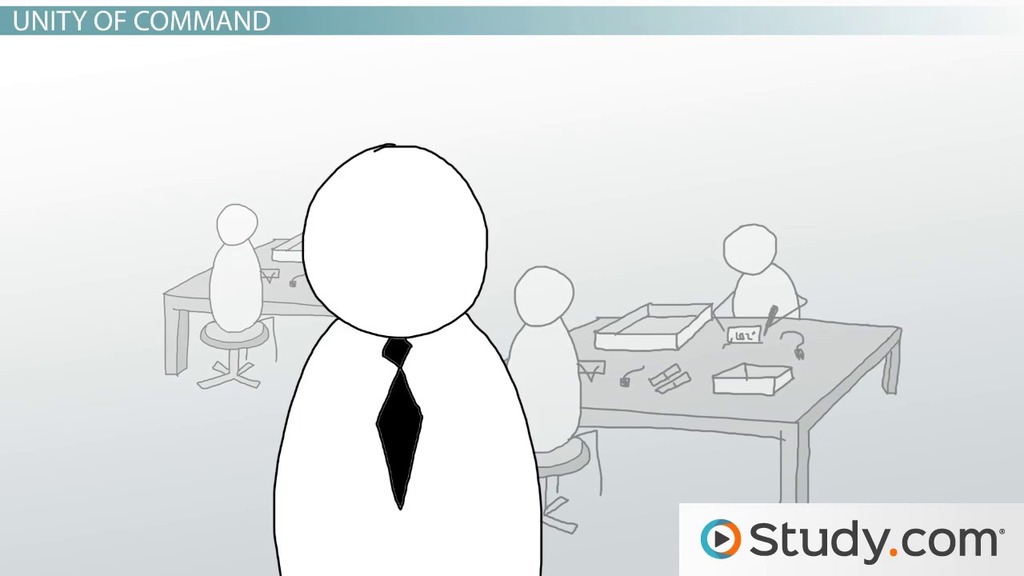
When you are granted a formal position of authority by official appointment or other formal grant of authority you are in command.  You may issue an order and expect compliance.

Leadership does not require the benefit of command and getting things done through the use of personal impact and influence skills  without a formal appointment or granted authority can be harder but sometimes is longer lasting and ultimately more effective.

Balance Command and Influence

Earning the ability to guide and support others through trust and collaboration is typically more difficult than issuing directives and expecting compliance based on the dint of command authority.

However, sometimes the direct approach is required due to urgency and priority but if overused the ongoing effectiveness of your command authority can be diminished.

A mix of command behaviours with more facilitative ones is often the best approach.  The challenge is finding the right mix for any particular situation.

Take Your Time

Taking charge should not be rushed and taking time to analyze options and work out the best plan for a given situation is well worth it.

Consider the audience and the nature of the goals.  These may be strategic or tactical objectives and the stakeholders could be mature or inexerienced and every flavour in-between.

Targeting leadership/command approach will typically provide better more sustainable results.