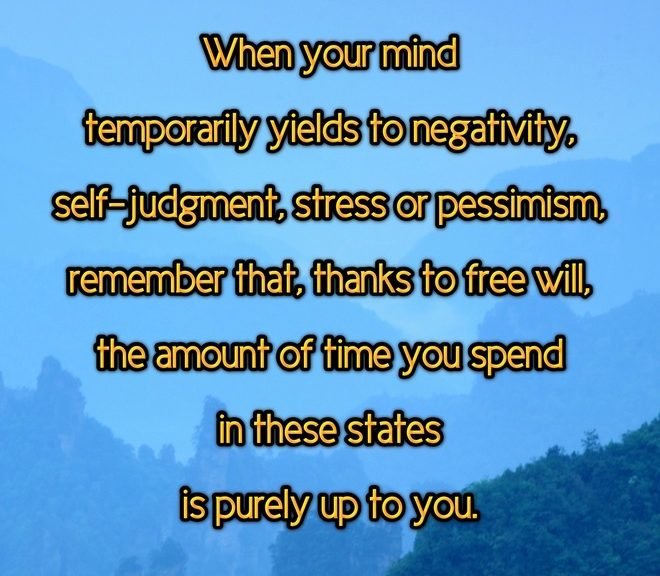
Use your Perspective

The way you see things, how you perceive and react both physically and emotionally is driven by your attitude and can change with the situational context.

Notwithstanding your surroundings or state of mind, with attention and effort your perceptions can be controlled.  This does require conscious and self determined action but it is within your control.  For example adopting the optimistic or pessimistic view.

Play or Work

A basic interesting example of this revolves around our daily activities.  That is, do we perceive them to be work or play and more to the point why is there a distinction.

By definition an activity involving mental or physical effort done in order to achieve a purpose or result, often something a person has to do is work.

Play is also activity focused but the meaning of these two words is simply differentiated by the classification of the activity.  Play being activities for enjoyment and recreation rather than a serious or practical purpose.

All in Your Mind

The distinction is subjective and really self determined.  One persons play might be another’s work and vice versa.  We can choose how to view what we are doing.

I would argue we are always doing something and have to., it is the very nature of being. This applies to whether it is for a defined urgent purpose or just to relax, we choose to do it.

Doing nothing is a choice and although it is a circular argument by choosing to do nothing you are in fact doing something.  I find doing nothing challenging, invigorating and enjoyable because I choose to.

Perspective Matters

Although a very simple concept viewing what you are doing as play versus work increases your engagement, enjoyment and effectiveness.

What is wrong with constantly being at play.  It is a more positive state, have fun, enjoy be happy there is no good reason not to and it is your choice.
Code of Conduct

Organizations of all types frequently choose to create and communicate to various stakeholders groups (sometimes all stakeholders) their behavioral expectations relative to interactions with the organization.

The code of conduct is developed by, or at a minimum – endorsed by, the board or senior leadership of the organizations.  The code is  strategic in nature providing direction for development of guidelines and procedures which are contextually specific.

Personal Values

Organizational conduct codes are necessarily in sync with the enterprise values, mission and vision.  This alignment is critical to build support for expected behaviors by those acting for and associated with the organization.

The organizational behavior expectations, grounded on expected values, work best when they are in sync with the personal values of those individuals that make up the organizational whole.

Thus the organizational code of conduct can be a filter both for selection of stakeholders as well as for the stakeholders themselves to determine if this organization is a good fit.

Developing a Code of Conduct

An interesting question for organizations is how to best develop the enterprise wide conduct expectations.  Is this a collaborative exercise among all stakeholders or should it be top down.

I believe there is no simple answer to this question and like many things (e.g., conservative vs. liberal, nature vs. nurture) in fact the answer lies with creating an optimal balance.

The organizational leaders both strategic and operational (i.e, the board and executive) play a key role in developing and issuing the code but to be effective it must take the expectations of the broader stakeholder group into account.

How to do this is very much contextual and dependent on the overall make-up of the organization but drawing on the existing culture, strategy and values at the core of the organization can often be an efficient way as opposed to the broader consultation processes often used by large and ineffective bureaucracies.