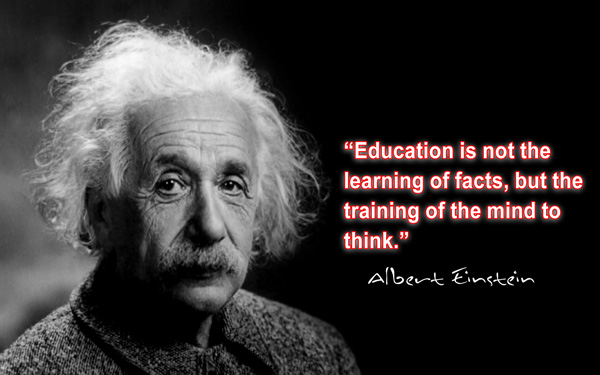
Subjective vs Objective Analysis

We regularly rely on our personal feelings, tastes, or opinions to arrive at conclusions.  Sometimes these can be strongly influenced by unconscious bias (i.e., things are not even fully aware of). This is a subjective approach.

In the objective approach, fact-based judgements are not influenced by personal feelings or opinions.  In this case, facts are always the same for everyone.

True objective measures provide no opportunity for interpretation.  For example, two plus two equals four is a fact.  It is accepted as always being true.

Outcomes

Actions are based on our understanding and analysis.  Often subjective information (easiest to obtain) is readily available and what we act on.

Subjective information could be accurate or inaccurate resulting in decisions that might lead to success or might not.  Of course using  objective information does not guarantee success but results are far more predictable.

Analysis

Whether objective or subjective, sometimes a combination of both types, the quality of the decision will rely on the analysis, that is the interpretation of the data gathered.

Analysis should include weighing  the quality of the inputs relative to how certain the facts are.  Objective facts will always be more certain but determining what they tell you can be tricky.

Testing

Sometimes testing the facts through trials or demos is an approach to separate subjective from objective inputs as this can be a grey area.

Walking through the recommended solution(when feasible) can help identive weaknesses in the knowledge base. This validation process canbe a very useful quality check.

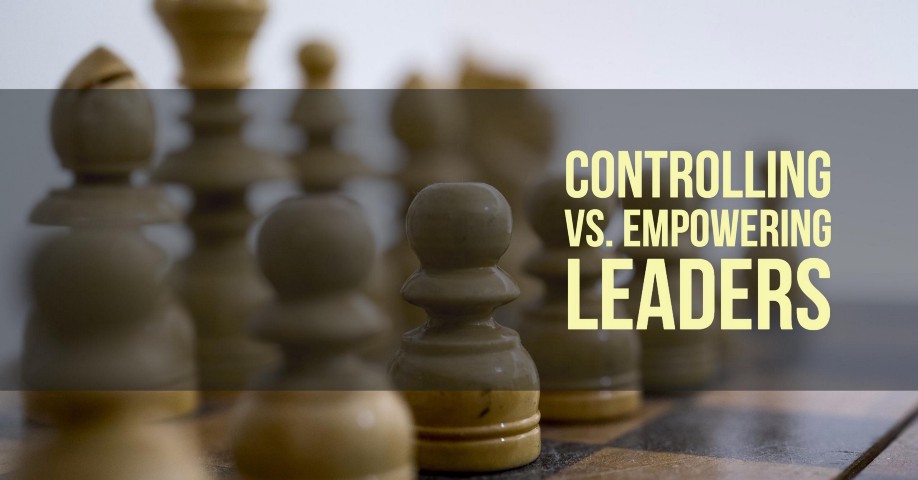
Leadership Approaches

Which approach to leadership gets the best results, leadership from the top or collaborative leadership?  Trick question, the answer is both.

Balance is the key here.  When to be directive and when to collaborative depends on a multitude of factors.  Not only when to employ a particular style is important but also the sequence, collaborate before direction from the top.

Lead from the Top

Top down leadership refers to a heirarchical structure with the fewest resources and the greatest power at the pinnacle.  Simplistically there are two classes of people in the organization, leaders and followers.

This approach can be very effective, basically the leader telling the followers what to do leveraging their power to get it done, granted by dint of their location in the heirarchy.

Collaborative Leadership

In this case there is no hierarchy.  Some roles may have more authority or power but getting things down is participatory and involves everyone.

Those with greater skills and earned power (e.g.,trust and respect) may catalyze the team, that is get things going without direct participation, but no-one is unilaterally directing.

Collaborative approaches tend to have superior outcomes. The effort to achieve the results is more efficient and of a higher quality.  This results from stronger buy in (driven by personal accountability) and the leverage of a diverse set of skills and capabilities.

Both Approaches?

Sounds like collaborative leadership is so much better why is there a need for leadership from the top.  Because, the direct approach is sometimes needed.

For example when collaborators flounder and a single direction can not be arrived at strong direction from the top may be the onlyway to move forward.

On the whole though the best balance between percent use of collaborative and directive leadership is probably in the 90/10 range.


Control

While not always pracriced as explicit or overt behaviour, there is a basic human need for power to influence or direct people’s behavior or the course of events.

The need for control is frequently either a contributing or the root cause of conflict.  Political behaviour is a classic example of contoling behaviour.

Politics is largely just a way of describing  a series of actions to get it done my way, or yours.  The priority objective becomes getting your way, the real goal can be secondary.

For Example

Many comment on US President Donald Trumps behaviours as unpredictable.  This often because the goals seems to shift endlessly and even become diameteically opposed from day to day.

Personnally I find them quite predictable when personal control is considered the prime objective.  Donald simply views his success as being based not on outcomes but others perceptions.

If changing a position or stance is needed for him to be percieved as the victor, no problem.  He will spin his position on dime as long as it enables him claim achievement.

Managing our Controlling Instincts

Not surprisingly the best outcomes arise from collaborative methods.  Members of high performing teams obviously exhibit a number of positive behavioural attributes.

The ability to manage their controlling instincts effectively is always the number one skill all high performing team members are able to use with ease, like breathing.

Without the burden of worrying about controlling the situation, versus focusing on all the stakeholders and most importantly success, high performing team members achieve high performance.

Lead me

I often observe people complaining their leader/manager/supervisor does not meet their expectations.

I hear, “ Whats my purpose?, Whats our strategy? How can I perform well if you don’t spoon feed me.  You seriously expect us to think for ourselves?”

The Leader Within

Typically most folks don’t embrace my advice, that is “Be the leader you want to be!”.  The concept of top down leadership and a hierarchical structure that rolls up to a single power base just does not resonate with me.

Classic management theory is based on leadership from the top.  Success depends on the quality of the leadership.  I don’t subscribe to this thinking.

This practice has a single point of failure and relies on the exercise of granted power over the more powerfull and sustainable use of earned power (although it is harder).

Collaboration

High quality, effective and low cost results are far more likely to be achieved when the knowlege skills and capabilities of a group of individuals are integrated seemlessly.

No one is in charge alone, all are in charge collectively.  Idealism you say.  I have practicle experience demonstrating it can be done.  Agreed though, it is not easy and does not happen naturally.

Much effort is required.  The key to this approach is buy-in from all participants.  Someone with strong leadership capabilities can act as a catylst to get all to agree.

However, it is important they do not take overall charge and employ granted power versus earned.  Creation of a high performing team of independent collaboraters is not simple but the results are well worth the effort.

Continuous Understanding

Understanding requires knowledge of the facts and information about a thing.   Knowledge is based on skills used to acquire information through experience or education.

A key aspect of continuously improving your knowledge (and thus your ability to understand) arises from sharing, without sharing a vacuum can be created.

Don’t you want to share what you know and thus build on the quality of your understanding of things, rather than keep it to yourself and live in a fantasy world?

Communicate Openly

Two-way communication is a critical requirement for building knowledge and creating understanding.   You can initiate this by being completely open, regularly sharing all you know.

This practice, sharing openly with others, encourages others to share openly with you.  Your knowledge and experience increase leading to a greater level of understanding.

Filtering

As you gain perspective from the stories and facts others pass on to you it is important to remember, the interpretation of the shared information is owned by you, subject to your filters.

The value of what you learn by listening and observing others, whether spontaneously shared or prompted by your own sharing behaviours, is yours to determine.

You need to apply your own personal knowledge base against that of others to generate new unique and useful knowledge.

The most valuable knowledge is not that you copy or assume from others but rather that you work out yourself by thinking through the facts and information you have gathered.


Are you human?

Some leaders believe they must be held in the highest regard relative to their abilities.  Humility is considered to be a weakness.  Strong and decisive are their bywords.

For these individuals, acknowledging they might not have been right is not acceptable.   They believe this could reduce their effectiveness relative to commanding others.

Strength from Conviction

An apology is not a behaviour these strong dictatorial leaders will ever entertain.   They believe others will not follow them unless they are perceived to be infallible.

Sadly, we are all human and to quote Alexander Pope “To err is human …..”.  While the strong and forceful superman approach can work experience shows it is rarely sustainable.

On the whole, others appreciate perceived sincerity over false bravado and while a clear direction can often achieve results quicker they will not be of sustainable quality and usually fall apart when the leader departs.

Strength from Empathy

While it is typically harder to collaborate as opposed to direct this approach enables people to feel empathy toward the leader and their needs.

It is, after all, easier to bond with those we can identify.  Fear can drive behaviour but it is not the optimal way to achieve the best results.

Demonstrating normal human characteristics, of which one is not being perfect, that is making mistakes is more admired than not.  By acting to correct mistakes you have acknowledged, you set a great example for others.

This approach is both appreciated and copied.  As a result the results are both of a higher quality but also will last.

Screwing Up

Making mistakes is a part of living.  Turning mistakes into opportunities for success is therefore a much needed skill, sadly one I see rarely used.

If you take a wrong action or make a misjudgement with negative results you can feel badly, call yourself stupid and go whimper in a corner hoping everything will magically go away.

Be Proactive

Letting your mistake paralyze you into inactivity is a mistake in and of itself.  Concrete definitive actions starting with acknowledgement and ending with resolution are always in order.

This cannot take place until the mistake is identified, which is not always immediate.  Action should begin at the same time as awareness.

Resolution not Diversion

It can be tempting to divert attention from your faux pas (French for a type of mistake) hoping your responsibility will be overlooked, saving you from consequences or resolution efforts.

Typically owning up and acting to resolve any associated issues, figuring out a way to achieve closure is more satisfying but more importantly it prevents later reprecussions if something hidden comes to light.

A permenant solution is a better approach than submitt and hope, that is trying a diversion and hoping it does not unravel.  Acting providesthe aforementioned oppoutunity to turn the error into a success.

Relationships can be built on effective resolution.  In general, others respect those who admit and act.  Of course, the corrective actions are evidence of sincerity and are one of the building blocks of respect that can be forged by acknowledgement and action.

Apologies

Expressing ones regret over offending others (or mistakes or failures which impact others) for which you accept accountability (i.e., an apology) typically is addressed to those who were negatively impacted.

Although on the surface apologizing appears to be for the benefits of those that were harmed, in reality, it is often more to assist the apologizer themselves with coming to terms with themselves.

Seeking Resolution

An error in action which causes others to think less of you also causes you to think less of yourself.  The resolution needs to include resolving your own internal bad feelings as much or even perhaps more so.

More directly stated, apologies can often be more important for the person making them than the person receiving it.  When I am crafting my apology one objective is to receive recognition and sympathy.

I not only want to mend my relationship with those that we injured by my missteps but also want to feel better about myself.  If the situation is accepted by the relevant stakeholders there is less for me beat myself up about.

Even Praiseworthy

Acknowledging your error and following on your sword clearly and promptly, including what you are doing about the issue (or have already done) to make things whole again is often viewed as a very positive behavior.

If the choice is being defensive or being open and upfront, requesting forgiveness I always choose the latter.  This should not be viewed as a cynical perspective but rather just a practical one.

Getting it Done

What do you want to achieve, how and why are all key considerations relative to getting things done.  When managing or leading others ( or even just yourself) the priority you assign to the objective versus how and why can vary.

Often those with a reputation for getting things done focus on the actual deliverable.  The reasons for doing the work are not considered important and the approach is not standard, that is, just something that works.

Sustainability

The direct approach focusing on outcomes can be very effective relative to achieving results.  The downside is sustainability.  In cases where the outcomes are not just one time, lack of sustainability can be an issue.

Many studies have shown consistent implementation processes coupled with a strong understanding of why things are being done result in more durable results.

Strategy vs. Tactics

How and why are the basic building blocks of a strategy.  Of course the goals are paramount but without supporting rational and underlying approach to achieve the objectives, it is not a strategy.

Tactically clearly defining what to do without reference to why, how or specific goals can work very efficiently.  It is a bit tricky to intergrate with other work and measuring is largely based on doing what you said you would do.

For sustainable results starting with a strategy to guide your execution may take a little more effort up front but in the long run it will pay off

Re-use

The wrongful appropriation or stealing of anothers language, thoughts, ideas, or expressions (i.e. intellectual property) and the subsequent representation of them as one’s own original work  is considered deceitful.

In the case of written documents this is called plagerism and is considered academic dishonesty and a breach of journalistic ethics.  In the case of patents or copyrights the practice is illegal.

Copying

Copying others work with permission and attribution can be effective reducing your time of rework (i.e., doing something yourself  that others of have already been done ).

Automation is founded on this very principle.  The first time something is created or processes  can involve significant time and effort.

Once the “how” has been figured out, replicating the process can be much faster, take less effort  and provide consistent and sustainable quality.

Exercise Caution

While imitation can be a form of flattery for the originator without acknowledgement of their role it is a form of theft.  Replicating others efforts can be useful and effective, but misused can have significant negative impacts.

People can be upset if you use their ideas or outcomes, particulary if it’s at your benefit and their expense.  However, if all benefit it can be a win/ win situation.

So re-using the output of other people can be a way to work harder, not harder.  It can also be viewed in very negative ways with serious undesirable consequences, unless proper permissioning and attribution have occured.