Your Problem

When your leaders approach is to tell you to bring them solutions, not problems, I question their value.  Should we not expect our leaders to support us.

When someone assumes I am bringing them a problem or issue that I could solve myself it makes me wonder what I did wrong.  My personal philosophy is don’t waste time bringing your problems to others, resolve them and carry on.

When reality intrudes, and I cannot solve it myself then I go for help.  At this point when those I seek assistance from are telling me to show up with a solution, I get a bit frustrated.

Awareness

It makes sense to encourage others to be accountable.  As a leader, mentor or just a friend encouraging responsibility in others is a noble pursuit.

However, blindly assuming those you collaborate with have not thought it through can be more harmful then good.  If you are seeking to change behaviour there must be a good foundation to do so or you are likely to fail.

Taking a blanket position to encourage others to think and act for themselves, that is empower them requires more thought and effort than simply demanding they come to you with a solution.

Understanding

Before saddling someone with a problem make sure that is an appropriate step.  Get the background.  It may well turn out they have thought it through  completely and the decision to seek help is a good one.

Before discounting an approach for help check it out, maybe your assistance is really needed.

Setting Expectations

Choosing or deciding how things should proceed will be most effective when done upfront.  (for example who has accountability ,how good or bad the level of associated quality, and so on)

On completion of a piece of work, task or service, advising all, that was not what I expected is of little value.  Expecting others to guess what we are expecting is also a bit like gambling.  They might guess and they might not.

Clarity

Providing clear notice of expected process and outcomes is frequently overlooked.  It is just assumed others magically know what you want.

Of course, for some this is a purposeful approach.  The lack of clarity is intentional because it provides wiggle room if things don’t proceed as expected or the outcomes are not what we thought they would be.

This can lead to accusatory clarity after the fact.  For example exclamations like “Why did you do it that way, you know that is not what I expected.  I am so disappointed.”

This is usually not a very effective approach, however, I have seen things proceed this way many times.

Ask

If you are undertaking a task or part of a process and the expectations have not been clearly provided to you, ask.  This is a great way to avoid the unexpected disappointments.

Sadly, sometimes even when what is you have carefully validated what is expected the outcomes might not measure up.  This does occur but can be mitigated by reference back to the clear mutual understandings.  The cause of the communication disconnect won’t fix the past but it does help with the future.


What do others think

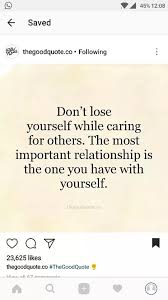
I have often expressed the view that my life is all about me.  The intent of this philosophy is to highlight the reality of personal accountability.

Your life is yours and only yours, albeit it is not lived in isolation and life experiences are greatly impacted by the environment.  How you behave is your choice alone.

Feedback

Receiving information from others about their reactions to your behavior, the performance of a task, your philosophy and so on, can be used as a basis for self-improvement.

At the very minimum feedback increases your own self-awareness and so enables you to make informed decisions about actions you take.

It’s still about you

Choosing to pay attention and be guided by the feedback you receive, whether directly from others or indirectly through the things they do (their body language) does not mean you are given up accountability.

Paying attention to what others think and letting it guide the way you interact is certainly done for the other person to some extent.  The critical factor though is how you behave toward others is who you are.

Who you are is very much influencing how you feel about yourself.   If your feedback is negative you feel bad.  This is about you, even though initiated by others it is you who feel bad.

So, paying attention to what others think about you enables you to treat them in ways that make you feel good.  On the surface it seems to be about them but in reality it still is all about you.

Doing it for someone else can really be doing it for yourself.


Missing Pieces

Sometimes we do not have all the information needed to determine the best course of action.  After all, this is about things we don’t know, which can include things we don’t even know we don’t know.

These missing pieces are not always important but sometimes they are critical in such a way that it is impossible to do the right thing or succeed without considering them.

Is Something Missing

Looking for missing information begins with assessing the completeness and accuracy of what you know.  Putting together the known facts can lead to questions.

This concept is the foundation of a good mystery novel.  As the author unfolds the story facts are withheld but the information provided is enough for the hero of the story to determine that something is missing .

One of the pleasures for the reader is to match wits against the story detective and figure it out as well, before the author discloses all.

Looking for the Missing Piece

Knowing something is missing helps the search for it.  If you are convinced things don’t add up and a reasonable conclusion cannot be achieved without more info you are more likely to be motivated to search hard.

Believing something unknown exists drives us to search until we find it.  Giving up is frustrating and rare.  When we believe there is an answer most of us will hang in their until we find it or at least believe we have found it.

Watch out for the red herring.

Be Wary

When making an assessment, before concluding give careful consideration as to wether you have the complete picture.  It can save you from grief and missteps.


Take a Chance

Sometimes the door may be open but we ask ourselves, “Is it safe to go through?”  Everything we do contains some risk, choosing to be too risk-averse can result in missed rewards.

Surprisingly, human nature will drive many of us to work harder to get through closed doors.  The hidden and mysterious is often appealing and we work hard to break down those doors.

Risk Aversion

When we are not sure of the reward, that is the value equation is not crystal clear and it is possible moving forward through the door might require more effort than it is worth.

In these cases, although the path is open to us and we could follow it our consideration of the potential negative impacts can derail us and we hold back.

Carpe Diem.  The ancient Romans produced many great phases and “Seize the Day” was one of them for me.   Of course, this should not be done blindly throwing caution to the wind but taking an opportunity, going through the open door should not be ignored without due consideration.

Without Failure

When I pause to consider if I should take a chance one factor for me is the knowledge that if I don’t try I will not magically attain my desired goal.

Failure however will not destroy me, albeit unpleasant.  While the chance I pass up obviously relieves me from the associated risk and danger of failure, what am I missing out on?

On the whole giving it a go is more satisfying than sitting on the sidelines.


Pushing Until you Succeed

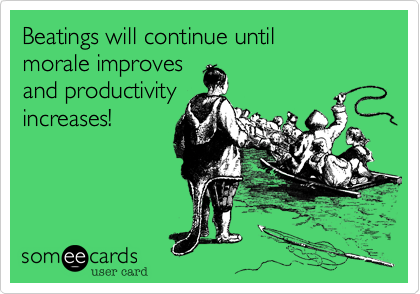
The beatings will stop when morale improves.  This somewhat humorous statement highlights a conundrum of changing group or individual behavior.

Care needs to be taken to ensure the approach to make changes and successfully achieve the desired goals does not contradict the overall objective.

Using Pressure to Attain Calm

Pushing for a quality result, or a wholesale change in culture or perspective needs to be accomplished in a way consistent with the expected outcomes.

A pressure cooker environment might drive results but if the intention is to do so in a way the participants are relaxed, calm and enjoying themselves, obviously the two goals diverge.

Pushing Yourselves or Others

Motivation is required to succeed.  At a high level, motivation is either a push, pull or combination of the two.

Pushing is by it’s nature, demanding and does rely on pressure and anxiety somewhat to drive results.  This approach can backfire if the stress level gets too high.  Many of us just shutdown when that happens.

The pull approach is often more difficult to set-up and must be enticing enough to the target audience to get results.  A pul could be overlooked or even ignored.

The Middle Ground

As with most things balance is a great approach.  In this case combining push and pull techniques can have the advantage of  attention getting without the negative aspect of consequences.

Most people prefer to make their own choice, or at least believe they chose freely.  Influencing people in a way that initiates self motivation is usually far more effective than flogging.


Big Brother

In 1997 Sweden implemented a traffic safety idea called vision zero.  Vision Zero is basically the adoption of a long-term goal of zero traffic fatalities and serious injuries.

Sweden currently has the lowest rate of traffic fatalities in the world.  Canada adopted vision zero as a federal strategy in 2016. The City of Edmonton in Canada is stepping up the bar toward the achievement of vision zero goals.

Speed Enforcement

Unlike many other jurisdictions throughout Canada, the City of Edmonton has chosen to move to more aggressive automated enforcement of speed limits.

Apparently speed is a factor in all collisions.   Sure, logically for a collision to occur there must be movement, hence vehicle speed is not zero.

However, as an argument for strict enforcement of vehicle speed limits, it does not cut it for me.  There are numerous other factors impacting accidents and short of not moving at all speed is not necessarily or even primarily the cause.

Cash Grab or Safety

For me,  justifying the feeding the city coffers faster (through automating the collection of speeding fines) using the vision zero objectives is clearly an obfustication of reality.

Speeding fines are lucrative and the city wants to increase revenue.  They introduced a fleet of speed enforcement trucks with photo radar which will be regularly situated at enforcement sites throughout the city.

With enforcement zones published weekly on the web and trucks bright yellow and left in the open, the city is couching this revenue generator as a vision zero safety program.

How gullible do they think we are.

Bad Behaviour

No matter what kind of soap you use, or how much, it is unlikely you can clean up the impacts of bad behavior.   The best way to ensure there is no fallout from the way you behave is to not behave badly in the first place.

Sometimes we stretch our behavioral limits beyond both cultural and social standards.  When acting outside of the norms you can be viewed as behaving badly (albeit a somewhat subjective measure).

Impacts/ Consequences

Our behavior has a real impact.   We can negatively (or positively) affect how others view us but also we could act in ways that cause others pain or harm them in some way (of course we can do good as well).

The things we do and how we act matter.   In some cases, these actions can have irrevocable results.  Bad behavior usually leads to negative outcomes while we may work hard to make amends or fix the damage, in reality, the past status quo can never be truly restored.

The results of bad behavior can never be fully cleaned up, regardless of how apologetic or remorseful we are.  It is more effective to avoid acting in ways that could harm your reputation.

The Simple Approach

Most often, if not always behaving badly stems from emotional override.  Our logic and restraint are overridden by a flood of emotions.

We feel it coming on and know what we are experiencing but for many, we are unable to hold back our passion, excitement, anger, frustration, etc.

The simple solution is to adopt a personal belief bad behavior has no value or benefit and must be avoided at all costs.  When you start to cycle up the bad behavior curve, stop, ignore everything around you.

Force yourself into a state of relaxation, take several deep breaths and then start again from the bottom – and stay there.

Tell me

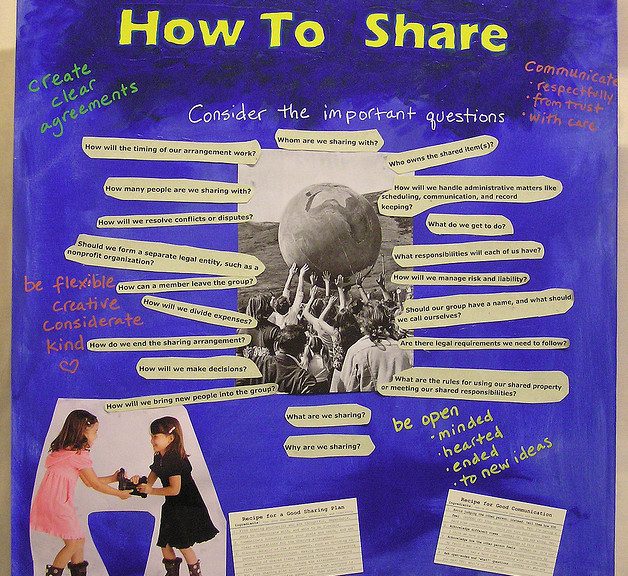
Sharing information could result in a loss of control.   This principle is intuitive and is a key underlying factor in shaping our behavior when it comes to telling others stuff.

The catchphrase “Information is power” refers to using it as a lever to enable increase our capacity or ability to direct or influence the behavior of others or the course of events (i.e., exercise power).

Associating the loss of control with a lessening of personal power is a reason information is often not shared.

Overcoming the Loss of Control

While it can often open opportunities for collaboration leading to better results, given the impacts on both our control and power base it is more likely to hold back providing others information freely.

Strategic dissemination of information is often viewed as the best approach largely because of fear.  That is fear of loss of control.  In reality, giving up this control and frequently lead to better results.

The power of diversity comes into play when we leverage ideas and support of others.  Harnessing different thinking can be a great way to resolve the issue or come up with innovative approaches.

Share and Get Rewarded

Although our instinctual behaviour is to be cautious when sharing our personal information the downside is missing on the potential rewards by sharing freely.

Taking advantage of others resolves the dangers of the unknown things that you don’t know but others do.  Share with others and they will tell you what they know.

The advantage gained by sharing usually far exceeds the cost of giving up some control.


Free Will

When you come to a fork in the road, choose free will. Free will represents the exercise of power to act without the constraint of necessity or fate; the ability to act at one’s own discretion.

It may seem at times the choice is not yours to make due to arbitrary constraints, external pressures, forced needs or just happenstance.  Ultimately though, choosing free will is always the best choice.

Use the Power Within

Each of us has the ability to create and use earned power.  We all have the ability to select, influence and change an outcome (i.e., the exercise of free will) even when we are not specifically granted that authority.

This is not the default state though and the exercise of free will requires skill and effort.  When you are presented with options and need to decide your personal approach, the exercise of free will can be the most satisfying but also may be the most difficult approach.

For me, the mantra is “I choose free will”.

It is Satisfying

The most powerful argument for the exercise of free will is the associated pleasure it gives you.  It feels good to take charge of our destiny and while not usually the easiest path it is certainly the most personally fulfilling.

Of course, as will all things balance is key.  Taking charge and blatantly exercising your free will can harm relationships with others and the overall result could be catastrophic.

So do take care, but don’t dodge undertaking the use of your free will because it is too hard.  Ultimately it is worth it.