Cultural Motivation

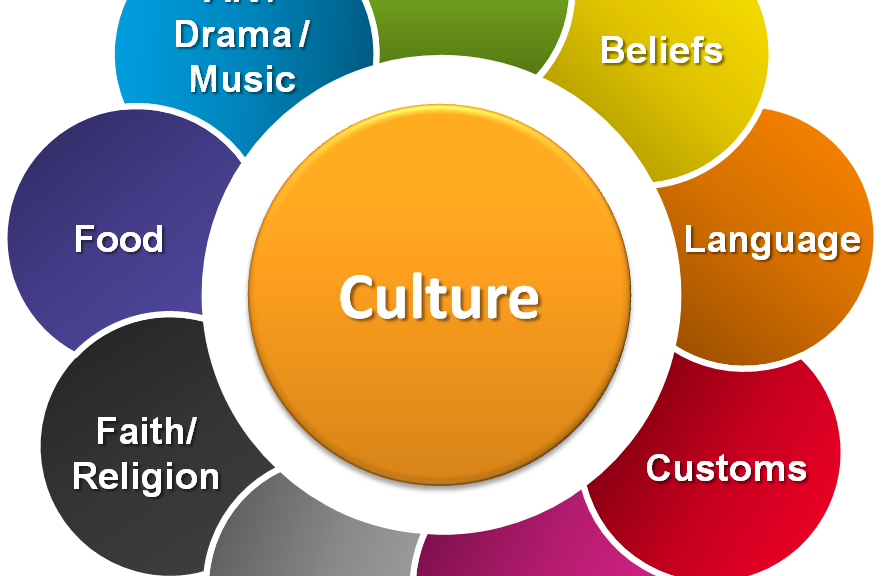
Taken as a whole, countries are typical examples of places with a fairly clear set of customary beliefs, social forms, and material traits of a racial, religious, or social group.

Or simply stated, countries have a unique culture embraced by their populations.  This does give rise to stereotypes or unconscious bias but in the case of countries, there is always some root basis to the cultural interpretation.

For example, Canadian culture is often stereotypically defined as polite.  Not all Canadians exhibit excessive politeness or repeatedly apologize but on the whole, this is a national trait and arises from a natural observation of the populous as a whole.

How does this happen

Assuming you can except national cultural stereotypes exist and do have some basis in reality, the question becomes, how does this happen?

The most common methodology is for cultural behaviors to be enforced, largely through consequences.  From a young age, we are trained to conform to societal beliefs through the carrot (positive consequences) and the stick (negative consequences).

Some societies, I believe Japan is a good example of this, develop conformance to the expected behaviors collaboratively.   That is through example and individual interaction where the reason for the overarching beliefs is developed individually, not forced but absorbed.

While much harder to achieve, absorption of cultural values through self-learning rather than enforced training is much more effective and most importantly sustainable.

Left or Right (somewhere in the middle)

The downside, to both practices of forming a common culture, is the impact on the individual.   The balance between total individual freedom (anarchy) and a rigidly established society (authoritarian) is the sweet spot cultures should naturally try and attain.

When cultures grow organically they are more likely to be balanced.

Taking Flight

Get airborne, drive fast when you come to a bump in the road if your speed is great enough your car will leap into the air.    Metaphorically speaking, your life travels can be eased by not getting hung up on the barriers.

Common sense must prevail, the reality of speeding over a road bump, or crashing into a barrier to blast it out of the way, could be painful and destructive.

Drive with Caution

Conceptually, resolving your issues and challenges can be achieved by addressing them directly (i.e., crashing through the barrier) and this approach should not be discarded lightly.

However, some caution is warranted lest the problem, rather than overcome, becomes worse.  The key takeaway is not to let obstacles stop you from soaring.

A Balanced Approach

Aggressively addressing the bump in the road so you fly over it might not be the best method but not trying and letting the barrier impede your forward progress is not optimal either.

The balanced approach begins with recognizing the issue or challenge and consciously acknowledging the need to succeed with your goal, overcoming the problems.

This might not mean charging forward blindly, but recognize the potential roadblock and don’t let it stop you.  This is not about trying but rather knowing you can try.

Stopping before you are airborne leaves you grounded.  While you might not achieve great height, at least attempt to leave the ground.


Alignment

While it is not always true that multiple resources can complete a task more efficiently, it is often the case.  In simple terms, efficient means in a well-organized and competent way.

Efficient work is usually faster and of a higher quality.  For a number of people to work together toward a common goal, that is all are contributing to an outcome (product or service), alignment of approach is a critical underpinning.

Confusion Reigns

Say you are washing the dishes with a familly member.  There are a number of interelated tasks for your team to complete.  Things like putting leftover food away, scraping the plates before hand washing in the sink or putting in the dishwasher.

These tasks apply to the pots.  Condiments have to be stored and the table cloth shaken or replaced and washed.

The participants in the clean-up need to be aligned as to approach, i.e., who is doing what, how and when.  Without alignment confusion takes over and the end result is not arrived at efficiently.  It will be slow and messy, frustrating for the participants.

Conceptual Alignment

How to approach achieving your objectives, what you are trying to achieve and how you are going to get there is not only a key to being efficient but also drives everyones contentment.

If all are not on the same page, trying to read the book together is never going to work.  This does not mean everyone must like everyone else or even agree, but they must be able to both accept and align their behaviour to the common approach.

In essence all must either agree or be able to say I don’t agree this is best but I can support and comfortably live with this approach.

The Man Cold

I recently contracted a cold.  It began with an irritated throat, migrated to a stuffy nose and sinuses ultimately leading to overall fatigue, aches and pains.

I never complain about such minor illness, but I did mention it to my wife who passed on the information to my daughter.  “Oh he has a man cold eh!” she said.

The Man Cold

Not being current on all the latest jargon I decided to investigate the meaning behind the phrase.   It is  defined as an affliction usually caught by boyfriends or husbands, exhibiting cold-like symptoms, but no one has ever been as sick or tired as one who catches the man cold.

Really, I was beginning to sense I was the victim of an unconcious bias propagated by the female species.  This was how strong, self motivated and independent males were being viewed.

Digging Deeper

I continued my search and the level of sarcasm increased.

“The name ‘man cold’ disguises the true terrible, debilitating disease that is the man cold. Nearly all men will die from man colds unless they are administered immediately with large amounts of mindless TV such as Big Bang Theory or childrens’ songs (the wiggles anyone). It is essential that they not move from bed or a comfy sofa to allow for rehabilitation and must have tissues and man cold medicine (such as chocolate biscuits, McDonalds, or a nice cup of tea) brought to them constantly by a nearby female.”

Sadly for me I had to suffer in silence and care for myself.  No sympathy.   Of course I had the deadly man cold but it’s a good thing I am a manly man and can take care of myself.

Social Norms

The groups or communities we are part of  at any given point in time, usually have an accepted individual behavior expectation, this is the social norm.

Whatever your cutural group, whether all encompassing like a country or large organization to a micro community, (e.g., family, neighbors, friends) usually we quickly aquire and practice the expected behaviours.

Social norms and Age

I have personally observed, both in myself and others that the motivation to adhere to social norms diminishes with age.  This feeds the stereotype, “ they are just a cranky oldster, it’s to be expected”.

In point of fact the desire to conform is motivated to a large degree by the need for acceptance.  The concept of self actualization includes being a happy group member.

Self actualization is a phychologists way of describing the search for a state of maximum personal comfort, that is inner peace.  We all need and desire it and low levels of self actualization can lead to undesirable behaviours.

The drive for self actualization is typically a lifelong journey.  When not achieved, whether through acting out, or trending inward the results can be considered anti-social.

Back to Aging

As we get older most of us have accepted our state of belonging, that which we have achieved over time and are comfortable with the status-quo. Our drive for self actualization is lessened.

In the majority of cases,  changing your circumstances, gaining additional acceptance and the associated drive to do so simply wains with age.

This does not translate to old people not caring how they are percieved but rather not needing to care.  They can easily practice social norms and most will do so on the drop of a dime if provided the right motivation.


What you see is not what you get

Understanding what you see, hear and feel is an oft underated skill.  Frequently people take direct meaning from  their sensual  observations whithout taking time to consider.

The data you gather via your senses is not information.  That is, it has not been contextualized but is just a raw interpretation.  Parsing the data, that is analysing a string of symbols for syntax , is needed to transform it into information.

Why bother?

Turning what you percieve through sight, hearing, touch and so on requires effort.  What is the value proposition?  The fictional character Sherlock Holmes provide a good example of possible outcomes when observations are not taken at face value.

Sherlock often astounded the other characters in the mystery novels by deducing information based on the data in ways that were not imminently obvious to most (both readers and other fictional characters)

The approach to considering the data, treating it like a logic puzzle and following the trail to uncover valuable information (i.e., solve the mystery) appears simple, yet it is not a common practice.

The danger of directly following our default interpretation of what we observe can be ,costly, painful or embarrassing.  Who has not arrived at a confusing point or frustrated others by following erroneous conclusions.

Take your time

A key underlying approach to understanding is not to rush.  Quick thinking has gotten many a person into trouble.  Check your conclusions before acting by running the possibilities through your mind, pause, consider, then proceed.

Motivation

Most of us practice some form of work on a regular basis.  That is simply performing  activities involving mental or physical effort.  As I have noted before, financial compensation is not a mandatory characteristic of work.

Being paid to work, while common, is just one way to provide motivation.  Work involves effort and so typically, I would say almost exclusively, requires some form of compensation.

Without a reason why would one undertake the effort associated with work?  The motivating factors run the gaumont from satisfying one or more of our basic needs  (i.e., Maslow’s heirarchy of needs) to simple pleasure seeking.

Most Powerful Motivator

Self actualization is at the top of Maslow’s heirarchy and simply put this is the drive to realize one’s full potential.  From the psychological perspective it is believed the need to excel is instinctive.

This compliments my oft stated observation that life is all about me.  It is a very useful observation when attempting to motivate both yourself and others.

While basic needs like food, shelter, warmth, security and sense of belonging have some urgency from moment to moment, overall self actualization is the key.

I interpret this as meaning the drive for success and accomplishment are underlying  all motivation.  It is therefore critical to plan to succeed before attempting the work (regardless of whom is undertaking the work – yourself or others).

Setting yourself or others up for success before undertaking work is not only a tired overused buzz phrase, it is really a critical truth.

Measuring Success

We have many ways of measuring achievement.  The measure can be aligned with the objective directly or peripheral factors.  Also it can be highly objective or subjective or somewhere in between.

For example if you are  playing a game of golf the measure could be your score or it could be your score against the scores of others.  Both of these are pretty objective measures.

However, it could be how you feel.  This is a more subjective measure not necessarily related to your score but rather how much fun you had.   Did your level of enjoyment meet expectations?

Measuring your Daily Activities

Most of us spend our days performing  activities involving mental or physical effort, i.e., work.  (To clarify financial compensation is not required to classify  spending your time as work).

What is the success measure relative to this work.  Like the golf game, there are multiple measures.  You can objectively assess if the goal of your activity was achieved and to what level.

The subjective measure of accomplishment can also apply.  Was it a good outcome, high quality, appreciated, etc.?

However, Over the long term, I would argue, the subjective measure of enjoyment and happiness is the most important.

If you are laughing and having fun the lack of more concrete success, while not desirable or to be encouraged, can be overlooked and absorbed to some extent.

This is not to propose that achieving what you set out to do is not important, but it should not be at the expense of your personal happiness.

Getting Help

Asking others for suggestions, recommendations or simply for opinions is not a weakness.  Practicing the input/advise of others is not mandatory.

Gathering information increases your opportunity to make the best choice.  Frequently our assumptions and subsequent actions can be based on misunderstandings or even misinformation.

Ask Others

Some may react holier than thou or pompous and arrogant when you consult them.  Don’t let that put you off.  Your query is for your benefit alone, no matter what others think.

As I have repeatedly noted in the past, on you can decide how to behave.  Of course the influence of other people or environmental context plays a role but ultimately, you are in control.

Excelling

In your search for personal excellence you don’t need to rely on other people for help but leveraging the knowledge and experience of those around you will more likely improve the quality of your choices  than make them worse.

Remember, no matter how you get there, they are still your choices.

Considering the Options

My own experience has been a single conclusion rarely exists.  Multiple options are always present and choices are how can you increase the probability of your decisions having positive results.

Or viewed in the reverse, consulting is a risk mitigation technique to reduce the possibility of poor outcomes?  One good approach to the question of good or bad outcomes is to find out what others think (of course this does not guarantee success).

However big or small the questions or options before you are, consider others thoughts before plunging ahead.  You won’t regret it.


The pendulum swings

Just back from a quick visit to Toronto.  Out for a bite with friends and the conversation, of course, eventually turned to a discussion of the recent provincial election.

I really wonder how these far right politicians like Doug Ford (and of course the trophy holder – Donald Trump) get elected.  I have been unable to find anyone who agrees with their radical policies or supports them.

My Social Group

These “strong people” leaders ( not strong man, to be politically correct) must have support.  Their radical ultra conservative policies obviously appeal to enough people  to get them elected ( in democratic countries anyway).

Even in more totalitarian regimes they must have some core supporters, after all no one can go it alone, teams are needed to implement those scary policies or back the hard to understand proclaimations.

I guess I don’t associate with dictorial types, more reasoned intellectual conversations resonate with me.  And so, I am regulary surprised of late as the political  pendulum swings to one extreme or the other.

While we have seen many strong right wing conservatives arise to power in the past few years moderate regimes have also spun to the far left as well (British Columbia for example.)

I should clarfiy whether a politician has socialist or capitalist leanings for me the key is to avoid extremes.  For a culturally diverse population like Canada, moderate views work best.

My friends lamented how the rifts between the centrist political leaders in Ontario was part of the cause of the road to radical capitalism.  There just did not seem to be an alternative.

There probably is a lot of truth to this theory.  As the populous becomes more culturally fragmented the multitude of special interests can cause divisions that simply result in the least objectional option being chosen.

An election is coming up in Alberta, I wonder what is in store for us?