Tag Archives: understanding

Understand me, please

The act of imparting or exchanging information, providing direction, or passing on the news is more of an art than it is a science.  Clarity is founded on an individual perspective and to some extent, it is unique to each of us.

Strangely, because of the subjective quality implicit in any message the being coherent and intelligible with what we perceive to be full transparency can still result in misunderstanding.

Assumptions

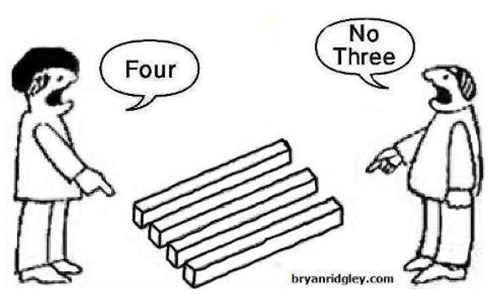
In almost every communication both the sender and the receiver include things they accept as true or certain without the need for elucidation (i.e., assumptions)

Without assumptions being explicitly identified and defined it is easy for parties to believe the information being exchanged has a unique and clear meaning.  Sigh, sadly this is often not the case.  Depending on the assumptions the message could be very different.

Avoiding Miscommunication

One way communication is most likely to be misinterpreted.  Without the opportunity to test the message (i.e., two-way exchange), combined with a message that appears complete and clear it is easy for the recipient to assume they understood.

This situation applies to the information provider as well.  Without receiving feedback they can only assume the everyone understood the point and all is well.

In these situations, surprises occur frequently and the result is often by choruses of “that is not what I meant” and “well that is what you said”.    The intent of the message is not achieved.

Keeping the content simple is obviously one way to achieve clarity but most important is testing/validating the communication on multiple sources, getting feedback, and modifying accordingly.

This of course is really critical when providing directions or instructions on how to do something.  Misunderstandings can lead to costly mistakes.


Answers begin with the Question, or do they?

When we don’t have all the information we need or are not sure of it’s validity we will elicit additional information from other sources, that is human, virtual, experimentation and so on.

Hopefully this process of investigation will yield the answers we seek in response.  Sometimes the answers are not the information we seek.  This can be because the question is wrong, and there is the rub,

Question or Answer/ Chicken or Egg

Without some information we can not be sure what the question is and without the question information is lacking.  The question answer dance is founded on what we know when we begin.

Neither the initial question or subsequent answers is the starting point, rather, what we know about what we don’t know is the best place to begin.

Assuming questions are intended to gather things we don’t know or validate information we are uncertain of the beginning is not to seek answers or formulate questions but rather understand what it is you don’t know.

Understanding Requirements

The process of seeking information using questions as the prime technique begins with understanding what you seek.  Valid quality questions begin with requirement, that is defining what you seek.

Formulating the question is often best managed as a multi-step process building on the information uncovered during the journey for answers.  Critical to the success of this journey is the starting point, the first question.

Seeking Information/creating Knowledge

Asking questions and analyzing the answers will provide you with the information you need to create knowledge.  The value of knowledge to you depends on your requirements.

Asking questions is only of value when you have a solid understanding of why you are asking them.  What is the information you are lacking and why is it of value should always be the starting point of your interrogations.


I comprehend

The difference between comprehension and understanding is a very fine line with the basic meaning of each term broadly overlapping.  However there is some subtlety to be applied when using these terms.

I would highlight this by noting, true comprehension requires much more than just  understanding.   Comprehension is generally broader and more holistic.

While understanding is at it’s core, comprehension includes the ability to conceptualize the broader context.  Fitting the various pieces together to form a broader and greater understanding, comprehension is really the next level.

Subjective

Understanding contains a subjective component.  I understand is all about you.  Your understanding might not match that of others but if not confusion can certainly arise.

Comprehension implies the broader context of taking others views into account, i.e., the bigger picture and translating this to a universal meaning that is not self centric.

Piecing together all the information rather than focus on a single point of understanding is the only way to be in a position to truly comprehend the situation.

Avoid Misconception

Understanding based on your own personal conception is common.  It is the baseline and how the majority of us develop conclusions.  Taking the time to fully comprehend can lead to avoidance of misunderstanding.

This is not a silver bullet.  Believing you have full comprehension in a particular circumstance does not mean that is so, validation is still needed.  Take the time to build a fact based objective foundation.

Working to fully comprehend both implies and requires looking more broadly and the situation and combining individual understanding into a cohesive whole.

The Root of Confusion

I will hazard a guess that we have all been bewildered or unclear in our minds about something, at some point in our lives if not on many occasions.

Confusion largely results from inadequate communication and unclear objectives and is particularly prominent when the circumstances are complex.

Too Many Cooks

A very common aspect of confusing situations is a multitude of stakeholders, each of whom purports to have a full understanding of the situation.

Feeding the confusion is these multiple explanations offered to add clarity are often perceived to be different or even in some cases are actually different.

Keep it Simple

Avoiding confusion always begins with simplicity.  Clearing away the misunderstood begins by reducing the situation to the fewest components.

To ensue clarity and focus explanations need to be single threaded, that is provided by a single designated knowledge expert.  Using a single point of reference without exception is key to avoiding honest misunderstandings.

Start with the End

When explaining a process or providing how-to instructions the comprehension of others begins with understanding the end result.  It seems to make sense to describe the journey and reveal the outcome at the end.

Perhaps strangely so, this is not the case.  My psychology studies have demonstrated humans achieve understanding much more quickly when they know what the goal is upfront.

Eliminating confusion is a combination of limiting the number of stakeholders involved with explanations coupled with providing clarity of outcome, what does done look like, right from the beginning.


Confusion

When those around you are in a state of being bewilderment or unclear about something the key question is what can be done to resolve the confusion.

The answer begins with the source or root cause.  Most frequently this is related to poor communication often stemming from assumptions and personal bias.

Assumptions

Unconsciously we use things we know to be true as underpinnings of  information we want to share with others.  Unfortunately, just because something that is accepted as well known and true by us, this assumption might not be universal.

This can confuse others because they are not at the same baseline as you.  You may be frustrated at the apparent misunderstanding and not realize it is simple a result of different baselines.

Your unconscious assumptions are often not shared directly, because you don’t believe it needs to be.  This gap is the most common cause of confusion.

A Simple Solution

On the surface it appears confusion could be avoided by sharing everything and confirming everyone is starting from the same information baseline.

The reality is a balance must be struck between sharing for retention and comprehension.  A dump of everything you know has the same effect as holding back, it creates confusion, if not boredom too.

Confusion Free

The key skill associated with reducing or eliminating confusion relates toward regular interval testing.  Provide the background and information objective but test for comprehension every step of the way.

Comprehension test does not mean asking “Did you understand?” but rather questioning on a subject related point that requires understanding to be answered correctly.

Avoid confusion it will make communicating moreenjoyable for everyone.


Seeking Concensus

Leveraging the skills and abilities of others in conjunction with your own can be frustrating.  Independence and belief in our own abilities and self-worth lead us to challenge the value of collaboration.

That is to say, while the quality and effectiveness of our achievements are greatly enhanced by acting en mass rather than independently it is not human nature to do so.

Interacting with Others

Going it alone can be very satisfying.  Individual accomplishments make us feel good.  Group accomplishments are still worth applauding and can be very satisfying but we are just a cog in the wheel.

A very challenging aspect of working with others is the need to attain a consensus.  This is a general agreement among all parties.  Making a unilateral decision and forcing it on others is so much easier.

Therein Lies the Rub

Leaders with granted power can abuse this privilege by taking the easy route.  That is rather than attaining consensus, which means the best ideas and knowledge all participants gets leveraged, they just override and push forward with their decision.

The disadvantage of this approach is simply that is has a lower likelihood of arriving at the best approach.  Intuitively the larger the information base, the combining of multiple processing power and the diversity of thought will provide better results than a single stream,

Albeit it slower, taking the extra time and effort to consult, discuss and achieve consensus will in most cases (outside of dire emergencies) produce the best results.

Granted power should not be used recklessly.

Turning Pain into Gain

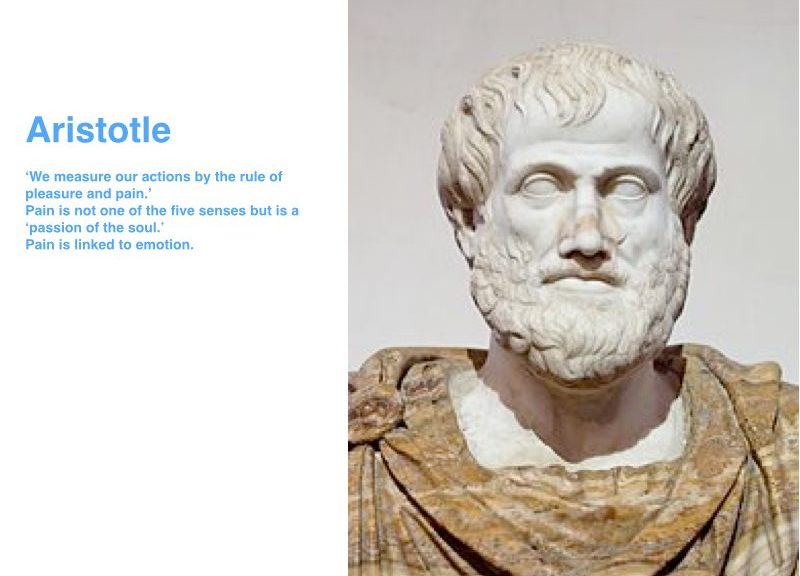
Painful experiences are best avoided. However, whether resulting from a physical or mental context we all experience suffering or discomfort from time to time.

Dealing with pain can be an opportunity for gain, in fact, trainers often use the old saw “no pain, no gain”.  Pain and suffering can also lead us to a downward spiral of doom.

Accentuate the Postive

To borrow a little motivational advice from the movie Mary Poppins, focus on how to improve and resolve things.  This is a great way to leverage painful situations as a wake-up call.

This is not about ignoring things that cause you pain.  Rather focus on a resolution that surpasses the status quo.  Use pain as an opportunity to make things better.

Our perspective is an important influencer of our actions.  What we do, that is our behavior, is very much based on the way we regard something; our point of view.

Act to your Benefit

Pain can influence our perspective toward sadness and pity, neither of these emotional views is likely to result in positive action.  Overcoming the pain we feel by rising above and beyond it, seeking positive change is far more personally enriching.

Being mired in sadness or self-pity can become self-fulfilling prophecies.   The results are far better when we act in a way that benefits us.

Allowing external circumstances to become detrimental to our health and well being is a choice but is probably not the best choice for you.


Finding your Purpose

Why am I here is a question that has intrigued philosophers since the dawn of time?  In essence, the answer to this question can provide us with motivation.

That is, the reason for being, why we were created or for which we exist can guide our purpose.  Without this understanding or at least we need something we can accept as a reasonable explanation, if not the real answer, otherwise one wonders what to do.

Retire and Die

Lack of purpose can translate into sadness, depression and even reduce our will to live.   Retirement can be a classic example of this where many studies have shown retirees who do not replace their work with some other regular and demanding activities, just expire.

Succinctly put, the studies showed for retirees without a clear reason to live (ie, some purpose) they don’t.  These studies focused on people who had at least one accepted personal “purpose” that being working at something.

After becoming retired this purpose disappeared and if not replaced the results were, well deadly.

What Purpose?

Working, especially if you don’t enjoy it or embrace it, might not satisfy your personal need for purpose.  For many it relates to what we have determined is the answer to the mysterious, what is life all about question.

For some work is accepted as a significant answer to that question and as studies have shown, in those cases we need to figure out an alternative.

For me,  my raison d’etre, is attaining maximum pleasure. This can be work or some other activity (reading a book, configuring technology) but my life long search for maximum pleasure will not be impeded by retirement.


Without Questions there are no Answers

It is simple and intuitive but surprising how often we don’t adhere to the simple imperative.   Answers start with the question.  Determining the question can in itself be a significant task.

Those seeking post-graduate designations at institutions of higher learning are quite familiar with this concept.  Selecting a research topic (i.e., the question) is the first step to conducting research.

Value-Based

Seeking a worthwhile question is a great way to get answers.  Just raising a question for the sake of the question itself can waste time and effort and ultimately has little value.

Quora (quora.com) is a forum for raising questions of any type or category and drawing on the memberships collective knowledge for answers.  Quora has an interesting model to encourage participation.

By invitation only, selected members are asked to become Quora partners and get paid for asking questions.  (Full disclosure, I am a Quora partner so am fully familiar with this process.)

Question is King

Quora recognizes their answer forum is of little value without an ongoing stream worthwhile questions (Unless of course, you are playing Jeopardy which is all about answers).

Post-secondary educational institutes which focus on research recognize the same.  Without questions to answer, there is no research to do and doctoral programs are largely unnecessary.

Caution

One of the things I observe with the Quora forum is the compensation model can and does lead to some frivolous, low-value questions.  I wonder why they are being asked.

Often these valueless questions accumulate zero answers as respondents do not want to waste there time. Compensation is based on answers and reviews so it does act as a mitigating factor though, no point in asking a question that earns no cash.

Getting Your Message Across

When communicating with others you, in simple terms, you first decide what message you want to convey and then craft it in a way others will understand.

The challenge is crafting your message in the context of the recipient’s filters.  Most likely you shape what you say based on your own knowledge and bias.

Target the Audience

To be understood, your communication needs to fit the perceptions and context of your audience not your own.   We all filter what we hear within the context of our personal bias and thinking processes.

How you think about things, that is the way incoming information is processed varies for all of us.  By default, our own outgoing messages are formated based on how we think.

This can be confusing to the recipient.  The tendency is to process what we see and hear based both on what we know and believe as well as the way we assume the communication is structured (which may be different from what the sender intended).

The better we are able to anticipate the way the listeners/readers will filter our information, the more likely the intended meeting will match (both sender and receiver).

Validate

The risk of the intended meaning not be transmitted fully is high.  Even if you try to be fully aware of your audience’s expectations it is not always possible to craft your thoughts in a way their filters will get.

Checking to confirm the intended message was received is not foolproof either but a worthwhile exercise to at least help identify if disconnects exist and attempt to repair them.

The key is not to expect others will transcribe your meaning as intended and it is well worthwhile to probe and follow-up to avoid misunderstandings.