Taking and Giving Accountability

When you are expected to make and standby either a decision or ensure an activity is completed to everyone’s satisfaction you are accountable.

Accountability is the condition of being accountable and it is either taken on (by choice) or given to you.  When assigned you may technically have the choice to accept or decline but in reality, this is not always the case.

Self Motivted

Choosing to take accountability, whether for your own actions or those of others ultimately you are the one making the decision or ensuring the successful completion of an action.

Taking accountability without being assigned or requested to do so is a leading indicator of a high level of initiative.   Typically this is recognized as a positive behavior although it needs to be balanced so as not to appear arrogant or authoritarian.

Self-motivation is a critical attribute for high performing groups.   Whether it be a Corporate, non-profit or even a family context when members take the accountability to make sure decisions are made and activities completed the outcomes are easier to achieve and of a higher quality.

Encouraging Initiative

Sometimes it is difficult to let others take accountability.  Our natural tendencies are for control and to take charge.  Allowing others to take accountability, particularly when we are in a leadership role can be difficult.

There is a risk, but it is a risk well worth taking.  The greatest way to motivate others to take accountability is quite simple, let them do it. The key here is making sure the culture is clear,  everyone is empowered.
Don’t tell me what to do!

Have you every felt like telling someone, very firmly, “don’t tell me what to do”.   Often the phrase is just sallowed internally and not voiced out loud, but the resentment lingers.

Effectively interacting with others, whether as a leader, manager or peer to peer, you definitely don’t want them to ask you not to tell them what to do.  It’s a  bad signal.

 Pre-cognition, Independence or Trust

Whether this retort is an example of someone anticipating what you are going to tell them, or feeling you are encroaching on their independence or demonstrating a lack of trust in them, it is not a positive response.

If your actions lead to such a frustrated response you should pause and re-think.  Directive or dictoral approaches may work, once, but the are definitely not sustainable.

Encourage and Support

When others believe you are not willing to let them think for themselves, they loose faith in you.  This is not to say feedback is not welcome, how it is presented really affects how well it is received.

The sweet spot is about adding value to what others do.  Most importantly the main judge of the value add should be on the receiving end.  You may think you have added value but it is only true if the other person believes it.

Telling people directly how to act or behave is rarely received by them as a value add.  Helping them see the way themselves is a much more powerful and effective approach.

How do you see yourself; How do others see you?

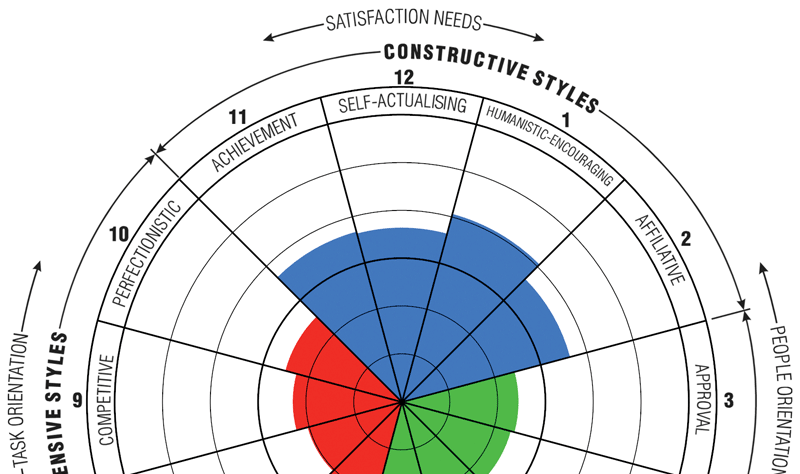
From birth to death everything we do is a form of behavior. The way you act is your behavior.  It defines you. Your behavior is not in isolation and most often the context for behaviour interpretation is how you conduct yourself toward others.

Categorizing your behaviour

Would there be value in interpreting your behaviors in terms of the impacts they have?  Do your thinking style and associated actions support personal effectiveness and satisfaction.

That is, what are the behaviors that define your lifestyle and what is their impact?   Of course, this question depends on perspective.  Your answer might differ from that of others.

Simply stated how you view yourself could be different from the way others perceive you.  To get real value from a behaviour analysis you need to get both what you believe and what others think.

Human Synergisitics

The best way to get information about your behaviour styles, both from you and others is through an anonymous web questionarire crafted by researchers who have developed questions that can be translated  to behavioural styles.

While no one can be 100% certain the results are accurate, if the consultants that administer the survey are supported by years of study and supporting data it is likely to have a high degree of alignment to reality.

I had the good fortune to have an assessment performed on me by Human Synergistics  and I found the results very useful to determine behaviour changes I wanted to make and ideas on how to execute the changes.  They do both lifestyle and leadership assessments.

Disclaimer – This post is not an endorsement of HumanSynergistics  ( they are just an example I used out of familiarity) Rather the post is intended to get you thinking about the value of having your behaviours assessed.

That is, to help you understand what others think of you and adjust your styles if you want to.


Facilitation

Completing a task can be a rewarding experience.  For example, after you mow the lawn, sitting in the yard drinking a beer, you happily ponder the results of your work thinking “What a great looking lawn.”

You are proud of the accomplishment, it feels good.  What about the cases where you do not participate in the activity directly but are a key catalyst in getting the reaction started.

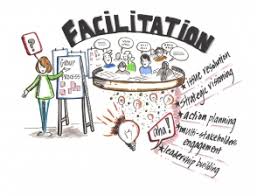
When the work you do focuses on helping other people deal with a process or reach an agreement or solution without being directly involved in the task, you are facilitating.

Making it Happen

Achieving a goal, particularly through the use of teamwork (i.e., collaboration) can sometimes require independent assistance.  That is,  help to focus on the goal from someone who is not invested in how the results are achieved, but rather focused on their achievement.

This is the role of a facilitator.  Facilitators do not actually have the rewarding feeling of personally completing a task, however, in many cases without facilitation the task will not be completed.

Like the catalyst that initiates a reaction without actually participating the facilitator enables others to get the job done.   A job that could (even would) fail otherwise.

Observe, Facilitate

Everyone can and should act as a facilitator when it is needed.  This a a great way for groups to get things done.  It is an attribute of high performing teams, any team member steps in to facilitate (seemlessly) when it’s apparent a liitle help is in order.

How do I know?

I have found a very useful quality check hinges on the answer to a single query.  The question can be applied to a product, service or process.

First, identify the outcome.  For example, if building airplanes, one outcome might be the plane can fly to its destination without mishap.

Question then Validate

The questions become things like.  How do we make sure this plane can fly the expected distance?  How do we make sure things don’t break in flight?

The plan to test the answers to the questions and make sure they are correct represents validation.

This simple process of repeatedly answering the question, (i.e.., how, ………….? ) while not infallible is a very valuable technique to determining quality, efficiency and effectiveness.

High Quality Outcomes

This simple questioning process is a great way to ensure outcomes will be what you expect (proactive) and then are what you expect (reative).

Asking the “ how do I know …..?” question reduces risk and increases predictability.  Based on the answers we can be condident that the process,service and ultimately the products will be consistent, reaptable and issues or deliberate attacks will be identified and can be avoided or at least mitigated.

Objective Measure

How do I know this blog is readable?  I use automated grammar and spell check tools.  I read the post at least three times before publishing.  I use feedback to improve quality of future posts.

My list actually goes on.  The point is, I am able to consistently produce a high quality post because I am always validating the outcomes using the how do I know questions.

How do I know the topic is interesting?  Hmmm.

Anniversary Post

I started musings.kerrzone.com blog back on July 19th, 2015 so yesterday was my three year anniversary.  There have been 770 blog posts, an average of 255 per year, so virtually every business day.

From the humble beginning of just 3 to 5 readers for the first couple of months, I now regularly have 50 to 100 readers each day.  My focus has been on interesting random ideas.

Of course the intent was more for my own pleasure in being able to freely say what I think, that is I am not focused on the reader, however, it is nice to know a few find the ideas amusing.

Not everyone agrees

It has not been a surprise to me that not everyone agrees with my random thoughts and ideas.  This has been expressed through the feedback I receive and is always welcome.

Interestingly though, some do agree occasionally.

Running Out of Ideas

Looking back over three years of posts I wonder how I was able to keep on going.  Where do all this random thoughts and ideas arise from.

I must pass a heartfelt thanks to my colleagues at U of A.  Without the robust discussions we engage in regulary I often would have been bereft of ideas. .

Also my readers often passed on their thoughts about this and that and many a post arose from their feedback.  To everyone thank you and I hope you have been enjoying reading these short missives as much as I do creating them .

Hopefully I will soldier on for a while though it will be completely dependent on whether I continue to have something to muse about.

Focus on the problem not the person

Years ago I came to the conclusion that often discussions escalate into a focus on peoples personalities, leaving the issue real issue behind.  As a result, it becomes a form of argument.

In this case, the argument is not an exchange of diverging or opposite views about the issues but rather becomes a reason or set of reasons,  focused on the other parties shortcomings.  These are disguised as being about the issue.

Attack

In reality these points are formulated with the aim of explaining why the other person is wrong.   This justification become the topic of discussion and the root cause becomes irrelavent.

I have have learned to recognize the use of a pro-noun typically means the discussion is getting off course.Unfortunately without diagnosing the problem, but focusing on the other people the argument quickly becomes personal and though it probably was not intended it degenerates to attack/ defend, in essence a battle.

Ironically if you pause and focus on the aspects of the discussion outside of the interpersonal, I find the perspectives on the actual problem are usually in sync.

That is, although the conversation may become heated the differences are almost exclusively related to the personal attacks (i.e., your behavioural justifications).

In fact, after careful and reasoned thought, you will probably realize both parties are identifing a identical issue, root cause and solution.  It just sounds like that is not the case.

I have have learned to recognize the use of a pro-noun typically means the discussion is getting off course.  When this happens I stop talking, think about what the issues actually is and refocus the discussion.

Spawning Leaders

A well documented innate human behavior is the way each of us develops our values in a social context.   This does not refer to the imitation or copying of others behaviors directly but rather basing our own actions on how we percieve the actions of others.

Environment Impacts

In the context of human development, nature versus nurture refers to behavioral practices we are born with (nature) and those generated from environmental influences (nurture).

From childhood to adult, there is always a part of our “go-to” behavior that develops from our observation of others.  Many believe this is more impactful during childhood (when we have more of a blank slate) but it applies throughout our lives.

Influencing Others Behaviours

Whether children (yours or others), colleagues, friends or anyone, how you behave is a key influencer relative to how the others develop their own personal behaviour values.

This  concept is key toward building a world of leaders.  That is by exemplifing your leader skills to others you provide a framework for them to build their own leadership skills on.

Just Tell them to do it

I had a conversation the other say about how to shape a culture, regardles of context, home, business, other, the most powerfull approach is not to tell others how to behave, rather show them. It really work.

Likewise, be open yourself to be shown the way by others.  This adds value to everyone  and ultimately the overall  cutural improvements spiral up.  Consequences, logical explanations or being shown the way, I choose the later every time.


The spirit is within you

Your physical presence forms the baseline of your existence.  Your health is the framework on which your spirit relies. Spirit is  is the non-physical part of you, that is the seat of emotions and character; your soul.

Possibly more important to your overall well being than the physical is your spirit.  By their very nature our spirits can be indomitable.  That is impossible to subdue or defeat.

Leveraging Your Spirit

Physical strength and stamina set a baseline for your active abilities. Your spirit though is your true strength.  You can rely on your spirit to carry you through any circumstances.

Leveraging your spirit requires only recognition of it’s presence and a willingness to use it to support your actions, whether physical, mental or both.

Your spirit is the most powerful energy source you have. The key is believing in its existence, this is the first step to  accessing and then unleashing  the energy.

Focus on you.  Your personal spiritual engery is yours release and power your achievements.  The key to this power is its capability to enable you to be successful.

Your spirit is a force to be reckoned with, one that cannot be overcome and will serve only your purpose not that of others.  Your spirit is the energy within you and it is yours to weld.

Great Power

There is great power contained within your spirit.  Many do not use theirs to full effect, often because they do not realize what a great tool it is nor recognize what can be accomplished by harnessing its energy.

Being who you want to be

Imagining what you want to be is how you become what you are.  A colleague lamented to me, “if only it was that easy”.  Arguably, it depends on the interpretation.

Reasonability

If you imagine being a prince or princess with great wealth and respect, in a literal sense, there is a high risk you will not become that. Figuratively speaking, maybe you can.

Imagining things that are in the realm of the possible (reasonable expectations, albeit they may be stretch goals) is a technique which supports the achievement of the goal.

Imagining the end point does not need to be exact.  For example if you imagine yourself a world class athlete, stepping up to the podium for your gold medal, taken-in the figurative sense, that is to be a successful athlete, your imagination can be a valuable guide.

Seeing, Acting, Achieving

Visualizing your success, even if an exaggerated version of it, helps you believe it is possible.  Confidence based on belief begins in your brain.

The caution of course is not to become overconfident,  but rather leverage the imagination as a guide, not as an absolute.  Striving for excellence in your mind is a beginning, ultimately though you do need to focus on the possible.

Imagine what you want to be, then become what you imagine within the constrants of reality.  This is not dreaming, rather it is a practicle approach to goal setting.