Tag Archives: self awareness

Who are you?

Years ago I participated in an online personality assessment where I answered a number of questions about how I would behave in specific circumstances.

Ten others, who all knew me well, anonymously answered the same survey from their perspective of me.   All the answers were subjected to an algorithm that calculated my perceived personality traits or most likely behavior types.

Know Yourself

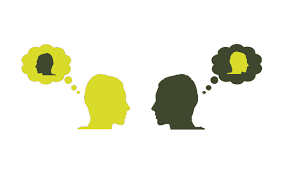
Obviously individual perceptions (both yours and others) won’t map exactly.  How we view ourselves can be markedly different from how others perceive us without issue as long as we are not surprised by how others see us.

Empathy with others is critical to personal self-awareness.  This allows us to behave in the best possible way when interacting with others.

Sometimes this means acting outside of our base character or personality but purposely so.  To do this effectively we need to have a robust and accurate understanding of what others think of us.

Avoid Surprises

For me, the test results showed both areas of overlap as well as differences.  The key value of the output though was not that differences or conformity existed (obviously yes) but rather, did it match my own understanding of what others thought of me.

Testing like the one I describe here can be a valuable tool in validating your perceptions however it is just one tool in your kitbag and not always readily available to you.

Most importantly is to be able to evaluate what others are thinking and behave in ways that do not result in surprises.  When you are surprised by someone else’s reactions likely you have misjudged them.

Pay attention, listen carefully, observe, this sensitivity will serve you well.
Control

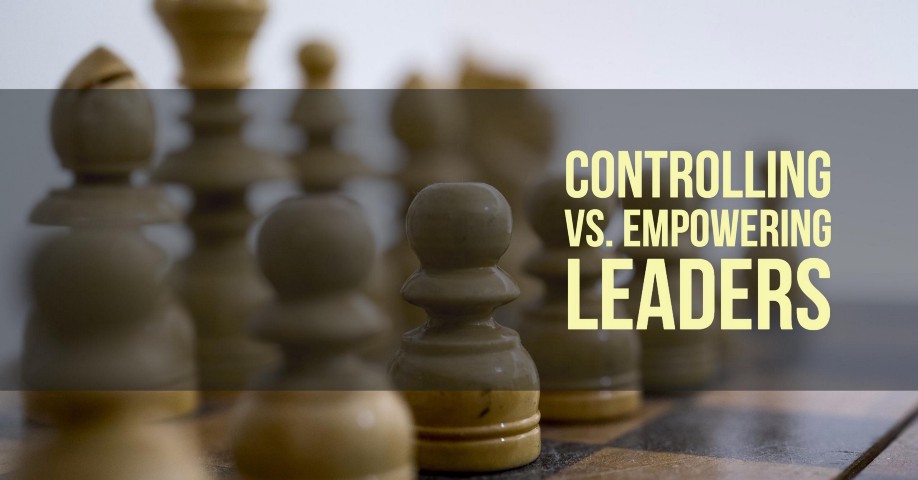
While not always pracriced as explicit or overt behaviour, there is a basic human need for power to influence or direct people’s behavior or the course of events.

The need for control is frequently either a contributing or the root cause of conflict.  Political behaviour is a classic example of contoling behaviour.

Politics is largely just a way of describing  a series of actions to get it done my way, or yours.  The priority objective becomes getting your way, the real goal can be secondary.

For Example

Many comment on US President Donald Trumps behaviours as unpredictable.  This often because the goals seems to shift endlessly and even become diameteically opposed from day to day.

Personnally I find them quite predictable when personal control is considered the prime objective.  Donald simply views his success as being based not on outcomes but others perceptions.

If changing a position or stance is needed for him to be percieved as the victor, no problem.  He will spin his position on dime as long as it enables him claim achievement.

Managing our Controlling Instincts

Not surprisingly the best outcomes arise from collaborative methods.  Members of high performing teams obviously exhibit a number of positive behavioural attributes.

The ability to manage their controlling instincts effectively is always the number one skill all high performing team members are able to use with ease, like breathing.

Without the burden of worrying about controlling the situation, versus focusing on all the stakeholders and most importantly success, high performing team members achieve high performance.

Understanding

Don’t just wonder about the things around you, figure it out.  If knowledge is lacking, create personal understanding proactively.

In the words of Lennon/McCartney (Beatles songwriters) “There’s nothing you can know that isn’t known, Nothing you can see that isn’t shown” 

Take Charge

If you are puzzled, wondering why something works the the way it does (or doesn’t work, but should) don’t passively accept it. 

Take charge of your life, seek knowledge and understanding of everything.   Others can help with this but you need to ask.  

Motivation

There is a strong rationale for building your personal knowledge base.  Understanding the underlying explanations for all things can enable proactive response.

This really falls into the root cause discussion.  To act appropriately, reacting to the symptoms can provide positive results) or it may not but typically they would not be sustainable. 

Understanding the real nature of things provide a framework for action.  Just wondering and accepting things as the way they are will not provide the benefits of exploration, that is research. 

Integrating with Others

Spending the time to understand why things work or behave the way they do allows us to plan the best and most beneficial response. 

Seeking a broad understanding is not a one time exercise but rather a constant quest. 

Knowledge can make your interactions with others become both more rewarding for everyone as well as raising your own profile.

So, don’t be passive, embrace the opportunity to expand your understanding of the world.  Seek answers, figure it all out. 


Confidence

Self confidence is the belief you can rely on yourself.  The level of your own self trust is reflected by your behaviour. 

Intrinsically, we all have firm trust in ourselves but it can be eroded over time through the influence of environmental circumstances.

Believe

It is very important to take accountability for your self trust.  Personal confidence is yours to own and manage and yours alone. 

This does not mean you should be unaware or heedful of feedback and signals from others either verbally or through actions. 

The key point is to remember is this is your life and while your actions should not be taken with an unwavering conviction that you are right, neither should you bow to others unless the rationale is strong. 

Be Firm, Not Stubborn

Personal confidence is not about charging head first like a bull, challenging all around you and portraying a high level of firm self trust. 

It does empower you to be firm in your beliefs not to the extent of stubbornness but rather to the level of fair judgement.

Be aware of your surroundings but trust in your ability to judge fairly the best path to follow.  Firmness is articulated through reasoned analysis not forceful action.  

Rely on Yourself

The most important message associated with self confidence is the belief that everyone is important, that includes you. 

Being Polite

The definition of politeness is behaving in a way that is respectful and considerate of others.  Unfortunately determining what is respectful and considerate is subjective and there is the rub.

Considerate behaviour should align with expectations.  Individual expectations can vary considerable and group expectations are formed from cultural bias.

What?

In English the expression what can be associated with body language indicating incredibility.  That is, the observered behaviour is considered outlandish or outside the norm.  

Such an expression, used about some action that is a  behaviour norm in another culture will fall flat.  Perception and expectation drive the interpretation of politeness.

Picking up the Garbage

In North America there are public garbage receptacles everywhere.  Still there is garbage randomly cast aside everwhere, just check your local park.

In Japan there are virtually no public garbage receptacles and despite this there is virtually no garbage in public places.  

In Japan, it is considered impolite to dispose of your garbage anywhere but home and the main deviation from this is the by foriegn tourists. 

The cultural norm of the country very much drives behaviour.  Of course that is not to say there are some impolite people but their occurance is rare.

Practicing Logic

While individual expectations and cultural bias is a reality the benefit of polite behaviour is the pleasure it brings to others, and so to yourself.

Understanding the context of behaviour norms  is valuable but most important is self awareness about the impacts of your beviour on others.

In the moment reacting to and meeting their needs and expectations can and should be more of an exercise in applied logic than guessing what the expectations are.


Overcoming Aprehension

Basic human biology plays an autonomous role governing and controlling our behaviour.  While we might believe we are in control of our thoughts and actions there are many biological influencers which need to be overcome if we are to achieve full control

Consider the simple fight or flight response.  The body produce adrenaline involuntary as a reaction to a perceived harmful event, attack, or threat to survival. 

The hormone prepares the body to repel the threat (fight) or flee the threat (flight).  Its production is automatic and conscious thought is needed to override it’s effect, for example, a false alarm.

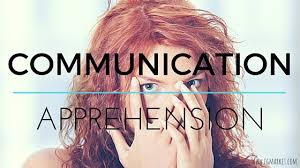
Communication Apprehension 

Apprehension is the anxiety or fear that something bad or unpleasant will happen.  Typically it is not consciously derived but rather an unconscious control we develop over time.

In the case of communication apprehension, this may result in holding your tongue when speaking out is more appropriate.

The level of apprehension we may experience arises based on the context of a situation but the underlying individual propensity for apprehension is derived from both nature (genetic) and nurture (learned through experience).

Take Control

Clearly, there is value to these unconscious bio-influencers as they drive appropriate behavior where time is of the essence (fight or flight) or cases where we might do the wrong thing through unclear thinking.  

There is a time though when the unconscious control (e.g., involuntary communication apprehension) does not lead to the better behavior.  In this case, recognize it’s presence and conciously override it.

Oh behave!

One of my favorite movie scenes is from Austin Powers International Man of Mystery.  It is  Austins response to the movies femme fatales offer to slip into something more comfortable.

“Oh behave, baby!”

Defined by our Behaviour

How do each of us assess others?  Basically, you start with the apparent, appearance, grooming and so on, moving on to speech, actions and non verbal communications.

All these things, from grooming to non verbal communication queues are derived from a persons behaviour.  So it is not a stretch to conclude how well you control your behaviour is key to achieving your goals.

Self Awarenes

Self awareness is the practice of being intimately aware of both your and others behaviours at any point in time, constantly analyzing the impacts and outcomes of your own behaviour (within context of those around you) and molding your actions to achieve the desired results.

To lead others, whether via the traditional “in front” practice or more innovatively from virtual or pheripheral places where physical positioning is irrelevant, the ability to behave in a self aware way is foundational for success.

In the simplest terms everything you do from how you dress, walk or talk to your written communications, facial expressions, emotional vibrations (what people sense about you) must be conciously managed.

Everything is carefully orchestrated to realize planned outcomes.  You know what you want to achieve and through awareness of your own and others strengths and weaknesses (expressed behaviourally) you get what you want.

The practice of strong and effective self awarness behaviours alone might not make you a great leader but it undoubtedly frames you for success.


It’s getting better all the time

Improvement is the act or a thing that makes something better.  This requires a change. By definition the improved state is better and so different from the starting state.

Bad to Good

A common misconception about changing for the better is the starting state was bad.  This is not necessarily the case, in fact, improvement from dire straits to an acceptable level in one step is relatively rare.

Incremental improvements or continuous improvement are both more common and better.  When the environment is at rock bottom sometimes just starting over is more practical than seeking improvement.

Consider an Olympic silver medalist attending the next Olympics and winning gold.  A silver medal is an exceptional achievement in and of itself.  Improvement to gold is a great improvement but, as noted, does not mean tbe starting point was bad.

Managing Change

At it’s core, improvement comes through change .  Whether it be internal change ( you change yourself), external to you or a combination.  Like all change, it is most effective when well planned and communicated.

In  essence, all change will have improvement as an underlying motivation.  There may be a variety of specific reasons to make a change, for example to reduce costs or increase revenue or quality,

Whatever the reason, to be executed effectively with a positive outcome,  those affected by the change must have a clear understanding of what the improvement is and why it’s of value.

Embracing Change

As we go through our lives understanding and believing in the value of change, we can lessen our natural resistance and this allows us to be part of the improvement, we become better.

What does your parody look like?

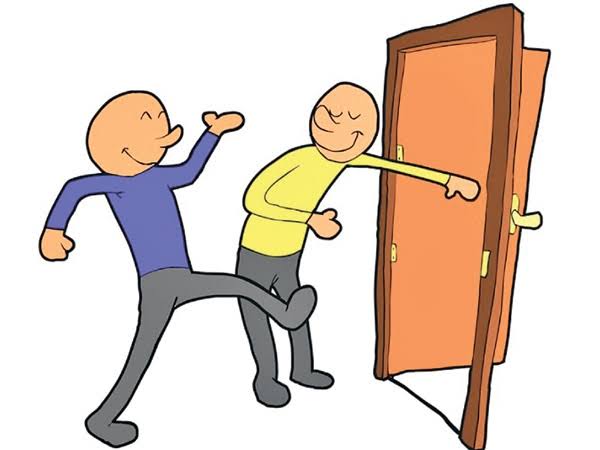
Others can parody your behavior through use of humorous, satiric, or ironic imitation.   Often this is done when you are not present, which is  sometimes unfortunate as parody can be a great way to wake up your self awareness.

Parody (about you) often provides real insight into what others think about your behaviour.  By paying attention, this can be very insightful and useful to you.

Public Figures

Public figures can be a regular target of parody.  The current president of the United States is a great example of this.  The numerous and very pointed parodies provide a telling story of how the Presidents behaviour is viewed.

If you are lucky

Humor often contains a message.  The exaggeration of your actions, if you are lucky enough to see it, can be very helpful in understanding what others think of you.

The awareness of what others think, versus what you think of yourself, is probably some of the most beneficial and helpful knowledge you can ever get.

Of course, if your relationship with others enables them to parody your behaviours while you are around, it says a lot of the trust and respect they hold for you.  (Not a bad thing).

So, if someone is mocking you or using humor to send a message, pay attention, it can only help you to become a better person.

Behaving Badly

Expecting people will practice respectful behaviour toward others is a standard for all societies and cultures.  The challenge, of course, is defining what respectful behaviour is.

To a large extent bad behaviour is in the eyes of the beholder, that is the recipient of the actions.  Difficulties arise because the categorization of the behaviour as bad or acceptable can be largely subjective.

Acceptable Behaviour

Putting the subjective aspects aside there is generally consensus on really bad behaviour, although most of these are extreme. Even the extremes have exceptions though.  For example:

  • violence perpetrated against others or even self flagellation is considered unacceptable
  • full nudity (although not so much at a nudist colony)
  • shouting (except for emergencies when getting attention is practical and accepted)

Extreme examples aside, the following have a very subjective component;

  • not listening, ignoring others, disregarding others needs.  (this is subjective in that one person may feel ignoredor disregarded well another would think nothing of the sort)
  • insults ( one persons insult may be anothers compliment)
  • disreputable appearance ( a beauty to me might be an ugly duckling to you

Meeting Expectations

Ultimately others judge your behaviour when it meets their expectations.  When it does not you may be labled as rude, disrespectful, arrogant and so on.

The resolution to this dilema is the practice of self awareness.  Using a variety of skills to sense others expectations and act accordingly.  The usually results in your being held in high esteem.