Tag Archives: facts

What is Reality?

A common definition of reality is the world or the state of things as they actually exist, as opposed to an idealistic or notional idea of them.

It seems simple enough but determining the existence of something, and what that entails, has a subjective component and therefore defining what is real can become different depending on individual perspective (although this flies in the face of the definition.)

Existentialism

Soren Kierkegaard was a philosopher who proposed that each individual—not society or religion—is solely responsible for giving meaning to life and living it passionately and sincerely, or “authentically”

In essence, this could be broadly interpreted as meaning we create our own reality.  How we give real meaning to our lives is founded on our self-creation.

We create ourselves and live within our self-creation.  This becomes our reality and the essence of our existence.  This does not mean we can ignore things as they actually exist, however; we can perceive them in the context of our self-actualization.

So Is Anything Real?

If there is broad acceptance by everyone that a thing actually exists than it does.   What that existence means and the impacts of it can be open to analysis and interpretation.

A single reality only exists for the individual but out of convenience and for practical purposes general consensus of reality across a population is needed.

Your own reality is constrained by outside forces.  For example, if you believe you have the ability to survive underwater with breathing assistance, the constraints of reality will intrude in a very real and deadly way.
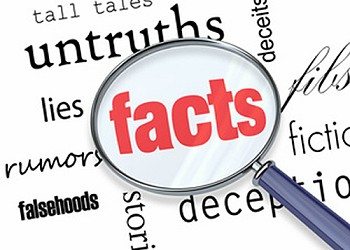
Subjective vs Objective Analysis

We regularly rely on our personal feelings, tastes, or opinions to arrive at conclusions.  Sometimes these can be strongly influenced by unconscious bias (i.e., things are not even fully aware of). This is a subjective approach.

In the objective approach, fact-based judgements are not influenced by personal feelings or opinions.  In this case, facts are always the same for everyone.

True objective measures provide no opportunity for interpretation.  For example, two plus two equals four is a fact.  It is accepted as always being true.

Outcomes

Actions are based on our understanding and analysis.  Often subjective information (easiest to obtain) is readily available and what we act on.

Subjective information could be accurate or inaccurate resulting in decisions that might lead to success or might not.  Of course using  objective information does not guarantee success but results are far more predictable.

Analysis

Whether objective or subjective, sometimes a combination of both types, the quality of the decision will rely on the analysis, that is the interpretation of the data gathered.

Analysis should include weighing  the quality of the inputs relative to how certain the facts are.  Objective facts will always be more certain but determining what they tell you can be tricky.

Testing

Sometimes testing the facts through trials or demos is an approach to separate subjective from objective inputs as this can be a grey area.

Walking through the recommended solution(when feasible) can help identive weaknesses in the knowledge base. This validation process canbe a very useful quality check.

Continuous Understanding

Understanding requires knowledge of the facts and information about a thing.   Knowledge is based on skills used to acquire information through experience or education.

A key aspect of continuously improving your knowledge (and thus your ability to understand) arises from sharing, without sharing a vacuum can be created.

Don’t you want to share what you know and thus build on the quality of your understanding of things, rather than keep it to yourself and live in a fantasy world?

Communicate Openly

Two-way communication is a critical requirement for building knowledge and creating understanding.   You can initiate this by being completely open, regularly sharing all you know.

This practice, sharing openly with others, encourages others to share openly with you.  Your knowledge and experience increase leading to a greater level of understanding.

Filtering

As you gain perspective from the stories and facts others pass on to you it is important to remember, the interpretation of the shared information is owned by you, subject to your filters.

The value of what you learn by listening and observing others, whether spontaneously shared or prompted by your own sharing behaviours, is yours to determine.

You need to apply your own personal knowledge base against that of others to generate new unique and useful knowledge.

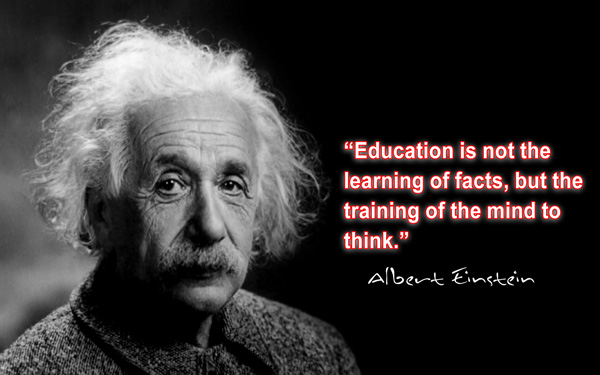
The most valuable knowledge is not that you copy or assume from others but rather that you work out yourself by thinking through the facts and information you have gathered.


Freedom of the Press/Reporting Bias

Around the world members of the media should be allowed to tell their story.  This is freedom of the press; However, this should not be interpreted as telling a story without bias.

Bias comes in many forms.  These can include:

  • telling the whole truth/facts ( as you percieve them)
  • telling complete untruths, doing this knowingly to meet your objective or agenda
  • colouring the truth/facts to support your position.

Personally, I believe every story, every news item has some bias.  It is just part of being human.  It is impossible for us to  relate information without including our own bias to some degree.

Externally Forced Bias

Unfortunately regional, political and religous bias is sometimes controlled external to the reporter and the way the information is shared can be manipulated through consequences.

In these cases where information is misshaped (i.e., propaganda), manufactured or with witheld; then freedom of the press does not exist.

Free Press can still be Biased

News that is not restricted, manipulated or otherwise controlled by third parties can still be presented with regional, political or individual perspectives (reporting bias) and still be considered “free”.

That is, while the story may be free from malicious or nefariuos manipulation by dictorial control freaks; it is still molded by the author.

Like it or not the authors baggage is included, even when it is purportedly “just the facts”.  After all, what is a fact?

(Good news, I will have more thoughts on the definition of a fact in a future post.)