Finding the right balance

I had an interesting discussion today about balancing competing interests.  This is a topic I have touched on in previous posts but it is always interesting with many points to consider. Today I build on past thoughts I have shared on this subject.

The English language contains a large number of interesting sayings that in an of themselves are contradictory.  In fact, they really just highlight the importance of finding the optimal balance .

For Example

  • “You have to spend money to make money” In fact, considered literally spending is the opposite of making so doing one to increase the other seems illogical.
  • “We need to increase revenue while decreasing costs”  This seems the opposite of spending to make money, but how can you increase revenue without doing something more (which typically increases costs)
  • “Take er easy and just get it done”  Slowing down and relaxing does not intuitively seem the best way to accomplish something.

Yin versus Yang

Ancient Chinese philosophy includes the concept of Ying and Yang. In brief, the concept defines yin and yang as cosmic dualities by which the universe is governed.  They represent sets of two opposing and complementing principles or cosmic energies that can be observed in nature.

Finding the optimal balance between these competing energies, which is building on the complementary parts and reducing the opposing parts, is key to your happiness and peace.

The concept of Yin and Yang is simply a real recognition that in all things the extreme approach is unlikely if ever the best way to proceed.

Balance in everything will lead to health, wealth and happiness.
Your Cut Man

More than 30 years ago a work colleague shared an analogy with me about expectations we should have of our leaders.  It was as accurate then as it is now.

The basic theme is a core attribute effective leaders must always demonstrate fully completely.  The analogy defines a required practice for leaders to gain and retain power whether granted or earned.

Core Belief

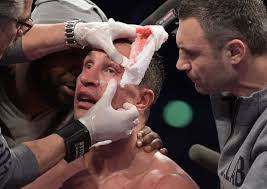
To achieve personal high performance requires support you can trust.  Take the role of “cut-man” in boxing.  During the match the cut man is always in the boxer’s corner, wiping the blood from cuts he receives during the match, providing motivational support.

However, the fight is proceeding the cut-mans role is to enable the boxer to fight the best fight, win or lose, whatever blows or attacks are made the cut-man is in the boxer’s corner, on his side.

The boxer is able to believe to his very core that he can trust in the support of his cut-man.  The knowledge is critical to him being able to continue particularly under what might become very adverse heavy slogging.

The analogy typically resonates with each of us so that in the face of adversity we can fight the best fight because we are confident someone has our back.

Without Cut-Man

Unfortunately, sometimes the leader you are associated with is not a good cut-man.  Although you will probably strive to overcome this deficiency it is probably likely that you won’t be able to achieve your maximum potential.

We all need somebody.  Perhaps it is time for you to cut and run, maybe greener pastures with a solid trustworthy supportive leader are worth seeking.

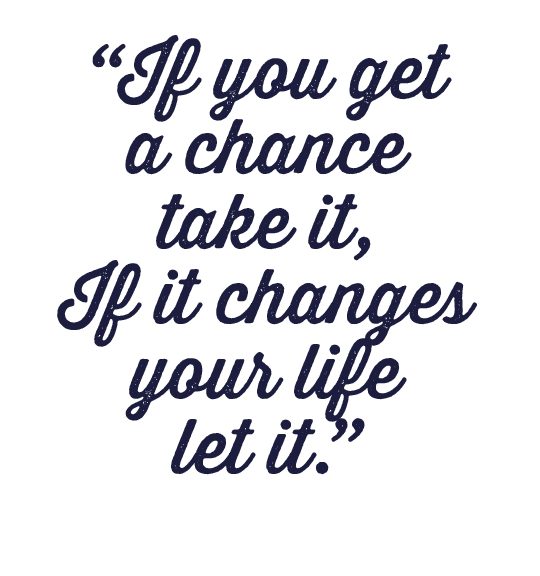
Taking a Chance

In our day to day lives we often consider the possibility of something happening or not (i.e., chance).  Sometimes this is an unconscious consideration and others it is a ponderous and lengthy thought process.

Chance is a key factor in determining how risky something is.  For example, the chance of a satellite falling from the sky and hitting you or destroying your house is infinitesimal and few if any of us consider mitigating that risk because it is so unlikely.

The thrill of life

Part of the thrill of living is taking chances, although for safety this is probably best practiced in a measured way.  I am not suggesting you go for the thrill of dancing with wolves (although if it is your cup of tea……).

However, life without stretching your limits can be dull and unenjoyable.  Those limits vary for each of us and for best personal results should be outside our comfort zone but not so far as to engender uncomfortably, pain or fear.

In short, when warranted, take the chance, go for it.

When Warranted?

The time to take a chance is a very subjective decision.  Many factors come into play ranging from risk of negative consequences to likelihood and magnitude of the pleasure, enjoyment and self satisfaction you anticipate.

Staying in your safe zone all the time is not the best way to take advantage of life.  Leaving your zone recklessly also has potentially unpleasant implications.

Making the choice to take a chance is good to do but a careful balance is recommended to avoid the less pleasant outcomes and accentuate the positive.

Overcoming Adversity

Captain Edward Murphy is attributed as originator of the famous quote “If anything can go wrong, it will”.  This has become known as Murphy’s law.

It resonates with everyone because it is pragmatic and allows us to shrug off unfortunate events.  This much like it’s sister phrase “it is what it is” (which I believe arose organically).  Both concepts can let us accept the challenge and move on (shit happens is another good example).

Perspective

In the case of Murphy he was an army engineer and at the point in his career when he was quoted he was working on military projects at Edwards Airforce base.

His experience included many unexpected set backs and he became a bit of a pessimist with a purpose, that is acknowledge, accept and move on to success.

Murphy very much believed that in the face of adversity the best approach was not to break down in despair but rather accept that shit happens, fix it and move on.

Prevention

A key concept of project management is recognizing and being prepared for risks.  Murphys law is not about risks you can recognize and prepare to overcome in advance.

Rather it is a recognition that the unexpected can, and will, rear it’s ugly head from time to time.  This phrase is not about preparing for these problems but rather not panicking when they occur.

In my experience adversity can also be resolved to our personal satisfaction in a reasoned and logical way.  Accept that bad stuff can and will occur and deal with it.

Government Spending

With the release of the first United Conservative budget for the  Canadian Province of Alberta, the screaming has begun.  It is an austerity budget.

Reducing spending and increasing revenue are difficult steps to take.  For the many constituents of the province, the cost of funding the government and its services rises while the services provided a drop.

Deficit Spending

It is common for governments to spend more than they receive in revenue.  Deficit spending has become an endemic practice.  The main question though, “Is it sustainable”?

When the latest gas and oil production slump arose 5 years ago the Province of Alberta revenues became impacted accordingly (ie., they dropped).  The response, take on more debt.

Debt can be a useful tool to assist the government in maintaining and increasing prosperity but it can be a dangerous approach as well resulting in just the opposite (e.g., rampant unemployment, inflation, recession).

Give but don’t Take

One of the little-publicized problems of rampant spending is the difficulty to go back.  It is basic human nature.  It is much easier to give things than to take them back.

Successive governments experience this issue quite frequently.  Adding programs and services is relatively painless but reducing programs, services and employees will typically create a great outcry (e.g., present-day Alberta).

I do admire the fortitude of leaders and political parties that are willing to push forward with their principles in the face of great opposition  (particularly in the case of fiscal responsibility).

It will be an uphill battle but returning the province to an era of balanced budgets is an admirable cause.


Counting on the unknown

Nothing is known with certainty except for the existence of the unknown.   We can speculate, anticipate, predict and plan based on the things we know, but not the things we don’t.

Could things change?  Will the unexpected rear its ugly head?   Of course, these questions cannot be  answered with certainty.  We can determine the best or most likely scenario but always there will be an element of uncertainty.

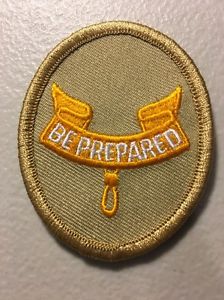
Be Prepared

The boy scouts motto is “be prepared”.  Underlying this sentiment is the knowledge that no matter how rigorous your analysis and detailed planning the unexpected can occur.

In fact, the things we do not know might not impact our plans or goals.  Or, yikes, they might.  Being prepared is all about managing the risk of unknown factors having an impact on something.

This could be a good impact or a bad impact but either way, being ready for things we did not know about and consider helps ensure they do not derail the plan.

Mitigating your Risk

Anticipating impacts that might occur, that is guessing about the results of unknown factors to the best of your ability is a good way to be prepared to respond effectively, without panic.

The things you can do to resolve unpleasant surprises, mitigating actions, can be determined and prepared in advance.  Given they might never be needed spending a lot and time and effort is not the idea.

Most importantly is just having alternate ideas/concepts/tools etc. ready.  Awareness of the unknown and readiness to combat it is the key to being a good scout.


Live in the Moment

While this is not a new or entirely fresh concept, being conscious, aware and in the present with all of your senses at all times (except when sleeping) leads to the best life experience.

This is about not dwelling on the past, it is what it is, nor being anxious or worrying about the future.  This is not about ignoring the past or the future but rather accepting and using the past and being optimistic about the future.

Embrace Each Moment

I am not a fan of the trite or obvious and the statement that “life is a gift, don’t waste it” probably does not feel right for everyone and seems like just a catchphrase.

For me, it actually is a bit of a mantra.  I can believe their are no bad times, even though I get frustrated, excited, angry, nervous, etc, along with everyone else (I am pretty sure to some degree the emotions plague us all).

Believing in the magic of every moment, accepting they are all precious both happy and sad, allows me to be firmly convinced that (watch for it, another trite phrase) “it’s all good”.

It is about me

The often misunderstood statement that it’s all about me is not in any way selfish or conceited (both things with a bad context).  In fact, it is just a simple and logical recognition that the things that impact my life, and that I impact, are mine.

I own them!

To be clear embracing every moment includes helping others and doing good for everyone if that works for me, and it should.

Making Decisions

Typically the best decisions are based on a thorough review and analysis.  (Although this is not universally so, luck and good guessing do play a role).

Accurate calculations based on the known data and clearly defined and reasoned assumptions enable a logical review and interpretation.

Keeping Track

While it is not feasible in every case to document all the reasons for proceeding a certain way (that is how the conclusion or resolution was arrived at), it is worthwhile to track the rationale including the options considered to the greatest extent possible.

The process itself of capturing what the key considerations are together with pros and cons aids in the quality of the overall analysis.

Taking the time to write down your thoughts can drive your thinking processes down a logical path.  Relying on your thoughts of the moment can reduce the level of focus and thus you may overlook a key element.

Eye on the Past and the Future

Often when making decisions we focus on the present.  The question we ask typically starts with “What will happen if I do this now?”  Good decisions include reference and consideration to both the past and the future.

Consider past results of similar decisions if you have any archival information focusing on the analytical calculations of the pertinent facts and how they ultimately related to the outcomes.

This approach helps you avoid past mistakes.  On the opposite end of the spectrum, it is wise to give consideration (based on assumptions) to what the future holds and how it will impact your decision.

While our decisions are usually focused on the current state keeping them in the context of both past and present often proves to be of good value.

Differences lead to Strengths

Disagreement can be the hallmark of a strong relationship.  Respectful interactions with others from deep friendships to casual acquaintances do not require agreement to be successful.

In fact, just the opposite.  The ability to use disagreement to reach stronger and higher quality conclusions can be  misunderstood.  Due to the negative emotions often associated with disagreement we do not always see the potential value.

The Power of Diversity

Differences can have a very powerful impact on results.  Adversity is a challenge (for sure) but overcoming it can lead to great rewards.  Both from the satisfaction of resolving conflict and because the result is most likely improved by multi-participation.

A key part of successful collaboration is harnessing the differences to create a unified approach that encompasses the best everyone has to contribute.

Leverage to Agreement

Disagreement only builds a relationship and leads to better results when it is used to develop consensus.  Success does not require all to agree but it does require acceptance and buy-in.

In the best cases, disagreements morph from separate positions to a unique but ultimately better-unified position.  This modifying of perspectives is not only a cornerstone of innovation but also a powerful way towards improvement.

A combination of everyone’s ideas, perspectives, experience, and background will typically lead to a stronger chance of attaining the desired goal.

Embrace Disagreement

In essence, disagreement is not something to be discouraged or treated with dislike.  Rather use the differences as a springboard to results.

Put aside the adversarial aspects of disagreement and leverage the opportunities they can provide.


Deciding to Feel Good

When you encounter a happy, friendly, optimistic person do you ever wonder why they are behaving that way?  Perhaps something good just happened or good things are on the way.

Or it could be they choose to feel that way.  After all feeling good is really just a state of mind. The sense of satisfaction and well being is defined by your emotional state.

Take Charge

I begin this section with the caveat that the recommendations herein are much easier to write about than to actually undertake.  However, while hard to achieve, the personal value associated with owning and controlling your state of mind is immense.

You can identify when you are not feeling good pretty easily.  I will go out on a limb and say everyone has felt shitty at some time in their lives and you just feel it.

How you feel is under your control, although subconscious and external influences definitely play a big role.   Positive self-talk can change your state of mind as well as taking an optimistic approach.

These actions, though, should not be taken blindly or without true belief as otherwise, they will just backfire.

Root Cause

Changing your state of mind begins with understanding what is driving you to be sad, fearful, annoyed and so on.   In reality there is no reason to feel anything but full of joy.

We only have one life to live (as far as we know so far) and both logic and common sense dictate enjoying it to the fullest.  Why not?

Understanding what is bringing you down and putting into perspective, it is transient and probably minor in the context of the universe.  This approach will enable you to adopt a state of mind that puts you in a happy and good place.