Stir Crazy

A common phenomenon that often occurs in jailed criminals is psychological instability arising, as a result of being imprisoned (i.e., going stir crazy in the common vernacular)

Interestingly given the restrictions on the face to face social interactions (masks and distancing) coupled with general encouragement to stay home,  many people are experiencing this symptoms.

Fear of the Unknown

Confinement to ones home coupled with limited ability to predict when things will return to normal impacts the way we behave, sometimes even without us consciously recognizing the effects.

The first step to addressing the behaviours associated with uncontrolled confinement (involuntary) is to recognize them.  The stress of change coupled with not knowing when things will return to normal can cause us to behave erratically.

Domestic Disputes

The local police recently reported a higher incidence of domestic disturbances over the past month.  I attribute this to the effects of going stir crazy.

Typically one of the first symptoms of psychological distress arising from confinement and forced close quarters is the dropping of etiquette associated behaviours.

Social norms can go by the wayside when you don’t have access to society, just those you stuck in the house with.  Driven by the personal stress arising from an unknown future, playing nice does not appear to be a priority for many of us.

No Regrets

If you seek motivation to identify and shut down the effects of going stir crazy, just remember, it is not a valid excuse for bad behaviour and if you don’t hold it in check you are most likely to suffers regrets in the future.

Nothing good comes out of letting confinement adversely affect your psychology.  Take charge, overcome the feelings focus on when you will be free again.

Embrace all Life Experiences

Embrace the new norm, relax, and enjoy the unique opportunities afforded you during a global pandemic.   At any point in our lives, there will be exhilarating moments and undue adversity.

The gift of life we were granted on birth is not to be wasted and every experience, both good and bad is well worth treating as worthwhile, after all, there are no second chances or re-do’s.

Why Fight It

Live fully in every moment and work to recognize the meaning of every experience you have and make the most of it.   Futile resistance is not worthwhile.

That is not to say bad situations should not be resisted where feasible just don’t waste time and incur emotional pain for things that are generally outside of your control.

Anxiety without a purpose is a true waste of effort and can cause you to miss the chance to embrace all experiences in a worthwhile way,  both good and bad.

See the Good

The main point of this post is that everything has a value even when the pain and sadness associated to make it seem that is not the case.  All human life consists of both stress and relaxation (i.e. positive and negative)

Without both good and bad life it becomes hard to live.  The experiences we live through are full-spectrum and this enhances the overall life experience.

While it seems hard to take in the moment life without both yin and yang does not exist.  Accept the hardships you experience, adapt, and move on.  You will have a better overall life following this approach.

Leveraging the Past and Future

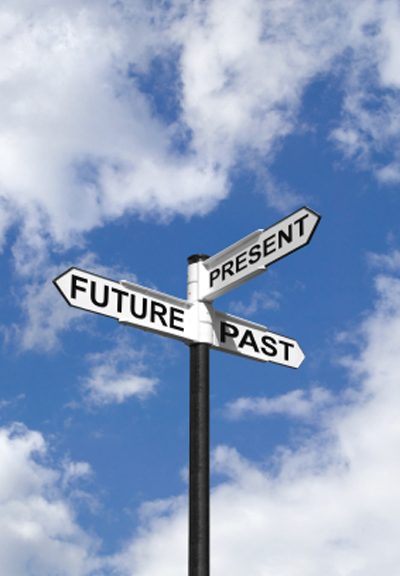
Ground your present through reference to the experiences of the past and the prophecies for the future.  These things can be key to helping us be successful in the present.

Things that occur in the past or we perceive as future opportunities are not a solute predictors of the present but deserve our consideration as potential influencers.

Past Outcomes equal Present Facts

The past represents facts, that is they are things that are known and can be demonstrated  as being true.  The past occurred and the outcomes are a real although interpreting what they mean can be somewhat subjective.

Predicting future events with accuracy depends depends on how much is known about the options and their potential likelihood.

Using future predictions together with analysis of past outcomes needs to be done with careful and considered analysis.  Other factors must be taken into account as well.

What has happened or prognosis for what will happen are important, even critical decision making parameters relative to ensuring the best decision but they should not be used at the expense of all else (e.g., intuition).

Repeating the Past, Ignoring the Future

Consideration of what has transpired in the past before acting in the present is obviously an important factor in avoiding the repeat of sub-optimal outcomes.

Likewise using likelihood estimations of future projections avoids performing actions in the present which will not conform with what the future will be.

Simply paying attention to what has and will happen in order to make good decisions seems like basic common sense yet surprisingly these things are often ignored.

Choose Freedom

People used to desire the freedom to work at home on occasion.  The thought here is “on occasion”.  In the current world of self-isolation and mandatory working from home the phrase “freedom to work at home” is almost an oxymoron.

Many of us have been trapped in our homes for over six weeks, some with our kids.  Not that being constantly with your kids is unfortunate but after a while, both adults and kids find it a bit wearing.

Stay Home

For me no having to travel to and from work, beyond a few steps to my home office is a real bonus, one which I do not tire of.  However, the lack of face to face interaction beyond that with my spouse does become a little wearing (and I’m an introvert by nature).

For those with personalities of a more extroverted nature the “freedom” to stay home must be stifling.  From this perspective, I do feel fortunate.

Whether your basic personality trait is more introverted or extroverted there is a need for interaction and freedom to move and for our own sakes, we should not become home hermits to an absolute extent.

Stay Safe but Live

Although our freedom to interact in large groups or close interface has been restricted by rule of law, this does not stop social interaction.  Nor should it deter you from going outside.

Yes the freedom to stay home is restrictive but we all can choose to adapt to the circumstances, stay safe but still live our lives to their fullest.

Enjoying what you do

There are reams of material around the value of enjoying how you use your time.  Roughly speaking we can divide our time into three categories:

  • leisure – free time which is not constrained by a need to act in a certain way
  • working. – any time your actions are at the disposal of your employer (including self-employment). This includes paid and voluntary employment
  • sleeping -the voluntary absence of wakefulness associated with the loss of consciousness (different from “sleeping with” which refers to sexual relations)

Whatever you are doing, regardless of the focus or category almost all studies indicate you do it better the more you enjoy it.  Although a bit subjective enjoyment is broadly considered things we perceive as pleasurable.

Without Joy

I ask myself if the activity I am doing brings no joy, why am I doing it.  Obviously we have needs that go beyond constantly seeking pleasure alone but those are the ones to avoid whenever you can.

Whether at work, leisure, or sleeping the absence of joy makes the activity less likely to be performed with vigor and enthusiasm.  So what’s the point?

Hedonistic

Being engaged solely in the pursuit of pleasure characterized by sensual self-indulgence is not what I am advocating here.  Enjoying or deriving pleasure from all you do is a strategy not an absolute.

Considering others and building them into your personal pleasure profile is tantamount to achieving the objective.

The purpose of this post is to highlight the value of seeking to enjoy all you do whenever possible.   This is perhaps a form of hedonism but I would not classify it as hedonistic behavior.

Common Sense

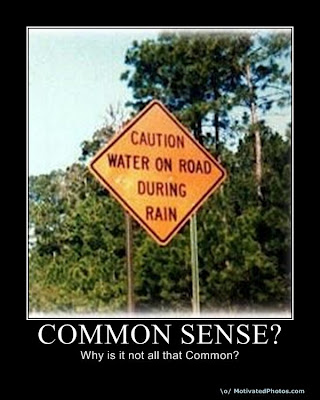
Yesterdays post about empowerment contained the suggestion to practice common sense.  I received some excellent feedback questioning the validity of my recommendation.

After all common sense can be a very subjective term with a multitude of interpretations.   As a decision support tool, does it really have value or is it just an easy motherhood type recommendation.

In Principle

My intent was to consider the practice of common sense more as a principle and strategy than a definitive action.   Common sense is the ability to perceive, understand, and judge things in a way that is shared by nearly all people. (i.e., in common)

An individual feeling that something is the case is of course subjective to an extent.  Good sense is the ability to under those feelings that are shared by the majority.

This is not an absolute method to making the best choices but it is a validation technique with proven value.  Reacting the way most others would is often best (but not always)

Not Absolute

The practice of common sense needs to be considered as a guide not the definitive way to decide how to proceed.  The approach is just one of many ways you can help validate the veracity of your conclusions.

While this is not a litmus test which will always lead to the best results casting aside common sense can lead to disastrous results.

For example, each year the Darwin awards go to people who have lost their lives through silly actions.   Clearly they were not practicing common sense and if they had, they may still be alive today.

Freedom

I was listening to the folk-rock tune “Me and Bobbie McGee” the other day and got reflective and philosophical as a result of the lyrics (songs that reflect real-life can do sometimes do this).

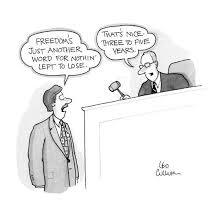
In particular, I was struck by the line, “Freedom is just another word for nothin’ left to lose”.   It is a bit of an ironic statement but probably accurate.

Felliniesque

Through the sixties and seventies, the made-up term Felliniesque (fantastical or surreal) was coined as a reflection on the quality of movies directed by Italian Frederico Fellini.

Frederico’s distinctive style blended fantasy and baroque images with earthiness while still highly intelligent and thought-provoking.  It was from one of his stories the song “Me and Bobby McGee” arose.

Kristofferson

In the late sixties singer-songwriter Kris Kristofferson wrote a song which he based on the last scene of Frederico Fellini’s movie “La Strada”

Kris wanted to create an emotional and moving ode to the sadness and despair apparent in the movie which was based on the simple concept that being free of emotional ties might be aspirational but ultimately it can lead to great sadness.

Feeling Good About Yourself

Empowerment is an important way to help yourself become stronger and more confident, especially in controlling your life and claiming what is yours by right.

I have posted before around the importance of leaders creating a framework that enables others to be empowered.  Today’s post will focus on individual empowerment.

Ask for Forgiveness

A key way to exercise empowerment is to proceed with confidence whether explicitly authorized or not.  If questioned about your actions, in the worse case just apologizes for overstepping and ask for forgiveness.

There are boundaries to this approach that must be adhered to.  If explicitly forbidden from taking a specific action or if the action borders on improper behavior (e.g., illegal, immoral and so on) don’t do it.

If you plan to ask for forgiveness post mortem (per-say) it is critical you have a solid justification and realistic support for your actions.

Empowerment not Anarchy

Taking control of your life does not mean at the expense of all else.  Doing anything you want is a form of anarchy and is not being advocated here.

Taking charge when it makes sense to do so and in doing so enhance your own self-worth and build personal confidence is strongly advocated.   But, be sure to apply a large dose of common sense before acting, perhaps recklessly.

Better Results

Acting based on the directions given by others can be demeaning and also typically will have reduced buy-in by you relative to the matter at hand.  For the sake of your own self worth take personal accountability and responsibility whenever you can.  Empower yourself.

Wasted Time

When you allow time to pass in an unproductive manner, it is wasted.  In essence by devoting our time to a useless activity we expend efforts for no result.

Of course devoting your time to doing nothing does not expend effort but also, seemingly, does not produce results.  While the value of doing nothing could be arguable, I would suggest it is not necessarily wasted time.e

With Intent

On occasion we may purposefully waste time, (i.e., work more slowly and inefficiently) just to fill the time and stave off boredom somewhat.

In the long term staving off boredom through wasting time resolves little.  It does not address the root issue and so just provides

Taking initiative, finding productive and worthwhile ways to expend our free or unassigned time is actually far more beneficial than wasting time, albeit requiring greater effort.

Boredom is a Choice

Staving off boredom through time wasting does not address the root issue and so does not resolve the problem .  This approach provides temporary relief at best.

Whatever is the meaning of life it is certain life without purpose has little value and so little meaning.  Wasted time is an acknowledgement of a lack of purpose.

Being bereft of immediate goals we simply decide to coast until provided an opportunity not too.  Why not create our own opportunity.

Reason for Being

We can always find a purpose and expend effort to achieve it.  Wasting time is a choice, not something thrust on us for which we have no control.

At any given time, determine your reason for being and act.  Only you can make this choice.

Destiny

Do we have an inescapable fate?  Are things just meant to be?  Destiny refers to things that will necessarily happen to us in the future.  Out of our control is implied.

Although it is outside of the intended meaning of the work I wonder if we can create our own destiny through action.  The concept is based on acting in a strategic and visionary way such that your pre-determined fate is actually morphed.

Pragmatic Approach

It is important to deal with things sensibly and realistically in a way that is based on practical rather than theoretical considerations.  If something is inevitable however you behave won’t change that.

However, sometimes we can be too pragmatic in our approach.  Stretching into the area of theoretically possible things and believing in them means we do have a chance to overcome our destiny.

It may be easier to believe in the pre-ordained, that is there is nothing I can do to make a change so why try?

Taking Action Works

The history of humanity seems to demonstrate an inevitable destiny is not reality.   Events throughout history have clearly changed the course.

While we cannot yet travel back in time and change the actions and behavior to see if the results would actually change we can logically and intuitively visualize this to be the case.

The outcome of world war two is a simple and straightforward example of this re-imaging.  Numerous treatise has been written about what-if scenarios and outcomes if different political and warfare actions were undertaken.

Destiny is within our grasp, we just have to be clear what we seek and plan the best approach to achieving our goals.