Confidence

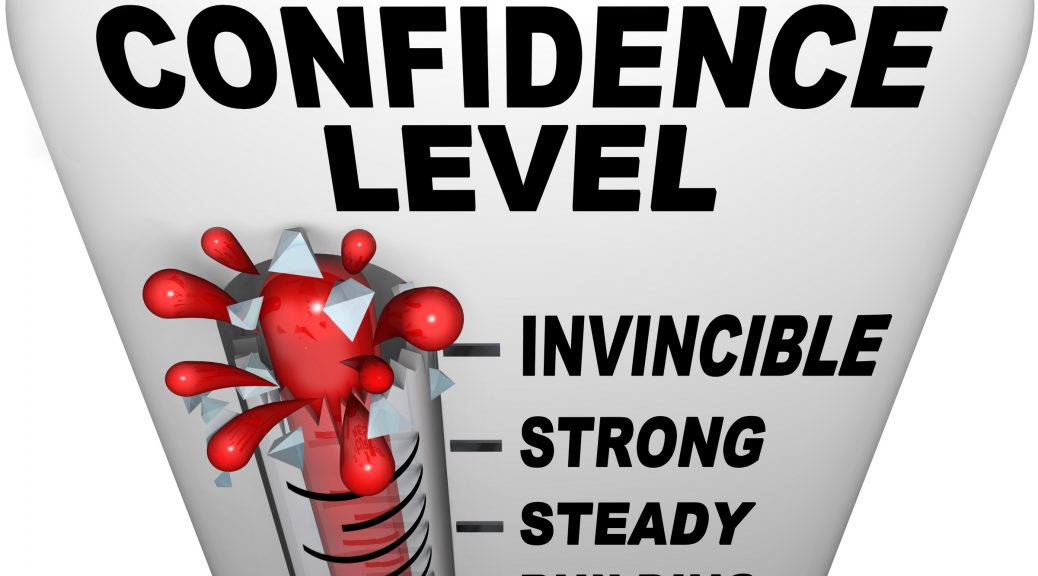
A typical quality of those we consider leaders is their demonstration of self-assurance which arises from self-appreciation of their own abilities or qualities.

This confidence is projected as a personal core value and the underlying behaviors enable us to hold a feeling or belief that one can rely on them; firm trust.

Over Confidence

While confidence is an important attribute for those that seek to guide and support others (and themselves) it is a fine line.  That is to say, overconfidence can lead to disastrous results.

Trust is a foundational factor, without which others cannot have confidence in you.  If they don’t believe the outcomes can be relied on however self-assured you project yourself to be will, in essence, be for naught.

Projecting confidence and not delivering could result in more than disappointment.  Those who trusted your judgment could lose whatever time, effort and currency they invested in you.

Ultimately there faith would be eroded and this could have a long term effect on how others perceive you.  Be very cautious about showing false confidence.

Proceed with Certainty

Confidence is about how you behave.  Being able to behave with certainty should be founded on facts.  Before acting with a high level of self-assurance, showing that you believe in yourself, be sure you have cause to do so.

True confidence is not a gamble.  It needs to be based on certainty to be effective.  Certainty is derived not from you just believing a thing to be so but rather knowing it to be the case.

If you don’t know, make that clear to others.  You can still be confident about searching and finding the answers but don’t guess them.


Life Long Learning

I had a friendly lunch with a former colleague today who is planning to embark on an executive MBA program.  Nothing unusual in that except he is in his very early fifties.

It got me contemplating the value of formal education later in life.  Although I am a fair bit older than my lunch companions today  I have been thinking of taking some courses toward an advanced degree.

Motivation

I admire my friends resolve and am a bit jealous.  The issue with entering some educational program boils down to motivation.  Is the cost and effort worth it (i.e.  are the outcomes justified.

To be motivated to take the significant step of applying for a course of study there are of course a variety of drivers but ultimately three things are key to your level of motivation.

How much work you need to put into it,the cost and what you will get out of it are foundational parameters that must be acceptable, regardless of the other considerations.

Effort and Cost

At later stages of life it is likely you have accumulated the resources to fund a program like an MBA (they are not cheap).  Probably though cost won’t be your limiting factor (subject somewhat to the appeal of the outcomes.)

Effort on the other hand is a bit of harder to reconcile, after all it is work for sure, perhaps a lot of work and as you approach or pass retirement age, do you really want to commit to working, albeit to your personal benefit.

Achievement

The core of a decision to proceed or not most likely lies with your perception of benefit to you.  What will you get out of it.  Retirement aside maybe for you this is the way to keep your brain active, stay connected with other people, even enhance your life achievement.

Personally I am still stuck on the motivation equation, maybe todays lunch conversation will push me off the fence.  Thanks friends.


Be Yourself

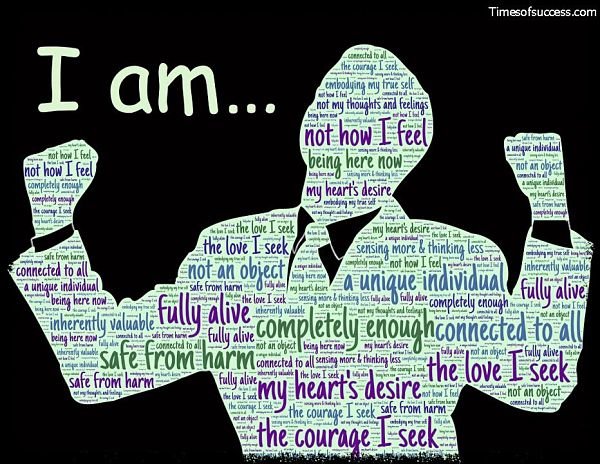
Our true self is who we really are when we let go of all of the stories, labels, and judgments that we have placed upon ourselves. It is who we naturally are without the masks and pretentiousness.

Given all the external influences on this state of being, that is other peoples feedback, demands, and complaints, together with environmental factors (cold, hot, dark, etc), it is not always easy to just be ourselves.

Being You

In order to behave according to your true self, you need to understand what that means.  Who are you? or more personally stated, “Who am I?”

To behave consistently according to who you are is not definitive because who you are is in a constant state of flux.   The framework lies in your value system and personality.

Being yourself requires you to manage external influences in ways that completely integrate with the core YOU.  That is your foundational beliefs and go to behaviours.

Flexibility Required

Being true to yourself is not locked in and unchangeable.  The key is being sure everything you do, both inwardly and externally is what you choose.

Always taking ownership of yourself, choosing what you will be, both from self awareness and others perspectives defines the road to self actualization.

Contentment

A state of contentment requires you to achieve realization  (i.e., fulfillment ) of your talents and potentialities.  This is an integral  part of being yourself.  To be content with yourself demands understanding who you are  and accepting it.

Being yourself is a lifelong task.  You should preserve this state and avoid others trying to influence you to step outside of your basic essence.

Complaining

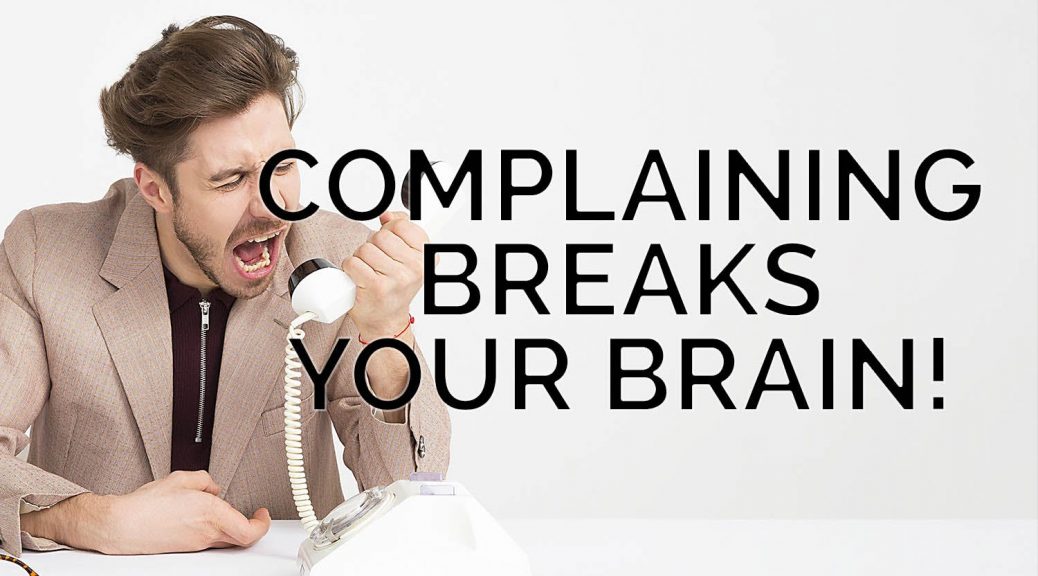
There are times when both myself and people I interface with express dissatisfaction or annoyance about something. It seems to be a common practice.

I always get a thrill (not) when those less than sympathetic folks tell me ” What are you complaining about, just fix it.  What’s your problem?”

Rhetorical Question

I am always puzzled when they ask me what my problem is.  Weren’t they listening, I just explained completely.  They must know the answer to their question so why are they asking?

Obviously they are trying to make a point.  Complaining resolves little although it may make you feel better (which is something) but in essence, the effort made to complain could be put to better use, for example toward solving the issue.

Natural Behaviour

While I don’t have empirical data about the natural inclination of people to complain my own observation n is that it is an endemic practice.

While the extent and ferocity of complaining varies by personality in my experience  everyone like to complain somewhat.  It seems a natural behaviour.

The value equation

I suspect there is some therapeutic benefit derived from sharing things you take issue with.  A real danger of this is the negative impact it may have on people you are sharing with.

Your complaint may cause others to act or feel in ways they would otherwise not.  Caution is prescribed when sharing with others to avoid creating a tidal wave of anxiety.

You are what you do

Classic solo keyboardist Lee Michaels was a classic rocker active during the late sixties and early nineteen seventies.  Hailing for the San-Francisco hippie/ flower child generation he is known for his eclectic tunes.

Surprisingly he had many popular hit songs although his music style (very keyboard and drum focused) and lyrics was not typical mainstream pop or rock of the time (although a blues-based offshoot).

Simple but Accurate

I am a long time fan of Lee Michaels.  One of his seminal hits was played on Sirius XM radio the other day and it got me into a philosophical mindset.

The songs title and chorus is a simple but accurate phrase “You are what you do”  A sentiment well worth embracing.

I have long believed our actions defined us.  This is not a unique perspective it is largely intuitive.  It is easy to perceive that from others perspective clearly “You are what you

Self Awareness

A key to effect self awareness is consciously managing your own behaviour.  Your behaviour is not just affecting how others view you but also how you view yourself.

We judge ourselves based on what we do, not what others do to us.  External actions can influence us for sure but what we undertake ourselves defines us.

In the Moment

Exercising control over your actions requires you to always be present.  Unconscious behaviours are out of your control although they are attributed to you.

You may well regret those things you do on auto pilot, my recommendation is to stay in the moment all the time.

Improving Your Brand

When people hear your name what is their reaction.  From positive to negative and everything in between, even lack of awareness is your personal brand.

Whether you are well known (e.g., the prime minister of Canada) or lesser known their are people that know you and react to your name.

That’s Not my Name

Of course more t(an one person might have your name and this can be confusing to your brand identity.  In most cases both the name and context link peoples reactions to the correct brand.

My namesake, Stephen Kerr is well known and very accomplished basket ball player and coach.  He has a well established personal brand through social media, press, sports fans, etc.

When people are referring to me it is always clear from the context that it’s not about the basketball player.  The reaction is about my brand identity even if it is a “ I don’t know him”

Your Personal Brand can become Viral

Even people who don’t know you but know of you can react to your brand.  For example, “Steve Kerr, I have heard he is meticulous”.  This person might not have met you personally or even ever interacted with you.

Your brand reputation spreads like wild fire.  This highlights how critical it is to ensure those you interact with directly and indirectly are getting the message you desire them to have.

That is, own your brand.  Treat it like the most important thing about you.  Don’t let others sully you.  This means be of good character at all times.  Your personal brand is always on display.

International Peace day

The United Nations has declared Sep 21st (tomorrow) as the international day of peace.  It would be nice to celebrate another year of peace on Sept 21 each year but sadly world wide peace continues to elude us.

Sometimes peace in the bar down the street, the neighbourhood market or local school eludes us.  This is a sad state of affairs.  Peace is only logical.

On September 21st the United Nations recognizes those  who have tried to keep the peace during the previous year.

A Show of Force

Although the human race excels at innovation and continuous improvement of quality of life and cultural openness, on the whole, there are disturbing pockets of illogical unpeaceful behaviour.

How can an intelligent species like humans (we consider ourselves to be at the top of the intelligence curve) believe the best approach to peace is a show of force.

The United Nations has a peace keeping force.  The sovereign nation of Japan does not have an army but rather a self defence force.  However you label it, using aggression to ensure freedom from disturbance,  that is a state of tranquility, seems a bit of misguided approach.

Peace is Good

Strangely to me, humanity has not yet adopted a universal value embracing a state of perpetual peace.  Peace is the only acceptable condition for co- habiting members of the human race and it should be inviolate.

Peace is good, great, extraordinary.  Peace is the only way.  Protecting the peace with aggression is illogical.  Aggression has no place in a peaceful society.

Inappropriate Behaviour

Social norms are dictated by the group.  This may be through a group  hierarchy, for example at the town, city, province, state, country-level with the higher-level groups influencing the lower ones.

On the whole, the social group (ranging from student associates in a class to the population of the country) have great power influencing and directing individual behavior.

Changing Norms

In my life I have seen enormous change in our societies beliefs, this has been worldwide but most significant in democratic countries.  Racial prejudices and sexual preference laws have clearly changed to focus on multicultural  and individual freedoms.

These changes have been rapid in the last fifty years and behaviour that was accepted in the 1960’s is definitely  considered inappropriate today.

Great strides have been made decreasing sexual abuse and the basic tenant that all people are equal is continuously becoming more entrenched in our day to day actions.

Social groups have great power and group think is a powerful underlying driver of social change.  The groups power of censure and disdain can be more effective than guns and bombs (less destructive too ).

Punishing Past Misdeeds

This leads me to my main point of todays post.  Canada’s prime minister is currently being shamed for inappropriate behaviour he practiced over 18 years ago. That is inappropriate by todays standards not back then.

Respect for everyone should be timeless so I don’t condone the prime ministers behaviour in anyway but in truth back at the time he dresses in black face few would have considered it to be inappropriate.

Agile or Waterfall

Getting things done in a specific order of completion, commonly referred to as the waterfall approach is relatively simple.  Basically the instructions are, do this then do that.

Sometimes things are done in parallel or a staggered sequence but typically the tasks have a relationship to each other.  Working this way is simple to do, just organize and monitor.

Waterfall Approach

Following the sequential approach, often called waterfall, the focus is on milestone objectives each a building block to the overall goal.

One  common challenge with this approach  is it may take some time to achieve worthwhile results.  Milestones achievements along the way may be significant but on their own meaningless.

People often say we done a lot, “what are the results”.   Being patient and waiting is not an behaviour many of us are comfortable with. Show me now.

Adding Complexity

More complex strategies involve an iterative approach to planning and guiding the work.  The process becomes a series of interrelated questions and analysis,  like if I do this, then that occurs, otherwise this.

The flow is not step by step.  As a result outcomes are actually practical and useable from completion of the first iteration. This method of getting things done is known as the agile method.

Over time each iteration improves on the previous, ultimately the same finished overall goal as in waterfall approach will be achieved.  You just get to use parts or iterations earlier on.

Of course, both methods for sequencing of work have some value but typically the agile approach requires more skill to manage effectively.

Low Interest

Considering the basic principle of supply and demand, lack of interest is indicative of low demand.  Not wanting to know or learn more about something or someone (i.e., paying attention or focus) leads to disinterest.

In financial terms interest is money paid regularly at a particular rate for the use of money lent.  Your indebtedness creates interest both that which you have pay (financial) and attention (focus).

That is to say the debt has your focus, it worries you and requires attention.   This leads to a focus or interest in the rate of interest. Low rates (and high rates) can grab your attention.

Financial Interest Rates

In an interesting twist of the word, for me anyway,  low interest rates in fact have a high demand, people are interested in them .  I would be far more interested in borrowing at a low rate than a high one.

Our current financial interest rate environment is historically low and has been for some time.  This situation has become more of a norm than anything else.

High Rates

In the 1980’s, when we bought our first home interest mortgage rates were around 20% compared with less than 3% today, in some cases .

We survived through high and low interest ups and downs but over the last 20 years low rates have been the norm and interest in having a loan has been high.

These has resulted in the current world wide economic dilemma.   Economies and employment rates are typical of those associated with high interest rates but Governments fear raising them will cause a debt implosion, which it well might.