All posts by steve@kerrzone.com

Canada vs. U.S., who loses fastest

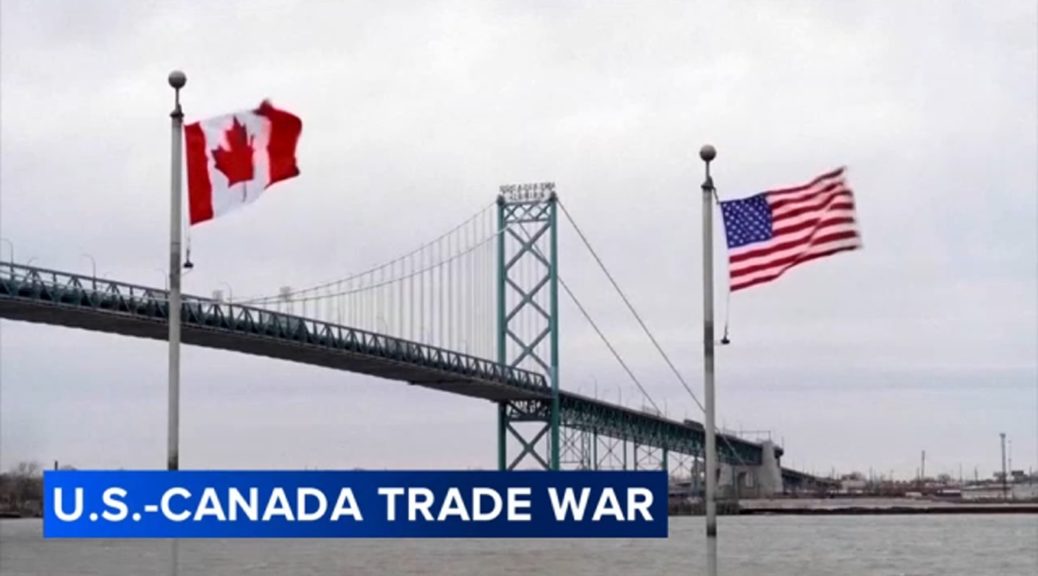
The U.S. has initiated a trade war with Canada.  This has resulted in a massive amount of commentary which I absorb with great interest,  yet in my opinion the real question is rarely mentioned.

The questions around what, how, why and who are somewhat irrelevant but whatever  your perspective about those fundamentals is, the one absolute truth is that everyone loses, period.

Americans and Canadians alike will suffer and neither will be better off than at the start of the trade wars.  Perhaps if a declaration of victory is needed it will be the country that recovers fastest with the smallest long term effects.

Not even about who loses the most

This conflict is not about who loses (everybody does) but rather which country is negatively impacted the fastest to an extent where the pain becomes intolerable.

Like a game of chicken with two automobiles headed for a dead on collision, with no one swerving, the winner after the crash is the combatant witch the least injuries and most importantly is best positioned for recovery.

Popular Support

The US polls show support of the tariff policy at less than 30% while 75% of Canadians support their government actions.  These poll numbers support the theory that America will reach a level of intolerance (i.e., declare a crash) far before Canad,  unless something unexpected occurs..

When and how the trade wars end is unpredictable but it is likely the current American President will declare victory regardless of the circumstances.

After all he has declared victory over Iran numerous times to date although that conflict does not really seem to be over yet.

In the End

The victor will have continued employment growth, rising GDP, strong trade agreements worldwide and recognition their approach was successful.  At the moment my opinion is that will be Canada hands down.
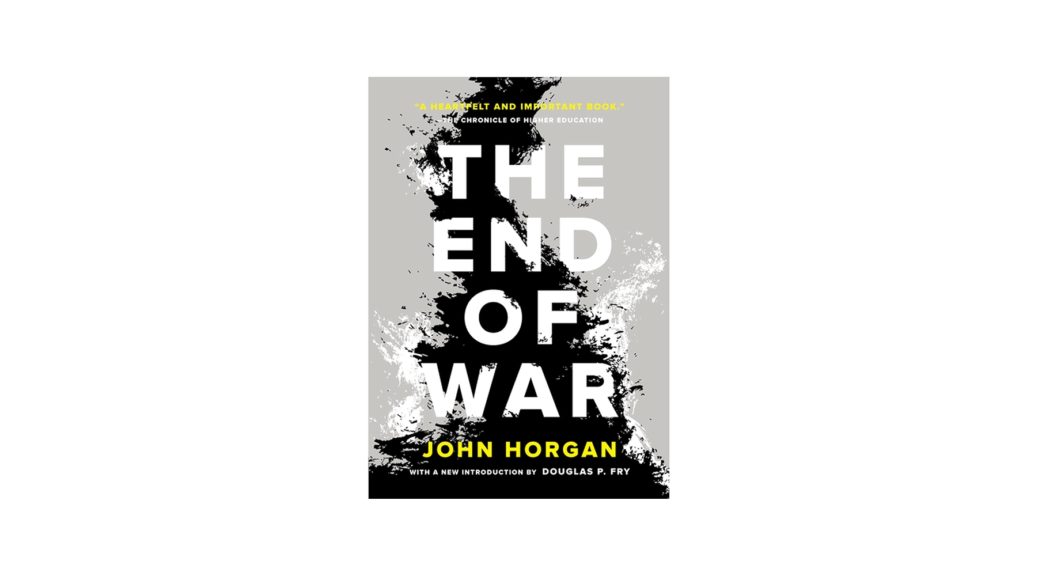


War, whats it good for

For some unfathomable reason there always seems to be a state of armed conflict between different countries or different groups within a country.

The question I ask is why and I am often reminded of a line from a 1970’s song by Edwin Starr entitled “War “ The line “war what is it good for”.

Justifying death and destruction

Current conflagrations involving Ukraine, Russia, Iran, Israel Lebanon and the United States are causing pain and hardship which is only justified by the perspective of the combatants.

The “good” coming out of the war is singular to each of the combatants. Their reasons and rationale supporting the conflict works for them whether the aggressor or defender but is widely questioned not just by external parties but those living within the embattled areas.

Right and Wrong

War is not about right or wrong although the motivation is often publicized as such.  Israel is a t war to prevent their anhilation, Russia fights Ukraine because the Ukrainian people actually want to be part of Russia or have evil delusions about conquering  Russia.

Interestingly both side of these conflicts have different justifications all couched within terms of righteousness.  Sadly those who suffer, life limb and property loss don’t care.

Still it goes on

The most puzzling thing is the continuation of the conflict while those most negatively impacted want to stop it, but are unable to do so.

The psychology  of violent human is unclear but throughout history continues relentlessly.  What is the solution.  Emotions override our logical ability to all be friends.  Why is that and how do we overcome it?  This is the key question.

Unfortunately the answer does not seem to be within reach.  Perhaps leaders we follow should be required to support peaceful existence as a baseline behavioural requirement to achieving popular support.


Costco Bureaucracy highlights process inefficiency

I recently purchased a members only/ on-line only item from Costco.  Research had shown me items in this category are significantly cheaper than elsewhere.  The dual purpose coffee maker I purchased was no exception.

This post is not about Costco deals but rather their internal processes when things go unexpectedly.  In two words “exception handling” Overall  my experience was okay, the job got done but it took way more time and effort than it should have.

The Story

My purchase went through and three days later a UPS shipping label was created.  Based on the UPS tracking number I was able to see 5 days after lable was created no pickup had been made.

I contacted costco customer service who advised that if pickup not made within three days of its creation the item was considered lost.  My option was cancel for refund or cancel and reorder.

I chose cancel and reorder which he did for me.  In due course a new shipping lable was created, a new tracking number showing the item picked up with a new estimated delivery date, which was achieved.

Oops, the canceled order was also delivered, 8 days after its original delivery day estimate and the day before the reordered item. So now I had two items.

Costco Makes it Hard

Seems like a simple scenario to correct.  I call them, they send me a UPS label, I put it on the duplicate product and drop at UPS near me.

After my first call it took two days and 2 follow up calls on my part to get a shipping label to take the second item to UPS for return to Costco.

I found out that my return request was delayed by operational processes.  To me, taking two days to get the  return label is ridiculous.

I had received a duplicate item and was honest enough to let them know.  The return process should have been quick and straightforward with me receiving the return label promptly via e-mail.  And thanks for doing the right thing.

Why service agents cannot create a return without reference to operations sounds like a bureaucracy run wild.  Come on Costco, save some overhead.

Rule of Law

I have been very disappointed by recent events around the world.  The international  “rule of law” seems to be disappearing.  Brute force e is rising to the fore.

That is a foundational principle of democracy ensuring that all people, institutions, and governments are accountable to publicly promulgated, equally enforced, and independently adjudicated laws has been cast aside with self justification based on personal greed.

What Right Have We

I might sound like a crusader spouting rhetoric but truly what right have we collectively or individually to impinge on the actions and behaviours of others.

This is a tricky question because our laws do set limits to guide us in deciding what is right and wrong but unfortunately rationalization and emotional responses often override logic.

For Example

For example the U.S. and Israel attack  Iran for behaving contrary to their expectations.  The country wants nuclear weapons to protect themselves like many other countries have.

Perceived  evil leads us to believe this should be stopped and punished.  Really the justification is more founded in fear than logic.  Perhaps justified fear, perhaps not, clearly a subjective assessment dependent on where you reside.

Who Decides

The most trickey part of this equation is obviously who decides the law.  Is it collectively and mutually agreed or enforced through strength?

The former approach makes most sense but the later is most often chosen.  We need to change this stone wall bullying type of behaviour and work together so everyone can live in peace under a set of basic simple rules that are universally adopted.

Simple approach but very difficult to implement when force seems just easier.

Taking my Toys and Going Home (succeeding from Canada)

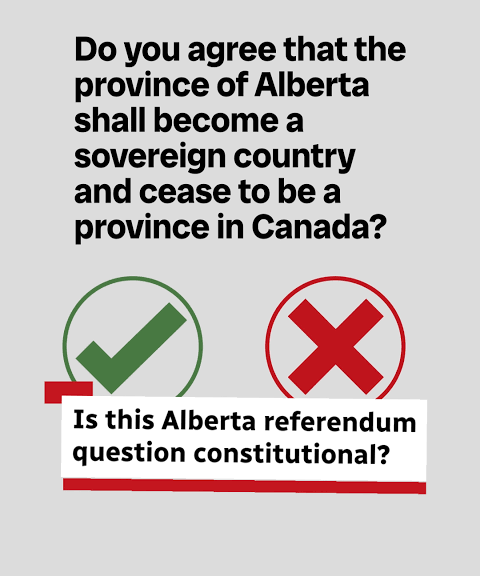
A group in the Canadian  Province of Alberta is currently collecting signatures calling for a referendum on the question of whether to remain part of the country of Canada.

Much has been written by proponents on both side of the argument, that is  should I stay or should I go?  Many of the questions raised can only be answered by speculation so really it is a pointless discussion.

What will happen?

If the majority of eligible Albertans vote for succession, the most likely outcome is a negotiation will be initiated.  Predictably, everyone involved will be working to attain their wants and desires.

A win-win style negotiation is unlikely and the real question in my mind is which side has the strongest bargaining position, Canada or Alberta.  Given the current status quo my speculation is it would be Canada.

So can the Province reasonably expect sucessfull denouement on the following points (as they currently state as fact), I really doubt it.

– Alberta residents who so desire can retain Canadian citizenship

– Alberta will be able to transport goods and services across Canadian territories without cost

– CPP will still be available to eligible Albertans

– Agreements can be reached relative to federal land use and maintenance acceptable to all parties.

And the list goes on with many, many contentious points.

Just Spoiled Children

The call for succession appears to me just about the disgruntled child not getting their way and taking their toys and going home.  It is just an emotional spat poorly thought out.

Working through the issues and coming to a calm reasoned resolution is clearly the best approach from my perspective but sadly, it seems this sad scenario will continue to play out.

What a disappointing approach to negotiation.  Give me what I want or else.  Really, you think that will work, give your head a shake, the country of Canada is unlikely to succumb to extortion.


Rise of the Hegemon

Hegemon definition- a dominant leader, state, or group that exerts significant political, economic, or cultural control over others.

In his speech to theWorld Economic Forum in Davos, Switzerland CanadianPrime Minister Carney alluded to a the end of rules based international order.

Reading between the lines, this is attributed to hegemonic behaviour.  The American hegemony was specifically referenced in the speech although China was not.

What Changed

I agree with Prime Minister Carneys assessment of a change in the world order where rules based behaviour is largely being replaced by acceptance of rule breaking by dominant leaders/ states (e.g. Trump, U.S.)

For me a key question is what changed to lead us to the current state?

I believe China has operated under hegemonic principles for decades but the U.S. adhered to the rule of law which enabled other countries to do so as well.

The recent U.S leadership change has resulted in hegemonic behaviour similar to China and Russia and unfortunately has left no single dominant country to support the rule of law.

What Now

We can only hope Carnies call to arms will succeed .

By acting together, as he proposes,  the “middle” countries referenced in his speech should be able to form a dominant group able to overcome the political, economic and cultural control exercised by the hemegon’s (i.e., China and the United States. )

When countries that value and recognize the need for  international rule of law act accordingly pressures to act  in alignment with political direction from the one or two dominant nations can be overcome.

As Carney states, the old order is gone but by acting in unison we can create an unified international order based on decency and common morality.  The bullies will, in essence, be vanquished.

MSI Codex R2 Gaming desktop Review

My most recent post focused on a flaw in my new Codex R2 desktop PC.     My intention was to draw attention to weakness in the companies support chain not the product itself.

That  post created a bit of a false impression of a flawed product so now I want to do a full review focusing on the PC itself because not withstanding the broken network adaptor this is the best PC I have ever purchased.

That is from a long line of both past and present machinesI have owned, this is the best.  The features, combined with basic capabilities were top notch value when compared to the price.

Truth in Advertising

As is my usual practice I did a lot of research before purchasing.  I wanted hardware with a solid reputation from a trusted manufacturer  that would support basic personal use.

The Codec R2 comes in a few sub- models but all are based on current gen 13/14 intel Central processing units (CPU) and MSI’s own Geforce graphic processing units (GPU).

My model had a modest 16 gig of ddr5 ram but easily upgradable to 96 gig).  The clock speed is a comfortable 4.3 ghz, more ports than I need and great light show based aesthetics overall.

Specifications Aside

For me, the actual usage experience is more important than the specifications which really just guide expectations.   For me expectations were wildly exceeded .

From boot up to program load, game visuals to productivity program usage everything is fast and seamless.  Even a VM instance of Windows XP for legacy gaming works better than my standalone windows machines ever did.

I did replace the flawed network port with a PCIe card and now get blazing wired internet up to the max limitations of my ISP and router port.

The Recommendation

For a measly $900 cdn , I think this may be the best value on the market for a mid range gaming desktop.  I strongly recommend it, if you are in the market for a versatile multi-purpose machine, take a look at this one.

What can result from Lack of Employee Empowerment

I recently bought a new desktop gaming computer manufactured by MSI (micro star international).  MSI is a well known Taiwan based manufacturer best known for their GPU’s (Graphic Processing Unit),

Their Geforce brand is considered one of the premium cards.  They also manufacturer motherboards and other peripherals and computing electronics.

Service Experience

Unfortunately my built in network port was malfunctioning and transfer speeds were limited to 100 mbps rather than the specified 1 gbps.

Given my technical expertise I was able to troubleshoot and narrow the issue to most likely a pin mis-alignment in the port.  The network controller is motherboard attached.

The fix is replace the $200 motherboard or add a $20 PCIe card to the open port on the board.  Given the PC is a week old and under one year warranty I submitted a support ticket.

The response from MSI was quick and clear.  I could ship the PC to Toronto for repair.

Corporate Rules Override Common Sense

Clearing my sensitive data and taking the risk of shipping damage (not to mention packaging requirements ) for a $20 part I could easily install myself did not make sense to me.

I suggested to the support rep I could save them on shipping costs and the need to replace a $200 motherboard if they simply sent me a PCIe card which I would install myself.

The response was straightforward .  MSI policy requires them  to do the warranty repairs in person.

Impact of Employee Empowerment Flexibility

As the support rep in this case had no decision making capability, they could not accept a cheaper expedient option which would have enhanced MSI’s reputation.

I understand the support reps response to my suggestion they try the cheaper faster route.  Unfortunately, their lack of ability to accommodate the cheaper and faster approach led me to request my ticket to be closed to unresolved.

I will proceed with the quick and easy solution at my own cost but this scenario does highlight for me a perfect example of where empowerment to not follow rules ridgidly could  have benefited the company’s reputation.

Strategic Decision Making

My last post was about making good decisions.  Building on the main idea of that post today I will add some ideas that support the long term planning view versus fearful knee jerk reactions.

Just read the other day an interesting point about how succeeding does not require winning every time.  Achieving your goal is underpinned by deciding to focus on the overall outcome not steps along the way.

Roger Federer Example

At a recent convocation in Newfoundland, tennis star Roger Federer noted how his individual point win loss record was only 54%.  That is he lost one of every two points.

Yet his overall lifetime tournament win record was 80%.  The point was his strategic focus  was on decisions that supported the goal – winning the tournament, not tactical events along the way.

Focus on the Strategic Outcome

Strategy is defined as a plan of action or policy designed to achieve a major or overall aim.  Along the way to achieving your strategic goal it is likely many decisions will be required.

The important take-away for the Federer example or my previous blog about avoiding fear or impulsive actions is to understand losing or having bad stuff happens but this should not deter from achieving your overall objective.

Like Roger Federer by focusing on the end result you can still be successful.  Micro decision making can actually be detrimental.  Don’t overly worry about the present, its the future that really counts.


Making Good Decisions

Today’s post is prompted by events I have recently observed in which others are basing decisions on fear versus careful logical consideration of facts.

The most frustrating part of this is a general inability to persuade these people about the negative outcomes of their fearful behaviour no matter how strong the facts.

Winning the Lottery

It is a documented fact the probability of  winning a lottery is very low (the actual chance depends on the lotteries format).  Like gambling organizations lotteries are always profitable for their organizers.

Yet millions of people continue to participate although it is well known chances of sucess are slim.

Vaccines

One of my favourite examples of this centers on those who choose not be vaccinated although the proof of vaccine effectiveness is overwhelming proven through historic evidence (e.g.,  virtual elimination of measles and polio)

Are vaccines perfect, of course not, risks do exist but empirical evidence shows the benefit is enormous and so the risk worth taking.

My point is simply, by weighing the pro’s and con’s of our actions based on historical evidence we can make good decisions, caution is needed to avoid letting unfounded fears override common sense.

Information Security

The events that triggered this post relate to decisions based on fears   of the dangers of associated with the internet and those leveraging it in criminal ways (e.g., identity theft, monetary theft, etc).

Firstly I think it is critical to realize even when taking precautions, bad stuff can still occur.  What is critically important is not to let pleasure and happiness be overcome by fears of things that, in essence, are unavoidable.

Whether we lock our doors, or have alarms, our houses may be robbed.  Mine has.

If we guard our credit cards religiously we can still subject to fraud.  I have.

Guarding against hacker attacks, with most up to date best practices is not impervious to threats.  I have experienced brute force attacks and ransom ware.

Prevention without Anguish or Unnecessary Stress

It is critical to recognize, as noted above, there are no absolute solutions.  Risk mitigation just needs to be reasonable and can focus on prevention (e.g. locks) or post event  mitigation (e.g. insurance).

The key here is to make sure your risk mitigation behaviours do not stop you from enjoying yourself ( i.e., don’t be homeless because of fear of robbery, or auto-less because of fear of accident, or not embracing all technology has to give because fear of theft.)

Is fear overcoming smart decisions

Ultimately our choices are based on a multitude of factors.  The point of this post is to relax and think about the pros and con’s of your decisions based on costs and outcomes.   This should enable choices based on logic  versus emotions (i.e. good decisions). That is, choose wisely, don’t stress, don’t worry by basing  your actions historic facts and focusing on the best results.

Ask yourself, are you acting in ways that restricts your successful outcomes and personal enjoyment.  Is your fear causing you unnecessary stress.

Remember there are no absolutely correct decisions, bad stuff can happen no matter what you do, avoiding fun and enjoyable tools unnecessarily hurts only you.