Tag Archives: behaviour

Stir Crazy

A common phenomenon that often occurs in jailed criminals is psychological instability arising, as a result of being imprisoned (i.e., going stir crazy in the common vernacular)

Interestingly given the restrictions on the face to face social interactions (masks and distancing) coupled with general encouragement to stay home,  many people are experiencing this symptoms.

Fear of the Unknown

Confinement to ones home coupled with limited ability to predict when things will return to normal impacts the way we behave, sometimes even without us consciously recognizing the effects.

The first step to addressing the behaviours associated with uncontrolled confinement (involuntary) is to recognize them.  The stress of change coupled with not knowing when things will return to normal can cause us to behave erratically.

Domestic Disputes

The local police recently reported a higher incidence of domestic disturbances over the past month.  I attribute this to the effects of going stir crazy.

Typically one of the first symptoms of psychological distress arising from confinement and forced close quarters is the dropping of etiquette associated behaviours.

Social norms can go by the wayside when you don’t have access to society, just those you stuck in the house with.  Driven by the personal stress arising from an unknown future, playing nice does not appear to be a priority for many of us.

No Regrets

If you seek motivation to identify and shut down the effects of going stir crazy, just remember, it is not a valid excuse for bad behaviour and if you don’t hold it in check you are most likely to suffers regrets in the future.

Nothing good comes out of letting confinement adversely affect your psychology.  Take charge, overcome the feelings focus on when you will be free again.

Empowerment

Increasing empowerment in your life is a process of becoming stronger and more confident, especially in controlling one’s life and claiming one’s rights.

Almost all of us serve somebody.  It is those leaders or authority figures that can be a potential roadblock to personal empowerment. We must interact with them effectively if we want to increase our empowerment.

Force or Influence

There are two main ways to exercise your personal power.  Forcefully or through the art of finesse.  That is the practice of getting things done in a subtle and delicate manner but getting them done.

How you behave directly influences the way you build confidence with those you serve.  Ultimately this is directly related to the level of empowerment you are able to attain.

The use of influence type behaviours is usually more effective and longer-lasting but on occasion being forceful is what is expected and being too meek may cause others to take charge.

Cautious Balance

It is important to be careful not to be categorized as either forceful or too restrained.    The behaviour balance you choose is best tailored to the target audience.

In the case of building empowerment that is those you serve.  But this should not be interpreted as being servile.  In fact, it is very much the opposite.  Servile behaviour is unlikely to increase your empowerment.

The key is to balance the way you act in such a way you are at neither end of the spectrum but rather more centred.  That is not to say the forceful or the meek do not attain their goals but the middle ground is more often the route to success.

Relationship Context

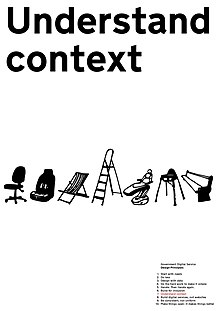
How we interact with each other can be heavily influenced by the context of our relationship.  Two obvious examples of this would be relationships defined either as a colleague or as a client/customer.

Where both parties view the other as a colleague the relationship is usually not-adversarial largely defined by polite behavior.  If both view it as a client/customer relationship it evolves more as demand/subservient behavior depending on which role you are in.

Mis-aligned Context

The really interesting stuff can arise when each party views the context differently.  This can lead to anxiety, frustration, disagreement, and dissatisfaction.

Consider the case where one “colleague” considers themselves the boss (not a colleague).   Interactions have a disconnect from the beginning as one colleague believes they have granted power over the actions of the other (unfortunately this is only one way).

The perceived context of each participant leads to different behavioral expectations.  Interactions could very quickly become adversarial as each party’s expectations don’t match.

Service Expectations

In many many societal groups, organizations one internal unit provides service to another.  Everyone is part of the organization and in these cases do not have direct reporting alignment.

Are the receiving unit members clients or customers of the servicing unit or is everyone a colleague?  Or is this even defined but rather just shakes out organically?

Where one person views another as a colleague rather than a customer or client the interactions can quickly fall apart due to widely differing expectations.

The appropriate behaviors for provider/client interactions are quite different from colleague to colleague.  Without being clear upfront as the context of the relationship you can get into hot water very quickly.

The Simple Solution

Before interacting with others, share your relationship perspective and ask for theirs. Even if there is not agreement at least you will know that and can adjust behaviours accordingly.

Being Polite

The definition of politeness is behaving in a way that is respectful and considerate of others.  Unfortunately determining what is respectful and considerate is subjective and there is the rub.

Considerate behaviour should align with expectations.  Individual expectations can vary considerable and group expectations are formed from cultural bias.

What?

In English the expression what can be associated with body language indicating incredibility.  That is, the observered behaviour is considered outlandish or outside the norm.  

Such an expression, used about some action that is a  behaviour norm in another culture will fall flat.  Perception and expectation drive the interpretation of politeness.

Picking up the Garbage

In North America there are public garbage receptacles everywhere.  Still there is garbage randomly cast aside everwhere, just check your local park.

In Japan there are virtually no public garbage receptacles and despite this there is virtually no garbage in public places.  

In Japan, it is considered impolite to dispose of your garbage anywhere but home and the main deviation from this is the by foriegn tourists. 

The cultural norm of the country very much drives behaviour.  Of course that is not to say there are some impolite people but their occurance is rare.

Practicing Logic

While individual expectations and cultural bias is a reality the benefit of polite behaviour is the pleasure it brings to others, and so to yourself.

Understanding the context of behaviour norms  is valuable but most important is self awareness about the impacts of your beviour on others.

In the moment reacting to and meeting their needs and expectations can and should be more of an exercise in applied logic than guessing what the expectations are.


Behaviour Values

Your personal values are the things that you believe are important in the way you live and work.  For the greatest level of internal serenity the  way you behave should be in accord with your values.

When others believe your behaviour is wrong and ask you to change,  assuming your behaviours are consistent with your values (i.e., your integrity is intact) there is a problem.

Behavioural Issues

I heard an interesting story the other day about a frustrated mother attempting to stop her nine year old daughter from lying.  After one confrontation the daughter demonstrated an amazing level of maturity.

“Mom”, she said “ The issue is not my telling lies, rather its the fact you don’t want me to”.  Out of the mouths of babes.  What the young girl was questioning was why she needed to adopt her mothers value.

Tell the Truth

Truth telling is generally accepted as an intuitive value that should be commonly held.  Yet frequently people lie to avoid embarrassment or confrontation.  This is generally considered acceptable.

For example, I can’t make the party because I have an appointment might be an excuse you use to avoid attending a party even when there is no appointment.

Who is Right

Behavioural expectations can often be subjective and mostly based on the expectors value system.  This can cause conflict and stress people by expecting them to shift their value system and conform.

Often majority rules is used as a justification for this.  Polite society must have some boundaries.

There is no definitive answer to the issue of different perception of values and their associated behaviours but it helps to recognize this ambiguity does exist and needs to be dealt with.

Cultural Motivation

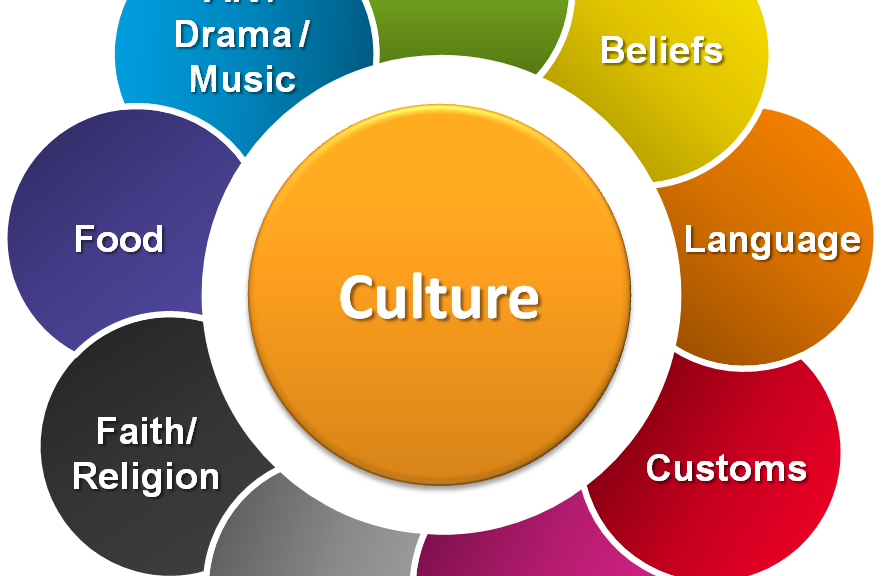
Taken as a whole, countries are typical examples of places with a fairly clear set of customary beliefs, social forms, and material traits of a racial, religious, or social group.

Or simply stated, countries have a unique culture embraced by their populations.  This does give rise to stereotypes or unconscious bias but in the case of countries, there is always some root basis to the cultural interpretation.

For example, Canadian culture is often stereotypically defined as polite.  Not all Canadians exhibit excessive politeness or repeatedly apologize but on the whole, this is a national trait and arises from a natural observation of the populous as a whole.

How does this happen

Assuming you can except national cultural stereotypes exist and do have some basis in reality, the question becomes, how does this happen?

The most common methodology is for cultural behaviors to be enforced, largely through consequences.  From a young age, we are trained to conform to societal beliefs through the carrot (positive consequences) and the stick (negative consequences).

Some societies, I believe Japan is a good example of this, develop conformance to the expected behaviors collaboratively.   That is through example and individual interaction where the reason for the overarching beliefs is developed individually, not forced but absorbed.

While much harder to achieve, absorption of cultural values through self-learning rather than enforced training is much more effective and most importantly sustainable.

Left or Right (somewhere in the middle)

The downside, to both practices of forming a common culture, is the impact on the individual.   The balance between total individual freedom (anarchy) and a rigidly established society (authoritarian) is the sweet spot cultures should naturally try and attain.

When cultures grow organically they are more likely to be balanced.

Maximizing Pleasure

A life without purpose or meaning probably results in a low level of motivation to act.  When there is no reason to do anything (purpose or meaning) so one does nothing.

The exception to this is when doing nothing is your goal, i.e., it is what motivates you and so your behavior is geared to enabling you to do nothing.  If this meets your purpose, it is perfectly fine.

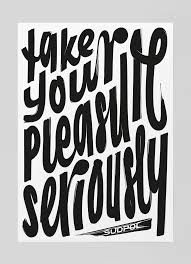
Your goal is yours to select, however, there is a primal driver that overrides your choice of purpose, meaning or lack thereof.  “Pleasure”.

Seeking Pleasure

Pleasure is simply a term to describe a state in which you have a feeling of happy satisfaction and enjoyment.  That is, pleasure feels good.

I theorize that pleasure is the primal driver forming the underpinning of my own personal motivation (and probably that of most people).  Simplistically, seeking maximum pleasure is a component of everything we do (i.e., feeling good).

It’s all about me

Pleasure seeking does come with some constraints.  If someone else is suffering at my expense I do not feel pleasure.  Fortunately, this is true for most of us.

Those who derive pleasure without regard to context are usually labeled as deviant even criminal in their nature.   Intrinsic to the human condition is a level of empathy.

Some are more empathetic to the plight of others, possibly influenced more by nature over nurture.   Generally though (excepting the aforementioned deviants and criminals) everyone exhibits some level of empathy toward others.

Embrace your inner desire to seek pleasure

For me, seeking maximum pleasure (as long as it’s not at the expense of others) is natural behavior and there is no reason not to both recognize but also embrace it.

Reputation Part 2

Yesterdays post explored the concept of personal reputation.  In summary, it is of great value to you to understand your own reputation (as varied by audience).

Leveraging your reputation is an invaluable tool in supporting achievement of your goals.  Managing your behaviour (how you act and what you do) will manage your reputation.

Group Think

Groups of people achieve gang mentality  by sharing their perceptions about others with each other.  The communication methods can include social media, public media, in person, water cooler gossip and a variety of other ways.

The group is not logical and underlying bias can influence the perceptions.  That is for example a group may have a conservative or liberal bias.

The reputation you have within the group is mostly not openly shared with you so you need to figure it out through observation.  This can include conversational ploys to determine what others think of you.

Behaviour and Reputation

Reputational behaviour is not only what you say and do but ranges from the clothes you wear to the cut of your the cut of your hair.  How loud you speak or the effectiveness of your deodorant all inluence reputation.

Since a lot of your reputation can be derived from gossip and peoples bias the trick is to figure out what those bias are (through logic and intuition) and use them to craft the reputation you seek.

Your reputational goal could be respect, isolation (just leave me alone) , a trusted advisor or any of a plethoria of things.  Whatever it is, you can craft your behaviour to formulate the matching perceptions.

Personality and Maturity

Your personality, basically a word to describe your habitual behaviours, is believed to be formed as a result of both nature (neurological development) and nature ( the environment you grew up in)

In general the foundation of your personality, based on nature and nurture, is believed to be set by your early teens.  Your habitual behaviours can change over time but like habits in general, it is usually slow and difficult to do.

Maturity

Maturity decribes growth and advancement in your behaviour.  This is largely based on experience.  The behavioural changes you make as time goes by and you gain maturity can include impacts to your habitual behaviours (personality).

The way a person might typically behave in given situations have been studied and labled as personality types.  The level of conformity, efficiency and effectiveness of overall behaviour is typically used to gauge ones maturity.

While typically personality is considered set at a young age, as you grow older and mature in other behaviors so can your personality mellow and mature.  Personality and maturity can combine to create change.

Continuous Improvement

The point is, although your personality can be an underlying defining aspect of your core behaviour, as you mature it can and will change.  Continuous improvement of your overall behaviour is not only possible, it is desirable.

To coin an old television conmercial for a ladies cosmetic product, your not getting older, your getting better.  Don’t ever give up improving your behaviors, both those you interact with and those you will be interacting with, salute you for continual striving to behave better.

Conscious Thought

Conscious thought requires more effort than unconcious thought.  It is theorized that one possible cause of autism is a persons inability to think unconciously.

While most people can behave in an autonomic  way for many routine actions it’s thought those inflicted with autism have to think through eveything in a conscious way.

The danger of Unconcious thought

In theory, being able to rely on predefined soltions to external behavioural clues allows us to focus on the important things directly and conciously.

Those things that require analysis and thought to arrive at informed conclusions, and subsequently, leading to  appropriate behaviour are best handled consciously.

Think about the scenario first thing in the morning.  You begin to encounter other people and mainly great them with a “good morning”.

This is a typical sub conscious behaviour.  Somewhere in your store of unconscious behaviours is a routine grreeting to use in the morning even when it is not reflective of reality.

How often have you muttered good morning to others when in reality for you it was anything but.  People with autism will usually think consciously what their morning  greeting should be and then say it.  Many of us find this disconcerting.

And so that highlights both the benefit and danger of unconscious autonomic behaviours.  They may not really be appropriate because they are based on a pre-defined action and so they could be off putting to some or result in truly inappropriate behaviour.

Of course acting conciously when a routine action is expected could be unnerving as well.  On the whole though acting consciously is more likely to be both supportable (you had a well thought out reason) and the outcomes will often be better.