Tag Archives: success

Determination

I recently saw a post that reminded me failure is not an indicator of future success.

Take note:

  • Tom Brady wasn,t selected until the 6th round of the NFL draft (199th pick) due to slow foot speed, lack of arm strength,  couldn’t throw a tight spiral and said he couldn’t improvise if a play broke down
  • The greatest basketball player of all time, Michael Jordan, was cut from his high school team.
  • Walt Disney was fired from his job at a newspaper early in his career–they said he lacked imagination.
  • Jerry Seinfeld was booed off stage in his first stand-up comedy appearance.
  • Sir James Dyson suffered through 5,126 failed prototypes before he landed on the first working Dyson vacuum.

There are many, many other examples, both of famous personages  and not so famous people, that reinforce the concept, determination and persistence do lead to success.

Personal Experience

In the mid-2000’s, I was in a career rut and needed a change. In the past I had sought to move myself in different directions with middling success.

This time, I decided to persist until I made the career move of my dreams.  It took over approximately 350 direct and indirect applications over 7 months, resulting in more than 50 interviews (some I rejected myself, some I was not successful).

Ultimately, I did secure the job of my dreams, senior director of a large application development  and support team.  This only occurred through perseverance.

Simple Advice

Like the advice in the post I recently read, directed to an individual searching a career change, don’t be disheartened by failure, the odds   are in your favour for success in the long term, keep on going, you will get there.

Set your own bar

Everyone is subject to the expectations of others.  We also hold expectations of both ourselves and others.  Ideally what we expect of ourselves matches what others expect, although this is not always the case.

While our personal accountability drives what we invest our time and effort in motivation and capabilities play a key role in the type and magnitude of results achieved.

Syncing to External Desires

What others want you to do (i.e., their expectations of you), might not map to your self-expectations but it is very important to know what others want.

This is not necessarily so you can meet the demands of others but rather so you can choose in a reasoned manner how you should respond to these external expectations.  This is about the benefits or associated negative impacts.

Knowing what others seek is key to being able to build your response motivation, regardless of whether it will be supportive or not.  Most critical though is knowing what you want.

Setting Personal Expectations

Mainly the level of performance you desire to achieve is measured by results and these outcomes represent your objectives.  When setting your personal expectations you must first know what you plan to achieve.

This could be a stretch goal and your expectation might be only to make the attempt.  Achieving the goal is not always a certainty but doing everything you can to make it so is fully within your power.

Determination and fortitude underpin the level of success associated with your attempt to perform to the level you desire, this can vary by individual but the more determined you are the more likely you will succeed.

What by When?

Clarity of purpose, understood by everyone involved or impacted by your plans and objectives, is core to their achievement.  It has been asked many times but if you don’t know where you are going do you ever arrive?

Leadership first and foremost is about ensuring that clarity exists – universally.  The clearly and broader the message is spread the greater the likelihood of arriving at the destination but at least you will know if you are not there yet.

What by When

For everything we set out to do there is always the question “What are we doing?” and co-existing with the objective is timing “When will we finish?”  These two simple pieces of information completely define any and all tasks we undertake.

This is not to say plans are absolute and inflexible.  Both the what and when parameters can change as you meander along your journey.   Starting without knowing what you are attempting to achieve leads to chaos, changing it as you learn more does not.

Motivation

Everything we do , how we behave, our desires, all have some underlying motivation.  Nothing happens without motivation.  Both what you are seeking to achieve and the time frame underpin motivation and drive urgency.

Having a solid understanding of the strategy and direction can be very high level or intricately detailed but without some definition of purpose  why would we do anything.

Of course even doing nothing requires motivation.  That is to say nothing can be defined and so is something.  The level of motivation to do nothing (possibly the default activity) does not need to be strong but still must be present.


Empowerment

Increasing empowerment in your life is a process of becoming stronger and more confident, especially in controlling one’s life and claiming one’s rights.

Almost all of us serve somebody.  It is those leaders or authority figures that can be a potential roadblock to personal empowerment. We must interact with them effectively if we want to increase our empowerment.

Force or Influence

There are two main ways to exercise your personal power.  Forcefully or through the art of finesse.  That is the practice of getting things done in a subtle and delicate manner but getting them done.

How you behave directly influences the way you build confidence with those you serve.  Ultimately this is directly related to the level of empowerment you are able to attain.

The use of influence type behaviours is usually more effective and longer-lasting but on occasion being forceful is what is expected and being too meek may cause others to take charge.

Cautious Balance

It is important to be careful not to be categorized as either forceful or too restrained.    The behaviour balance you choose is best tailored to the target audience.

In the case of building empowerment that is those you serve.  But this should not be interpreted as being servile.  In fact, it is very much the opposite.  Servile behaviour is unlikely to increase your empowerment.

The key is to balance the way you act in such a way you are at neither end of the spectrum but rather more centred.  That is not to say the forceful or the meek do not attain their goals but the middle ground is more often the route to success.

Who, What When

Through experience I have come to believe accomplishing a goal requires three things, at a minimum.  Of course you need to be clear on what the intended outcome is be you start.

The three simple things are:

  • What do we need to do in order to attain the objective?
  • Who is involved in executing the “what”?
  • When will it be done?

Anticipating Failure

Whether a very simple or complex task unless what, who and when is clearly defined I am never surprised by failure.  Failure is more likely than success when clarity of purpose, approach and accountability is not present.

That is not to say you cannot stumble upon success miraculously (often called luck) but even with luck, intent is usually present which implies some level awareness of the objective being sought.

While being very clear about the steps to achievement, how they are executed, by whom and when does not guarantee success it does increases the likelihood.

Guaranteed Results

Understanding how to achieve the results you seek  is certainly a best practice it does not mean you are guaranteed to reach your goal.

If that were the case, this practice would be universally employed.  We simply decide, I want that, here is how I can get it, with these peoples help and this is when I want it.

If this approach was always assured of success everyone would, after all if what I want is guaranteed just by making the attempt, what barrier to trying?

Sadly it is not that simple and good planning and preparation do not equate to absolute achievement (the possibility of failure is omnipresent).  Still good process is more likely to lead to success so well worth undertaking.

Defining Success

Simply put, success is achieved when a the purpose or goal has been accomplished.  The definition of accomplished is the sticky point.  Even completion of well defined aims can be some what subjective.

Who determines your success.  Arguably it should be a self assessment but this can be a hollow victory.  If others don’t share in your conclusion did you really succeed?

Own It

Others opinions are a valid gauge for deciding whether you have been successful or not.  However, ultimately you own  personal accountability for determining the success of  your achievements.

For example, when running a marathon the officials might define if you won or not.  You determine the measure of your success.  Just completing the marathon, not necessarily winning might bring you satisfaction and joy.

Needing Approval

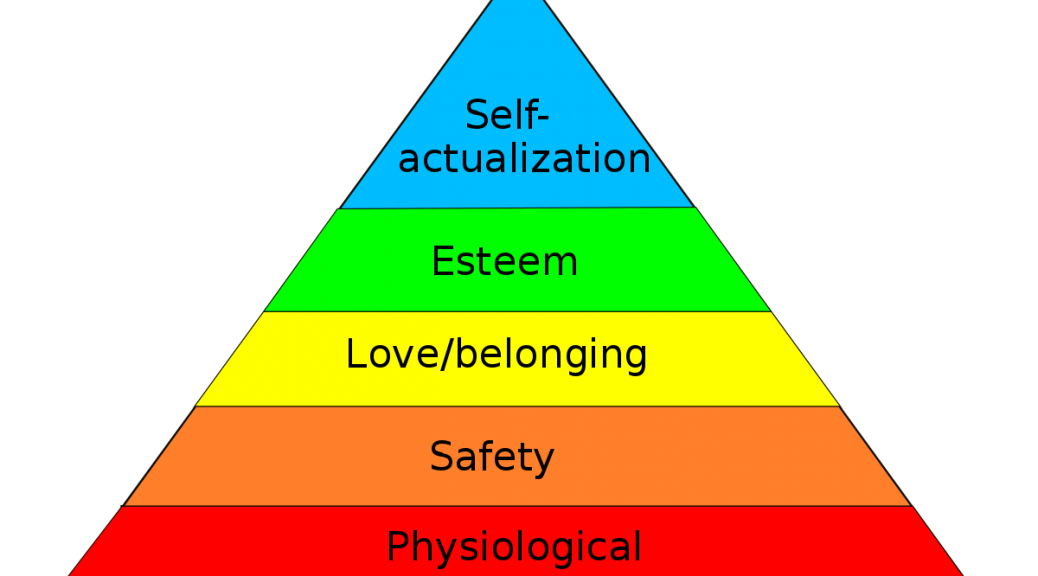
The need for acceptance is a basic human trait.  It is strong and within the hierarchy of needs  defined by American psychologist Abraham Maslow in the nineteen forties, acceptance tops our basic needs.

Therefore success defined solely outside of approval or recognition of others cannot fully meet our needs.  We might be self-satisfied but how others feel matters to us.

That being said we do not have to let their opinions dominate our own analysis and conclusion.  Influence how we view the world, of course but that does not mean we should readily succumb to the power of others.

Balance Yours Needs Against Others

The key to feeling joyful about your success is balancing your own perspectives against those of others and reaching a realistic balanced assessment.

The conclusions relative to personal success are yours to own so you must be fully comfortable with what they are.


.

Avoiding Mistakes

Mistakes are the product of ill-conceived actions that are typically fraught with peril.  Based on this description of the root cause of mistakes, they are totally avoidable.

Simply put aside high risk approaches conceived in haste and the likelihood you will make a mistake is very low if non-existent.  This is a strong argument for consistently practicing careful analysis and thought.

Reality Bites

In practice taking the time and effort to apply careful analysis and planning to everything we do is impractical.   While careful forethought is a wise approach the situational context is a key factor affecting the feasibility of behaving this way.

Undertaking expediency often leads to mistakes because the urgency can drive us to rushed decision making that is not fully thought out and high risk.

The reality is mistakes can be avoided, however, it is often not a simple thing to do.  As the first step in any decision-making process, it’s most helpful to ask yourself “What can go wrong and if it does how sorry will I be?”

Considering the negative impacts, even if only at a high level focusing on the obvious, allows you to make a choice to stop and take time, even in the face of percieved urgency.

Mistakes can be Painful

While taking too much care to avoid mistakes can lead to missed opportunities taking too little can be painful.  Spending a little effort to help achieve the right balance is always worthwhile.

Avoid the pain, maximize the gain, think a little before you act.


Success

Your accomplishments are a key part of what defines you, both to yourself and to others.   These successes are dependent on your belief the purpose or aim has been accomplished.

To be successful begins with understanding what success looks like (i.e., your purpose or aim).  If you are not perfectly clear on the goal or objective (what you are trying to achieve) how will you know if you achieved it?

In Isolation

In reality, however, if your only measure of success is personal and subjective without considering the views of others, you might not be as successful as you think.

Taken in isolation believing in the achievement of personal success can still be of value to you, however, it might not be a singularly defining factor from another perspective.

That is you may consider your achievements as important and valuable.  This can be personally motivating and lead to self-aggrandizement.

Unfortunately, if it is not a common view.  This leads to the question, “Have you been successful if it is not validated by others and from alternate perspectives?”

Your Happiness

Is success what you define it to be or is it defined by those around you?  Perhaps this is best answered by the rhetorical question,  “Who is in charge of your happiness?”

Remember those around you do not define your goals, they may influence them but you own them.  Living within the context of others approval might be needed to supplement your personal success but it should not be over powering.


Motivating High Performance

Performing both at your best and incenting others to do so is a good way to achieve happiness.  It makes me feel good to see others succeed and to do so myself.

Hence a core motivation for getting things done is simply the pleasure derived from success.  Making sure you and everyone involved in the performance understand what the results are and how attaining them will make all feel good.

Trust and Respect

Treating both yourself and others with trust and respect is a basic underlying behavior to enhance the motivation (trust and respect begin with how you view yourself).

As a default, perceiving everyone is being treated fairly and respectfully results in everyone being inclined to do their best and creates a high-performing culture.

Clarity

Building on trust and respect is just as important.  We all need to know why we do are doing something and personally believe in the value of doing it.

This understanding leads to buy-in.  When we care about what we are doing, appreciate it and anticipate the results we are far more likely to perform at a higher level.

Beware the Poisonous Environment

Some cultures are so poisonous that people only care about themselves and will never take any risks that might have negative personal consequences.

Success and strong positive results are founding on trust, respect and creating real understanding.  This leads us all to care about both our own achievements and those of others.  We are willing to extend ourselves for the greater good.


Stealing Home

Sports analogies are at a forefront for me this week although I have no idea why.

In baseball when a runner advances to a base to which he is not entitled in the normal course of play, for example by a hit or a walk, it’s credited as a stolen base.

I think of this as analogous to attaining a goal outside the normal process.  Achieving a strategy outside of standard channels could be thought of a stolen success.

Of course, stolen in this case  is within the rules, not outside the law.  The beauty of it is that it is unexpected by others, the stolen element has an element of surprise.

Sneaking Success

Planning an approach to achieve your goals without fully communicating to all stakeholders can be risky, however the element of surprise can be an advantage to you.

Caution must be exercised to ensure you are not being underhanded in a way that would offend.  This takes skill and careful preparation and planning.

Stealing your success often means you don’t need to overcome obstacles typically associated with bureaucracy.  You simple bypass andif needed apologize later.

Handle with Care

Executed carefully, so you are not labeled as sneaky, theresults can be achieved with greater speed and effciency.  Overall the appraoch can be quite satisfying.

The value is stealing home most likely is the fact accomplishments that would not be or ones that become watered down, are possible to achieve this way.

It is an approach worth considering as long asthe reward outweighs the risks.