
Tag Archives: openess

Intransigent

Sometime when we are having a debate or trying to persuade someone to adopt our perspective we may find them unwilling or refusing to change their  views or to agree about something.

Or this intransigent behaviour could apply to ourselves, that is we might not be willing to compromise and  obstinately maintain our superior attitude.

Everyone is Important

For me, the best way to avoid being intransigent is to remind myself that embracing diversity of background and opinions is extremely powerful and effective.   Being obstinate can shut down rapport  very quickly, it is really the opposite of embracing others ideas.

This does not mean the thoughts and ideas of others take precedence over yours, although they might, but rather makes sure you treat others perspectives as important without summarily shutting them down.

For Example

I recently had an interesting discussion about my recent blog on the value and need to get vaccinated for covid to create a situation which eradicates spread of the disease.

At first my position was absolute brooking no argument until my obstinate behaviour became obvious to me.  I realized it was not necessary for me to agree or support the view of others (yes there are people who question the value of the virus) .

Assessing the information to date, both for vacinnes and against, Albeit how well articulated the detractors may be I find myself firmly pro-vaccine but much as I would like to simply dismiss the detractors this is no where near as powerful as continuing to work to persuade them of the correctness of my position.
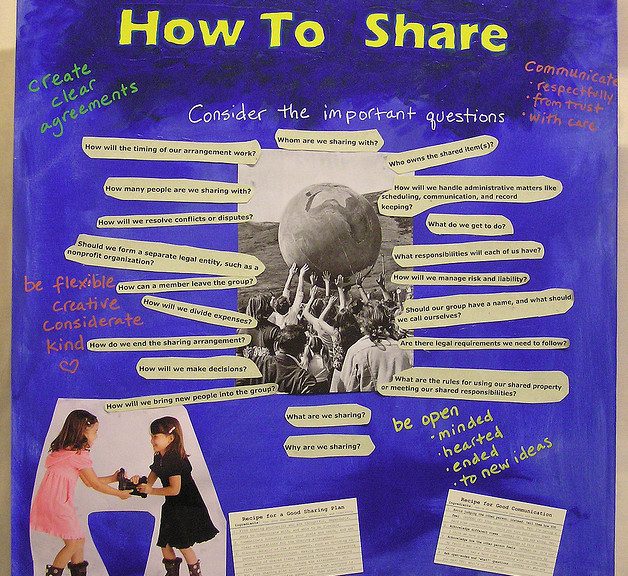



Tell me

Sharing information could result in a loss of control.   This principle is intuitive and is a key underlying factor in shaping our behavior when it comes to telling others stuff.

The catchphrase “Information is power” refers to using it as a lever to enable increase our capacity or ability to direct or influence the behavior of others or the course of events (i.e., exercise power).

Associating the loss of control with a lessening of personal power is a reason information is often not shared.

Overcoming the Loss of Control

While it can often open opportunities for collaboration leading to better results, given the impacts on both our control and power base it is more likely to hold back providing others information freely.

Strategic dissemination of information is often viewed as the best approach largely because of fear.  That is fear of loss of control.  In reality, giving up this control and frequently lead to better results.

The power of diversity comes into play when we leverage ideas and support of others.  Harnessing different thinking can be a great way to resolve the issue or come up with innovative approaches.

Share and Get Rewarded

Although our instinctual behaviour is to be cautious when sharing our personal information the downside is missing on the potential rewards by sharing freely.

Taking advantage of others resolves the dangers of the unknown things that you don’t know but others do.  Share with others and they will tell you what they know.

The advantage gained by sharing usually far exceeds the cost of giving up some control.


Sharing Success and Failure

We sometimes believe sharing failures is a sign of weakness and sharing success is arrogant.   As a result, many of us are not as open as we could be.

The reality, demonstrated by many studies, is the regular sharing of success and failure with others (team, family, colleagues, etc) provides far more benefits than concealment.

Being Aware

Failure is not a lack of weakness.  I prefer to view it as a sign of confidence.  Without confidence you won’t attempt things that you could fail at, hence you won’t fail.

Success leads to happiness and although it may sound unintuitive most people relish the success of others, it makes us all feel good.  For the most part, everyone genuinely enjoys achievements whether their own or others.

Concealing these things from others, thinking it will depress them (failure) or make them jealous (individual success) is just a silly approach.  It is not accurate.

Please much prefer to be in the know relative to what is happening.  The majority of us are mature enough to handle good and bad news without falling apart.   Being excluded is far more detrimental than being informed.

Motivation

Holding back information is demotivating.  People you interact with can sense when you are holding back.  The things you don’t share will be unlikely to demotivate.  The unknown is scary to others and leads to insular behavior.

When others are unsure they tread carefully.  They are unlikely to challenge and push ahead.  Fear of what you are keeping secret is demotivating to them.

Honesty

If your behaviour is free of deceit and untruthfullness, you are percieved as honest.  Assessing if someones practicing honesty requires knowledge of truth.

It is important to note that incorrect facts, shared with sincerity do not constitute dishonest behaviour.   That is behaviour that derives from genuine feelings, albeit potentially misguided.

Judging

Determining if someones behaviour is honest or not often derives from others personal judgement.  This is not always simple and can involve assumptions, always a tricky practice.

In the famous parable about truthfullness, George Washington cut down a cherry tree and displayed the value of true honesty by admitting to it, when asked.

The tree was cut down, that is a fact.  No one saw who did it so believing George to be truthfull is based on the assumption he would not lie about a misdeed.

I have no idea if George cut down the tree or not.  Personally I cannot be sure he was not accepting the blame to protect someone else or even to establish a perception that he was a truthful person.

Proof and Evidence

Our judicial system is founded on the believe facts should be used to judge honesty.  This is to avoid assigning dishonest behaviour arbitrarily.

Overall, there is no perfect way to judge a persons level of honesty, however, keeping an open mind and researching, validating and freely communicating your opinions are good practices to help avoid making erroneous judgements.