Tag Archives: influence

Get ‘er done

Force, that is the use of power whether physical or mental (or both) is one way to get results.  Make the decision and then like the Nike motto, “Just do it”.

However, I would argue overcoming obstacles through mental acuity provides solutions that are of a higher quality and realized with greater efficiency although the use of brute strength is a popular practice.

Do it Right

Just achieving the goal through the fastest means, with perhaps a field of bloodied or even dead bodies left behind,  is a way of getting things done but is not sustainable.  Those that helped and experienced the pain are unlikely to seek a repeat.

Also pushing hard to get a thing done often achieves a lower quality result.  Taking time to think through the best way to achieve the goal, rather than charging ahead like a bull, usually does require a little more effort but the outcome is likely both better and sustainable.

Collaboration

We can be successful on our own and this is probably where the Nike motto best applies.  Pushing ourselves and just doing it for a total isolated individual task (like running a foot race) does not on the surface require collaboration.

Most things though require some interaction with others.  To  work with another person or group in order to achieve or do something sounds simple.

However to do it in an efficient way that results in the best possible outcomes is a fine art.  As a general rule collaboration cannot be forced and when it is there can often be backlash, even if it is not obvious.

Collaboration is a great way to accomplish goals, it is best practiced with cooperation and consultation versus the  “Just do it “ approach.
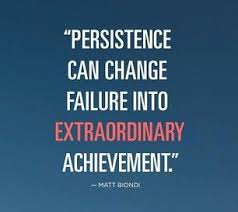


Persistance

Personal beliefs are the foundation of your value system.  These concepts and principles which you hold to be true are the fundamental drivers of your behavior.

We are not always able to sustain our beliefs.  External factors ranging from environmental, other people, legalities, and so on can force us to compromise or just give in.

Personality Cornerstone

Not staying true to your heartfelt personal beliefs can have a significant long term effect on your well being.  Unfortunately, these beliefs might not be widely held by others nor even based on scientifically proven facts.

However, they are ours and however, they were formed by us it is this personal ownership that makes them so powerful.

Our beliefs can, and should, change over time mapping to changes in circumstance but by and large, the basic principles we adopt at a young age will remain intact (i.e., our personal values)

Staying the Course

Accepting cases where others overrule what you believe is right is just a part of living.  It does happen.  Most important for your own well being is to find a way to accept these decisions without harming your own psyche.

This requires a reasonable level of persistence to influence change to align with your core values and beliefs.  That is you must try in a measured and logical way to influence the change.

Reasoned arguments/discussions will help you shape the decision/ imperative in a way that either leads to change or acceptance on your part without remorse or regret.

When seeking to influence change based on your own personal beliefs, remember persistence is critical but not to the point of banging your head until it bleeds.

In Command

When you are granted a formal position of authority by official appointment or other formal grant of authority you are in command.  You may issue an order and expect compliance.

Leadership does not require the benefit of command and getting things done through the use of personal impact and influence skills  without a formal appointment or granted authority can be harder but sometimes is longer lasting and ultimately more effective.

Balance Command and Influence

Earning the ability to guide and support others through trust and collaboration is typically more difficult than issuing directives and expecting compliance based on the dint of command authority.

However, sometimes the direct approach is required due to urgency and priority but if overused the ongoing effectiveness of your command authority can be diminished.

A mix of command behaviours with more facilitative ones is often the best approach.  The challenge is finding the right mix for any particular situation.

Take Your Time

Taking charge should not be rushed and taking time to analyze options and work out the best plan for a given situation is well worth it.

Consider the audience and the nature of the goals.  These may be strategic or tactical objectives and the stakeholders could be mature or inexerienced and every flavour in-between.

Targeting leadership/command approach will typically provide better more sustainable results.


Back Seat Driver

Sometimes as a leader it is best to take the back seat.  This sounds a little odd given we perceive leaders to be out front.  In a sports event or a competition that is valid.  For example, the winning runner was in the lead.

Actively enabling a group to excel at what they do, not the personal achievement is the type of leader I refer to.  In the sports analogy this could be the coach’s role, they are not in front of the competition but their leadership is key to the win.

Why the back seat?

Personal motivation and initiative typically will result in more positive outcomes than mandated action.  It is intuitive that our drive to succeed will be higher if we fully buy-in to an action, rather than supporting someone else’s perspective.

The indirect leader working in the background influences our motivation building on our initiative. The concept is to encourage high performance based on a personal desire for achievement, not the leader’s desire for recognition.

It’s Not Easy

While leading from behind can produce great outcomes from a leaders personal perspective it is not as directly rewarding or highly recognized as doing it yourself. 

Consider the athlete that wins the gold medal because of the leadership of the coach.  The athlete is the star, but the coach laid the foundation of success – largely from the background.

A key attribute of top leaders is the personal satisfaction level they achieve even when not directly in the spotlight.   The recognition they crave comes from the success of others.  

Pick your Moment

Influencing others, that is the ability to have an effect on the character, development, or behavior of someone, is an extremely valuable skill.

Through the practice of influencing behaviours you can impact the results as well as building your own confidence and personal satisfaction.  Being able to affect change can feel good.

Making your Point

During group discussions, a proposal can be made and those present provide their input.  During these type of collaborative sessions participants will argue their perspectives together with supporting rational.

My own experience has led me to conclude the timing of input into a group discussion is absolutely linked to results.  The first to enter the frey, regardless of the strength of their proposal, rarely succeed with influencing  the group to adopt thier perspective.

Success is most often found by entering the discussion at the point where the other participants are most receptive.  This is never the beginning but beyond that the time to strike can vary.

Wisdom is often percieved to come from the silent participant who is active in tbe discussion only for a short period, concise and seems to have weighed others perspectives carefully.

Speaking on a topic infrequently during a meeting, not repeating your points (ever) are keys to success.  Say what you think, at the right moment and whatch others pick it up and carry the day for you.

The perception you send by timing your input when their is a lull and others are anxiously waiting for a good idea can make your thoughts seem more profound that they actually might be.

Hold your counsel, craft your thoughts to be clear, simple and short, wait until receptivity is high, then pounce.

Influence versus Manipulate

We all have power to influence others.  You are exerting influence when you effect a change (the change you desire) on the character, development, or behavior of someone or something, or the effect itself.

Manipulation is simply influencing a change in a clever or unscrupulous way.  Manipulation characterizes the way influence is applied.

Unscrupulous  practices are not about being fair or moral.

Unscrupulous behaviour is targeted at getting what you want without a huge amount of constraint on the behavioural practices beyond the fact they generally do not employ brute force but are rather well planned intelligent and ingenious (i.e., clever).

Effective Manipulation

I often have discussions with others who immediately classify manipulation as inappropriate while influence and impact skills are considered powerful positive tools.

This is not surprising as unscrupulous behaviours have a negative connotation.  On the other hand, manipulation is really just a sub-set of influence.

Additionally it is important to note the determination of  “fair” and “ morale” can be very subjective.  Manipulation can often just define influence behaviour where you have chosen not to let arbritrary constraints hold you back.

Influencers follow the rules, manipulators rule.  Often the rules are framed to be in favour of those you are trying to influence.  Playing within these boundaries will most likely lead to failure.

I acknowledge manipulation is a technique I use, but for me , the key is not to practice it in nefarious ways or with obvious disregard to morales, fairness or others beliefs.

Rather the point is to be clever, not evil, not  disrespectful but really clever.  And it works.

Manipulation

Manipulation is mainly considered to have a negative connotation.
One online definition I found states  ” the action of manipulating someone in a clever or unscrupulous way”.

I would argue, unsucessfully so far, that if your manipulation is clever (but not unscrupulous) it is not bad nor a behaviour to be avoided but rather, used in the right context (cleverly) it can be helpful.

Motivation, goals and manipulation

All human behaviour is motivated by something.  In a circular argument I would say even “no reason” is a reason.  The motivation is explained by the goal being sought.

If manipulation is the tool employed to achieve the goal you are motivated toward, I see nothing wrong with that, provided it is not done unscrupulously.  Clever, is the byword and my hat is off to clever people.  Good for you.

Manipulation or Influencing

Whether your base behaviour is to cleverly manipulate or influence an outcome, I postulate that all human behaviours contain some element of these practices.

That is, everything a person does is motivated, it is directed toward goal achievement and manipulation or influencing is required to try and achieve it, always.

Even if the result is not the original  goal (and often we don’t even conciously know what that was) some form of manipulative or influential behaviours will have been employed.

My days are filled with manipulative behaviour, of the clever sort, and I am proud of it.


Divide and Conquer

There are some bad behaviours which managers and leaders leverage to retain their organizational power.    Growing your influence through positive leadership practices is not always easy.

Leadership styles focused on creating an environment where everyone is motivated, happy and most importantly understands thier role within the context of the organizations strategy and vision are obviously preferred.

Divide and Conquer

When a manager or leaders prime objective is to retain personal power, the managing style can be focused on creating chaos.  In this way others are too busy defending themselves and so are not able to create a united front to combat and ultimately displace the ineffective manager.

This is a pure power play usually employed by insecure mangers who have neither the time nor the willingness to excel.  Maintaining the status quo, that is their position and compensation level, is the primary goal.

Creating a Positive Perception

In effect by creating confusion and disharmony this leadership or management style enables the encumbent to be percieved in a positive light.

In essence, it is all smoke and mirrors.

And the Solution

If you are in this type of scenario you can either accept it, leave or influence change.  Each option has different levels of effort and associated impacts.

Influencing Change

The key is to first observe and gain an understanding of the most disruptive behaviors being used by the manager.  Then develop a plan to counter these behaviours.

For example the manager might ignore questions and requests for action.  Emails to them might seem to go into a giant void never to be  heard about again.

To counter this, your messages and communications could be crafted to carefully involve others (external or internal organizational stakeholders).

This approach would highlight the negative behaviours and bring along others to help in prompting the change.

There is no simple, absolutely certain approach to change or eliminate this management or leadership style, but being a successful change catalyst leads to personal satisfaction, a sense of accomplishment and is to the benefit of all.