All posts by steve@kerrzone.com

Not everything works

If the shoe does not fit, a wise person sets it aside.

We are all individuals to some extent, that is single,  separate,  discrete and independent.  

We are also members of groups (family, social, work) but retain a uniqueness that is distinctly associated with us alone.  Thus, not every situation or opportunity will be suitable or to our liking.

Discriminating

Some situations won’t suite your taste and good judgement while for other people they are fine even to be embraced.  We discriminate according to our individual wants/needs and likes/ dislikes.

For your own satisfaction it important to discriminate without guilt.  Allowing yourself to choose something that is not right for you can  only lead to bad outcomes.

You Choose

Although there may be some debate on the point, choosing is our right and although the forces of influence can be powerful enough to force choices against your will, on occassion, by and large you are in control and should only make choices that fit you.

Anything less will lead to undesirable outcomes.  When you accept the less then desirable option, you should not be surprised at the results .  Embrace your right to choose alternatives that meet your needs.

Compromise is sometimes an option where you might end up in a particular scenario because you bent to the will of others.

Optimally practicing flexibility is a desirable behaviour but rather than compromise seek a scenario that provides what everyone desires, that is, win/win.


Share the Weight

Living without some accountabilities is not possible.  At a minimum, you are responsible for your own health and happiness.  Allowing these accountabilities to become a burden should be avoided.

The population of the earth is in the neighborhood of 7.7 billion people so the opportunity for sharing your personal burdens is very high.

Sharing

One way to ensuring your responsibilities are executed in a timely and high-quality way can be to participate,  or enjoy jointly with another or others.

The value of sharing is not always apparent and on occasion, we feel strongly about our personal accountabilities.   Other circumstances seem ideal for sharing but this tends to be a learned behavior (from childhood).

In later years sharing can be a way to ease the burden of our daily lives.   We can help others and they can help us.  In this way, stresses can be reduced and happiness increased.

Misanthrop

Two relatively common English words are from the greek “anthrop” meaning other people.  Through philanthropy, we can regularly demonstrate our love of others will a misanthrope not so much.

Whether philanthropy is your thing or you are more misanthropic sharing with others can be beneficial and is a great way to overcome personal difficulties.

You do not need to play well with others (a misanthrope typically does not) to realize the gains of interacting with others.  The act of sharing reduces your personal accountability and so the associated stress.

At the risk of being a tad cynical, it is important to remember sharing is a two-way street and while your main goal may be to benefit yourself, in doing so you could accidentally help others.

Free Spending

With the annual Canadian budget announced last week, there has been a lot of discussion in the Canadian press about deficit spending.  That is spending more money than you receive over a specified period of time, e.g., a year.

For me, a lot of the recent discussion is focused on the question ” Can government budget deficits actually be a positive approach to encouraging economic development?

Balanced Analysis

For Canada, the budget is not balanced but the analysis of whether this is good or bad seems to be.  I have read reasonable arguments both supporting deficits or to stay within income limits.

On the overspending side, the arguments largely postulate borrowed money could be used by the government to foster economic development.

Things road, ports and airport construction can act as facilitators of economic development where the benefits often, but not always, exceed the costs.

The proponents often point to the fact the investment fraction of GDP has fallen to half what it was in the decades after WWII when deficits were small and even in surplus a couple of years.

Basically during a rampant period of deficit spending since 19060’s the average economic growth rate has been much less then it was during periods of balanced budgets.

In the End

For me, it is a simple discussion.  If the debt reaches a point where re-payment is unfeasible, the consequences are catastrophic.  Even for immediate term economic benefits, this risk is too high.

Our governments should balance their budgets and pay down the debt in an orderly manner.  Peace of mind and our economic model demand it.


Managing Fear

Fear is an unpleasant emotion caused by the belief that someone or something is dangerous, likely to cause pain or other negative consequence.

A close relative to fear is anxiety, your body’s natural response to a feeling of fear or apprehension about what’s to come. For example a task for which you are accountable for but unsure you can complete or imagined unpleasant events that may not materialize.

In Your Head

The key to managing your fear and associated anxiety starts with the recognition that the anticipation of a fearful event is all in your head.

You must interpolate the results of  a specific behavior, action or circumstance which may lead to bad outcomes.  Without this belief in potential pain, there is no fear.

What you believe, how you perceive events sometimes is associated with unconscious thought and simply by bringing it to your consciousness, analyzing the risks and impacts you may well realize fear is unwarranted.

In the Moment

Fear can seize you in a flash.  Taking control at that moment, overriding the built-in autonomic responses driven by your sub-conscious, is key to managing fear.

Most often the causes of fear are not pleasant or at least the anticipated results are unpleasant.  Getting an alert from your body provides an opportunity to react

False Alarm

Many cases are false alarms or the perceived impacts are exxagerated and the feelings you have could potentially do you more harm (from stress and anxiety) than the object of your fear.

It is important in these cases to be self aware and consciously avoid over reaction and thus  unecessary unpleasantness.

Whose Problem Is It?

At various points in time, everyone encounters a matter or situation regarded as unwelcome or harmful and needing to be dealt with and overcome.

Ignoring the problem, hoping either other people will address it or even that circumstances will change and the problem will just disappear can be options.

Typically though, while these approaches can work,  both are risky with a high potential for failure and the associated negative consequences.

Taking Accountability

One attribute of high performing teams is that everyone accepts accountability.  For important topics, debates or discussions (i.e., issues) the team practices a culture of inclusion.

In high performing groups everyone accepts the need to participate and become part of the overall value add an equation.  Ultimately this means minimal effort is expended to achieve maximum issue/problem resolution.

Building a culture of inclusion and accountability is an activity that everyone needs to participate in.  Achieving a state where group responsibility overrides individual is not a simple task but well worth the reward.

It’s Our Problem

Collaborative efforts, when coordinated and conducted intuitively typically achieve the best results.  Diversity of thinking and approach are powerful tools.

Working together, spreading the effort across multiple resources (rather than relying on a single point of failure) has many advantages over reliance on an individual.

In the case of problem-solving, this requires everyone to take ownership.   They don’t blame or accuse each other, rather like the three musketeers, one for all and all for one.

Express Yourself

Our feelings can often drive how we express ourselves.  We want to show our feelings in a way other people can understand, not be offended and respond appropriately.

Or sometimes we want to hide our feelings as expressing them may do more damage than help.  A key component of managing your feelings is expressing them positively, containing them when appropriate.

Control

Communicating in a respectful way how you feel is not only more likely to achieve results, it’s also a way to reduce your own levels of stress.

Being proactive in dealing with potentially difficult situations arising from your feelings can be a very beneficial outlet.  Storing your angst and frustration is much more stressfull than addressing it.

The challenge is to communicate in a way that does not escalate your feelings but rather puts them to bed.  This requires both careful thought and the exercise of control.

You are in Charge

The key to managing your responses to strong feelings is ensuring your associated behaviours are targeted toward outcomes.  Think through what results you desire, emotions aside, than plan actions likely to lead to the desired effect.

Consciously take charge of your actions, don’t let your feelings overwhelm you.  This will allow you to avoid reacting like a volcano.  If you do explode be sure it is a planned and measured one.

Expressing yourself is an individual activity.  It is about you.  Others cannot do it for you nor should their actions overtly influence you to expressions you may regret.

Take charge of your feelings and the results will be gratifying.

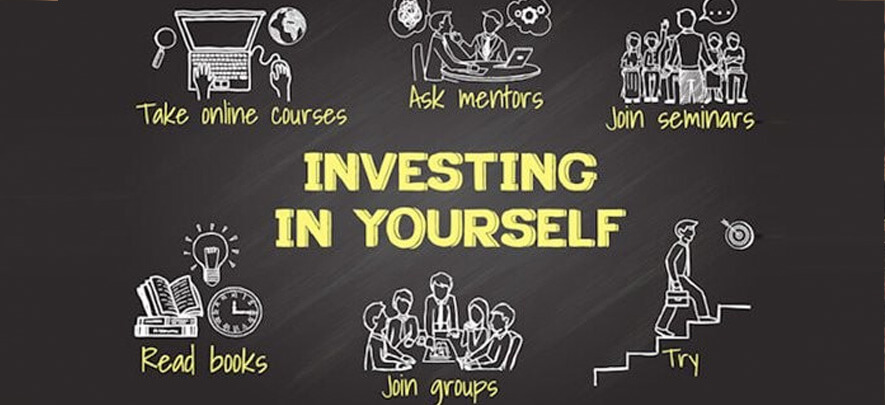
Invest in Yourself

When you have the opportunity to provide yourself with something,  that has a particular quality or attribute that enhances your life, now and in the future, take it.

Investing in yourself is your choice.  The value equation needs to be considered.  Does the effort to gain that certain something outweigh the benefit.

For Your Own Good

When I was younger my parents encouraged me to undertake many activites like swimmimg, socceer, tennis, clubs, outdoorsman and so on.

I would ask, why?  The answer was consistently, “ For your own good”.  Unfortunately I came to dislike the phrase because it has negative connotations.

Today I fully embrace the concept and I am truly grateful to my parents for perservering against my rebelliousness.  For their dedication to my improvement worked.

I would be far less the person than I am today had I not invested in myself so ferociously at my parents urging (perhaps a little beyond urging), albeit against my will.

Hidden Benefits

The personal payback for spending a little time, learning exercising, socializing, helping others can be enormous but is not always apparent.

Sometimes the thirst for easy fruit backfires.  We will overlook the long term benefits of spending some time and effort updrading versus instant gratification.

Motivating yourself to invest in yourself is not always easy and takes thought.  Not reconizing the benefits to you down the road for completing a work intensive activity now is a large part of the reason.

Take time to think through the value down the raod and don’t discount yourself when an improvement opportunity exists.  Take it, you will be glad you did.


Influencing

I have found a key skill underlying my achievement of pleasure or happiness is an ability to have an effect on the character, development, or behavior of someone or something, i.e.,  influence the result.

This is a two-way street and being blind to the influence attempts of others can derail your own.   Incorporating other peoples needs into the desired outcomes has a much better effect.

Think Past the Objective

A great way to begin influencing is to think past the objective.  For example, if your objective is to schedule a training course, begin with a discussion of the benefits and advantages derived from booking the training.

The subtlety of the approach is to begin the conversation by focusing beyond the course as if the approving/accepting its occurrence is pre-ordained.

Follow this with a confirmation of the approval to proceed.  This may lead to some discussion about details but most often the question of whether to proceed or not will not arise directly.

For the Good of All

It is important not to focus your influence solely on personal goal but go for the win-win.  The objective is for everyone to benefit from the results.

Use influence to attain goals but be receptive to others needs and listen to their feedback.  Often slight modifications to your approach is all that is needed for everyone to be happy.

Influencing skills are a powerful tool for achoeving the common good and while a prime focus will be your needs don’t forget about those of others, you will achieve greater success that way.


Stealing Home

Sports analogies are at a forefront for me this week although I have no idea why.

In baseball when a runner advances to a base to which he is not entitled in the normal course of play, for example by a hit or a walk, it’s credited as a stolen base.

I think of this as analogous to attaining a goal outside the normal process.  Achieving a strategy outside of standard channels could be thought of a stolen success.

Of course, stolen in this case  is within the rules, not outside the law.  The beauty of it is that it is unexpected by others, the stolen element has an element of surprise.

Sneaking Success

Planning an approach to achieve your goals without fully communicating to all stakeholders can be risky, however the element of surprise can be an advantage to you.

Caution must be exercised to ensure you are not being underhanded in a way that would offend.  This takes skill and careful preparation and planning.

Stealing your success often means you don’t need to overcome obstacles typically associated with bureaucracy.  You simple bypass andif needed apologize later.

Handle with Care

Executed carefully, so you are not labeled as sneaky, theresults can be achieved with greater speed and effciency.  Overall the appraoch can be quite satisfying.

The value is stealing home most likely is the fact accomplishments that would not be or ones that become watered down, are possible to achieve this way.

It is an approach worth considering as long asthe reward outweighs the risks.


Esteemed Colleague

I was recently asked by a colleague to add “esteemed” to a reference about their participation in a recent workshop exercise. Admired and respected are default attributes I expect of both myself and those I interract with so I found the request somewhat unecessary.

The concept of respect and admiration should not need highlighting.  If we behave according to the highest principles our actions, which dictate how others percieve us, will speak for themselves.

Trust but validate

Ronald Reagan is quoted as decribing his style for interraction with others as trust but validate.  His default approach is trusting, a behaviour that is both respected and admired.

However, straightforward trust in a world with con men and hustlers  whom for which trust is a flexible concept, does make validation activities prudent.

This should not be considered rude disrespectful but rather a necessary practice to reduce the risk of being mislead to our detriment.

Respect Needs no Acknowledgement

Trust and respect are bi-lateral behaviours that benefit all stakeholders.  These should be the cost of entry, that is good character begins with respect of others.

It should not be neccessary to explictly acknowledge this expected practice through use of adjectives like esteemed.  Rather it is probably more important to highlight cases where distrust and disrespect occur.

This identification, to those involved, of cases where changes in behaviour and attitudes are warranted will do more to create esteemed colleagues than false praise.