Tag Archives: respect

Maturity is not about age

Behavioural maturity is benchmarked against characteristic behaviour of a well balanced human adult.  While subjective to a degree mature individuals are able to practice interpersonal skills in ways that lead to consistently positive results.

Maturity is learned through observation and strongly environmentally influenced however the basic behaviours are mainly logical and intuitive.

Acting with Maturity

Although education and experience are cornerstones of mature behaviour this doesn’t necessarily mean older people will behave in a mature manner and younger people are not yet able too.

Selecting the most appropriate way to interact with others or respond to any specific set of circumstances is improved by background knowledge and understanding of what is acceptable  or not but common sense and intuition are also key skills.

Choosing the best ways to react requires a basic understanding of human nature and associated best practices but also relies  on the ability to be patient, empathetic and prudent.

Interactive versus Reactive

A basic tenant of mature behaviour is recognition all interpersonal reactions contain a social component to some extent.  Although the extent of socialization is dependent on the nature of the interaction it is always present to some degree.

Acting in a way that clearly recognizes and respects the needs of others (i.e., social requirements)  is a key sign of mature behaviour.  Recognizing normal behaviour requires consistent and complete repect of both yourself and others (the core of maturity).

Mature behaviour also needs to be intrinsic to the way you think and act and otherwise will be easily recognized by others as superficial.
Social Constraints

There are things within our societies that limit us from doing what we want.  These social norms are sometimes carved in stone, that is legally bindings with penalties for contravention.

The more challenging social norms are value based and sometimes our perceptions of right and wrong do not map to those of others, leading to bad feelings or other forms of conflict.

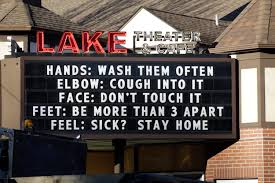
Social Distancing

A recent example of this that springs to my mind is the newly minted concept of social distancing which has been invented to assist us in limiting the spread of covid 19.

Social distancing is the new norm, yet I personally perceive it to be loosely practiced by so many people of encounter these days, that is in the outdoor or work space context (Where I live indoor social events are against the law based on a declared health emergency.)

My wife and I go for a walk daily and are constantly annoyed by those that do not move to single file on a narrow path or move to the side so we can move by each other with a six foot distance.  What is not to get about social distancing, it should be the norm?

Let’s all Live Together People

While I am a big proponent of live being all about me, it is my life, we all need to realize (including me) live without others is not possible and getting along, that is accepting some behavior standards is not only the polite thing to do it is the right thing to do.

The consequences of not social distancing are not readily apparent but it not just about breaking behavioural norms it can lead to some very negative results, even death.  So fellow walkers, be courteous, be aware, take care.

Winning/Losing Graciously

Years ago a soccer teammate of mine quipped after a close match “winners rule while losers check the rules”.   I believe the jubilation of winning clouded his judgment.

Win or lose respect for your opponents, the process, and culturally correct behavior should be the only option.  Gloating or behaving like a spoilt child should be condemned as unacceptable.

Accept Defeat

Being able to take on an opponent, put forth a credible fight, and seek to win within the context of playing field boundaries and the rules of the game is honorable in and of itself.

While winning is the goal, defeat does not make you less worthy.  Questioning the rules, cheating, and disrespecting your opponent are dishonorable behaviors.  Losing is not part of this.

Watching soon-to-be former President Trump’s behavior following his recent defeat in the US Presidential election is a classic example of how not to react to losing.

Once again he is ignoring time-honored political traditions to concede gracefully.  Dragging it out, contending when you are obviously done, and encouraging your supporters to follow you down this path disrespects us all.

Civil Behaviour

Democracy expects, no demands we behave civilly.  In this way, everyone wins.  Even with different political views, we are one society bonded together by a common belief in cultural norms, freedoms and respect.

Donal Trump is not a leader but a narcissistic dictator for whom the majority of the population has rightfully and thankfully finally defeated.

The lies, disrespect of fellow humans, and continuance of the reign of the worst President of the United States has ended, it is time to rejoice.


Importance

We each view different things as being of great significance or value as opposed to the perceived significance or value of other things.  This can be a very subjective measure.

As with so many things, the level of importance can be viewed by many as a state of fact but the interpretation of the facts remains subjective.  Is anything absolutely factually determined?

I’m Okay – You’re Okay

Back in the 1960’s the non-fiction book “I’m Okay – You’re Okay” by Thomas Harris opened me to some interesting concepts.  The book explored (among a number of other concepts) four simple life positions we all adopt from time to time.

  1. I’m Not OK, You’re OK
  2. I’m Not OK, You’re Not OK
  3. I’m OK, You’re Not OK
  4. I’m OK, You’re OK

Over time I substituted OK for  importance based on my observation of human behaviors and how we often treat each other.   So the life positions became:

  1. I’m Not Important, You’re Important
  2. I’m Not Important, You’re Not Important
  3. I’m Important, You’re Not Important
  4. I’m Important, You’re Important

For me, the fourth option was best, this translated to a value, “Everyone is important”

Subjective Analysis Aside

The importance we apply to others is a choice each of us makes.  By focusing exclusively on our own importance, option 3 or even perhaps the lopsided options 1 and 2 above we are only fooling ourselves.

Real pleasures and satisfaction can only be achieved in conjunction with the recognition that the happiness of the human race is truly based on the whole.

Everyone matters.  By reminding ourselves daily, I‘m important – You’re important we reinforce the basic tenant of humanity and position ourselves to live full filled and happy lives.


ourselves.


Inappropriate Behaviour

Social norms are dictated by the group.  This may be through a group  hierarchy, for example at the town, city, province, state, country-level with the higher-level groups influencing the lower ones.

On the whole, the social group (ranging from student associates in a class to the population of the country) have great power influencing and directing individual behavior.

Changing Norms

In my life I have seen enormous change in our societies beliefs, this has been worldwide but most significant in democratic countries.  Racial prejudices and sexual preference laws have clearly changed to focus on multicultural  and individual freedoms.

These changes have been rapid in the last fifty years and behaviour that was accepted in the 1960’s is definitely  considered inappropriate today.

Great strides have been made decreasing sexual abuse and the basic tenant that all people are equal is continuously becoming more entrenched in our day to day actions.

Social groups have great power and group think is a powerful underlying driver of social change.  The groups power of censure and disdain can be more effective than guns and bombs (less destructive too ).

Punishing Past Misdeeds

This leads me to my main point of todays post.  Canada’s prime minister is currently being shamed for inappropriate behaviour he practiced over 18 years ago. That is inappropriate by todays standards not back then.

Respect for everyone should be timeless so I don’t condone the prime ministers behaviour in anyway but in truth back at the time he dresses in black face few would have considered it to be inappropriate.

Respectful Behavior

Broadly speaking, showing consideration and regard for someone or something constitutes respectful behavior.  Unfortunately, the interpretation of what constitutes consideration is subjective.

A lack of consideration and regard is not necessarily disrespectful, pro-actively behaving in a way that clearly demonstrates derision is.  As noted though, the interpretation of derision or disrespect can be subjective.

Respectful, why bother

In recent years many people have indicated they find the behavior of the current U.S. president (Donald Trump) less than respectful.  His supporters argue his directness (apparent disrespect to others) is one of the key reasons he achieves his goals.

Perhaps politicians have a higher bar for respectful behavior and Tumps behavior is more acceptable for a businessman than a politician (although subjectively I would question that as well).

If Trumps behavior is not at the level of respect expected for someone in his position (i.e., POTUS) but he is achieving his goals and applauded by his supporters, why should he bother being more respectful?

In fact, it appears he is rewarded for being abusive.

How to behave respectfully

Although respect has a subjective component, this is not a fair excuse for not acting in a respectful way.  We constantly receive feedback from others (both direct and indirect).

Respect simply requires us to be aware of this feedback and react accordingly.  Others constantly send messages about how they are feeling (happy/unhappy, comfortable/uncomfortable, confused/clear, etc).

Sensitivity to this feedback (regardless of our subjective interpretation of the context) and responding accordingly to create a positive context is all that is needed to be perceived as respectful.  It is that simple.

Fear and Intimidation

Managers get things done through others.  Leaders help others get things done.  In both cases, the core behavior is developing motivation.

For managers, the motivating factors can range from fear and intimidation to understanding and encouragement.  Fear and intimidation are not in the leaders’ toolkit.

Sustainability

Managing through fear and intimidation is largely at the expense of individual initiative and empowerment.  Micro-managing is the order of the day.

This practice can be very effective in getting things done through others, and since it is typically very directive the results are often as expected (generally good things).

Unfortunately, this approach is usually not sustainable (others don’t like it so either avoid or leave) nor does it necessarily get the best results, just what was demanded and expected.

Demotivation

Motivation through fear and intimidation leads to loathing, that is a feeling of intense dislike or disgust.  A symptom of this is the development of a lack of trust.

The order is received and acted on, but not bought into.  For activities completed under duress, the focus is often not on the objective of the actions but rather avoiding negative consequences.

Not surprisingly this can lead to interesting results.  Although the task may appear to be completed, thus the consequences avoided this can be superficial to some extent.

Belief

Believing in what you are doing is a powerful motivator in and of itself.  Leaders focus on creating that belief.  Their ultimate objective to get things done but not at the expense of others self-esteem and personal satisfaction.

Leaders can be good managers.  Good managers aspire to be leaders.

Esteemed Colleague

I was recently asked by a colleague to add “esteemed” to a reference about their participation in a recent workshop exercise. Admired and respected are default attributes I expect of both myself and those I interract with so I found the request somewhat unecessary.

The concept of respect and admiration should not need highlighting.  If we behave according to the highest principles our actions, which dictate how others percieve us, will speak for themselves.

Trust but validate

Ronald Reagan is quoted as decribing his style for interraction with others as trust but validate.  His default approach is trusting, a behaviour that is both respected and admired.

However, straightforward trust in a world with con men and hustlers  whom for which trust is a flexible concept, does make validation activities prudent.

This should not be considered rude disrespectful but rather a necessary practice to reduce the risk of being mislead to our detriment.

Respect Needs no Acknowledgement

Trust and respect are bi-lateral behaviours that benefit all stakeholders.  These should be the cost of entry, that is good character begins with respect of others.

It should not be neccessary to explictly acknowledge this expected practice through use of adjectives like esteemed.  Rather it is probably more important to highlight cases where distrust and disrespect occur.

This identification, to those involved, of cases where changes in behaviour and attitudes are warranted will do more to create esteemed colleagues than false praise.


Everybody is Important

The last few days I have been musing about leadership.  Todays post is in the same vein, but with a bit of a twist. How others percieve you becomes the foundation of who you are to them.

On the positive side, if you are viewed as warm and friendly, thoughtful and knowledgable, kind, empathetic, easy to understand, motivated and successful, (to name just a few of the critical life skills) it is likely you will be able to exercise your earned power to a greater degree.

These skills are not only valued in leaders, but in fact serve everyone well with helping achieve their goals.  The key to their practice though, is the ability to be liked.  Arogant and conceited delivery can override personal effectiveness.

Everyone is Important

Embrace the thought “everyone is important” as a singular personal value and always behave according to that concept.  If everything you do is founded on this belief, by default you respect everyone and this permeates your behaviour.  Others will feel it clearly.

So whether you desire others to think of you as a leader or just want to use your own earned power to its best effect, start with an underlying mantra embedded in everything you do that will send others a clear single that you value them.

Leveraging this basic underlying default value as the drive of all your behaviours, that is good communication, empathy, self awareness, etc, will just be all the more powerful.

Being Valued

Whether you are managing, leading or just in an authority roles (parent, policeman, teacher) one of the most important behaviours you should practice, is respect of others.

Listening attentively and acting, even if not fully in your own interest is key to making others feel valued.  As athletes well know believing you are a winner is required if you are going to be a winner.

Similarly feeling, valued, respected, important are really strong motivators.  Recognition feeds a persons need for self actualization.  In Maslow’s heirarchy of needs this is at the top of the pyramid.

How is this achieved

Feeling valued is as much an intuitive feeling as it is an logic driven internal assessment.  That is you can consciously analyze the way people are behaving and interpret it as respect or you can just feel it unconciously.

For leaders, managers and other authority figures it is important not just to address the conscious interpretations of your actions, but also the hidden messages you send, for example body language, demenor or broadcasting your negative feelings.

Feeling Discounted

When you are interracting with someone who is making mistakes or behaving badly or acting stupidly (in your assessment) it is easy to discount their behaviour.

Being derisive or abrasive, for example when someone is talking too much (and you are busy) is relatively easily done.  This could solve your immediate needs.

However,  the recipient is unlikely to feel valued.  Ultimately  this results in a disaffected and demotivated person.  Something that, as a leader you want to avoid.