All posts by steve@kerrzone.com

Don’t forget to have fun

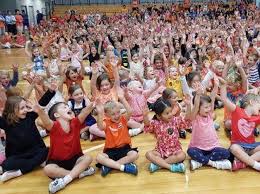
The purpose of our lives whether holistic to the entire population of the earth, individual or by cultural groups most likely includes a component of pleasure.

This should not be applied in the hedonistic sense, personal pleasure at the expense of everything else,  but for each of us life without pleasure to some extent will be quite empty and void.

Anytime

I have run into dissenters from time to time but my own philosophy is fun, laughing, joy are always appropriate.  Actually probably even more so in dire circumstances.

I my life on earth was not intended to bring joy (both to myself and others) than what?  I can imagine no other purpose and while times of adversity are sometimes unavoidable the ability to create fun is always within your grasp.

Appropriate Behavior

I will concede that social and cultural norms do put some limitations on when and how to have fun, but these can always be overcome, albeit gently.

Crashing a sober occasion like a bull in a china shop with joyous antics clearly is not appropriate but being somber and sad exclusively is not necessary.

I told appropriate amusing anecdotes at my parents funerals, in good taste and within acceptable context of the audience.   This went over exceeding well and I received many complements.

Don’t Let Calamity Overwhelm

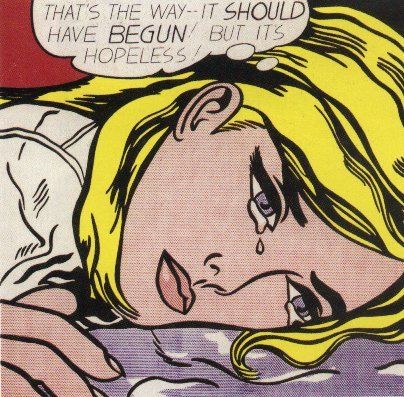
Laugh through your tears, you will never regret it.  My own personal mantra, sadness should be a fleeting emotion, joy and happiness forever.

Bring a little humor and fun to everything you do, I guarantee you will never regret it.
Imagination gone Wild

Yesterday’s post focused on the benefits of using your imagination.  The principle advocated channeling your imagination into innovative results.

Some great feedback I received pointed out sometimes we imagine things that frighten us.  In these cases, we could visualize nasty things and develop harmful ideas to counter them.

Filtering

With all our ideas and thoughts the process of filtering is critical to help us focus on real priorities.  That is things that matter to us or other people and justify taking consideration for employment in creative and innovative activities.

Filtering your imaginings to separate those that do not provide a value add and those that can be effectively used for the betterment of all (you and others) is not easy but really important.

The Easy Trap

Often we will focus on things that have lower value and impact but overall require less effort.  I can imagine the worse quite easily, worry about it (again with little effort) and classify it as something I cannot change (effortlessly).

Or I can focus my imagination and creativity on things that will make a difference.  Of course, this requires a little effort so I need to be motivated to act this way.

When we are encouraging and nurturing others (and even ourselves) to be creative and imaginative this needs some boundaries and guides to assist our filtering to be focused on things that can be useful.

While not an easy task, guidance to avoid focusing your imagination on the worst probably makes a lot of sense.  Although a little doom and gloom is probably part of the life experience.


Creativity

Our brains contain the faculty for forming new ideas, or images or concepts of external objects not present to the senses.  That is, we can exercise imagination.

Creativity begins with imagination, in fact, the words can be considered synonyms.    The core of innovation is imagination.  In it’s simplest form innovation is taking the product of our imagination, applying creativity and translating it into tangible results.

Feed it

Imagination is not something to be suppressed.  Some consider it flighty and a waste of time.  You may hear others complain you spend too much time imagining versus executing.

Unfortunately, this can discourage creativity and ultimately a potentially great idea is lost.  Without imagination and creativity, we might no have refrigerators, toilets,  mobile phones, and the list is endless.

When interacting with others ranging from your children, friends, and family to colleagues, stargazing in wonder should not only be encouraged but nurtured.

Do any of us want to be the person who stifled the next great enhancement for humankind?

Analytical Process

It is not all about imagination.  Having a goal and a plan to achieve it should not be superseded by imagination, however, the really innovative results are rarely arrived at without a touch of creativity in the mix.

Being process-oriented and applying standardized practices is best balanced with wide-open thoughts not necessarily contained within the boxes of process.

Like most things though the overall best effect is not achieved by overweighting one practice versus another but rather through careful balance.

The Collective Conscience

We can display our individual conscientiousness through conformity to what we consider to be correct, right, or morally good. Our social or cultural norms should be key influencing factors.

The collective conscience is displayed when all members of a social group practice consistent behaviors.  That is everyone accepts and conforms to the beliefs of the whole relative to what is right.

Laws/ Consequences

Voluntary adherence to societal norms is ideal.   History has shown while the majority of the population complies with cultural expectations a small percentage requires more motivation.

Hence our construction of laws with associated penalties or consequences of some sort.   These consequences can range from a slap of the hand to death.

Pandemic Context

A serious topic on everyone’s mind of late is the rapidly spreading Covid 19 illness.  Caused by the Corona virus, which seems to be easily and readily spread efforts toward containment require adherence to the collective conscience.

That is we need to isolate ourselves from others rigorously and respect each other’s space.   In North America, we are relying on personal integrity for adherence.

Stories from China and starting to emerge from Italy indicate a more forceful lockdown is taking place as some just don’t consider the need to adhere based on their own personal conscience.

We are seeming a lot of this behavior throughout the U.S. as well.  I find it puzzling given the requested self-isolation is only for the good of all.

Do we really need to be forced to do what only makes common sense?   I guess for some, sadly, that is the case.


Peace of Mind

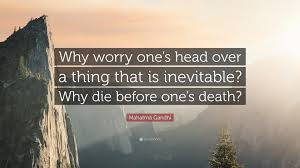
Living in a state of anxiety and uncertainty over actual or potential problems is a personal choice.  We can choose to give way to anxiety or unease and allow ourselves to dwell on difficulty or troubles.

Or not.

I do not intend to advocate the ostrich approach, that is choosing to hide your head in the sand (avoid reality) and a staying away from worry, however, allowing yourself to be anxious or worried when there is nothing you can do about it seems to me to be just a way to propagate unpleasant feelings unnecessarily.

Why Worry

Emotions that typically do not raise your level of pleasure (for most of us) exist for a purpose.  Things like fear, anxiety, and worry do have value but we often allow ourselves to experience these emotions when it really serves no purpose.

This raises the question, should I worry about something and if not then why am I?  Fair question.  I think the answer lies in the level of control and level of impact.

Consider – Why do I care?

The value worry brings is the resulting actions it prompts you to take.  Worrying continuously without addressing the root cause is both painful and relatively useless practice.

Most importantly don’t ignore your worry, do something about it, this might just be acceptance.  The key factor here is determining if you can do something about it, if not, accept and move on.

For example, recent budget cuts by the provincial government where I live are resulting in job losses.  Can I stop it, probably not?  Can I prepare for the eventuality, of course, there are many things I can do.

So I don’t worry, I just act.

Embrace the Unexpected

Often things happening unexpectedly can be disconcerting.   Sometimes they can be a pleasant surprise.   In any case, as each day unfolds with new surprises and mysteries we come to understand the purpose of our lives better.

Life is like a journey.  While we might not physically move from one place to another in a literal sense each moment of time transports us to a new experience.

Experience Awaits Us

The meaning of life is a mystery pondered by humankind throughout the ages.  The things we do (or don’t) define our lives meaning.  As time progresses the things that happen are never known with certainty.

We might have plans and expectations, these may be achieved or occur as expected, but also they may not.  It is these experiences that make up our reason for living.

Without ongoing practical contact with and observation of facts or events, we are probably dead.  A key to the pleasure contained in our experiences is the fact they are shrouding in some level of mystery.

Embrace Every Moment

Whether our experiences are negative, positive or neutral each has great meaning and without them we are nothing.  Each experience is to be treasured whether relaxing, stressful, pleasurable or any of the other plethora of emotions, we cannot live without experience them.

So, logically regardless of how you would characterize the experience, good, bad or middling, embracing fully those things that are the building blocks of your life, and basically give your life meaning,  only makes sense.

Maintaining Perspective

Everyone maintains a particular attitude toward things, it’s human nature to do so.  This is called perspective.

Our point of view or the way we regard things can be influenced by bias, personal interactions, and media (these are the main categories but there is a long list of factors).

Perspective and Reality

In times of turmoil, your change perspective can be significantly influenced by emotional factors.   Keeping control of your perspective so you don’t act in illogical ways is really important both to avoid negative impacts on yourself but also on others.

Unfortunately perspective might differ somewhat from reality due to an emotional charge or strong bias which colors your judgment.  It is these cases where pausing to reconsider can be helpful.

Act in Everyone’s Best Interest

In many cases what appears to be a dire reality is not really as bad as it seems and of course, the opposite is true.  Taking the time and effort to keep your perspective objective will help ensure your approach is a win/win for everyone.

Acting holistically in a way that is not just good for you but provides benefits to everyone leads to more long-lasting and sustainable results.

Reacting without great thought, at the moment, (i,e, panicking) might give some immediate relief but probably won’t last long and in the end, the problem is still there.

Remain Calm

Having a measured perspective that focuses on facts and includes consideration of options and benefits will also work out best.  It requires a little more time and effort to keep your perspective grounded but it is worth it.

Empowerment

Increasing empowerment in your life is a process of becoming stronger and more confident, especially in controlling one’s life and claiming one’s rights.

Almost all of us serve somebody.  It is those leaders or authority figures that can be a potential roadblock to personal empowerment. We must interact with them effectively if we want to increase our empowerment.

Force or Influence

There are two main ways to exercise your personal power.  Forcefully or through the art of finesse.  That is the practice of getting things done in a subtle and delicate manner but getting them done.

How you behave directly influences the way you build confidence with those you serve.  Ultimately this is directly related to the level of empowerment you are able to attain.

The use of influence type behaviours is usually more effective and longer-lasting but on occasion being forceful is what is expected and being too meek may cause others to take charge.

Cautious Balance

It is important to be careful not to be categorized as either forceful or too restrained.    The behaviour balance you choose is best tailored to the target audience.

In the case of building empowerment that is those you serve.  But this should not be interpreted as being servile.  In fact, it is very much the opposite.  Servile behaviour is unlikely to increase your empowerment.

The key is to balance the way you act in such a way you are at neither end of the spectrum but rather more centred.  That is not to say the forceful or the meek do not attain their goals but the middle ground is more often the route to success.

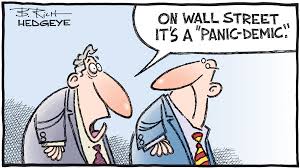
Panic Demic

In a time of a pandemic, the new norm becomes social distancing.  That is keeping at least one meter away from others.  Perhaps elbow bumps are okay but handshakes and hugs are out.

Given the covid -19 virus can live on surfaces for up to a week or more I am not sure social distancing has great value.  Airborne transmission is considered not to be the main vector, although not much is really known.

Over Reacting

This is a serious disease that is propagating rapidly, often passed by carriers with no symptoms.  The illness can be fatal.  Putting protective and preventative measures in place is only common sense.

In this situation not reacting makes no sense but overreacting/panicking is probably not a good choice.   Things like hoarding or pure isolation could be more harmful.

In Canada, the authorities’ reactions have been somewhat measured but the general populous is acting in full-on panic mode in some cases.

Economic Reality

World wide commercial activity is clearly going to be reduced during this pandemic.  This loss of productivity will worm through each countries economy over time.  This is obvious.

What I find hard to understand is the running for the exits before the fire has really started.  Stock markets around the world have crashed, but the economy soldiers on.

Must be anticipation.  Herd mentality. All-consuming panic.   Basically just a sudden uncontrollable fear or anxiety leading to wildly unthinking behavior.

For all the good it does.  Not!


Believe

Can you feel sure that something is true and doing so makes it true? That is, could belief become reality simply because you choose to make it so?

This is probably a stretch.  Making the impossible become possible is not a magical activity that is accomplished by a sweep of the wand.  However, attempting to elicit a change without believing it possible reduces the chance of success.

Trust in Yourself

Being sure something is true arises from a firm belief in your own judgment.  How you view your own reliability governs the strength of your belief and the intrinsic power of it.

Proceeding on the basis of blind faith can be risky and trusting in yourself without paying attention to reality could not only fail but also lead to negative consequences.

Self Doubt

It does make sense to temper your self-trust with a dose of doubt and some cynicism.   The trick is not to let self-doubt become the overriding factor in your decisions.

Doubt should be based on objective analysis to the greatest extent possible.  That is, where it makes sense to question whether something is true or whether you are able to make it true, this is best based on the supposition that is supported by some facts.

Accent the Positive

Having a strong belief and letting that drive your outcomes is really just a way to accent the positive.  Focus on the positive is far more likely to drive achievement of what you seek.

And for those that were wondering, this message of positivity is not brought to you by fox news.