All posts by steve@kerrzone.com

Networking

Forging strong bonds with fellow humans is beneficial to both them and you.  Being able to leverage the support of others is invaluable (this should be a two-way street for best effect).

Building and maintaining a network of personal connections is not effortless.  It can take a lot of effort to interact with other people.

Time for Reflection

Solitude can help you refresh your mind but it should be balanced with more extroverted behaviors.  Living in seclusion from society (i.e., constant solitude) is a choice some make (often driven by religious conviction) but this practice has a cost.

The amount of solitude each of us needs to reflect and recharge varies person by person.  It also depends on how much ongoing interaction and stress you have in your life at any given period of time.

The key is to not overdo your required time alone.  For the majority of us, our interactions with other people, friends, family, colleagues, and acquaintances are critical for us to thrive and succeed.

But, I strongly suggest, don’t overlook it.

Strengthen your Networks

Whether social, business or family focus having a  group of people that can reach out to you, and you to them is a necessity.  We all need the help of others at times, as they need ours.

The focus of your interpersonal network should not be on size but rather quality.  The base number of connections you choose is a personal choice and may be limited to a small group however the key is their ability to help you and yours to help them.




Giving and Taking

When we freely provide others with something it is usually accepted without dispute or controversy.  In the normal course of events, people may receive things like salary increases or free medical care.
The provision of these types of things made sense at the time.  The giving of things are often based on current circumstances and can be logically supported as a good thing to do.

Taking it back

Once given, getting it back will typically elicit a firestorm.  While it is human nature to take a free benefit without question, letting go is an entirely different proposition.

Governments, in general, are great progenitors of the give and take syndrome.  On a very cyclical basis, often linked with economic cycles, governments will give only to later take back.

Government spending which can know no bounds during times of prosperity can be shifted 360 degrees on a dime with changing circumstances.

Avoiding Churn

The give and take cycle, particularly on the political front, has a long history of rollercoaster-like ups and downs.   For me, the most frustrating thing is the cost of this churn.

The taking back of political gifts has a cost.  Leaving things in place and working through them in a less draconian way (i.e., big bang cuts) will, in the long run, cost less and provide a more stable and consistent environment.

Governments support their actions with strong arguments of dire consequences but this is mostly meaningless rhetoric.   The harder strategy to carefully consider options that are less drastic is mostly put aside in the favor of the politicians’ favorite device – the cataclysmic rant.

Attitude

Your personal behavior is largely driven by your attitude.  That is your core perspective, what you think and feel about things.  A positive attitude is can drive success.

By focusing on the positive, understanding and believing what you desire is within your grasp, you are more likely to attain altitude and soar. (Positive attitude will result in altitude).

You don’t need drugs or other artificial stimulants to get high.  The right attitude can take you there all on your own.

Perception Matters

The classic example of attitude is illustrated through the description of the glass that contains water to its mid-point.   Some respond the glass is half-empty (a pessimistic attitude). While others view the glass as half-full (an optimistic attitude).

To stretch the metaphor, our attitude toward the glass will influence our subsequent behavior.  The pessimistic view might lead you to sip the remaining contents slowly and drink them slowly over time.

The optimistic person will likely drink fully and quickly expecting additional supplies to arrive when needed.

With Caution

A positive attitude will most certainly include a dose of optimism.  Sometimes blindly believing in a positive outcome can be helpful but there is a risk optimism that could lead you to be careless and open to consequences.

A balance of appropriate caution well still believing positive results can be achieved is better than wild uncontrollable belief that you cannot fail.

A carefully tempered but largely positive attitude will always outweigh a negative and pessimistic approach but a small amount of doubt can be useful in preventing calamities.

Right or Necessary

Is it right to do what is necessary? Necessary action is deemed required to be done. It is considered needed and essential albeit this usually being a bit of a subjective determination.

Acting in a way that is morally good and justified based on acceptable ethical and behavioral considerations can be thought of as being the right thing to do.

What should happen when necessary and right actions conflict?  The necessary might conflict with moral and cultural standards but has a criticality.  We are convinced it is essential.

Horns of a Dilemma

When the necessary and right thing conflict, we are in a situation in which a difficult choice has to be made.  This could be between two or more alternatives, especially equally undesirable ones.

This choice can have significant consequences, perhaps even of a life or death nature.  Sometimes it is not necessary but is the right thing.  That is not too difficult a choice.

However when it is a necessary action but not right (i.e, appears unethical) the things that make it necessary probably have significant consequences and some urgency.

Integrity or Profit

The motivation associated with necessary action has a positive outcome.  Someone profits, whether you, others or people kind as a whole.

These benefits must outweigh the believed negative morality of the necessary actions.  Determining if this is the case is not always easily done, or even in an objective way.

This is a foundational battle between good and evil.  By doing evil for good reasons do we become evil?


Selflessness

The impact and effectiveness of our individual strengths can be multiplied many times over through the practice of selflessness.

By focusing our attention more on the needs and wishes of others than with one’s own, we create an environment for teamwork and collaboration.

But it’s all about me

Using circular logic, I can argue being selfless actually supports our individual needs.   It is a bit trite a saying, but really there is always enough success for everyone to enjoy.

Working effectively in cooperation with everyone is both easier on you and everyone else (if you have the right attitude) It is also more effective.  Results are of higher quality, achieved with less effort and create greater satisfaction because everyone can derive some.

Logically, being selfless can, therefore, support my selfish objectives.  Philosophically, seeking maximum personal pleasure without impinging on that of others can require some degree of selflessness.

Collaborating

Working jointly on an activity, especially to produce or create something can be a selfish activity.  You may be primarily concerned with your own personal profit or pleasure (i.e., selfish) but realize being part of a team is the best path to success.

In this way, collaboration and hedonistic self-interest can intersect.  This can be to everyone’s benefit.  Balancing both selflessness and selfishness effectively can actually be a great way to achieve optimum personal satisfaction.

Two Way Street

In brief, helping others helps you.  Being self-centered and confident your life is all about you does not necessarily translate to a lack of selflessness.

Helping yourself at the exclusion of others is selfish but helping yourself in conjunction with others is just smart.


Foundation of Leadership

Great personal satisfaction can be obtained through the action of helping others fulfill their potential.  This applies to both the helper and the helpee.

Leaders do many things.  Whether you are a designated leader with a granted power base or you lead from behind larger using earned power helping others is the cornerstone behavioral attribute  (or of course some combination of earned and granted power).

Excellence in Leadership

Many behavioral practices come into play to influence the quality of leadership.  These do not need to be present in equal quantities and in some cases perhaps a particular aspect of emotional intelligence is low or not present at all (e.g., empathy). That is okay.

However, without the ability to facilitate growth in others, you are not a leader ( whether practiced actively or passively).  This is a baseline required behavior of all leaders.

Simply put leadership is not about you, it is solely about others.  The things you impart to others helping raise the potential bar continuously can be self-applied but must at a minimum focus on others first and foremost.

Emotional and Intellectual Intelligence (IQ&EQ)

The quality and effectiveness of a leader can be predicted by the levels of IQ and EQ they demonstrate.  The higher the score in both these categories, the better the overall performance.

Of course, IQ and EQ must be balanced and if individually each does not meet the minimum level (even if one area excels) probably the leader will not be exceptional.

These attributes aside if the aspiring leader does not focus on growing other capabilities they will never achieve greatness in the role of leader.

No Regrets

We make decisions every day.  In some cases, our decisions can have positive results and in other situations,  negative consequences.  Warnings can influence our decisions but are not necessarily the deciding factor.

Taking heed of a dire warning could cost you time, effort or financially but the risk of not doing so needs to be carefully weighed.  If the worst happens can you live with it?

For Example

This is a simple scenario but illustrative of the principle.  I needed a gas fill-up yesterday.  On the way to the station, I noticed my window washing fluid seemed to be coming out low and slow.

Around this time of year in the northerly clime, I live in when the weather warms up a bit the roads become messy and spit a lot of dirt on the windshield.

Without adequate windshield fluid, your view can become so clouded that you actually need to stop driving, get out and manually clean it.

The Decision

Since I was stopped for gas anyway, I asked myself should I acquire some more windshield clean fluid to be ready to add when it actually runs out?  It seems like too much time and effort, a mild warning was there but not cataclysmic so ignored.

Less than 1km from the gas station my cars visual and very annoying audio warning about low fluid happened.  Yikes I made a bad decision.

But No Regrets

Now I had to go somewhere and get fluid or I would really regret it.  So if you are going to ignore the first warning signs be sure you are okay with what happens next.  No regrets.

Where does the money go?

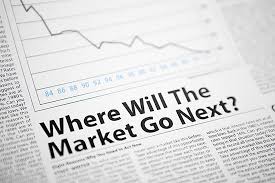
The last two days stock market indexes around the world have fallen significantly.  For many, the lost value of the last couple of days simply represents unrealized gains.

In a lot of cases, the value of a stock on Friday was far less on Tuesday leading to announcements of great losses.   The question is is the loss of an unrealized gain really a loss.

What is it worth?

If in the past year your portfolio value rose by say 20% and in the last two days the marketed dropped by 15% it is arguable that you have not really lost anything (this is a macro perspective for illustrative purposes – specific situations will vary)

As long as the original investment together within any paid dividends or interest is less than what the stock is valued today the only change is what people think your holdings are worth (not necessarily what they are really worth).

Paper Loss

An interesting thing about accounting is the value written on paper is indicative of what’s going on but does not necessarily represent hard reality (e.g., actual cash in hand).

In the equity market, the value can appear and disappear in moments the only thing that really matters is the value at the time of realization (i.e., when you buy or sell).

From a cynical perspective, money only has value when it is used to attain a physical benefit, for example, food, housing, clothing.   These are the things we need to stay alive.

Using equity markets to increase or decrease your supply of money can be a fun game and seem to have value, but the true value only comes at the time you spend the money on something you need.


Eradicating Evil

I have just begun watching the new Amazon Prime video series “Hunters”  and it reminded me of the large capacity humankind has for evil.

People’s inhumanity to other people has long surprised me.  Why are profoundly immoral and wicked acts allowed?  This seems like a simple fix, don’t allow anyone to practice evil.

The Eternal Idealist

For me, a world without evil seems to represent an ideal state.  For some, the lack of angst and stress might be missed, I am not one of those people.

Unfortunately, idealism often represents the practice of forming and pursuing goals which are especially unrealistic.  The question becomes why is the eradication of evil unrealistic?

Tales of the Holocaust

The genocide of some six million people of the Jewish faith in the 1940s has been labeled the holocaust.  The events of the holocaust are presented in the Hunters.

Perhaps, in a somewhat exaggerated form, the show highlights the insanity that was perpetrated by our fellow human beings.   This is the stuff of nightmares.

What is Reality?

I salute all those involved in creation and presentation of the Amazon show for taking a difficult topic and spreading the message.  The tale unfolds without bias, it is just a story told in a way that allows us to draw our own conclusions.

It is kind of a good against evil story but is it?  If good practices immoral and wicked acts to defend themselves have they become evil?

For me though the real question is still, why does evil exist in the first place.


Share your View

I am very fortunate to live in a country (Canada) which errs on the side of freedom of expression.  Here you have to be pushing decency and legality to the limit before restrictions take effect.

The balance between expressing your views openly and aggressively, whether written, oral or broad action such as a protest march or blockade is waited heavily toward freedom.

Drawing the Line

Over the last three weeks a small group of activists have clearly expressed their opposition to the Coastal Gas link pipeline in B.C.   To draw maximum attention they have blockaded the Canadian National railways (CNR) main line.

This blockade has been allowed to continue for more than three weeks even though it has been ruled unlawful and ordered to stop by court injunction.

Causing Harm

One of the principles of free expression must be avoidance of violence and in particular not allowing the innocent to be harmed. That is the deliberate infliction of injury on others.  (Self injury should be prohibited as well)

Actions which make  a statement and are constructed to gather maximum attention/awareness for your cause, by doing so in a dramatic way, is okay; harming others through your actions is not.

Act Now

Our government, although fully within their legal right to end this blockade which is causing serious impacts (from goods shortages, job losses to financial hardship) has chosen not to do so.

The harm being caused by a few who are exercising their right of open expression against the silent many gets larger every day.  A fair balance between the right to express oneself and avoiding harm to others has been exceeded, clearly so.

It’s time to shut  the blockade down.