Tag Archives: belief

Say what you do and do what you say

Being perceived as having a high level of integrity and thus building trust is not difficult.  Believing that you need to commit to actions and then complete those actions is the simple personal value that covers this.

Accepting responsibility for something requires communicating what you plan to do.  This does not mean committing to the outcome (which sometimes is out of your control) but rather committing to an activity, something fully in your control.

Passive/ Aggressive

Being agreeable or apparently accepting of a change, task or directive with no intention of undertaking the action, or even undermining it, is classic passive-aggressive behavior.

This approach could be described as “say what you do but don’t do what you say”.  This method won’t inspire trust but then it is not intended to.

To sabotage an unwanted change or objective is the goal and this technique is easier than being candid or blunt about how you feel.  It is certainly a way to avoid confrontation but does include significant reputational risk.

Not Locked In

A common concern I hear about the straightforward approach to “a promise is a promise”  it does not allow flexibility if things change and you are unable to fulfill the promise.

I beg to disagree.  The promise lays a foundation for expectation.  Ongoing discussion and communication resulting from changing circumstances are a reasonable and widely accepted way to keep expectations realistic.

Most people recognize expectations around an initial commitment can change as a result of circumstance.

Wording to this effect is often embedded in contracts and agreements where opt out of risk event clauses are inserted to ensure delivery on a promise does not become an impossible task.

Attraction

For the majority of males and females there is a specific physical look that makes the opposite sex attractive.  

This look is often leveraged in fields like marketing (models) entertainment (actors) and similar activities.  The point is to use physical attraction to get our attention.

Instinctive

Although there is a clear personal aspect to what attracts each individual there are some common body characteristics (e,g.,shape and weight) for which the majority of people have an unconcious favourable bias.

That is to say certain body types have a universal attraction while others do not.  This perception is typically not taught or experienced but rather part of human nature (i.e., genetic)

We have a natural instinct for what basic physical appearance we find attractive in other people.  Of course, this is superficial and can be quickly overriden as you go beyond just outward appearance.

It is this inate instinctual bias of body types we must overcome to prevent insulting or disaffecting others.  Albeit our natural behaviour is to admire and covet percieved beauty.

Body Shaming

Currently, around the world there is an active cultural shift toward overriding our genetic coded behaviours and to recognize the superficiality of physical attractiveness.

That being said, cleary the body beautiful still has a place in our societies that is unlikely to be completely eliminated.  

Use of attractive people to send messages, support causes and sell stuff is part of every culture world wide.

 Many societies are seeking a balance and promote things like body shaming as a bad thing, but admiring the body beautiful is still a real strong and persistant behaviour..

Maximizing Pleasure

A life without purpose or meaning probably results in a low level of motivation to act.  When there is no reason to do anything (purpose or meaning) so one does nothing.

The exception to this is when doing nothing is your goal, i.e., it is what motivates you and so your behavior is geared to enabling you to do nothing.  If this meets your purpose, it is perfectly fine.

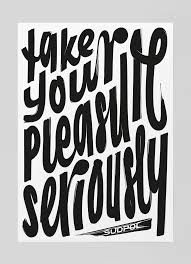
Your goal is yours to select, however, there is a primal driver that overrides your choice of purpose, meaning or lack thereof.  “Pleasure”.

Seeking Pleasure

Pleasure is simply a term to describe a state in which you have a feeling of happy satisfaction and enjoyment.  That is, pleasure feels good.

I theorize that pleasure is the primal driver forming the underpinning of my own personal motivation (and probably that of most people).  Simplistically, seeking maximum pleasure is a component of everything we do (i.e., feeling good).

It’s all about me

Pleasure seeking does come with some constraints.  If someone else is suffering at my expense I do not feel pleasure.  Fortunately, this is true for most of us.

Those who derive pleasure without regard to context are usually labeled as deviant even criminal in their nature.   Intrinsic to the human condition is a level of empathy.

Some are more empathetic to the plight of others, possibly influenced more by nature over nurture.   Generally though (excepting the aforementioned deviants and criminals) everyone exhibits some level of empathy toward others.

Embrace your inner desire to seek pleasure

For me, seeking maximum pleasure (as long as it’s not at the expense of others) is natural behavior and there is no reason not to both recognize but also embrace it.

Failure is a choice

Lack of personal success can be a result of many factors.  The things that impact success, or the level of success, that are within your control, are exercised by your own determination.

Failure is defined as a lack of success.  To what degree success is not achieved can be largely subjective; However, ultimately, for the aspects within your control the decision to succeed or not lies with you.

Of course the determination of whether the results represent an acceptable level of accomplishment depend on subjective analysis, both yours and others.

Deciding to Succeed

If you decide not to succeed does that equate to deciding to fail?  My own thought is yes.  While failure can arise due to factors outside your control it is just as likely to occur because you gave up.

In the second Star Wars movie (episode v) the character Yoda states this in a very simple way.   “Do or do not, there is no try.”   If you try there is a conscious acknowledgement a goal is being attempted and you may succeed or fail.

In fact, the decision to succeed requires you to believe in success.  You don’t try, rather you just do.  The things outside of your control willrestrict your ability to do things within the realm of the possible, the things within your control won’t.

Trying restricts your success not only to the realm of the possible but also to your own decision to proceed or give up, “I tried but could not do it.”

Doing and not succeeding is always about factors outside your control.  An extreme example of this for illustrative purposes would be to enter a room without opening the door.

Most likely all you do to  get through the door would fail, not because of what you did, but rather because the door was stronger than you.

Succeed more often than failing by deciding that is what you want.

Everybody is Important

The last few days I have been musing about leadership.  Todays post is in the same vein, but with a bit of a twist. How others percieve you becomes the foundation of who you are to them.

On the positive side, if you are viewed as warm and friendly, thoughtful and knowledgable, kind, empathetic, easy to understand, motivated and successful, (to name just a few of the critical life skills) it is likely you will be able to exercise your earned power to a greater degree.

These skills are not only valued in leaders, but in fact serve everyone well with helping achieve their goals.  The key to their practice though, is the ability to be liked.  Arogant and conceited delivery can override personal effectiveness.

Everyone is Important

Embrace the thought “everyone is important” as a singular personal value and always behave according to that concept.  If everything you do is founded on this belief, by default you respect everyone and this permeates your behaviour.  Others will feel it clearly.

So whether you desire others to think of you as a leader or just want to use your own earned power to its best effect, start with an underlying mantra embedded in everything you do that will send others a clear single that you value them.

Leveraging this basic underlying default value as the drive of all your behaviours, that is good communication, empathy, self awareness, etc, will just be all the more powerful.

Symbols

To a great amount of hype, the engagement of Englands Prince Harry to commoner Meghan  Markle was announced on Monday.  The last time an English royal married an American divorcee, there was an abdication.

If all goes ahead as planned this will be the first time a person of color, American and a divorcee actually joins the royal family.

Prompted by this announcemnt  and the associated level of interest, one of my colleagues asked a most interesting question,  what do the royals do?

Symbolism

Do you believe in Santa Claus?  Well you might not believe in the existence of an actual Santa Claus, as a descrete entity,  it is likely the concept and philosophy he symbolizes resonate with you.

Although the royals do exist, unlike Santa, the parallel is like Santa Claus, what they represent is larger and more powerful than their actual existence.

What you Do/What you represent?

Actions are critical, what you do is what you are.  In the case of symbols, e.g., royals, religious icons, fictional idols, it is not what is done but rather what is represented.

So, the answer to what the royals do is; support the symbolism.  Missteps on their part can damage the image of what the symbol stands for,  but to a large extent this damage can be overlooked in favour of the value provided by and the need and desire to believe what is being represented over what is occurring.

What about Trust

Trust is about reliance.  Whether you place your trust in a person or a thing, the level of trust will affect how you behave.  Typically low trust levels drive more cautious behaviour.

Why bother with trust.  It seems trusting carries a risk.  Bad things could happen if your trust is misplaced.  For example, most people trust the elevator cable won’t break, use after use.

If it did break, the resulting iact would likely be significantly negative, that is physical injury or death.  There are some safety features in place to mitigate the risk of a cable breaking but these also could fail.

Trust in Yourself

Some argue you should only trust in yourself, after all that’s who you know and understand best.  Most importantly,  relying on yourself provides the highest level of control.

While trusting yourself can  be easiest and provide the most underlying confidence, without trusting in others or things like elevators or planes accomplishing things anything can become more difficult.

Like most things, practicing too much or too little of a particular behaviour (in this case trust) is less likely to enable achievement of optimal results,.  The balance you place between healthy cynicism and measured trust is key to achievement.

It is virtually impossible to operate without some level of trust in others or things but the risk of trusting too freely can lead to disasterous results.

Don’t be afraid to embrace practicing trust, just be sure to balance it with some healthy optimism.


I exist, I will cease to exist

The awareness of ones existence leads to the realization someday you will cease to exist.  Death.  This in turn often results in the belief in a higher power.

This existance, and it’s ultimate end becomes explained in a logical fashion,  through a strong belief in in something whose existance is unproven.  In fact, only exists because of belief.

What if there is no higher power

The search for the meaning of life, the purpose or goal is often explained as a subservience to god.  Not a god you can see or talk to but one that only exists in your mind, that is a product of your beliefs.

Without this explanation,  our existence is a short trip through a reality of our own making ending in a death, which is not (of our own making).  This results in a strong motivation to believe in a higher power.

Such beliefs can be used as a justification for action, who can prove they are untrue?  Without this kind of fundemental motivation our lives become little more than a beginning and an end.

Not for everyone

Belief in a higher power, a god if you will, is not for everyone.  Personal philosophies that focus on the self, “it’s all about me” represent examples of an alternate approach.

I am here.  Let me do all the good I can for myself and others while I travel this road.  When it is done, I will have no regrets.

Chaplains and Religions

Today at the University of Alberta, a new non-denominational meditation/prayer center held an open house.  Several of my collegues attended.

My collegues ended up having a discussion with a chaplain that was in attendence and mentioned this me.  They were not familiar with term/role of a chaplain.

Need for Nondenominational spiritual guidance

I explained chaplains were spiritual leaders in non-denominational roles.  Organizations or institutions like armies, prisons and secular educational institutes require these roles to serve their constituents,  who come from a variety of backgrounds.

A key attribute of all major religions is a common belief that there is a God.  The detailed practices and beliefs may vary but belief in one God does not.

So, for me, a chaplain is a fabulous construct.  A spiritual leader that does not incite violence or hatred in the name of disparate religious practices but rather guides a focus on the key underpinning of religion, i.e., the common faith in a single deity.

Join hands, respect others travel in peace

Examples of religious  persecution  are common throughout mankinds history, yet it makes little sense given the core fundemental of each religion is the same.

Why couldn’t all religious leaders be like chaplains, that is agnostic to the specific tenets of whatever the religious type (Islam,Muslim, Catholic, Jewish and so on)?