
Tag Archives: values

Code of Conduct

Organizations of all types frequently choose to create and communicate to various stakeholders groups (sometimes all stakeholders) their behavioral expectations relative to interactions with the organization.

The code of conduct is developed by, or at a minimum – endorsed by, the board or senior leadership of the organizations.  The code is  strategic in nature providing direction for development of guidelines and procedures which are contextually specific.

Personal Values

Organizational conduct codes are necessarily in sync with the enterprise values, mission and vision.  This alignment is critical to build support for expected behaviors by those acting for and associated with the organization.

The organizational behavior expectations, grounded on expected values, work best when they are in sync with the personal values of those individuals that make up the organizational whole.

Thus the organizational code of conduct can be a filter both for selection of stakeholders as well as for the stakeholders themselves to determine if this organization is a good fit.

Developing a Code of Conduct

An interesting question for organizations is how to best develop the enterprise wide conduct expectations.  Is this a collaborative exercise among all stakeholders or should it be top down.

I believe there is no simple answer to this question and like many things (e.g., conservative vs. liberal, nature vs. nurture) in fact the answer lies with creating an optimal balance.

The organizational leaders both strategic and operational (i.e, the board and executive) play a key role in developing and issuing the code but to be effective it must take the expectations of the broader stakeholder group into account.

How to do this is very much contextual and dependent on the overall make-up of the organization but drawing on the existing culture, strategy and values at the core of the organization can often be an efficient way as opposed to the broader consultation processes often used by large and ineffective bureaucracies.

Clearing your Conscience

Taking action to salve your conscience may benefit others or it could just be a selfish act.  Most likely though it is a little bit of both.   Doing it solely for vindictive purposes may weigh on your conscience and create a vicious circle.
Each of us is guided by our inner feeling or inner voice relative to the rightness or wrongness of our behavior.  Sometimes we act on this directly, sometimes we ignore and let it fester for a while but ultimately it always affects us in some way.

Focus on You

Our conscience is with us until we die.  When we override the voice in our head or values we hold dear in our hearts the action we chose remains embedded in our brain and we need to live with it.

From time to time this can mean we try to heal our feelings by taking actions to resolve those things that are eating at us from the inside and just won’t go away.

In some cases, these things we finally chose to resolve will not only help us but can spill over as beneficial actions for others.  For example, if you chose to out a bully through public identification,  this could have drawbacks on you (the bully might not like it).

However, the good news is that it could put a stop to the bullying behavior, that is saving others from past or future pain.    For you, doing the honorable thing should resolve guilt feelings a salve your conscience, although there may be some short term pain.

Confidence

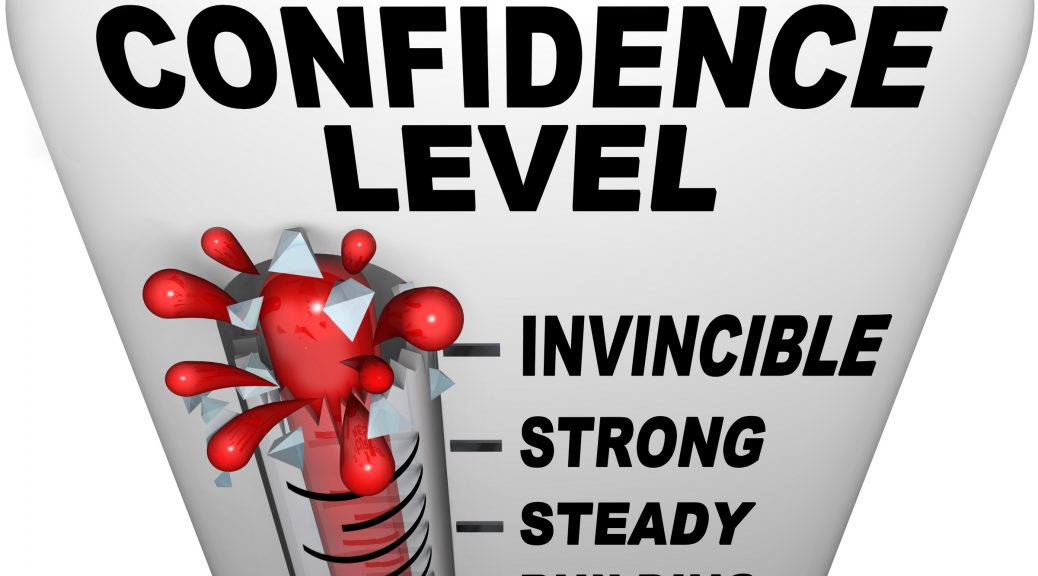
A typical quality of those we consider leaders is their demonstration of self-assurance which arises from self-appreciation of their own abilities or qualities.

This confidence is projected as a personal core value and the underlying behaviors enable us to hold a feeling or belief that one can rely on them; firm trust.

Over Confidence

While confidence is an important attribute for those that seek to guide and support others (and themselves) it is a fine line.  That is to say, overconfidence can lead to disastrous results.

Trust is a foundational factor, without which others cannot have confidence in you.  If they don’t believe the outcomes can be relied on however self-assured you project yourself to be will, in essence, be for naught.

Projecting confidence and not delivering could result in more than disappointment.  Those who trusted your judgment could lose whatever time, effort and currency they invested in you.

Ultimately there faith would be eroded and this could have a long term effect on how others perceive you.  Be very cautious about showing false confidence.

Proceed with Certainty

Confidence is about how you behave.  Being able to behave with certainty should be founded on facts.  Before acting with a high level of self-assurance, showing that you believe in yourself, be sure you have cause to do so.

True confidence is not a gamble.  It needs to be based on certainty to be effective.  Certainty is derived not from you just believing a thing to be so but rather knowing it to be the case.

If you don’t know, make that clear to others.  You can still be confident about searching and finding the answers but don’t guess them.


Building Teams

As I have commented in numerous past posts we are not alone.  Working with others, leveraging their skills and abilities as they leverage ours is an optimal approach to getting things done.

That is not to say solitary behaviors (i.e., solely individual activities) are not important and don’t play a role in how we live our lives.  However,  living without interacting with others is almost impossible.

Optimizing the Experience

While,at the core, your life is about you, unquestionably in my mind, we need to be aware of and sensitive to other peoples needs wants and desires.

This could simply be because of  your own committment to personal integrity, (i.e., being honest and showing consistent and uncompromising adherence to strong moral and ethical principles and values which include respecting others.)

Or it could be more selfishly motivated.   Positive engagement with others well is needed to influence them and achieve your goals.

Teamwork

If a group of people work together effectively (usually for a common objective but not necessarily)  there is a higher probability of a positive outcome for all.

However when its not effective, that is everyone is acting as an individual, it is worse than going it alone.

Basically effective teamwork relies on the all the team members practicing one core value, “everyone is important.  Everyone believes and acts like everyone else is valued (highly valued).

Teams are not mandated they are founded on this simple value.  If everyone practices it results are extraordinary.

Everybody is Important

The last few days I have been musing about leadership.  Todays post is in the same vein, but with a bit of a twist. How others percieve you becomes the foundation of who you are to them.

On the positive side, if you are viewed as warm and friendly, thoughtful and knowledgable, kind, empathetic, easy to understand, motivated and successful, (to name just a few of the critical life skills) it is likely you will be able to exercise your earned power to a greater degree.

These skills are not only valued in leaders, but in fact serve everyone well with helping achieve their goals.  The key to their practice though, is the ability to be liked.  Arogant and conceited delivery can override personal effectiveness.

Everyone is Important

Embrace the thought “everyone is important” as a singular personal value and always behave according to that concept.  If everything you do is founded on this belief, by default you respect everyone and this permeates your behaviour.  Others will feel it clearly.

So whether you desire others to think of you as a leader or just want to use your own earned power to its best effect, start with an underlying mantra embedded in everything you do that will send others a clear single that you value them.

Leveraging this basic underlying default value as the drive of all your behaviours, that is good communication, empathy, self awareness, etc, will just be all the more powerful.