Category Archives: Random thoughts – keeping you on your toes

Which comes first

I often run into people seeking answers.  My counsel to them is unlike the popular game show, Jeopardy, it does not make sense to start with the answer.

The answers we seek cannot be uncovered without a clear understanding of the question.  That is where to begin.  Spending time and effort seeking to find answers is a much more efficient process if it is focused.

Clarity of Purpose

Taking the time to fully understand the question is an effort well worth undertaking.  It helps us avoid responses that are not really relevant to what we seek, but appear to be.

Sometimes digging into what the question really is can provide answers.  For example, consider the simple question “Why is the sky blue”.

Are we really trying to determine the reason for the sky’s color or is it what the sky is composed of (which results in blue color) the answer we seek.

Or do we want to understand why the region starting from land and reaching outer space exists, that is what is the purpose of the sky and why does it exist and do we need it, can we use it for something?

Solid Foundation

Research into a topic is best conducted when the object of the research is well defined.  This process of determining what we are actually trying to answer, that is creating the question is not only a critical beginning but also time-consuming.

The value equation, spending time up front to think through and clarify the question more often than not results in clear and high-quality answers.

Without understanding the question we really cannot arrive at an answer.



Learning for Life

Do we need a reason for practicing continuous learning?  Whether formal or informal is the motivation to learn best just driven by the potential to gain knowledge, rather than a specific social or monetary goal.

The ongoing acquisition of knowledge or skills through experience, study, or by being taught directly by others undoubtedly has value even if the return on investment cannot be specifically defined.

What percent of my personal health and wealth is attributable to ongoing learning?  I do not have an exact measure in monetary terms but  I have always found ways to leverage my knowledge gains even if only to improve my feeling of personal well-being.

Embrace the Experience

Learning objectives are generally focused on specific topics and learning objectives (e.g., mathematics) however the ways we are taught and how it is received is an important part of the learning experience itself (beyond just the content).

Ongoing interaction with teachers and other learners can go well beyond the learning objectives.  Social interactions or working together with others to gather and collate information provides a side learning opportunity to increase our overall maturity.

Sometimes the most important knowledge gains are derived from the ad hoc or informal practices associated with structured learning.

Practice

All areas we undertake to upgrade our knowledge from time to time don’t need to be associated with specific future plans.  That is we do not need to take a course or training with a specific goal in mind.

Ultimately should find a way to employ the outcomes of our training when done. Without practice or actually using the knowledge we gained, learning may be wasted.

In some cases though exactly how we are going to leverage what we learned might not be clear to us until we are done.

Feedback

Lately I have found more people using the term feedback when they are more accurately providing advice.   Granted there is a fine line between these terms, but they do have different foci.

Feedback involves providing information about your reactions to something or someone (e.g, a person’s performance of a task)  which can be used by them as a basis for improvement.

The giving of advice seems similar to feedback but is more specific.  It involves guidance or action recommendations offered with regard to prudent future action.

Gently Done

Whether couched as advice or feedback, providing direction to others must be done with care lest it is misconstrued as criticism.  Perceived criticism is likely to result in resistance by the recipient as a natural reaction.

The giving of feedback can be tricky in this regard as by it’s nature the points of improvement imply criticism about actions to date.  Consider providing advice or couching the feedback as an opportunity to make it more palatable.

Overcome Resistance

Both advice and feedback can be useful tools but my experience is the natural reaction by most recipients is auto-shutdown.  That is, as soon as you offer advice or feedback you lose your audience.

Suggestions and recommendations, not explicitly stated as such but worded accordingly work much better.  You may still achieve your objective of giving some advice or feedback but it is more likely to be received positively when delivered softly.

A word to wise, when you are providing advice or feedback always includes the reasons why someone should be motivated to accept what you propose.  Action usually will not result without motivation.

A sense of wonder

Embrace the feeling of surprise and admiration that occurs when you see something beautiful, unexpected, unfamiliar, or inexplicable.
This sense of wonder can drive creativity.  The feelings associated with wonder are driven by curiosity and create a desire to know more, to discover.  This is the underpinning of innovation. 

Keep it Real

Wonder often starts with things we don’t understand but which have something exceptional about them that draws us in.   The mystery of the thing is compelling.

Acknowledging the unknown exists is our first step but then processing the reality of the situation we are wondering about can lead us to something better.

We must determine the underlying factors that create the object of our wonder as these will allow us to both replicate and expand on that which we wonder about.

Embrace the Opportunity

Things that amaze represent an opportunity for you to use them.  First work on understanding the phenomenon and then let your thoughts turn toward how to leverage it.

How can you use the power of this amazing and mysterious experience to improve yourself, and others.   It makes sense not to ignore your curiosity but build on it.  Things that make you wonder can be fuel for your creativity, to your benefit.

Beautiful, amazing yet mysterious, the thing you see and experience that develops a sense of wonder can provide you with a chance to surprise both others and yourself, seize the moment.

Take Action

Viewing and experiencing the wonders of the world may take your breath away but this is just wasted is you do not use the feeling to expand the opportunity.    Don’t just enjoy the things you wonder about use them to your benefit.

Submit and Hope

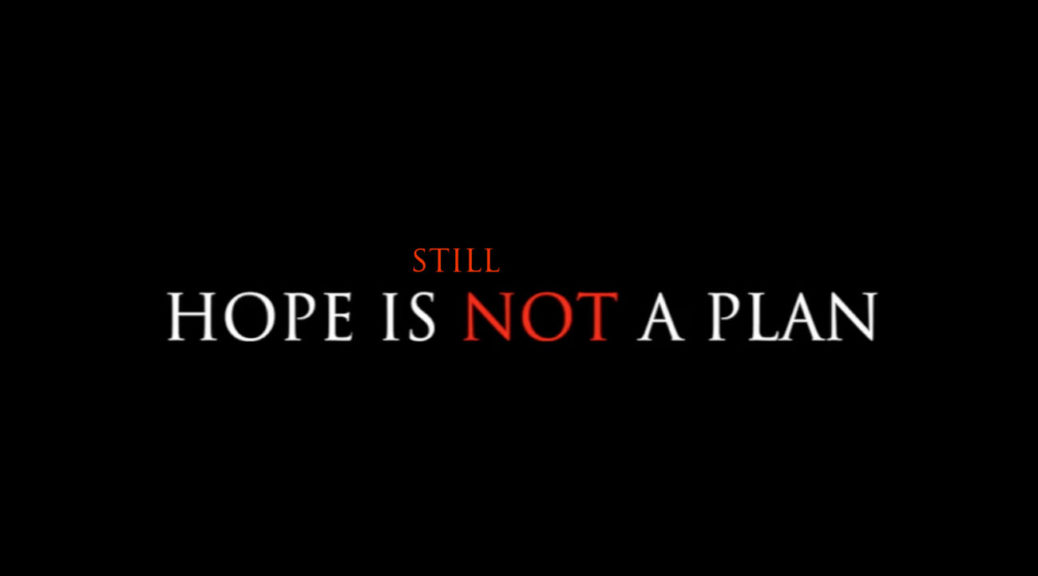
Relying on hope as your strategy will produce outcomes, good or bad, that are basically due to chance.  Without a plan of action or policy designed to achieve your goals, the results are in essence derived from happenstance.

While feelings of expectation and desire for certain things to occur is a valid emotion it is never the best approach to taking action and working to achieve your dreams.

Greater Uncertainty

For example, if your goal is to increase your fiscal wealth, purchasing a lottery ticket, submitting the numbers, and hoping for a windfall of cash is an option and sometimes it can pay off.

Basically, though this approach is based on chance.  How you choose your numbers, or how many you submit might affect the chances but overall this strategy is simply put – submit and hope.

Improve your chances

It has been well said, “Nothing is certain” but having a solid strategy increases the likelihood you will be able to achieve your desires.  Uncertainty still exists but can be diminished through planning.

Working out a set of actions to achieve your goals (e.g. increase your personal wealth) will not guarantee results but if formulated based on research, logical, and analysis the opportunity for success is increased.

Not to abandon hope

This is not to say that hope does not have value.  Hope underlies optimism and without it, life can be very depressing.  However, relying on hope alone is not a valid strategy if you truly seek to achieve success.

Do not abandon hope but also do not underpin your plans solely with hope.

Stay Sharp

I watched an interesting Ted Talk the other day by Chris Bailey, “How to get your brain to focus”.   My own key take-away was the potential of leveraging boredom to sharpen your mind.

This led me to research the topic further.  It turns out there is strong scientific evidence that the brain is more active and open to the development of ideas and plans in what is termed the default mode (i.e., boredom).

Not Natural

Given the opportunity for boredom to result in positive thinking and creative, innovative ideas simply by being bored, I wondered why boredom is typically avoided.

Our natural inclination is to be overloaded.  Attention spans are guided by the need for hyper-activity in our brains.  This is how we are genetically wired as a species.

In fact, bouncing from one activity to another or even conducting a number of activities in parallel (multitasking) is easier for us to do than being in a situation without anything in particular to do.

When we are not focused on our surroundings or feel that a day or period is dull or tedious our minds tend to wander.  They do not shut down, in fact, studies have shown in these situations brain activity actually increases.

Boredom with Regularity

In his Ted Talk Chris suggests we sharpen our minds through the practice of boredom for an hour each day.   He suggests his own experience was a significant increase in the developing of ideas and creating plans on how to make them a reality.

In short, he believed, for him, it really works.  Avoiding boredom can be in fact counter-productive.  Not sure if I like the concept because I am lazy or because it is a good idea,  but I am definitely giving it a try.


Destiny

Some believe there are a set of pre-ordained events that will necessarily happen in the future.  This is our destiny.  Perhaps by definition whatever we do,  our destiny is inevitable.

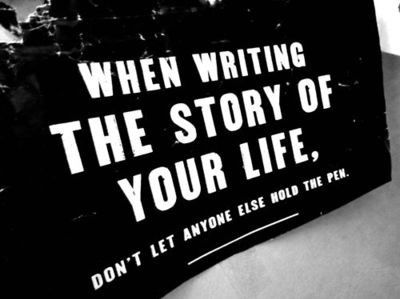
I question the validity of the concept and  I wonder, should we wait for our destiny to just occur or can we self forge it through our actions?

Influence/Control

We can all exercise influence on both others and events. That is we have the ability to try and effect changes in the behavior of someone or something, or the actual effect itself.

Our attempt might not achieve the results we seek but nothing limits us from making the attempt beyond our own motivation and desire to do so.  Taking control can be through the exercise of influence, granted power, or a combination of both.

Personal granted power is an interesting phenomenon as it enables us to command actions from others whose subservience is largely psychological (more about power in a future blog topic).

Shit Happens

Destiny occurs when we can neither exercise influence nor have granted the power to make the change or cause events to occur as we desire.

This is sort of the “shit happens” or “it is what it is mentality”.  It means acknowledging and accepting there was nothing you could do.

Unfortunately, a belief in destiny can cause us to let things occur when in fact we did have options and could take steps/plans to achieve better outcomes.

Destiny, things out of our control probably do exist but perhaps far less than we perceive.  After all, if you don’t try to go up against what is perceived as inevitable, then, of course, that is what it will be.


Celebrate, dance to the music

Celebration contributes to our ongoing joy, it behooves us to find a purpose for marking our pleasure at an important event or occasion or just by engaging in enjoyable, typically social, activity, every day.

Holidays are designated days of ceremony, on and off as both individuals and  social groups we select significant events and milestones to celebrate but these celebrations are selective and not continuous.

Life is Short

In the context of the Universe and time as we know it our own lives are just a drop in pond.  From that perspective celebrating everything continuously only makes sense.

While the following is a trite and a well worn phrase, our life is a celebration in and of itself we should not waste any moment under a cloud of fear, anxiety or other stressful feelings.

However small or large, beautiful or ugly scary or relaxing everything we experience is ours to enjoy and celebrate.  Logically why would we choose otherwise.

Choose Pleasure

One of the greatness opportunities of life is a feeling of happy satisfaction and enjoyment.  Why entertain anything but the joy we derive from pleasure.

We can find distinctive pleasure in everything.  An open and optimistic perspective is all you need to do this.  How you perceive your personal interactions and the things around you is core to achieving personal enjoyment.

Simply put, choose pleasure every-time, what possible reasons can there be not to.  It is only logical.

Pass it On

Another significant reason to find pleasure and celebrate everything  around you at all time is the fact it is infectious.  Your celebration will very quickly be joined by others.

Spread the joy.

Planning for the Unknown

It is hard to deal with things you do not know enough about or perhaps they are unfamiliar.  Risk management is a good example of developing plans to address or avoid the unknown, basically preparing actions just in case.

In general, planning for the unknown can have many applications in our daily lives and is not limited to mitigating potential or anticipated risk.  Sometimes our personal objectives relate to an unclear future.

Being that as it may be, we need to forge ahead as best we can.  Plans based on the unknown or as much as we do know with assumptions and guesses about the rest are needed if we are to be effective as we move on.

Objective Focused

Planning for the future, which is full of potential surprises starts best with a clear idea of what you want to achieve, that is the direction in which you are headed.

Building from these objectives, and using sound judgment founded on the consideration of optimistic, most likely, and pessimistic futures, you can craft an approach to reach your goals.

As time goes on things both become clearer and also change relative to your initial estimations of the possible.  To address these factors requires flexibility and the original plan you form will not work well if you intended it to be carved in stone.

Focus on the probable and the possible

When creating your plan of actions to achieve your goals and objectives, even if many relatively unknown factors exist, remember to always apply the litmus test, “could this happen and is it likely to do so?” (i.e., both probable and possible).

You can’t always get what you want

The external factors associated with your perception that prevention of the progress, success, or fulfillment is occurring can be very real to you, however,  letting this result in frustration is a choice.

As the Rolling Stones sang back in 1968, “You can’t always get what you want, but if you try sometimes you find you get what you need.”  For me, this is how we can avoid frustration.  Focus on what you need, not what you want.

 Focus

Getting what you need might require a significant effort but the result will be satisfying.  Focusing on things you require should never be frustrating, just plod on until you attain what is required. Ultimately you need it so you will find a way to get it.

Separating needs and wants (both of which can seem required, essential and important) is not easy but critical to avoid frustration.  Don’t waste time on the things you want.  Just relax and let it go, cause you don’t really need it.

Fine Line

There is a fine line between needs and wants and sometimes they are inseparable.  The yardstick is basically can you survive without it.  If no it is required.  For example, we need food to live ergo it is required.

However, this is an interesting requirement because of the devil in the detail.  How much and what kind of food is required.  We have our individual wants as it relates to food and we feel a need to satisfy desire but the reality is, core sustenance is pretty basic.

Separating wants and needs can be tricky but it ultimately it makes sense to stay chill about things that are nice to have but not absolute musts.