Tag Archives: planning

Understanding Failure

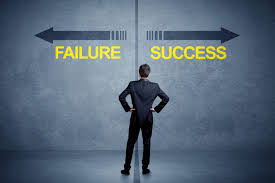
To know if you have failed you must first understand what it means to succeed. Basically failure is associated with a lack of success.  If you don’t know what success looks like you can never know if you have failed.

This concept is really about objective setting or defining yours goals.  Success requires planning.  This starts with a clear understanding of what is to be achieved.

Measurable

The best way to measure success is through the use of facts, that is something that is known or has been proved to be true.  Facts are objectively determined.  It is or it isn’t.

Our goals can contain some subject components and while they may be valid aspirations determining success or failure can be somewhat judgmental.

For example, on entering a confectionary shop you charge yourself with selecting (and consuming) the best tasting chocolate in the store.  Taste is a very subjective measure and as such, claiming success (or failure) can change for each person.

Defining Failure

Being able to know when you have failed (because success was clearly understood) is an invaluable skill.  Without clearly believing and accepting failure we are unlikely to re-plan and try again, perhaps with a different approach.

In essence after undertaking a challenge you may just decide to live with the results (to your detriment) and ignore the fact you did not actually succeed, i.e., you failed.

Taking Action

Clearly understanding what you want to achieve also enables you to decide when and how to change course, perhaps modify the goal or even drop it entirely.

Knowing whether you failed or not is a prerequisite for this.
Looking Forward to the Future

After about 43 years of continuous employment for various organizations, (albeit well paid), I plan to retire from my current employment in 2 weeks.

After having the majority of my waking hours focused on achieving Corporate goals (marching to someone’s else’s tune) what I do or don’t do is about to become very much my own choice.

My Choice

With retirement from regular employment, regardless of whether it was self-employment or for somebody else, the imperative of earning money through your own labors is gone (or should be if you planned appropriately).

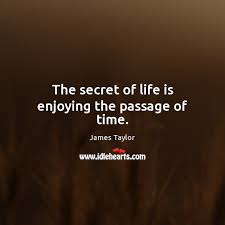
The passage of time is inevitable, focusing on enjoying every minute is a choice. In the case of retirement the focus is very much personal choice, which of course is one of the reasons retirement is prized.

Doing nothing could be what you choose or perhaps you have some definite goals relative to things you want to accomplish.   Deciding does not mean you cannot change the approach later but consciously choosing something is key to being satisfied.

Either way (whether the plan is to be idle or active), knowing what your plan is, being clear on what you choose is a critical success factor to enjoying retirement.

Freedom

The key and beauty of being retired is you have the power or right to act, speak, or think as desired without hindrance or restraint.  This is of course not an absolute, but rather a general principal.

One caveat, to be most effective and embrace the freedom you achieve from leaving employment a fiscal foundation is needed (some form of retirement income or nest egg).

With that in place (hopefully through pre-planning before you retire) the choice of freedom is yours.


Building Resilience

At various times in our lives, virtually everyone goes through a process of adapting in the face of adversity, trauma, tragedy, threats, and other significant sources of stress.

Situations that require the practice of resilience as a major part of perseverance through the unsettling change are unavoidable.  Our ability to adapt and move to the other side has a natural and learned component and strengthening this skill enables us to move on.

Get Through It

While it is important to get past a change without adverse effects on our health (mental or physical) this is not a process to be rushed nor ignored.

Just hoping it will resolve itself with time often leads to the deeper internal stress which festers.  Likewise rushing to get it over with does not address the root cause and again might not really resolve problems.

We need to move through the change leveraging planning, communication, and problem-solving skills to help us overcome the stressful and adverse impacts.

Focus on Opportunity

Our innate resilience can be a counter to change resistance.  However, it is important to bolster your level of resilience by behaving in ways that enhance the change experience.

Ask questions, seek clarifications, speak out clearly (but calmly) about how you feel.  Sharing can elicit helpful feedback from others which can guide you in ways to help yourself.

Plan how you will behave rather than react.  This gives you time to think through scenarios and is more likely to result in positive responses from others, as opposed to them experiencing explosive behavior on your part.

Studies have shown we can enhance and grow our resilience skills.  Change is inevitable, strong resilience will be needed from time to time and you will thank yourself for being ready.

Certainty

The other day a colleague advised me he was absolutely certain about something.  The implication was he knew his information was for sure, in his mind it had been established beyond doubt.

The things we know are likely never an unqualified certainty and so cannot be fully relied on.  This particularly applies to future happenings.

Blind Faith

Relying on certainty as an absolute indicates some lack of perception, awareness, or discernment.  That is, blindly believing a thing without recognizing the unknown always exists and can lead to the unexpected is a bit myopic.

That is not to imply our plans and actions should always take into account the potential things will not unfold as we expect.  While this is a possibility the types of impact-driven by uncertainty will vary with the situation.

For example, planning a wedding taking into account the very real possibility it may be called off by the happily engaged couple is certainly a way to mitigate the frustration and costs of standing down.

However, it is unlikely to occur.  Most engaged couples do proceed.

Be Prepared

Preparing for uncertainty should begin with an assessment of likelihood.  If things are likely to proceed as expected, based on past experience, current state, and what is known about the future, planning to address the uncertainties can do more harm than good.

It is important to recognize being prepared to address uncertainty can both save us from pain and stress as well as cause us pain and stress (as we focus on the uncertain).

Strike a balance

The best approach to managing the uncertainty is to conduct a thorough analysis, test assumptions to the greatest degree possible, and ignore uncertainty with on the face of it is unlikely to have any impact or if it does minimal impact.

Balance what you know with what you don’t with a modicum of common sense.


Submit and Hope

Relying on hope as your strategy will produce outcomes, good or bad, that are basically due to chance.  Without a plan of action or policy designed to achieve your goals, the results are in essence derived from happenstance.

While feelings of expectation and desire for certain things to occur is a valid emotion it is never the best approach to taking action and working to achieve your dreams.

Greater Uncertainty

For example, if your goal is to increase your fiscal wealth, purchasing a lottery ticket, submitting the numbers, and hoping for a windfall of cash is an option and sometimes it can pay off.

Basically, though this approach is based on chance.  How you choose your numbers, or how many you submit might affect the chances but overall this strategy is simply put – submit and hope.

Improve your chances

It has been well said, “Nothing is certain” but having a solid strategy increases the likelihood you will be able to achieve your desires.  Uncertainty still exists but can be diminished through planning.

Working out a set of actions to achieve your goals (e.g. increase your personal wealth) will not guarantee results but if formulated based on research, logical, and analysis the opportunity for success is increased.

Not to abandon hope

This is not to say that hope does not have value.  Hope underlies optimism and without it, life can be very depressing.  However, relying on hope alone is not a valid strategy if you truly seek to achieve success.

Do not abandon hope but also do not underpin your plans solely with hope.

Planning for the Unknown

It is hard to deal with things you do not know enough about or perhaps they are unfamiliar.  Risk management is a good example of developing plans to address or avoid the unknown, basically preparing actions just in case.

In general, planning for the unknown can have many applications in our daily lives and is not limited to mitigating potential or anticipated risk.  Sometimes our personal objectives relate to an unclear future.

Being that as it may be, we need to forge ahead as best we can.  Plans based on the unknown or as much as we do know with assumptions and guesses about the rest are needed if we are to be effective as we move on.

Objective Focused

Planning for the future, which is full of potential surprises starts best with a clear idea of what you want to achieve, that is the direction in which you are headed.

Building from these objectives, and using sound judgment founded on the consideration of optimistic, most likely, and pessimistic futures, you can craft an approach to reach your goals.

As time goes on things both become clearer and also change relative to your initial estimations of the possible.  To address these factors requires flexibility and the original plan you form will not work well if you intended it to be carved in stone.

Focus on the probable and the possible

When creating your plan of actions to achieve your goals and objectives, even if many relatively unknown factors exist, remember to always apply the litmus test, “could this happen and is it likely to do so?” (i.e., both probable and possible).

Close the Door on your Way Out

Looking for a way out, best practice, use the door.  Whatever you are doing there can come a time when you need to seek a change.  This can apply to any point or context of your life from work to play and every imaginable scenario in-between

Changes can be abrupt and not well planned.   These typically derive from frustration and related strong negative emotions (e.g., fear, anger, antipathy, sadness).  The exit can be noisy and messy.  Instead of using the door, you might leap through the window glass.

No Regrets

Exits made on the spur of the moment typically are not sustainable.  After a brief period of euphoria, “I did it”, in retrospect you begin to question your impulsive decision, and regret can set in.

There can come a time for you to choose to make a significant change (e.g,  a time to change your career, (voluntary or paid), start or end a family, take up or give up a sport, etc.)

The key to making the change, that is closing the door on something, is to not slam it.  Take your time, plan it out, and execute accordingly.  Your choice to change is in the context of improvement making things better is the goal.

Feelin Good

If the change is made and you are not happy something went wrong.  After all, why change if not for the better.  Planning including some introspection can help ensure you don’t act precipitously or contrary to your ultimate aim (improvement).

Take your time and think it through before leaping into space.  Calmly open the door and exit.

Vision, Goals, Strategy, Tactics

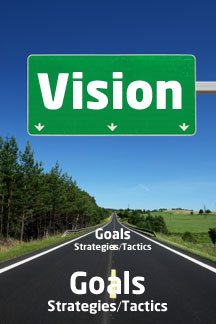
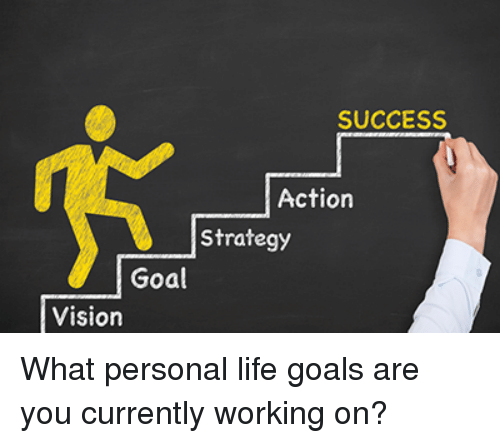
Our ability to think about or plan the future with imagination or wisdom is often referred to as vision. This can be a great starting point to define your goals and objectives.

Using what you visualize your future to be as a foundation, goals are the specific aims or desired results that make up the steps to enable you to achieve what you seek.

What Next

Once you have determined your goal/objective, that is the achievement aimed at or sought, the next steps are to determine how this will be done.

This is where strategy comes in.  Basically a plan of action or policy designed to achieve a major or overall aim – i.e., your ultimate goal or objective.

Strategies clarify what is to be achieved, by when and how.  This may be a multi-step process and the strategic plan does not need to be detailed but is rather more indicative in nature.

Make it Happen

After you have defined your vision, developed the goals to support is and combined everything into an overarching strategy, it is time for execution.

Use your strategy to develop tactics and associated tactical plans.  These are a series of carefully thought out actions that form the recipe for success.

The tactical plan defines activities that are focused on achievement of a specific end – the specific milestone needed to support the strategy which is just an encapsulation of the goals and objectives required to achieve the vision.

Using vision, goals setting, strategy development and tactical planning enables you to perform efficiently with a high chance of actually achieving your vision.

Frustration

Most of us experience a strong feeling of annoyance or upset because of a strong believe you lack the ability to change or achieve something, from time to time.

This sense of frustration typically  occurs for example when a doctor keeps you waiting past your scheduled appointment perhaps even one or two hours.
Or maybe you are in a line to make a purchase and you have been waiting an hour.  Whatever you are buying it must really be something  to make it worth the wait.

Avoiding Frustration

Being frustration rarely results in good behaviour.  Unfortunately many of us our known to pass along our frustrations to others in loud, sharp and disrespectful ways.

I believe this to be a strong argument to avoid things that can lead to frustration.

This is not always easy and does require some planning but it is a good approach not only for you but particularly for the others whom might become innocent victims of your negative emotions at some point along the way.

Selecting Options

Most of the common causes of frustration relate to other people.  How dare they make appointments, shop and drive at the same time as me.

This can be overcome by simple steps like picking the first appointment of the day to avoid later delays, driving at timesoutside rush hour and picking shopping hours that few others do.

The benefit of being relaxed and happy while you full-fill your needs without frustration will become quickly apparent.

Building a Strategy

A strategy will define the approach to achieving your needs but considered in the context of the bigger picture (e.g., personal life, business life, social life)  over specified time horizons (e.g., immediate, mid and long term).

Your strategy defines the top-level goal (e.g., obtain a post-secondary education) at a conceptual level  including what are the key objectives (e.g., type of education, cost considerations, quality expectations, etc) over a specified time frame (e.g., the next 1 to 5 years.)

Just Do It

Often strategies are considered a waste of time.  Why spend time figuring out the future when I can just plunge in.  Of course, often hindsight raises its ugly head and we wonder if we could have made better choices.

Well thought out strategies define our expectations but more importantly the supporting rationale for them.  Contemplation now can avoid pain later.

How to Get There

The strategy is directional.  It includes not only the objective but the key attributes of it.  These can be easily used to develop the actions that need to be undertaken to meet those goals (e.g., acquiring funds, educational pre-requisites,  health considerations )

Strategies help us avoid figuring things out on the fly, always fun but not always effective.  Making it up as we go along can be invigorating but also lead to regrets.

Flexible

Most importantly, treat your strategy as flexible.  Things change both for you personally and environmentally.  As the context changes so should the strategy.

Without a strategy, I wish you good luck.  With a strategy, luck is not needed. your success is planned.