Tag Archives: frustration

Engaging Criticism

From time to time I find that other people will express their disapproval of something I did based on my perceived faults or mistakes.

Being critical of other’s or perhaps even self critical is normal human behaviour; dealing with criticism effectively is however very difficult and in my experience relatively unusual.  Yet it is one of the key emotional intelligence attributes which I observe  in highly effective people.

Embracing Criticism

Being able to accept others ideas and suggestions, regardless of how hurtful they may be, can provide us with leverage to either improve ourselves or others.

Overcoming the instinctive emotional reaction of anger or annoyance is extremely difficult but conscious analysis of the critical information enables us to respond in the most effective manner.

Using Information to your Benefit

In this context accepting criticism is not meant  to imply agreement but rather acknowledgement that it exists and needs to be dealt with.

Ignoring the criticism without consideration or responding with an instinctive emotional reaction will typically not provide the best result.  Most often this leads to adversarial behaviour.

Embracing the critics and either adopting their suggestion or gaining their understanding and cooperation (i.e., support) for your actions is far more effective.  Albeit much harder to accomplish.

Avoid Antagonism

Most often criticism is the beginning of the end.  It leads to conflict based on anger and dislike.  Collaborating effectively with others requires the ability to use criticism (perceived or real) in a positive way to avoid going down a rat hole.

Those with high levels of emotional intelligence recognize criticism from others will always occur at some points in time, using it for benefit rather than battle s always the best approach.

Even the best made plans …….

Sometime things just do not work out.  Your expectations might not be met or others make mistakes which results in additional effort on your part.

Even when you carefully analyze the requirements, follow any instructions provided to you and clearly communicate your needs and expectations something might not happen the way you planned for it to.

Overcoming Frustration

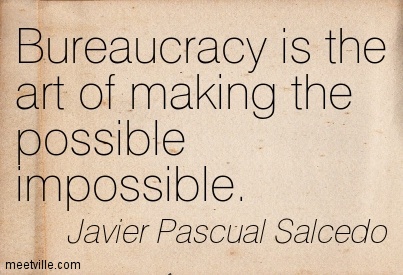
I find bureaucracy is a great driver of situations where re-work is needed.  The issue is small discrepancies which really have little impact on the outcomes can be triggers for the pompous bureaucrat to exercise their authority. simply because they can.

Recognizing frustrating moments can and will occur regularly is important in managing your way through them.  Personally I learned long ago that most often acquiescence and submissions works best toward ultimate achievement of your goal.

Of course this is not really my go to behavior but rather a learned one based on experience.   The pain caused by being forthright about how you feel (e.g., saying things like seriously this is your mistake) just is not worth it.

Win Win

After enmeshing myself in greater difficulty by seeking even demanding others be reasonable, an approach that might make me feel good, I often found it does not necessarily result in getting what I need.

By accepting things do not always go as expected no matter how well you have planned your actions, I find the best approach is to just go with the flow.

I have come to realize overcoming frustration by succeeding is often the best way to go.   Why fight it, ultimately you win and those responsible for the difficult process get what they want so I guess it is a win win, not that the others deserve it.

Have Patience my Friend

All of us has some capacity to accept or tolerate delay, trouble, or suffering without getting angry or upset.  How much capacity varies both by each individuals personality (go to behaviours) and perceived circumstances.

If your expectations were set through a hard commitment you may have little patience with delays however even in these cases you may be able to accept poor performance.   A lot depends on the personal impacts, i.e., is it painful or just annoying?

A Virtue?

Some associate patient behaviour with high moral standards and thus patience is often classified as virtuous.  Basically your tolerance and ability to accept the failings of others is a positive value.

For me this is not an absolute value but rather, as with so many things, patience needs to be a balanced behaviour.  There are times to act on your frustration, but with appropriate thought.

In other cases the results will turn out better and most likely be sustainable if you wait.  Exercising patience is best managed through a self assessment.

Eating Away at you.

When something does not occur in accordance with your expectations you may well be feeling of upset or annoyed, especially when you are not readily able to change something or achieve your goal.

Caution is recommended to avoid acting in a ways which  moves you further from your goal.  Granted the delay be upsetting but your first approach should also ways be to pause and reflect.  Waiting a little longer is probably not going to be a disaster.

Responding too quickly could well make things worse.  This is not to say patience will lead to resolution.  Balance your frustration with an appropriately timed plan of action.


Is it you?

Many times through out our lives we will experience conflict.  At times our exchange of information with others will appear adversarial.

We may be criticized or perceive others behaviour to be rude or unfriendly.   Often in these cases we assign fault to the others and use this determination to justify our own righteous behaviour.

Solution Based Action

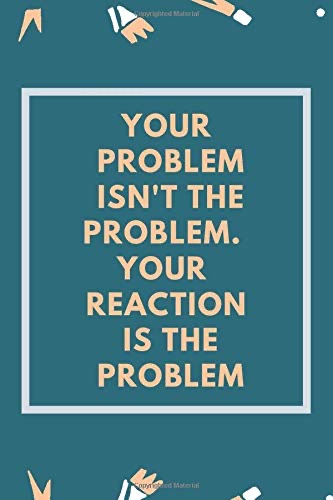
Regardless of the cause, which usually involves every one to some extent, overcoming unpleasant situations is most easily done by avoiding blame and focusing on behaviours that will resolve the conflict in a way that everyone wins.

When we are wronged or at least believe we have been wronged it is relatively easy to focus on ourselves and our needs We are in the right and dam it others need to know they have wronged us.

This approach results in us acting in ways that do not defuse conflict but rather result in escalation.  Although not our intention we become a contributor to the problem.  And through our actions the problem becomes worse.

Get over it

Perhaps you are not at fault, perhaps you have been mistreated by others.  Reacting to their rudeness or inappropriate actions in a retaliatory way might be good for you but it is unlikely to lead to a resolution.

Most likely your actions lead to a response which will just make the situation worse.  Accepting that shit happens, focusing on ways to work with others to achieve a state of happiness for everyone is a far more logical approach.

Work Together

Is it you, is it me, who cares.  Conflict is best resolved through joint actions.  Lashing out in spite might give you a brief satisfaction but it will not be sustainable.

Are we in control?

I have had a frustrating day from a technology perspective.  Both Microsoft and Apple have forced me to spend a significant part of the day waiting for their software updates to finish.

This is annoying not just from the perspective of the time required for the updates to finish but aggravated by the fact I cannot use the computers while the updates take place.

Inconvenience

For me and my wife, these regular updates have quite the impact given the multitude of hardware we have, although I will note Android and Linux updates are not forced on you.

Although you can select manual control of Windows, OSX and IOS updates the processes are designed to, shall we say, “encourage” you to download and install precipitously.

With more than 10 different hardware devices affected by these regular updates some which can take a couple of hours and entail downloading multi-gig-a-bytes of data (e.g. last major OSX upgrade) this is really becoming annoying.

Push at Night

Of course both Apple and Microsoft recommend you do auto-updates overnight.  Sounds brilliant, yet, it never works right for me and I end up spending the morning adjusting and recovering.

Maybe I am just targeted by their dev teams, somehow they got my IP and make my updates more difficult.  Who knows, although I am just a humble guy with technology as a hobby, why on earth would they pick on me.  Aah, I remember it is user error.

Security Matters

The driving force for these updates seems to me to be keeping the operating system current as it is less likely to be hacked and is therefore more secure.

The other feature enhancements are mostly just annoying, albeit interesting but really there is a very small value equation.  Do I really want to spend 5 to 8 hours every month keeping my devices secure?

Rethorical question – emfatically NO!

You can’t always get what you want

The external factors associated with your perception that prevention of the progress, success, or fulfillment is occurring can be very real to you, however,  letting this result in frustration is a choice.

As the Rolling Stones sang back in 1968, “You can’t always get what you want, but if you try sometimes you find you get what you need.”  For me, this is how we can avoid frustration.  Focus on what you need, not what you want.

 Focus

Getting what you need might require a significant effort but the result will be satisfying.  Focusing on things you require should never be frustrating, just plod on until you attain what is required. Ultimately you need it so you will find a way to get it.

Separating needs and wants (both of which can seem required, essential and important) is not easy but critical to avoid frustration.  Don’t waste time on the things you want.  Just relax and let it go, cause you don’t really need it.

Fine Line

There is a fine line between needs and wants and sometimes they are inseparable.  The yardstick is basically can you survive without it.  If no it is required.  For example, we need food to live ergo it is required.

However, this is an interesting requirement because of the devil in the detail.  How much and what kind of food is required.  We have our individual wants as it relates to food and we feel a need to satisfy desire but the reality is, core sustenance is pretty basic.

Separating wants and needs can be tricky but it ultimately it makes sense to stay chill about things that are nice to have but not absolute musts.


I’m Back

Warning, todays post is a rant about the vagaries of modern day social media technology. Really just need to get it off my chest.  Please accept my apologies if this causes your eyes to glaze over.

I noticed this morning my Dlvr.it  WordPress RSS feed automation has not been working since May 20th.  Neither was my Zapier automation which I use to post my feed to the Kerrzone facebook page.

Troubleshooting Yuck

I had an alert from Zapier last week but after spending several hours trying to figure out the problem I gave up.  Dlvr.it sent no error message so I figured the LinkedIn feed was still active and that is the one I really care about.

This morning I thought I would quickly check if my Zapier feed had miraculously fixed itself.  It had not and just in case I checked Dlvr.it and found the feed also was not working.

Strange Ambivalence

I have mixed feelings about trouble shooting technology issues.  I like the challenge and certainly feel good when I figure it out, however, I am never happy when things mysteriously stop working.

For well oiled organizations (public and private) documentation is a system and application documentation is a requirement.  For my home grown Kerrzone tech, not so much. Which of course makes troubleshooting even more fun.

Cutting to the Chase

For some unknown reason (I had made no changes) traffic to my WordPress blog was blocked from outside my network.  So, Dlvr.it and Zapier could not connect.

Within my own LAN I had no connection issues.  When it finally nally dawned on me some sort of weird partial Natty address blocking was going on I put the server into the DMZ and problem was solved.

Even weirder, I took the server out of the DMZ and the problem did not return.  Chalk up another one for the mysterious electronic gremlins..

Hanging On

Stuff bugs us, that is normal.   Letting irritants fester like a wound is more damaging than the cause of the issue in the first place.  At the risk of sounding like the hit song from the movie Frozen, “Let it go”.

Resolving things that bother you is much easier said than done, but consciously reaching an acceptable solution, something you can live with, is far less painful than hanging on. 

It’s a process

The process to resolve those things that are bugging you is a standard series of steps:

  • What’s the issue and why does it bug you?
  • What is the optimal solution?
  • What is the minimum you could accept to consider the problem resolved?
  • What steps do you need to take to achieve either the best or minimally acceptable solution or something in between? 

Asking yourself the four questions, in the order presented, will provide you with a way to close the issue.  The key, of course, is making sure the minimally acceptable solution is positively something that will allow you to “let it go”.

Execution

Identifying the problem, the way to resolve it and the steps to do so, leads to execution.  That is actually taking the action to conclude and close the thing that is bugging you.

This needs to be precipitous.  The longer you wait the more chance that the problem will fester into something larger and the cure will be more difficult.  Heal yourself while you can, don’t wait for septicemia to set in. 


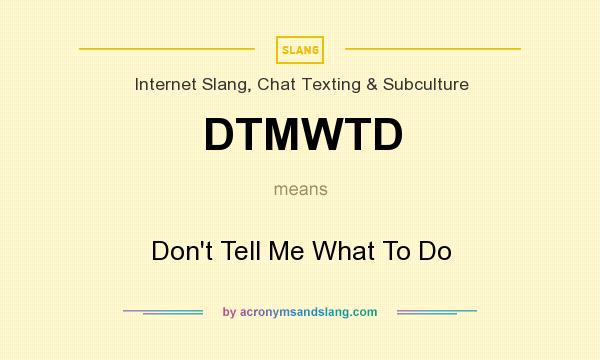
Don’t tell me what to do!

Have you every felt like telling someone, very firmly, “don’t tell me what to do”.   Often the phrase is just sallowed internally and not voiced out loud, but the resentment lingers.

Effectively interacting with others, whether as a leader, manager or peer to peer, you definitely don’t want them to ask you not to tell them what to do.  It’s a  bad signal.

 Pre-cognition, Independence or Trust

Whether this retort is an example of someone anticipating what you are going to tell them, or feeling you are encroaching on their independence or demonstrating a lack of trust in them, it is not a positive response.

If your actions lead to such a frustrated response you should pause and re-think.  Directive or dictoral approaches may work, once, but the are definitely not sustainable.

Encourage and Support

When others believe you are not willing to let them think for themselves, they loose faith in you.  This is not to say feedback is not welcome, how it is presented really affects how well it is received.

The sweet spot is about adding value to what others do.  Most importantly the main judge of the value add should be on the receiving end.  You may think you have added value but it is only true if the other person believes it.

Telling people directly how to act or behave is rarely received by them as a value add.  Helping them see the way themselves is a much more powerful and effective approach.