Tag Archives: needs

Answers begin with the Question, or do they?

When we don’t have all the information we need or are not sure of it’s validity we will elicit additional information from other sources, that is human, virtual, experimentation and so on.

Hopefully this process of investigation will yield the answers we seek in response.  Sometimes the answers are not the information we seek.  This can be because the question is wrong, and there is the rub,

Question or Answer/ Chicken or Egg

Without some information we can not be sure what the question is and without the question information is lacking.  The question answer dance is founded on what we know when we begin.

Neither the initial question or subsequent answers is the starting point, rather, what we know about what we don’t know is the best place to begin.

Assuming questions are intended to gather things we don’t know or validate information we are uncertain of the beginning is not to seek answers or formulate questions but rather understand what it is you don’t know.

Understanding Requirements

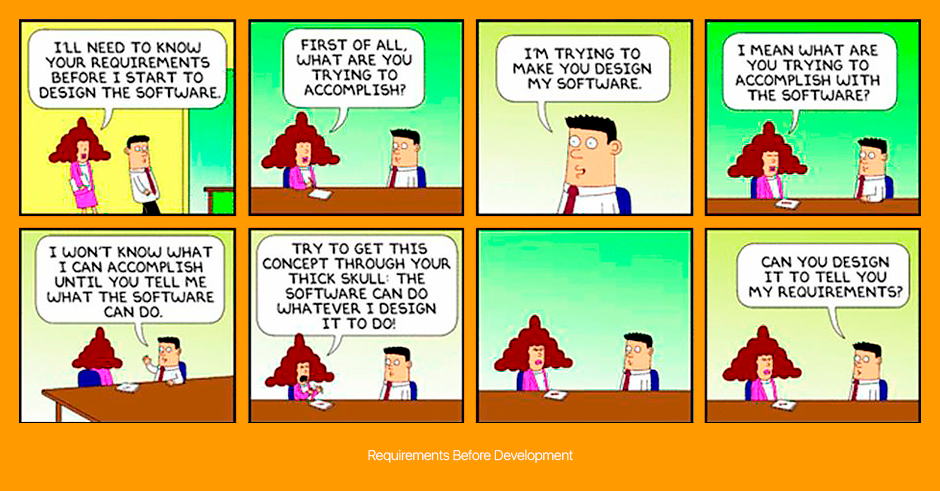
The process of seeking information using questions as the prime technique begins with understanding what you seek.  Valid quality questions begin with requirement, that is defining what you seek.

Formulating the question is often best managed as a multi-step process building on the information uncovered during the journey for answers.  Critical to the success of this journey is the starting point, the first question.

Seeking Information/creating Knowledge

Asking questions and analyzing the answers will provide you with the information you need to create knowledge.  The value of knowledge to you depends on your requirements.

Asking questions is only of value when you have a solid understanding of why you are asking them.  What is the information you are lacking and why is it of value should always be the starting point of your interrogations.

 

You can’t always get what you want

The external factors associated with your perception that prevention of the progress, success, or fulfillment is occurring can be very real to you, however,  letting this result in frustration is a choice.

As the Rolling Stones sang back in 1968, “You can’t always get what you want, but if you try sometimes you find you get what you need.”  For me, this is how we can avoid frustration.  Focus on what you need, not what you want.

 Focus

Getting what you need might require a significant effort but the result will be satisfying.  Focusing on things you require should never be frustrating, just plod on until you attain what is required. Ultimately you need it so you will find a way to get it.

Separating needs and wants (both of which can seem required, essential and important) is not easy but critical to avoid frustration.  Don’t waste time on the things you want.  Just relax and let it go, cause you don’t really need it.

Fine Line

There is a fine line between needs and wants and sometimes they are inseparable.  The yardstick is basically can you survive without it.  If no it is required.  For example, we need food to live ergo it is required.

However, this is an interesting requirement because of the devil in the detail.  How much and what kind of food is required.  We have our individual wants as it relates to food and we feel a need to satisfy desire but the reality is, core sustenance is pretty basic.

Separating wants and needs can be tricky but it ultimately it makes sense to stay chill about things that are nice to have but not absolute musts.


Making do with what you have

The Rolling Stones have had a long and prestigious career with many interesting songs ranging from pure entertainment to thoughtful and philosophical.

I have recently had some problems with my home office chair.  One of the wheels keeps falling off.  Of course, this can be a bit disconcerting, even dangerous when it happens you are getting out of the chair and it flips.

Getting What you Need

The chair issue is urgent to some degree, that is I need a comfortable chair so I can sit in front of my desktop screen for most of the day (with the pandemic we really are tied to the desktop for everything)

My issues drew me to one of my favorite iconic Rolling Stones tunes.  Musically it is really different (from a rock perspective) very choral in nature.  What struck me most though was the accuracy of the bridge lines.

You can’t always get what you want
But if you try sometimes, well, you might find
You get what you need

What I Want

In this specific case, I want an office chair I can rely on without having to worry about it tipping over or getting stuck as I try to roll away from the desk to leave.

Unfortunately I kind of wanted it stat.  Not being able to accomplish this, the chair is broken and the repair is not that feasible, I was stuck with getting what I needed. (At least I could get that though, through a wonky but temporary repair).

And this led me to hum the Stones tune all the while realizing that is life if you can’t get what you want then try hard to get what you need.  What else can you do?

Requirements are Important

When we need or want something that is necessary to satisfy our desires we need to document/explain clearly what the requirements are (in detail).

Providing a high-level objective can define what you are trying to achieve, but as often stated the devil can be in the details.  High-level requirements might get you started but without more detail, the results might not be to your liking.

For Example

You might engage a builder to construct a custom home for you.  The objective is simply stated to build a single-family home on this empty lot that conforms to the building code.

Without much more detail than that you could get a home that does not conform to your needs.  How many floors will there be, how many bathrooms, what color will the walls be and the list goes on.

In this example, the requirements can be quite straight forward coming from a single source, the homeowner.  There are many other cases where the evolution of the requirements can be much more complex.

Building Software

In the information technology space, application software development is a good example of a more complex requirements management  process.

Often there are many end-users of the software product and each may have an individual requirement some of which are contradictory.  Many of which are confusing and almost never with enough detail.

The cost or feasibility to provide all the desired requirements might be prohibabtive or for the sake of expediency.   Additionally because detail is often not provided or clarification sought the final software often does not meet the requirements.

If you expect to receive what you wanted clarity and detail is required.

Defining Success

Simply put, success is achieved when a the purpose or goal has been accomplished.  The definition of accomplished is the sticky point.  Even completion of well defined aims can be some what subjective.

Who determines your success.  Arguably it should be a self assessment but this can be a hollow victory.  If others don’t share in your conclusion did you really succeed?

Own It

Others opinions are a valid gauge for deciding whether you have been successful or not.  However, ultimately you own  personal accountability for determining the success of  your achievements.

For example, when running a marathon the officials might define if you won or not.  You determine the measure of your success.  Just completing the marathon, not necessarily winning might bring you satisfaction and joy.

Needing Approval

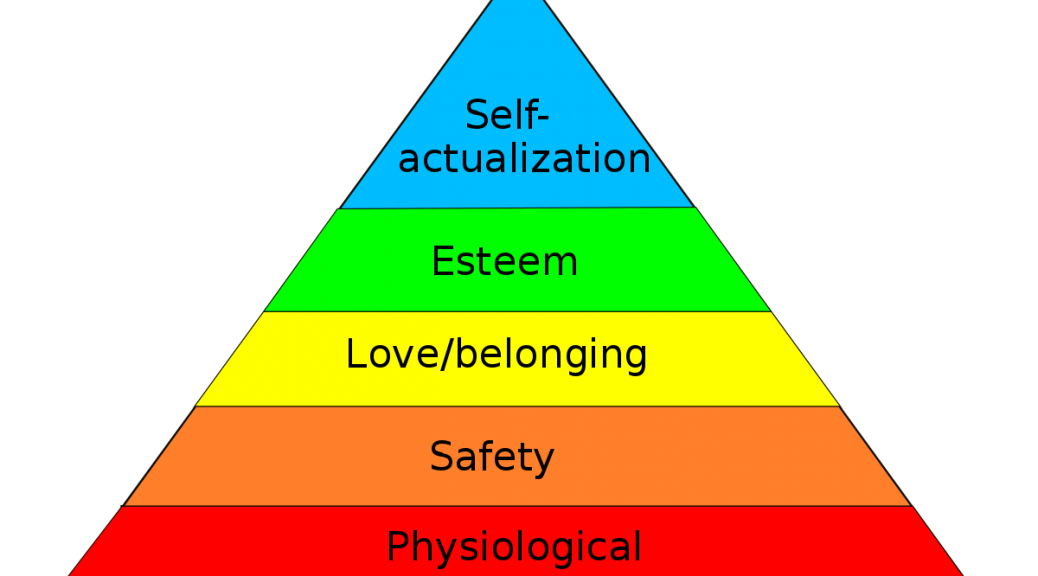
The need for acceptance is a basic human trait.  It is strong and within the hierarchy of needs  defined by American psychologist Abraham Maslow in the nineteen forties, acceptance tops our basic needs.

Therefore success defined solely outside of approval or recognition of others cannot fully meet our needs.  We might be self-satisfied but how others feel matters to us.

That being said we do not have to let their opinions dominate our own analysis and conclusion.  Influence how we view the world, of course but that does not mean we should readily succumb to the power of others.

Balance Yours Needs Against Others

The key to feeling joyful about your success is balancing your own perspectives against those of others and reaching a realistic balanced assessment.

The conclusions relative to personal success are yours to own so you must be fully comfortable with what they are.


.

Wants and Needs

Whether classified as a want or a need,  both are action terms about attaining something.  For wants, the underlying motivation is a desire and for needs it’s required or essential.

In 1943 Abraham Maslow put forward a motivational theory based on a heirarchy of needs.  The theory was more fully devolped in his 1954 book Motivation and Personality.

In brief, humans needs were grouped into five main categories, in order of priority: self actualization, esteem, love/belonging, safety and physiological.

Needs versus Wants

A very grey area for me is the classification of needs and wants.  Maslow focused on human psychology to define needs.  The categories are broad and distinguishing the essential over the desired is not clear cut.

For example, belonging is  an intrinsic part of human nature but to what degree.  Of course the degree to which we attach ourselves to others (e.g.,marriage, single, hermit) can vary widely.

For one person what might appear only desirable could be a requirement for another.  Often distinguishing between wants and needs can be tricky.

Does it Matter

When you are motivated to act, the strength of desire can be moderated by need versus want.  Rationalization can help influence the decision.  Thoughts like, I really want this, but do I need it.

And so the dilemma begins, is this an inherent need or not.  Is there any definitive way to decide?