Tag Archives: analysis

Missing Pieces

Sometimes we do not have all the information needed to determine the best course of action.  After all, this is about things we don’t know, which can include things we don’t even know we don’t know.

These missing pieces are not always important but sometimes they are critical in such a way that it is impossible to do the right thing or succeed without considering them.

Is Something Missing

Looking for missing information begins with assessing the completeness and accuracy of what you know.  Putting together the known facts can lead to questions.

This concept is the foundation of a good mystery novel.  As the author unfolds the story facts are withheld but the information provided is enough for the hero of the story to determine that something is missing .

One of the pleasures for the reader is to match wits against the story detective and figure it out as well, before the author discloses all.

Looking for the Missing Piece

Knowing something is missing helps the search for it.  If you are convinced things don’t add up and a reasonable conclusion cannot be achieved without more info you are more likely to be motivated to search hard.

Believing something unknown exists drives us to search until we find it.  Giving up is frustrating and rare.  When we believe there is an answer most of us will hang in their until we find it or at least believe we have found it.

Watch out for the red herring.

Be Wary

When making an assessment, before concluding give careful consideration as to wether you have the complete picture.  It can save you from grief and missteps.

 

Making Decisions

Typically the best decisions are based on a thorough review and analysis.  (Although this is not universally so, luck and good guessing do play a role).

Accurate calculations based on the known data and clearly defined and reasoned assumptions enable a logical review and interpretation.

Keeping Track

While it is not feasible in every case to document all the reasons for proceeding a certain way (that is how the conclusion or resolution was arrived at), it is worthwhile to track the rationale including the options considered to the greatest extent possible.

The process itself of capturing what the key considerations are together with pros and cons aids in the quality of the overall analysis.

Taking the time to write down your thoughts can drive your thinking processes down a logical path.  Relying on your thoughts of the moment can reduce the level of focus and thus you may overlook a key element.

Eye on the Past and the Future

Often when making decisions we focus on the present.  The question we ask typically starts with “What will happen if I do this now?”  Good decisions include reference and consideration to both the past and the future.

Consider past results of similar decisions if you have any archival information focusing on the analytical calculations of the pertinent facts and how they ultimately related to the outcomes.

This approach helps you avoid past mistakes.  On the opposite end of the spectrum, it is wise to give consideration (based on assumptions) to what the future holds and how it will impact your decision.

While our decisions are usually focused on the current state keeping them in the context of both past and present often proves to be of good value.

Over-thinking

Spending too much thought about something can make simple things appear to be complex.  The ultimate result is often delayed action.

Sometimes not deciding how to proceed because of analysis paralysis (i.e., over-thinking) can have significant negative impacts.  Acting too late often is like not acting at all.

Balance

Making a snap decision can have the same impacts as over-thinking.  The amount of analysis should be enough to make a good decision.  This requires a careful balance to prevents spiraling down a rat-hole in search of every answer, perhaps ultimately achieving nothing.

Decisiveness is the ability to make decisions quickly and effectively.  Too often we focus on the quickly part while the critical key to being decisive in a positive way and achieving the best results is making good decisions rather than quick ones.

The circumstances vary when we are thinking through an issue.  The impact of our decision should be the influencing factor relative to the balance between a quick or carefully measured and thought out choice.

Self Awareness

Overthinking is something we need to manage ourselves.  Thinking is a very personal action.  How much or how little thought you put to something is completely a personal choice.

Granted external factors can influence, even pressure us, to make a faster decision.  It is our best interests to avoid undue pressure for a quick decision.

Being aware of and using all options available to enable a reasonable amount of time to consider the best approach is a key practice of getting the right balance between and time and analysis.

Artificial Intelligence

Back in the 1940’s Allan Turing prophesied the computers would ultimately develop to the point humans would not be able to distinguish between a computer or another human.

This ultimately led to the annual Turing test where a set of judges interacted with humans and computers and had to identify which was which.

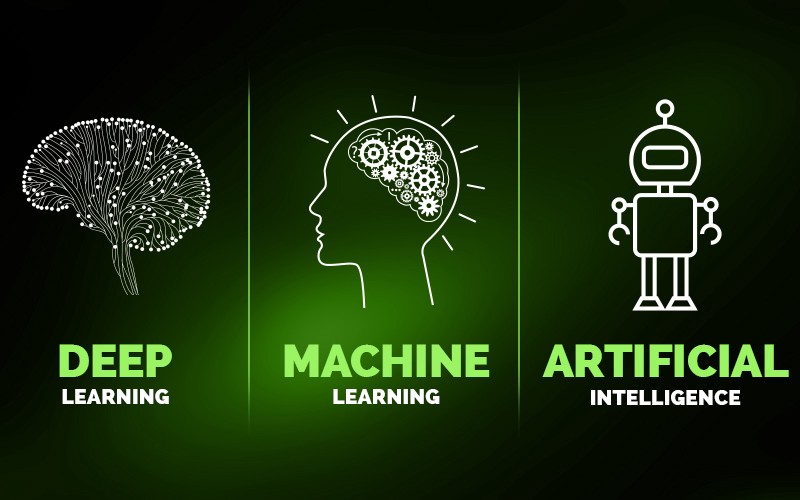
Ultimately this test is for artificial intelligence.  That is, computer systems able to perform tasks that normally require human intelligence, such as visual perception, speech recognition, decision-making, and translation between languages.

Machine Learning

Although not specifically included in the definition, a key aspect of intelligence is the ability to learn.  Currently, for the burgeoning artificial intelligence field, teaching computers is a slow process.

At this stage, the learning is still at the “rote” level.  Self-initiated deductions are limited to programmed logic.  The potential for the development of logic, to enable creative thought is still a way down the road.

Enhanced Computer-Based Programs

In my humble opinion, a lot of what is touted as artificial intelligence is just more efficient and faster review, analysis and recommendations from a large amount of data.

Creating new ideas and concepts, reacting in unusual or innovative ways are underpinnings of true intelligence for me that to date there has been little sign of us replicating, outside of science fiction.

Can humans develop equipment that replicates, even improves on human thoughts?  Maybe but for me, the jury is still out.

Full disclaimer, this post was written by a living, breathing, thinking human.  Or was it?

The best choice

A key part of being human is making decisions. Some are routine, for example deciding to get up in the morning and start your daily routine, while others are unique and much more complex.

Decision making oft results in positve or negative outcomes with varying level of impact (magnitude) but on the whole we seek to make good decisions, those with a high degree of positive impact.

It’s a Process

Ultimately we can act with little thought or a great deal of analysis. This is often related to how impactful the result will be. Also as noted routine decisions generally are overlooked, it’s just easiest to act routinel as usually, no harm seems to occur.

Surprisingly, because so many of our actions are autonomic, the first step to good decision making is concious realization that a decision, a fully aware decision, is in order.

Of course this can take up time and effort for what may seem to be an inconsequential item, so little value. Frequently it is the little things that can in fact have significant impact.

The Butterfly Effect

In chaos theory, the butterffly effect is thesensitive dependence on which a small change can result in large differences in a latter state.

For example a butterfly’s movement in the arid air of the gulf of Mexico creates a minor disturbance which is the catylst for what is later a powerful hurricane.

The concept is simply that a minor decision overlooked today (treated as routine) could become a missed opportunity for a major positive impact down the road.

Why take the chance? Take a moment to consider if your minor choice is as minor as you think. Good things may unfold.


What you see is not what you get

Understanding what you see, hear and feel is an oft underated skill.  Frequently people take direct meaning from  their sensual  observations whithout taking time to consider.

The data you gather via your senses is not information.  That is, it has not been contextualized but is just a raw interpretation.  Parsing the data, that is analysing a string of symbols for syntax , is needed to transform it into information.

Why bother?

Turning what you percieve through sight, hearing, touch and so on requires effort.  What is the value proposition?  The fictional character Sherlock Holmes provide a good example of possible outcomes when observations are not taken at face value.

Sherlock often astounded the other characters in the mystery novels by deducing information based on the data in ways that were not imminently obvious to most (both readers and other fictional characters)

The approach to considering the data, treating it like a logic puzzle and following the trail to uncover valuable information (i.e., solve the mystery) appears simple, yet it is not a common practice.

The danger of directly following our default interpretation of what we observe can be ,costly, painful or embarrassing.  Who has not arrived at a confusing point or frustrated others by following erroneous conclusions.

Take your time

A key underlying approach to understanding is not to rush.  Quick thinking has gotten many a person into trouble.  Check your conclusions before acting by running the possibilities through your mind, pause, consider, then proceed.

Resolve not Fix

There is a subtle difference between resolving an issue and fixing a problem.  If the issue has a solution, in essence it is settled.  That particular issue is finished.

On the other hand, the problem from which the issue arose is probably not solved.  In this case it is highly likely similar issues stemming from the base problem will contine to arise.

Applying Common Sense

Given fixing the problem will address reoccurrence, it clearly reduces work, re-work and associated costs and reputational impacts.

So, when you are presented with an issue, investigating to determine the problem (aka cause of the issue ) and then fixing it seems to be more logical than fixing related issues ad infinitum.

If it was so Easy

Typically most of us focus on the issue.  The most common question that springs to our mind is, “What is wrong? and How can I resolve it?”, not “Why is this happening?”.

There is of course a sense of urgency and it often seems the value of determining why an issue occured doesn’t outweigh the value of putting the issue to bed quickly.

If the issue reoccurs, (or a similar issue) odds are you won’t even recognize the relationship because you have not associated cause.

The sad part is just shifting the question from how to solve the issue, point in time, to how to fix it permanently is not difficult.  It is however not intuitive so often gets by passed.


Fear of Missing Out

Human behaviour is most interesting for me when considering group think, basically crowd or herd mentality.

Many of you will be following the top equity market story of the last couple of months – marijuana companies.  The demand for these  stocks has no logical or rational analysis behind it that I can figure out.

Me too

Personally I believe this is a perfect example of the fear of being left out.   Based on the demand, unsupported by more than a quess at what sales volume the marijuana market  represents, thousands are acting out their me-too impulse.

Basically if we don’t buy now at whatever price we might miss out.  Lets get in before it’s too late.  News flash, it’s too late.  It was probably too late when the price for Canopy (the biggest Canadian marijuana producer) broke $8 a share.

Looking at basic indicators like sales, forecast sales, forecast earnings per share, net asset value, market cap, management track record and so on a solid case could be made to buy Canopy at $7 to $8 per share.  Beyond that, not so much and $42 per share, forget it.

(Full disclosure I bought at a little over $7 share).

Probabilities

Based on a very conservative guess at the size of the Canadian marijuana market, Canopy’s share of this market ( considering manufacturing capacity and current sales) it is highly likely they will be able to pay a 5 to7% dividend (based on a $7 share price) within 3 years (assuming they don’t retain a lot of capital to keep growing).

My estimation though is at $42 per share the dividend would be less than 1% at most and the only way you would get good value is if the sales grow rapidly along with demand for the shares.  A very big if for me.

So I conclude, the sheep mentality is in place and emotions, not logic or analysis are driving demand.


How much Research is Enough?

For decisions, recommendations or suggestions it makes sense to investigate and gather supporting rationale for your conclusion/recommendation /suggestion.

This research can be wide and varied or narrow and focused.  It can take hours,days, months or years to complete.  The results may be fully objective, mainly subjective or as is most often the case, somewhere inbetween.

The Research Balance

High value decisions are arrived at by spending the least amount of effort to achieve the highest quality result.  This leads to the basic question, how much effort should I expend on research?

How much effort is better spent on positioning, marketing and manipulating to sell the recommended solution?

To that end how about making it look like a lot of time and effort was spent on research, that is having your solution accepted because it looks well researched, really though its just effective use of smoke and mirrors.

Things to watch out for

Don’t let the consultant, salesman, researcher, etc pull the wool over your eyes with their magical recommendations and suggestions to support the best decision.

Consider:

  • Does the solution advocate have a personal vested interest in the outcome.
  • Is there a plethoria of supporting data (I always worry this is asign of misdirection)?
  • Is the path to the conclusion twisted with multiple branches or just straight and to the point?
  • Can the supporting data be replicated (objectively)?
  • Was the research conducted for it’s own sake, that is took a long time so appears well thought out but is really just mainly focused on putting the researcher in a good light and justifying their existence.

Predicting the Future

” What is? is. What was? will be. What will be *was*, but will be again.”

Quoted from an episode of the TV show “Welcome back Kotter”

The basic logic of this quote is that events occur in cycles.  The only thing you can be sure of is the current cycle, (what is) but predictably the past will be back.

Past Behaviour Predicts Future Behaviour

Analysing past behaviour to determine the future is not an absolute and investment advisors ( to pick an example of a profession frequently trying to predict) regularly provide caution about using this approach to determine which funds or equities to purchase.

They advise, there is a real risk upcoming events will be unique and not influenced by historical at all.  For example, the government might introduce a new tax or policy that impacts behaviour.

Balanced Predictions

Past behaviour has been a proven predictor of future behavior in a number of psychology studies I have read.  That being said, the unexpected does occur and can significantly impact a future event.

Given  both these factors can have an influence on future predictions,  it is the balance you draw between behavioural predictability and the unexpected that will drive the accuracy of your predictions.

The future predictions you make will have a risk of inaccuracy, but careful consideration of past behaviour, event cycles and possible unexpected occurances should enable you to have some confidence in your forecast.

This is a bit contextual as some things are clearly more volitile than others, and so harder to predict.

Most pragmatically, what is: is ; what was: was and what will be: will be.  As the pseudo Spanish lyrics say, que sera sera (whatever will be, will be).  The future is not ours to see.