Tag Archives: logic

That’s Correct

A position that is free from error which aligns with the facts is defined as being correct.  Truth is based on facts that can be proved as accurate and valid.

Therein lies the rub, facts reality and accuracy is subject to interpretation.  This means all facts can be challenged so that which is true in theory must be proven by logic to become a law. Unfortunately logic can be questioned.

The World is Round

Grass is green, the earth is a spherical shape, vaccines are beneficial; these are all examples of statements for which arguments relative to their accuracy exist and proponents and opponents exist for both the statements and their  opposites.

Regardless of the fact the majority believe these declarations to be true and proven facts the flat earth society, colour blind people and anti-vaccination groups exist and argue their fallacy, even though the logical enumeration of the facts is overwhelmingly supportive.

Consequences

Sadly, the different interpretation of the facts can be impactful.  I might choose to not circumnavigate the earth if I believe it is flat, limiting my travel options and associated potential joy.

Or I might decide not to reduce my chances of getting ill from a serious disease perhaps even leading to my death or perhaps infecting others, leading to their death.

The subjectiveness of arriving at the truth is an underpinning of human beings ability to think freely and is of great value but not necessarily without consequence.

Embrace the Whole

Differences of factual interpretation are real and should be encouraged.  It is not necessary to agree on the positions each of us may take but rather focus on the outcomes and finding ways to collaborate on positive consequences.

That is don’t argue the facts but rather work together to make the resulting outcomes better whatever you believe to be true.

No Regrets.

Sometimes we feel sad, repentant, or disappointed about something that has happened in the past, this can include a loss or missed opportunity (i.e., something that did not actually happen).
Regret is our emotional response related to a desire to revisit the past and make a different decision because the consequences of the decision were unfavorable. In this case, we believe a perceived opportunity was lost.

Mitigating the Risk of Regret

Regret can be avoided by validating your choices before committing to a course of action.  Choosing your course of action always includes a chance the results will not be as expected and may even be disappointing.
Confidence in your choice should be founded on your own internal acknowledgment that regardless of the outcomes, based on what you know at the time you decided, it was the right decision.
It is this confidence that will enable you to avoid regrets.  However, this should not be blind confidence, that is basically a determination that is not based on evidence or determined by reason but rather a confidence founded on thoughtful reasoning.

Avoiding Regret

Regret will never be missed and provides you will little value.  What is done (or not done) in the past cannot be changed.  That is not to say there are no redo’s, there often is the opportunity to try again.  This is an option you may choose.
The key is to be confident in the path you choose works at the moment and if it does not work out in final denouncement then fine, and that is time to just move on (no regrets).
Accepting your choice, being comfortable with what happens, good or bad allows you to remain in good spirits, regardless.   After all, it is your choice.

How do you feel?

We all have a natural instinctive state of mind deriving from our circumstances, mood, or relationships with others.  These emotions drive our behavior.
Our feelings are not based on logic but rather they are intuitive and can even be hereditary reactions.   Our emotional response will not always result in optimal behavior based on the situation.

Logic or Emotion

The interesting paradigm presented by emotional behavior was cleverly illustrated in the original Star Trek television show.  One of the crew members belonged to a race (Vulcan) which could not experience emotion.

Amn oft viewed scenario on the show was the Vulcan character (Spock) opining on others behavior as being illogical.  Sometimes the emotional behavior proved best and sometimes disastrous.

Life Without Emotion

Seeing life without emotion, as envisioned by the TV shows creative talent was fascinating to say the least (another perspective oft spoken by Spock when observing others act emotionally).

The show very much put emotional behaviour into perspective and helped me understand the value of checking your feelings before acting.

Behave to Achieve

By checking my emotions before reacting I enabled myself the opportunity of acting in the optimal way to satisfy my desires.  Often the ungaurded reaction, based on how you are feeling at any given time, is not the best approach.

Logical analysis can often help determine the better way.

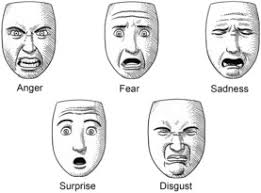
Surprisingly, determining how you feel e.g., anger, saddness, happy, excited is not difficult.  Holding your actions in check until you are ready to act appropriately is a little more difficult given the energy associated with emotion, but doable and worth it.


But is it Fair?

When I purchase a product or service my expectation is I will receive impartial and just treatment or behavior without favoritism or discrimination.

This particularly applies with a medium to a large organization that has been in business for some time.    That is, given their track record and absence the perception of dishonesty from the press and social media it seems to be a reasonable assumption.

The Fine Print

Of course, even large bureaucracies do focus more on self-interest over fair treatment of stakeholders to a certain point but usually, reason prevails so a fair balance is achieved.

Contracts with unreasonable clauses, usually in small print, are a popular technique to help employ one-sided practices that favor the business.

Today’s Rant

Almost ten years ago my wife joint Spa Lady Gym, as the name implies a gym exclusively for women.  New owners recently renamed the company GYMMVMT (weird name).

She was a regular at least a couple of times a week until Covid hit.  The gym, fairly in this case, offered the chance to suspend monthly payments, while gyms were not allowed to open, which my wife took advantage of.

Now comes the tricky part.  The gym decided to restart monthly payments in July (because gyms could now be open) but they did not announce it.

We had a 1-month credit so did not see the return of the monthly charge until this week.   Not ready to return to the gym my wife decided just to cancel her membership.

The Catch

The contract fine print required months notice so cancelation will not take effect until Sept.  So we pay for July, August, and September for a service that is not being used.

Is it fair?  I think not.

Passion

Valentine’s day is coming tomorrow and it is typically a time when people show passion for the one they love.  Passion is both emotional and powerful.

Demonstrating strong feelings or beliefs about something is the hallmark of passion.  These feels can cover many topics from success (a passion for achievement) to love (being passionate about somebody).

At the Expense of Logic

Typically passion is a good thing.  It helps supply the underlying energy and motivation we need to achieve our goals, i.e., things we are passionate about.

The downside is passion can blind us to reality.  Our ability to conduct a logical analysis of a situation can be overwhelmed. Our earnest and enthusiastic search to achieve the object of our passion might lead us to inappropriate behavior.

We may even injure our chances of attaining that which we seek.  Certainly, stalkers have some passion for their prey but it manifests itself in a totally inappropriate way.

Embrace with Caution

Passion can include belief in the spiritual and occult and other concepts that do not necessarily have physical proof of existence.  Actions in accordance with these beliefs should be treated with some measure of caution.

Recognizing passionate feelings have us in their embrace is important.  This is not to enable an override of those strong feelings and desires but rather to let us manage them appropriately.

Embracing those things you feel passionate about and acting on them is natural, it feels good and mostly is a worthwhile exercise.  Caution is recommended only to prevent headlong rushes into something you will regret.

Metrics versus Emotions

Decision analysis and review is the process that is followed, whether well or ill defined, when options exist and a choice must be made. That is, a decision of some sort is required.

Typically, pertinent factors are considered, weighed in contrast to each other and the overall objective.  The outcome is usually chosen because it best supports the desired results. 

Level of Rigor

The amount of effort put into the decision process can vary depending on the magnitude of the impact and the urgency.  Ultimately though the chances of positive outcomes rises with the level of rigor applied. 

The methodology for interpreting the decision influencing factors can cover the spectrum from clearly defined measurable attributes (e.g., it is 10 inches long) to subject intangible factors, important but less quantifiable. 

The subjective factors can be influenced by emotions.  Basically, the criteria applied is based on the questions “How do I feel about this?”  This is a basic human behaviour, that is emotions overriding logic. 

How do I feel/ What do I think?

The quality of a decision is very much dependent on the balance between how you feel about something and the tangible measures – reality.  Once the tangible versus the intangible are tallied, there is still the ultimate decision process itself which often favors the emotional. 

For the best decisions, regardless of impact and time constraints attempting to place a lower priority on the emotional aspects, at least initially, allows for the reasoned solution to appear first, the emotional filters can then be applied – they are relevant and important.  

This approach will ensure the decision was arrived at with a conscious understanding of how much was measured and how much was emoted. 

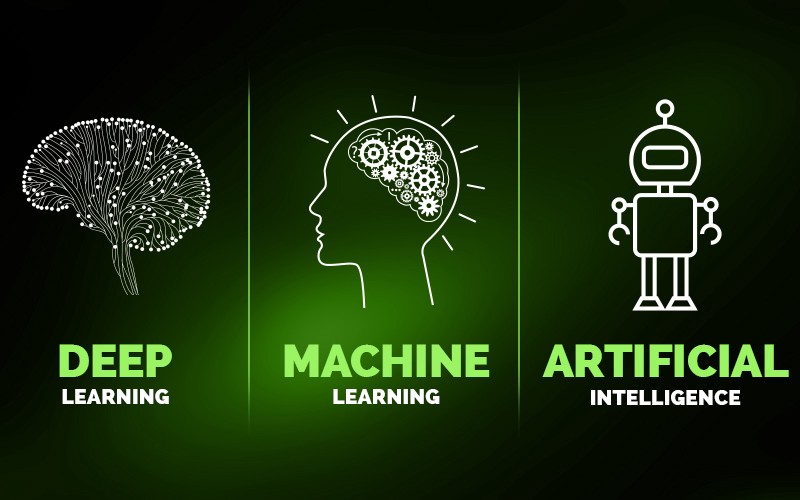
Artificial Intelligence

Back in the 1940’s Allan Turing prophesied the computers would ultimately develop to the point humans would not be able to distinguish between a computer or another human.

This ultimately led to the annual Turing test where a set of judges interacted with humans and computers and had to identify which was which.

Ultimately this test is for artificial intelligence.  That is, computer systems able to perform tasks that normally require human intelligence, such as visual perception, speech recognition, decision-making, and translation between languages.

Machine Learning

Although not specifically included in the definition, a key aspect of intelligence is the ability to learn.  Currently, for the burgeoning artificial intelligence field, teaching computers is a slow process.

At this stage, the learning is still at the “rote” level.  Self-initiated deductions are limited to programmed logic.  The potential for the development of logic, to enable creative thought is still a way down the road.

Enhanced Computer-Based Programs

In my humble opinion, a lot of what is touted as artificial intelligence is just more efficient and faster review, analysis and recommendations from a large amount of data.

Creating new ideas and concepts, reacting in unusual or innovative ways are underpinnings of true intelligence for me that to date there has been little sign of us replicating, outside of science fiction.

Can humans develop equipment that replicates, even improves on human thoughts?  Maybe but for me, the jury is still out.

Full disclaimer, this post was written by a living, breathing, thinking human.  Or was it?

Clear thought

Clear thought is the bedrock of logical outcomes.  Today’s environment has a multitude of complexities that have developed over-time and can lead to sensory overload. 

As our society has advanced,  so have the associated cultural complexities.  Obvious examples of this are the behaviour changes associated with automation, communication advances and the omnipresent social media options.

Focus

Intuitively, the first step to a clear mind is to focus on nothing.  This is the basic principle of meditation.  This technique causes your brain becomes cleared of all thoughts except what you are focusing on.

As you are focusing on nothing,  beyond involuntary thoughts, which you cannot control, the brain becomes thought free.

Meditation is often thought of a a relaxation technique, this is simply because the elimination of every day sensory overload, which we are all subject to, is nothing if not relaxing.

Clarity without Meditation

Meditation is used only a an example of a mind clearing technique.  It is not always practical to meditate and is best done in a quiet isolated place where you will not be bothered.

The principle of clearing the clutter that burdens your thinking is the same.  It requires focus.  When you are seeking to employ logic, and are not able to find a quite place or time to enter a meditation state, simply focus on the objective.

That is, place all your attention toward the data set you want to understand, parse and resolve.  This singular focus will enable you to follow a logic path to the best outcome.

What you see is not what you get

Understanding what you see, hear and feel is an oft underated skill.  Frequently people take direct meaning from  their sensual  observations whithout taking time to consider.

The data you gather via your senses is not information.  That is, it has not been contextualized but is just a raw interpretation.  Parsing the data, that is analysing a string of symbols for syntax , is needed to transform it into information.

Why bother?

Turning what you percieve through sight, hearing, touch and so on requires effort.  What is the value proposition?  The fictional character Sherlock Holmes provide a good example of possible outcomes when observations are not taken at face value.

Sherlock often astounded the other characters in the mystery novels by deducing information based on the data in ways that were not imminently obvious to most (both readers and other fictional characters)

The approach to considering the data, treating it like a logic puzzle and following the trail to uncover valuable information (i.e., solve the mystery) appears simple, yet it is not a common practice.

The danger of directly following our default interpretation of what we observe can be ,costly, painful or embarrassing.  Who has not arrived at a confusing point or frustrated others by following erroneous conclusions.

Take your time

A key underlying approach to understanding is not to rush.  Quick thinking has gotten many a person into trouble.  Check your conclusions before acting by running the possibilities through your mind, pause, consider, then proceed.

Logic or Emotions

I received some terrific feedbck about yesterdays post.  In summary of my post, I postulated a world based solely on logic would be peaceful.  That is to say, the things that break the peace have an emotional driver.

This idea was explored in the original 1960’s version of the sci-fi TV show Star Trek.  Vulcan characters could not feel, express or act on emotions.

Feedback Recieved

What would live be like without emotion.  Emotions motivate, create pleasure (not logical but nice to feel) and pain or sadness (again not logical but certainly motivating)

Also the question arises whether a fully logic based race would in fact be peaceful.  Could violence not be logically justified under certain conditions?

The answer to whether violence can be a logical outcome of any situation is probably an interesting discussion for debate.  I think strong arguments exist for both sides.

Motivation

The lack of feeling, pleasure or pain, does on the surface seem very detrimental.  Interestingly this topic was explored in a number of the Star Trek episodes.

Having watched these episodes with pleasure, I believe the ideas expressed promoted both lack of emotion as best and on the oppisite side,  the need for emotion as critical.  In short, it was inconclusive.

Of course A fictional drama cannot provide definitive conclusions; however, it can certainly be thought provoking.  As I hope is this blog post.

Personally the discussion I had about yesterdays blog, that is emotionless world might not be the peaceful paridise I postulated, certainly has strong suporting arguments.

That being said I do truly wonder if this emotional world we live in, with it’s mass murders, war, personal attacks, bullies and so on,  is really worth having the pleasure of emotions.