Tag Archives: reason

No Regrets.

Sometimes we feel sad, repentant, or disappointed about something that has happened in the past, this can include a loss or missed opportunity (i.e., something that did not actually happen).
Regret is our emotional response related to a desire to revisit the past and make a different decision because the consequences of the decision were unfavorable. In this case, we believe a perceived opportunity was lost.

Mitigating the Risk of Regret

Regret can be avoided by validating your choices before committing to a course of action.  Choosing your course of action always includes a chance the results will not be as expected and may even be disappointing.
Confidence in your choice should be founded on your own internal acknowledgment that regardless of the outcomes, based on what you know at the time you decided, it was the right decision.
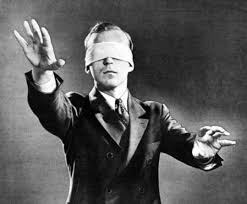
It is this confidence that will enable you to avoid regrets.  However, this should not be blind confidence, that is basically a determination that is not based on evidence or determined by reason but rather a confidence founded on thoughtful reasoning.

Avoiding Regret

Regret will never be missed and provides you will little value.  What is done (or not done) in the past cannot be changed.  That is not to say there are no redo’s, there often is the opportunity to try again.  This is an option you may choose.
The key is to be confident in the path you choose works at the moment and if it does not work out in final denouncement then fine, and that is time to just move on (no regrets).
Accepting your choice, being comfortable with what happens, good or bad allows you to remain in good spirits, regardless.   After all, it is your choice.
But is it Fair?

When I purchase a product or service my expectation is I will receive impartial and just treatment or behavior without favoritism or discrimination.

This particularly applies with a medium to a large organization that has been in business for some time.    That is, given their track record and absence the perception of dishonesty from the press and social media it seems to be a reasonable assumption.

The Fine Print

Of course, even large bureaucracies do focus more on self-interest over fair treatment of stakeholders to a certain point but usually, reason prevails so a fair balance is achieved.

Contracts with unreasonable clauses, usually in small print, are a popular technique to help employ one-sided practices that favor the business.

Today’s Rant

Almost ten years ago my wife joint Spa Lady Gym, as the name implies a gym exclusively for women.  New owners recently renamed the company GYMMVMT (weird name).

She was a regular at least a couple of times a week until Covid hit.  The gym, fairly in this case, offered the chance to suspend monthly payments, while gyms were not allowed to open, which my wife took advantage of.

Now comes the tricky part.  The gym decided to restart monthly payments in July (because gyms could now be open) but they did not announce it.

We had a 1-month credit so did not see the return of the monthly charge until this week.   Not ready to return to the gym my wife decided just to cancel her membership.

The Catch

The contract fine print required months notice so cancelation will not take effect until Sept.  So we pay for July, August, and September for a service that is not being used.

Is it fair?  I think not.