
Tag Archives: truth

That’s Correct

A position that is free from error which aligns with the facts is defined as being correct.  Truth is based on facts that can be proved as accurate and valid.

Therein lies the rub, facts reality and accuracy is subject to interpretation.  This means all facts can be challenged so that which is true in theory must be proven by logic to become a law. Unfortunately logic can be questioned.

The World is Round

Grass is green, the earth is a spherical shape, vaccines are beneficial; these are all examples of statements for which arguments relative to their accuracy exist and proponents and opponents exist for both the statements and their  opposites.

Regardless of the fact the majority believe these declarations to be true and proven facts the flat earth society, colour blind people and anti-vaccination groups exist and argue their fallacy, even though the logical enumeration of the facts is overwhelmingly supportive.

Consequences

Sadly, the different interpretation of the facts can be impactful.  I might choose to not circumnavigate the earth if I believe it is flat, limiting my travel options and associated potential joy.

Or I might decide not to reduce my chances of getting ill from a serious disease perhaps even leading to my death or perhaps infecting others, leading to their death.

The subjectiveness of arriving at the truth is an underpinning of human beings ability to think freely and is of great value but not necessarily without consequence.

Embrace the Whole

Differences of factual interpretation are real and should be encouraged.  It is not necessary to agree on the positions each of us may take but rather focus on the outcomes and finding ways to collaborate on positive consequences.

That is don’t argue the facts but rather work together to make the resulting outcomes better whatever you believe to be true.

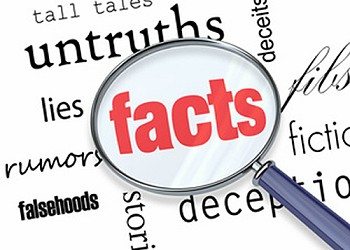
Be accountable to yourself

When others seek evidence that your actions or decisions were well founded they are seeking to assess how effectively you have addressed your accountability.

When we are accountable we often think of it in the context of how others perceive you/ your performance.  In fact, most importantly you are accountable to yourself, then to others.

Judging Accountability

There is a subjective component to the exercise of accountability.  A decision one person thinks is good might be considered disastrous by another.

The most accurate judge of what you are accountable for, that is the opinion that counts the most, should be your own.  The truth is yours to testify to.

This is not to say you should ignore your accountabilities as they relate to others, this can have a significant impact on you.  What others think matters but as you create those perceptions the foundation of success is being true to yourself.

Don’t Fool Yourself to Live

Asking yourself hard questions about what you seek, what you value, how you want to behave, basically defining your own beliefs and accountabilities should be a brutally honest assessment.

Don’t fool yourself into believing things that don’t resonate with you,  but appear appealing.  As you act out your basic values the best results always arise from things you truly believe.

If you believe you own something then most likely you will be passionate about acting accordingly.  Others will see that and respect it.


Subjective vs Objective Analysis

We regularly rely on our personal feelings, tastes, or opinions to arrive at conclusions.  Sometimes these can be strongly influenced by unconscious bias (i.e., things are not even fully aware of). This is a subjective approach.

In the objective approach, fact-based judgements are not influenced by personal feelings or opinions.  In this case, facts are always the same for everyone.

True objective measures provide no opportunity for interpretation.  For example, two plus two equals four is a fact.  It is accepted as always being true.

Outcomes

Actions are based on our understanding and analysis.  Often subjective information (easiest to obtain) is readily available and what we act on.

Subjective information could be accurate or inaccurate resulting in decisions that might lead to success or might not.  Of course using  objective information does not guarantee success but results are far more predictable.

Analysis

Whether objective or subjective, sometimes a combination of both types, the quality of the decision will rely on the analysis, that is the interpretation of the data gathered.

Analysis should include weighing  the quality of the inputs relative to how certain the facts are.  Objective facts will always be more certain but determining what they tell you can be tricky.

Testing

Sometimes testing the facts through trials or demos is an approach to separate subjective from objective inputs as this can be a grey area.

Walking through the recommended solution(when feasible) can help identive weaknesses in the knowledge base. This validation process canbe a very useful quality check.