Tag Archives: communication

Overcoming Aprehension

Basic human biology plays an autonomous role governing and controlling our behaviour.  While we might believe we are in control of our thoughts and actions there are many biological influencers which need to be overcome if we are to achieve full control

Consider the simple fight or flight response.  The body produce adrenaline involuntary as a reaction to a perceived harmful event, attack, or threat to survival. 

The hormone prepares the body to repel the threat (fight) or flee the threat (flight).  Its production is automatic and conscious thought is needed to override it’s effect, for example, a false alarm.

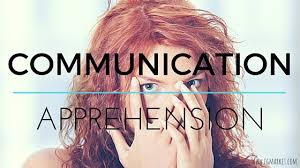
Communication Apprehension 

Apprehension is the anxiety or fear that something bad or unpleasant will happen.  Typically it is not consciously derived but rather an unconscious control we develop over time.

In the case of communication apprehension, this may result in holding your tongue when speaking out is more appropriate.

The level of apprehension we may experience arises based on the context of a situation but the underlying individual propensity for apprehension is derived from both nature (genetic) and nurture (learned through experience).

Take Control

Clearly, there is value to these unconscious bio-influencers as they drive appropriate behavior where time is of the essence (fight or flight) or cases where we might do the wrong thing through unclear thinking.  

There is a time though when the unconscious control (e.g., involuntary communication apprehension) does not lead to the better behavior.  In this case, recognize it’s presence and conciously override it.

Filling the Information Void

I often observe how social groups tend to fill information gaps by making up the data. This is the foundation of gossip. It begins with a factual foundation and then grows organically.

Most often, groups of colleagues, acquaintances and co-workers   begin with the kernal and fill in the gaps arriving at conclusions which are passed on as completedly factual.

For Example

An organizations leadership decide to be candid and communicate accross the organization that spending has reached unsustainable levels and cost cutting must ensue.

The work of identifying the best approaches begins but this is where the transparency disappears.  Large groups of the organizations human resources have no insight into the detailed planning.

The result is speculation, assumptions and sadly the new reality is arrived at.  Although there is probably little alignment with the actual plans developed by the organizations leadership (and known to few) the majority come to believe what they made up to fill the information gap.

Of course, this commonplace organizational behaviour can have very negative impacts.  For example, strong capable resources the organization needs to retain, depart.  Largely because they are convinced the layoff axe is imminent (although that might not be the case at all).

The unfortunate fact is this type of scenario is totally avoidable.  The mistake of not holding broad open disccussions about the detailed cost cutting strategies, sharing plans and ideas ongoing as they develop, leads to people creating their own answers.

Without the benefit of accurate information this answers can be far off reality and lead to unwanted consequences.

Sharing Imformation

Who do I tell and what I tell them?  These are questions people are constantly asking themselves, whether conciously or unconsciously. This is a filtering process.

These questions are not intended to imply that we will share all the information we have but rather that we will determine if we can or should share some or none (The answer to the first question could be no one.)

If you are going to share something, what you will share comes into play.  Underlying this filtering process is motivation for sharing.  This influences the what and even how.

What’s the Purpose

All communication or lack thereof has a purpose.  There are four basic categories into which information sharing falls.  These are:

  • unburdening (lessen your guilt)
  • personal gain  ( this includes a wide variety of motivations from monetary to self worth)
  • altruistic (for the benefit of others)
  • malicious (to attack or harm others, could be coupled with gain on your part)

Withholding information can be as effective as sharing and during the filtering – whom do I tell and what – the decsion to not tell could be because that appears to be the best way to achieve the underlying objective.

In a flash

The really scary part is the filtering process often happens without a great deal of concious thought or examination of pro’s and con’s.  For most, it is just managed intuitively.

A thought pops in your head, is mulled briefly and then shared or not.  During that brief interval the reasons to communicate or hold back and what to say and how to position it are determined.

Often this leads to misunderstanding, frustration and conflict.  What we say, to whom and how we contextualize the information is so critical and important to get it right, yet alas, we spend so little time figuring it out.

Honesty

If your behaviour is free of deceit and untruthfullness, you are percieved as honest.  Assessing if someones practicing honesty requires knowledge of truth.

It is important to note that incorrect facts, shared with sincerity do not constitute dishonest behaviour.   That is behaviour that derives from genuine feelings, albeit potentially misguided.

Judging

Determining if someones behaviour is honest or not often derives from others personal judgement.  This is not always simple and can involve assumptions, always a tricky practice.

In the famous parable about truthfullness, George Washington cut down a cherry tree and displayed the value of true honesty by admitting to it, when asked.

The tree was cut down, that is a fact.  No one saw who did it so believing George to be truthfull is based on the assumption he would not lie about a misdeed.

I have no idea if George cut down the tree or not.  Personally I cannot be sure he was not accepting the blame to protect someone else or even to establish a perception that he was a truthful person.

Proof and Evidence

Our judicial system is founded on the believe facts should be used to judge honesty.  This is to avoid assigning dishonest behaviour arbitrarily.

Overall, there is no perfect way to judge a persons level of honesty, however, keeping an open mind and researching, validating and freely communicating your opinions are good practices to help avoid making erroneous judgements.


Structuring for Success – Part 2

On Wednesday I described the strata theory of organizational structure.  In summary, the workof an organization  (e.g., build a plane) can be categorized by it’s type, e.g., level 1,2,3 ……… and so on.

The type of work at each level generally goes from  long complex tasks requiring a lot of earned power to short simple tasks (i.e., level 1) based on granted power.

My earlier posts describes this in a little more detail. Today I will focus on how the model can help identify problem areas, ultimately leading to resolution. (hopefully)

Comprehension

When direct reports are doing the same kind of work, that is they are both level 3 for example, conflicts quickly arise.  Intuitively you can imagime the angst and confusion when the boss is doing what you have been assigned ( often by the boss).

Terms like micro managing or constructive dismissal can be applied to this scenario.  To solve, study the work done in your organization, based on the length and complexity of the tasks, ensure direct reports are not working at the same level.

Gaps

When someone doing level 2 type work is reporting to a boss doing level 4 work, things can be missed.  Gaps in the work flow , not unexpectedly, create challenges at the lower level of work.

Working Across Multiple Levels

For me, this is both the most common and frustrating.  In this case the resource at (for example) level three sets the direction and goals assigning them to people who work at level 1 & 2.

Unfortunately they then go and proceed to do the work.  That is the senior manager assigns projects aligned to the strategies and then goes and runs the projects alongside those assigned to do this type of work?

The project managers accountable for the work become quickly disaffected and impotent.    Most often, ultimately, they leave the organization.

Leading Change

Change can be good if effectively managed.  Change management is a critical skill employed to increase the probability of a successful change.

Submit and hope methods involve announcing a change and then hoping it proceeds without issue.  Changes implemented this way can work, but the risk of failure is high.

Communicate

The most important practice to ensure positive change is two way communication.  The message should be structured so what, why and how are clear.

Feedback is essential, as is responding to others ideas and comments including modifying approaches.  Successful changes require everyones participation.

Top down approach to change often leads to passive resistance.  Simply put, those affected by the change will outwardly accept it but in turn do everything they can to sabotage the result.

Plan and monitor

While ongoing two way communication is the key to success, as a practical matter, defining the approach and methodolgy (i.e., the logistics) and then monitoring the activities throughout the change is needed to allow for issue management.

The unknown and unexpected can and almost always will occur.  To avoid issues from derailing the entire change you want to identify and resolve them as they arise.

Validate the Result

Hopefully changes are not being driven based on some random whim.

The reasons for making the change (i.e., the benefits) should be freely and honestly shared (this is key to getting buy in) and those objectives need to be checked ongoing to confirm they are being achieved and allow for modifications if not.

This is the reason for making the change, after all.

Leadership Skills – CommunicationI often

For this post I am using a narrow definition of leadership.  In this context, leaders are individuals providing guidance, direction, support and influence.

This does not necessarily need to be done from the front (a traditional view of leading) but the results need to be better than they would be without leadership.  That is the leader needs to facilitate a positive change (result).

If you aspire to lead, whether in front or from behind there are a number of skills that can assist you to be a top performer.  Of these the most important is communication.

Many of the other key leadership skills like empathy, self awareness, confidence and innovation all both support and require strong communication skills.

What to Communicate?

I often find conversations I have with others about communication often start with a focus on how.  That is things like clarity, brevity, retention, listening and so on.

For me good communication from a leaders perspective always starts with what.  Leaders influence, guide and motivate.  How you do this is key but the content trumps all.

WIFM

What’s in it for me is foundational content for any communication.  To get attention and direct behaviour toward action, most if not everyone starts with the personal motivation question?

It is all about me after all so why do I care about what you are communicating.?  Give me a reason.

This does require using self awareness, empathy and other skills to some extent to understand what is the most appropriate and grabbing content.

Top quality  communication practices are not just for leaders.  Everyone can benefit from strong communication capabilities.   More on this in future posts.


Choosing to be percieved as Stubborn

Stubborn describes a behaviour that is considered inappropriate by most people.  More to the point, when we characterize someones behaviour as stubborn it’s not a compliment.

When a person is percieved to display dogged determination not to change their attitude or position on something, especially in spite of good arguments or reasons to do so, we lable them stubborn.

Subjectivity

Like so many things related to behaviour classification, stubborness has a significant subjective quality.  The assessment is largely based on the assessors perception and opinion.

The most subjective part of the assessment relates to the motivation of the resistance to change.  That is, deciding the stubborn person is resisting change, though there is no good reason for them to do so.

The subjective  part hinges around an opinion relative to the quality of the arguments for changing anothers attitude.  Typically the “stubborn” person does not see it that way.

Ergo, someone who behaves stubbornly from your perspective might not agree with you.  This can lead to entrenched positions by all parties, a situation not conducive to resolution.

Seeking Positive Outcomes

Not surprisingly when one person percieves stubborn behaviour in another the natural response is to develop their own stubborn behaviour.  Ultimately, to an outside observer, the discussion begins to resemble two brick walls with strong foundations, spouting barbs.

Help is at hand.  This is where your self awareness is a key tool.  Recognize the rising stubborness in yourself and in the moment use self talk to remind yourself escalating stubborness on the part of all parties never leads to resolution.

Relax, agree with the party you view as stubborn.  This technique invariably creates a small opening where your opponent become slightly receptive.  After all they now believe you get it.

Slowly  using continued reinforcement of agreement you ply your points and with time and patience a place of mutual agreement can be achieved.  The key here is iteratively building receptivity to discussion (softly) and using this to slowly achieve common ground.

Throwing Bowling Balls

Sometimes communication needs a little punch.  A colleague of mine calls this throwing bowling balls.  Sometimes I  get a snappy email response from him, “thanks for the bowling ball”

A touch of levity empowers communication  and as long as it can be taken in good humour, as a bowling ball versus a nuclear detonation there is nothing wrong with spicing the message to increase noticeability.

Getting Attention

Not surprisingly, getting attention is not as useful as keeping it.  When crafting your message, verbal, written or even through body language the key is not just to be noticed but more importantly to be heard.

Bowling balls come in hard and fast, you need to pay attention and react or risk getting hurt.  It’s the reaction which creates the opportunity for dialogue and ultimately opens the door for understanding.

Mutual ackowledgement and understanding (very different from agreement) is the place to start the communication.  Moving on to agreement, if you can, is the next step.

Why Listen

Communication entails transmission of a message.  Most important to the sender is receptivity.  Without motivation why would anyone waste time on your communication.

In today’s environment digital messaging abounds.  People with a large volume of email can be selective about what they pay attention to.

In some cases this is just a defensive tactic.  Time management can be over whelming and the motivation to bypass seeming innocuous or low priority messages is high.

So send that bowling ball spinning to it’s destination when some motivation toward having your message selected for attention is warranted.

Friendship

Probably the framework of friendship is simply defined as a relationship of mutual affection between people.  A stronger bond than acquaintance, but weaker than love.

Simple description aside,  friendship is a favourite study  topic of academia.  The cornerstone behaviours associated with friendship can be very subjective in behaviour, hence the quest to better define the term.

Relationship Driven Behaviour

Typically there is a bond between siblings.  This familial relationship can include friendship, love or even hate relationships but typically there is a positive respect respect and close relationship with your siblings.  (A caring relationship).

Civil wars create a fascinating perspective in the study of relationships.  Friends, family even lovers can be pitted against on another just on the basis of geography.

Do you live in the north and your brother in the south?  Regardless of your relationship, circumstances might drive you to take arms against one another.

The typical behaviour associated with your relationship (e.g, friend) might be transformed to foe overnight.  All for the sake of political expediency.

The point is, typical relationship behaviours can be overcome by circumstance.  Your friend might not act in accordance with your expectations.  It is important to consider the root cause of this disappointment to help you understand what is happening.

Loyalty

A relatively common trait of friendships is loyalty.  You expect support from your friend but circumstances can cause loyalty to waiver (civil war being an extreme case)