Tag Archives: decisions

Making Good Decisions

Today’s post is prompted by events I have recently observed in which others are basing decisions on fear versus careful logical consideration of facts.

The most frustrating part of this is a general inability to persuade these people about the negative outcomes of their fearful behaviour no matter how strong the facts.

Winning the Lottery

It is a documented fact the probability of  winning a lottery is very low (the actual chance depends on the lotteries format).  Like gambling organizations lotteries are always profitable for their organizers.

Yet millions of people continue to participate although it is well known chances of sucess are slim.

Vaccines

One of my favourite examples of this centers on those who choose not be vaccinated although the proof of vaccine effectiveness is overwhelming proven through historic evidence (e.g.,  virtual elimination of measles and polio)

Are vaccines perfect, of course not, risks do exist but empirical evidence shows the benefit is enormous and so the risk worth taking.

My point is simply, by weighing the pro’s and con’s of our actions based on historical evidence we can make good decisions, caution is needed to avoid letting unfounded fears override common sense.

Information Security

The events that triggered this post relate to decisions based on fears   of the dangers of associated with the internet and those leveraging it in criminal ways (e.g., identity theft, monetary theft, etc).

Firstly I think it is critical to realize even when taking precautions, bad stuff can still occur.  What is critically important is not to let pleasure and happiness be overcome by fears of things that, in essence, are unavoidable.

Whether we lock our doors, or have alarms, our houses may be robbed.  Mine has.

If we guard our credit cards religiously we can still subject to fraud.  I have.

Guarding against hacker attacks, with most up to date best practices is not impervious to threats.  I have experienced brute force attacks and ransom ware.

Prevention without Anguish or Unnecessary Stress

It is critical to recognize, as noted above, there are no absolute solutions.  Risk mitigation just needs to be reasonable and can focus on prevention (e.g. locks) or post event  mitigation (e.g. insurance).

The key here is to make sure your risk mitigation behaviours do not stop you from enjoying yourself ( i.e., don’t be homeless because of fear of robbery, or auto-less because of fear of accident, or not embracing all technology has to give because fear of theft.)

Is fear overcoming smart decisions

Ultimately our choices are based on a multitude of factors.  The point of this post is to relax and think about the pros and con’s of your decisions based on costs and outcomes.   This should enable choices based on logic  versus emotions (i.e. good decisions). That is, choose wisely, don’t stress, don’t worry by basing  your actions historic facts and focusing on the best results.

Ask yourself, are you acting in ways that restricts your successful outcomes and personal enjoyment.  Is your fear causing you unnecessary stress.

Remember there are no absolutely correct decisions, bad stuff can happen no matter what you do, avoiding fun and enjoyable tools unnecessarily hurts only you.


Making Assumptions

From time to time most of us will accept something as true or as certain to happen, even though we do not have absolute proof (it is possible definitive evidence of the truth does not exist.

Making assumptions can be expedient but it could also result in inappropriate behaviour or doing the wrong activity because things we not actually as you assumed them to be.

Speculation

A close cousin to the making of assumptions occurs when we form a theory or conjecture without firm evidence, i.e., speculate.  Combining speculation with assumptions can lead to a very dangerous combination.

Basically, inadequate quality of facts and inconclusive information leads us to actions that appear to be supported by feelings or beliefs that we can firmly trust, although in fact they are based a bit on smoke and mirrors, (i.e., what appears to be, not necessarily what is).

Easy and Simple

The prime motivation for acting on speculative information and assumptions is simplicity.  It is easier to assume you know the answer and proceed than step back, dig in and investigate.

We can achieve our goals by knowing how to proceed and assumptions provide us with that direction.  Sometimes it works and of course, our level of false confidence drives our ability to make assumptions comfortably.

The thinking goes “We are good at this, it’s unlikely we are wrong.  Why wait, why do more work?  Let’s get it done.”  Unfortunately, this approach does not always work out.  Worse when it misfires you can really make an ass of yourself (or worse).

Don’t Let Fear Overwhelm You

Our actions can be motivated by many factors both internal and external.  Our environment and other people can exert a strong influence
Fear driven behavior might not be the most appropriate, in these cases, it is best to take time to think through your options although this is often easier said than done given the presence of a sense of urgency.

Think

Some of our reactions to danger are an innate action and can be hard to control, in some cases controlling these is not the best option.

However, in many circumstances, taking the time to contemplate our fears will produce much better outcomes.  We cannot always control our external influences but how we respond is within our ability to manage, just not always easily done.

Allowing our fear or anxiety to take control of us and dictate our behavior might achieve acceptable results but in those cases, it is purely by accident.  Retaining control of your destiny at all times is a much smarter approach.

Choose

While sometimes external factors are out of your control, you can always choose how to react.  Overriding instinctive action is difficult and occasionally not appropriate but generally more satisfying.

Without a doubt, our choices are influenced by circumstances.  Picking the best alternative for any given situation, sometimes at the moment, is often overlooked due to expediency or just because the effort appears too great.

In reality, taking time to get it right is always a high-value proposition and worth the effort.  Avoid being stampeded by your fear, you won’t regret it.


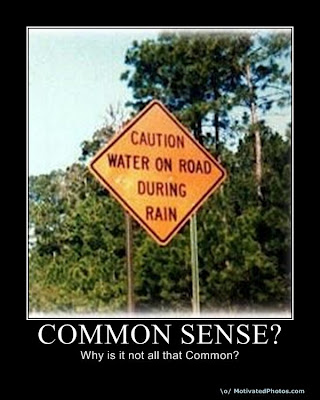
Common Sense

Yesterdays post about empowerment contained the suggestion to practice common sense.  I received some excellent feedback questioning the validity of my recommendation.

After all common sense can be a very subjective term with a multitude of interpretations.   As a decision support tool, does it really have value or is it just an easy motherhood type recommendation.

In Principle

My intent was to consider the practice of common sense more as a principle and strategy than a definitive action.   Common sense is the ability to perceive, understand, and judge things in a way that is shared by nearly all people. (i.e., in common)

An individual feeling that something is the case is of course subjective to an extent.  Good sense is the ability to under those feelings that are shared by the majority.

This is not an absolute method to making the best choices but it is a validation technique with proven value.  Reacting the way most others would is often best (but not always)

Not Absolute

The practice of common sense needs to be considered as a guide not the definitive way to decide how to proceed.  The approach is just one of many ways you can help validate the veracity of your conclusions.

While this is not a litmus test which will always lead to the best results casting aside common sense can lead to disastrous results.

For example, each year the Darwin awards go to people who have lost their lives through silly actions.   Clearly they were not practicing common sense and if they had, they may still be alive today.

No Regrets

We make decisions every day.  In some cases, our decisions can have positive results and in other situations,  negative consequences.  Warnings can influence our decisions but are not necessarily the deciding factor.

Taking heed of a dire warning could cost you time, effort or financially but the risk of not doing so needs to be carefully weighed.  If the worst happens can you live with it?

For Example

This is a simple scenario but illustrative of the principle.  I needed a gas fill-up yesterday.  On the way to the station, I noticed my window washing fluid seemed to be coming out low and slow.

Around this time of year in the northerly clime, I live in when the weather warms up a bit the roads become messy and spit a lot of dirt on the windshield.

Without adequate windshield fluid, your view can become so clouded that you actually need to stop driving, get out and manually clean it.

The Decision

Since I was stopped for gas anyway, I asked myself should I acquire some more windshield clean fluid to be ready to add when it actually runs out?  It seems like too much time and effort, a mild warning was there but not cataclysmic so ignored.

Less than 1km from the gas station my cars visual and very annoying audio warning about low fluid happened.  Yikes I made a bad decision.

But No Regrets

Now I had to go somewhere and get fluid or I would really regret it.  So if you are going to ignore the first warning signs be sure you are okay with what happens next.  No regrets.

Avoiding Mistakes

Mistakes are the product of ill-conceived actions that are typically fraught with peril.  Based on this description of the root cause of mistakes, they are totally avoidable.

Simply put aside high risk approaches conceived in haste and the likelihood you will make a mistake is very low if non-existent.  This is a strong argument for consistently practicing careful analysis and thought.

Reality Bites

In practice taking the time and effort to apply careful analysis and planning to everything we do is impractical.   While careful forethought is a wise approach the situational context is a key factor affecting the feasibility of behaving this way.

Undertaking expediency often leads to mistakes because the urgency can drive us to rushed decision making that is not fully thought out and high risk.

The reality is mistakes can be avoided, however, it is often not a simple thing to do.  As the first step in any decision-making process, it’s most helpful to ask yourself “What can go wrong and if it does how sorry will I be?”

Considering the negative impacts, even if only at a high level focusing on the obvious, allows you to make a choice to stop and take time, even in the face of percieved urgency.

Mistakes can be Painful

While taking too much care to avoid mistakes can lead to missed opportunities taking too little can be painful.  Spending a little effort to help achieve the right balance is always worthwhile.

Avoid the pain, maximize the gain, think a little before you act.


The best choice

A key part of being human is making decisions. Some are routine, for example deciding to get up in the morning and start your daily routine, while others are unique and much more complex.

Decision making oft results in positve or negative outcomes with varying level of impact (magnitude) but on the whole we seek to make good decisions, those with a high degree of positive impact.

It’s a Process

Ultimately we can act with little thought or a great deal of analysis. This is often related to how impactful the result will be. Also as noted routine decisions generally are overlooked, it’s just easiest to act routinel as usually, no harm seems to occur.

Surprisingly, because so many of our actions are autonomic, the first step to good decision making is concious realization that a decision, a fully aware decision, is in order.

Of course this can take up time and effort for what may seem to be an inconsequential item, so little value. Frequently it is the little things that can in fact have significant impact.

The Butterfly Effect

In chaos theory, the butterffly effect is thesensitive dependence on which a small change can result in large differences in a latter state.

For example a butterfly’s movement in the arid air of the gulf of Mexico creates a minor disturbance which is the catylst for what is later a powerful hurricane.

The concept is simply that a minor decision overlooked today (treated as routine) could become a missed opportunity for a major positive impact down the road.

Why take the chance? Take a moment to consider if your minor choice is as minor as you think. Good things may unfold.


Taking Action

Action decisions are always yours to make.  The question of whether someone wants you to do something is relevant, but the decision to proceed or not is solely yours.

Sometimes we ask ourselves what does our signifant other or leader or key stakeholders expect.  Meeting expectations can be very fullfilling both for you and the person whose expectations you are addressing, but is it what you want to do.

You are in Charge

Whether the initial motivation to act originates internally (within yourself) or externally ( from others) you should never do anything that does not going to satisfy you.

That is not to say acting to the benefit of other (altruistic) behaviour is not the best thing to do but the underlying motivation, to ensure best results,  has to be your own.

Deciding to act solely on the request and expectation of others rarely leads to the best outcomes.  Not to say the obvious objective, what the other person wanted, will not be accomplished, it might.

However, doing something that is not what you wanted to do will have a negative impact on your psyche, maybe not readily apparent or immediate, but it will be there and over time personal resentment  could peak out its ugly head.

Do or do not, you choose

Whatever decisions you make, the most important advise to heed is your own.  You may decide to proceed or not, whatever option as long as it was your own selection all will be good.

Options

Often, the path you are following presents several options.  For example, if you are out for a walk and come to a fork in the road the obvious questions is do I proceed left, right or turnaround and go back?

After consideration  you conclude which option to select.  Based on your resolution the journey continues.  The outcomes may lead to your questioning or applauding the choice, in hindsight.

Of course the quality of the outcome (good or bad) can be a result of luck, your decision or a combination of the two.  The aspect within your control is the decision.

Making Decisions

Your approach to determining how to proceed is often impacted by environmental factors.  For example an element of urgency may be present limiting the time you have to analyse possible outcomes and associated risks.

Or you might have lots of time to gather information about each option; however, this can lead to analysis paralysis (overwhelming data stalemating the decision process).

Start with a plan

The best decision making begins with planning.  The planning effort needs to be tailored to the impact of the decison, priority and available time.   Whether high or low impact, quick or slow duration, considering how you are going to decide is invaluable.

The plan can be documented or just thought out in your head with the steps and timing remembered.   The key is to outline what considerations you want to make to  enable determiation of  effort, risk and expected outcomes.

Utimately the best decisions are formulated with an understanding of what it takes to achieve the desired results and what could go weong.

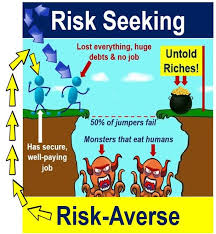
Appetite for Risk

There are many behavioral attributes that have been identified as key leadership skills.  Often overlooked is the willingness to accept risks, albeit, not recklessly.

Sometimes the situation is bereft of information neededto assist in making an informed decision.  In these cases the critical balance leaders need to be able to navigate is between expedience and caution.

Intrinsic Risk

All activities have some risk associated with them.  That is some level of exposure to danger, harm or loss.  The level of exposure can vary widely but it is always present, there is no zero risk when it comes to deciding how to proceed.

For example, If you decide to cross a low  traffic road in clear weather with visibility for miles in both directions, there is still a risk (however small)  a car will appear and hit you resulting in your death.

The motivating factors, why is the decision before you in the first place should be the main drivers but the risk averse will often focus on the potential negatives resulting in delay and potentially causing the decision to never be made.

Balance on the Fly

The best leaders are able to quickly determine if delay is appropriate for reasons of insufficient data or lack of urgency or major risk or if accepting the risk balanced against the potential benefits is the best approach.

This ability to weigh the options in short order contributes to a leaders reputation.  Their track record in this regard builds both respect and confidence among those they interface with.