Tag Archives: freedom

Obligations

Sometimes we are morally or legally bound to do something, it is our duty or a commitment we made.  Are we obligated to work based on the explicit or implicit contract we made both with our employer and those we serve?

A case in point is the recent wild cat strike by health workers in the Province of Alberta.   Classified as a wild cat strike because it was not officially sanctioned as a union activity by the leadership but rather just an uprising by the rank and file.

In this time of a worldwide pandemic when medical support is critical do, the workers have a duty or commitment to the general public?

Freedom of Expression

In countries with democratic based political structures, we are fortunate in the ability of an individual or group of individuals to express their beliefs, thoughts, ideas, and emotions about different issues relatively free from government censorship.

However, there are boundaries, some structures, and rules, and it is the administration of these that is not always either exacting or easy.  We do have structures to make the assessments of fairness (e.g., our legal system) but sometimes the results are contentious.

Is it a right to express our dissatisfaction with our employer (in the case of health workers the employer being the government)?  Generally yes but what about when it affects the public good?

A Fine Balance

Freedom does not equate to anarchy and sometimes the separation of the two states can be a fine balance.  Groups (union members) have rights but does that mean they can be righteous?

The answer to this question is sometimes a real moral dilemma.  I support the right to express disagreement with the government policies but also the need to maintain public health services (particularly in times of crisis) is critical.

There probably is no clear answer to this situation, fortunately, we do appear to be muddling through with some civility.  Yeah for democracy.
 

Leisure

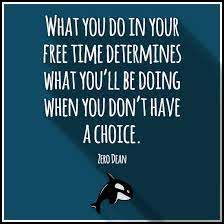
I have always found work to be one of the most deceptive words in the English language.  Especially when coupled with the concepts of leisure time and time off.

Depending on your perspective, work is either an activity in which one exerts strength or uses one’s faculties to do or perform something: or activities that a person engages in regularly to earn a livelihood.

Poor Description

Earning a livelihood or exerting yourself to do stuff that will result in the achievement of something are actually very different things.  Of course, the do compliment each other and have similarities but at the core, the meaning is very different.

My challenge is that both leisure and time-off activities are in fact work, just work for a different purpose.  This is my pet peeve.  Many consider leisure time more pleasurable than “work” because you have freedom.

My argument is work is work whether you choose it freely or are directed to it by others or even just your own sense of accountability.

Focus Differentiation

I could be working in my garden during my leisure time (although why I would freely choose this type of activity to do this is beyond me).

Gardening is work, most likely my spouse directed (requested) me to it so while it’s not work focused on making a living it is work with a purpose – to keep the peace.

Constantly Working

Ultimately we are all constantly working on something (maybe as simple as just breathing).  The objective and value of the work clearly varies but is very contextual.  Often it will have nothing to do with earning a living.

Freedom

I was listening to the folk-rock tune “Me and Bobbie McGee” the other day and got reflective and philosophical as a result of the lyrics (songs that reflect real-life can do sometimes do this).

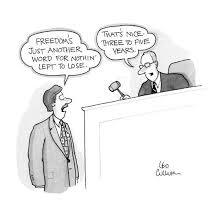
In particular, I was struck by the line, “Freedom is just another word for nothin’ left to lose”.   It is a bit of an ironic statement but probably accurate.

Felliniesque

Through the sixties and seventies, the made-up term Felliniesque (fantastical or surreal) was coined as a reflection on the quality of movies directed by Italian Frederico Fellini.

Frederico’s distinctive style blended fantasy and baroque images with earthiness while still highly intelligent and thought-provoking.  It was from one of his stories the song “Me and Bobby McGee” arose.

Kristofferson

In the late sixties singer-songwriter Kris Kristofferson wrote a song which he based on the last scene of Frederico Fellini’s movie “La Strada”

Kris wanted to create an emotional and moving ode to the sadness and despair apparent in the movie which was based on the simple concept that being free of emotional ties might be aspirational but ultimately it can lead to great sadness.

Freedom

Freedom is the power or right to act, speak, or think as one wants without hindrance or restraint.  Freedom is a choice, not a right.  If you choose not to be constrained, then you will not be. 

Some argue the ability to make a choice can be overridden.  When the exercise of the power needed to be free meets a stronger power, your freedom can be diminished.  That is the strength overcomes resolve. 

Take It

If you choose to behave without hindrance or restraint there should be no need to request or even demand the right to do so, rather it is a case of exercising your prerogative to act as you see fit.

Realistically, there are obstacles to this approach and caveats that should be considered.   Social and cultural considerations are valid constraints on your freedom. 

Choosing freedom does not mean disregarding your environment.  Consideration of others is a cornerstone of appropriate behaviour, albeit a subjective assessment to some degree. 

It is reasonable to have an expectation the behaving freely is a choice you can make but to take this approach without recognizing the impacts on others is not recommended.  

Overcoming Opposition

As alluded to earlier, others may exercise their power and this can appear to effectively limit your options to act freely.  For example, armed aggressors may threaten to harm you for not following their dictates. 

You may choose to fight this aggressively or passively, whatever you decide it is your choice, not theirs.   The point, you do not need to accept the limits on your freedom but you can choose to do so.

In some cases the consequences drive your choice to adhere or not, but it is still your choice to accept rather than overcome the constraints.

Friendship

Probably the framework of friendship is simply defined as a relationship of mutual affection between people.  A stronger bond than acquaintance, but weaker than love.

Simple description aside,  friendship is a favourite study  topic of academia.  The cornerstone behaviours associated with friendship can be very subjective in behaviour, hence the quest to better define the term.

Relationship Driven Behaviour

Typically there is a bond between siblings.  This familial relationship can include friendship, love or even hate relationships but typically there is a positive respect respect and close relationship with your siblings.  (A caring relationship).

Civil wars create a fascinating perspective in the study of relationships.  Friends, family even lovers can be pitted against on another just on the basis of geography.

Do you live in the north and your brother in the south?  Regardless of your relationship, circumstances might drive you to take arms against one another.

The typical behaviour associated with your relationship (e.g, friend) might be transformed to foe overnight.  All for the sake of political expediency.

The point is, typical relationship behaviours can be overcome by circumstance.  Your friend might not act in accordance with your expectations.  It is important to consider the root cause of this disappointment to help you understand what is happening.

Loyalty

A relatively common trait of friendships is loyalty.  You expect support from your friend but circumstances can cause loyalty to waiver (civil war being an extreme case)

Motivating High Performance

Performance, in the context of the post refers to the action or process of carrying out or accomplishing an action, task, or function.  High performance should lead to better outcomes.

Applies to Everyone

In a group situation (e.g., family, corporate , charitable) the more the individual performances integrate (i.e., synchronize) the greater the outcome.

Motivating performance is most effective when balanced (a favorite concept of mine) between the group and the individual.  If my soccer team has a superstar I might win sometimes.

If every player on the roster is a superstar, and collaboration is their mantra, the chances we will consistently win are high.  That is both individual and team performance are key success factors.

Enabling Motivation

The most powerful form of motivation comes from within.  Achievement orientation is an extremely important emotional intelligence characteristic.

Selecting group members that identify with this value and display the associated behaviours is the first step toward building a motivated team.

Having a high level of individual motivation practiced by everyone in the organization sets the framework for leaders to provide the motivational direction.

In this case, the individual contributors naturally combine and leverage each other.  They recognize a true team effort is the route to great success.

The secret to successful motivation is to create an environment where self motivation will occur organically.  This is no so much about direct action on the part of the motivator.

The key is recognizing what each individual needs to fuel their inner motivation and then give it to them.  Observation and barrier removal is mainly what this entails.

Inspiration

Simply put, inspiration is the process of being mentally stimulated to do or feel something, especially to do something creative.  For me, inspiration hit  almost two years ago when I was inspired to write a blog.

I acted on that  inspiration (as regular readers know) and four or five time a week I post about a top of mind topic.  These are selected at random and derived from, well, anywhere and everywhere.

More specifically, anywhere and everywhere could be the result of discussions with friends, colleagues or acquaintances.  It could be from news or other communication sources like web or social media.  It be from dreams, hallucinations and so on.

And the posts continue

The results of inspiration are not always successful, and sometimes we choose not to act on our inspiration.  When the action derived from the inspiration does work a great feeling of accomplisment can result.

Some personal filtering is helpful to avoid acting every time inspiration hits you.  My own experience has been the best and most effective inspirations are not the ones I seek or urge onto myself but rather those that are simply organic in nature.

Desired Outcome – Personal Satisfaction

Ultimately when you act on an inspiration both the acting on what inspired you and the end results will be satisfying more often than not.  Occassionally it might make sense to ignore a sudden unbidden inspiration  but as a general rule acting on your inspirations will be a good thing.


What is Retirement?

Typically we would say retirement is a point where a person ceases employment completely.  This is differernt from ceasing employment voluntarily (quitting) or involuntarily (fired or laid off).

Of course, we often think of employment as the condition of having paid work.  So if you do volunteer work or focus on raising children or other ways of spending your time, other than paid employment, with no intention of ever taking up paid employment; are you retired?

Out of Retirement

If you cease employment completely (so you are “retired”) but decide to take up employment again at a later time, are you “unretired” or just employed again.  Or is the paid work called your retirement job?

That is, you retired and elected to receive a pension.  You then seek and gain employment and so have two incomes – one income for doing nothing and paid employment.

Why Retire?

Interestingly many cases of working in retirement have little to do with monetary status (although some do). Studies have shown after a lifetime of focusing on participating in paid employment, stopping suddenly can effect a big psychological impact, a negative one.

Suddenly stopping your paid employment has been  shown to be a statistically valid causal factor in early demise.

Working in paid employment or unpaid employment (e.g. volunteering) provides a purpose .  Leisure activies, technically not classified as work also provide a purpose.

In considering retirement, it is important to remember the key factor is not always financial.  Although it is nice not to worry about income, the psychological impacts of not having a purpose or objective could be deadly.


Learning from the children

As I think about how I have lived my live to this point, my successes and short comings,  I am satisfied.  By this measure, the way I have lived my live maps to my key personal objective – maximum pleasure.

I feel good about the way I live and it gives me pleasure.  More satisfying though, and probably not an objective perspective,  is my perception of my childrens lives.

All our children are fully mature adults and my observation of their  lives, achievements, values and goals is they have bettered me in every way.

All our children  demonstrate maturity and leadership far beyond my own, albeit that it pains me to think this way.  It is after all all about me, I struggle with being bested.

Life Reverses Itself

At some point in recent years, I am not exactly sure when, I began to gain more from observing how my own offspring behave and react, but it happened.  Emulating them  now helps me grow and makes me a better person.

The point where I was the example, the teacher, the elder has reversed.   Suddenly I am learning from them.  The student surpasses the teacher.

When I think about it, this was probably our parental goal all along.  However, while  my wife and I only laid the foundation our children themselves are soley accountable for thier achievements.

And so, unlike the iconic song by Crosby, Stills, Nash and Young -“Teach your children well” what goes around comes around and now it is more like “Teach your parents well”.


Managing your money

The basic framework to money management begins with your overall objective.  This is supported by specific goals, overtime as performance to the overall objective is measured the specific goals may be modified.

Some go with multiple objectives, personally I have always been a believer in simplicity and focus.  You might have a number of specific goals (shorter term and changing over time) but the objective should be straightforward and longer term (15 to 25 years).

How it could work

Objective:  Have more than a million in joint net financial assets by age sixty-five

Goals:

  • maximize registered retirement saving plan contributions each year
  • maximize tax free savings contribution each year
  • Achieve a dividend return for total net financial assets of 3% a years
  • Minimum internal capital growth rate (i.e., net of new investments) of 5% (both realized and unrealized gains)

And so on …….  (You could have goals around asset mix, interest income, etc)

The key thing to note is each goal is very specific and easily measurable, that is either it was obtained or it was not.

What Next

Use the specific goals for detailed planning.  Consider how to achieve the goals using the tools at hand.  I have previously done a number of posts about things like financial and retirement planning.  This posts provide some good ideas about the many of the tools and techniques you can use to assist with achieving your goals.

For example, if a specific goal is to maximize your TFSA contribution each year, financial planning tools can assist is defining an approach and the associated steps to achieving this goal.  Intuitively it’s pretty obvious you are more likely to achieve the goals with planning than otherwise (although with luck goals can be achieved randomly too).

Why Bother?

One of my favorite sayings is “If you don’t know where you are going, how can you plan to get there and when you arrive how will you know it?”  Setting your objective is the first step in answering that question.  Specific goals provide the flexibility to change direction over the long term,  as to how you achieve the objective.