Category Archives: Random thoughts – keeping you on your toes

Ideas, the journey begins

Ideas are thoughts about a potential course of action, typically for beneficial purposes.  Ideas can also be philisophical and highly conceputal both with a mental image or etherial perspective.

For todays post I am focusing on the more material form of ideas, those that can be converted to reality.  That is, the potential is acted on and ultimately beneficial gain is realized (monetary or otherwise).

Inventing

Often the conversion of an idea to reality is termed as the process of invention but this is not always the case.  Invention implies the idea has a newness to it, i.e, never seen before, unique, innovative.

Inventing can be a profession ranging from creating and patenting the idea without making it a reality, to actual building and implementing the idea, that is acting as an entreupreneur.

 Implementing Ideas

Arguably  the most satisfying process is not the ideas inception, rather implementing the action arising from the idea and of course reaping the benefits thereof.

This is the journey from the germination of the idea to conceptualization and finally reality.  Like many journeys it can be long and tiring, can have frustrating moments and even times when you wonder why you even started.

The key here is overcoming the motivation not to act.  Often the getting the idea is as far as it goes.  For those few that take the journey and overcome the challenges the satisfaction can be high.

Of course it could lead to failure, willingness to accept the risk is, of course, one of the key barriers to taking an idea to fruition.  Ths can be offset by the pleasure of the journey.
 

Team Chemistry

Often a group, department, or team within an organization develops overtime.  That is, ongoing turnover changes the shape of the team.  People leave, new people join.

Rarely does a leader get the opportunity to build a team from the ground up, selecting every member.  I have had this rare opportunity once in my career.

It was a very illuminating experience.  Each team member I selected had a chemistry with me.  Unconcious bias plays a factor in this, it is only natural and hard not to select candidates with whom you emote.

This is true even when you are carefully filtering on merit (i.e., skills and abilities).  While the team might not be widely diverse the commonality created by the selection being based on a single hiring  leader does have some benefits.

Interpersonal Chemistry

In the broadest sense interpersonal chemistry is the way two individuals relate to each other.  The term implies a positive interraction.

This is typically related to common values and personal perspectives.  These attributes are not necessarily openly communicated,  rather felt more on an emotional level.

In my experience, the team of about twenty people for which I was the single hiring manager interacted seemlessly.  The bond was largely based on the common filtering I had done resulting in a team full of interpersonal chemistry.

Putting your stamp on a team

I have often observed new  leaders forcebly turn over their direct reports, the ones they inherited, and replacie them with new subordinates  they have better chemistry with.

This practice stems from a desire to work/play with others that have “go to” behaviours that are similar.  As I have noted there is some merit to this approach, on the down side it often limits creativity and innovation to some degree.


Governance

Over the past twenty years I have found myself in governance roles.  That is I have had the opportunity to participate in both interaction and decision-making among the various stakeholders involved in the creation and  reinforcement, of organizational norms.

In simpler terms, this involves ensuring everyone understands what the boundaries are and adheres to them (whether related to processes,  policies or behaviours).

Bad Word

Frequently governance is viewed with distaste both by practitioners and victims ( at least they see themselves as victims).  So why do we bother?

To be clear, as a practitioner I personally found my own involvement in governance unpleasant regardless of the fact some viewed my role as the easier one.

Why bother?

The motivation for implementing and maintaining governance practices is  avoidance of cost impacts and  reputational risks. Governance leads to cost effective consistency and sustainability.

The downside mainly arises from the fact that governance is restrictive.  It is a control process.

We all love control

Not surprisingly, whether it’s an  editor  controling the consistency and clarity of a communication or an  auditor advising how operations are deficient and creating unacceptable risks, people grit their teeth and bear it, but seldom like it.

Who among us likes to be corrected.  Pick me, please pick me.  I think not.  Most people think who are you to say I am wrong.  Bloody control freak!

Emotional remonstration aside, the reality is this governance.control practices can guide us to success.  As distasteful as it may be to actually perform the role of editor or auditor,(policeman, bureaucrat , etc., without them anarchy would rein.  Quality would suffer greatly.

Sadly, we need to be governed for our own good.

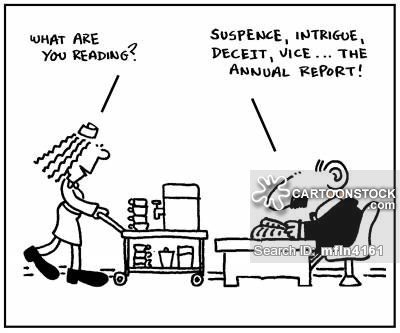
Intrigue

Intrigue can vary from the act of arousing others curiosity or interest to  making secret plans to do something illicit or detrimental to someone.

Organizations are composed of groups of people, usually formed in teams or functional associations.  Within these organizations intrigue is often a common practice.

Political Games

The common phrase lumping politics with game playing arises because the practice of politics can proceed very much like a game.  Opponents have different objectives and compete against each other through use of different strategies.

Game playing can be very competative and, as many bridge players would tell you,  to the point of being cutthroat.  An illustration of this can be found in the pages of a great book I have in my personal collection,  “Underhanded Bridge”.

Intrigue can be a technique employed to achieve political aims within an organization.  The practice of intrigue is often just a sub-process of office politics

Risk Mitigation – Awareness

I have personally encountered few organizational situations (come to think of it actually none) where there are not at least some people that actively use intrigue, that is the hatching of secret plans to improve their lot most likely at the detriment of others.

In toxic environments the reality is, not only a few of the organizational members are off plotting but rather the majority.  Unfortunately the practice of intrigue is natural to most people.

It is through the implementation and practice of organizational cultural norms ( the organizations inherent values) that typically restrain the practice to a few people that are willing to stretch the cultural boundaries.

If you are in an organization where intrigue is openly practiced you might want to consider a change.

Vision, Mission, Goals, Objectives, Strategies, Tactics

The goal of a non-drug induced vision is to inform the development of strategies that can underpin a series of objectives,  achieved through tactical practices, ultimately resulting in the completion of your mission (should you choose to accept it).

What a meaningful statement I just wrote, I must really know what I am talking about.

Bureaucratic Double Speak

On a stand-alone basis, the organization buzzwords employed in the first paragraph do have some relevance.  Strung together, I am not so sure they do much more than provide self-gratification.

I wrote the leading paragraph because I can, it sounds good and makes it appear that I know what I talking about.  In reality, though, I would propose it is a pretty empty statement.

Know Where you are going and the road to get there

Taken on their own merit these words do have more value than combined.  Each plays an important role in answering what you want to achieve and how you are going to do it.   (although goal/objective and strategy/tactics are virtually interchangeable terms)

Using them in a jargon form diminishes the effectiveness.  Most people recognize condescension versus meritous information. Why fool around with catch phrases.  Let us be clear, just say this is what we are shooting for and this is how we are going to do it.

  • Goal  – the sought after aim or desired result
  • Vision – elucidating the dream state, what is sought but not attained
  • Strategies – The plan to achieve your aim
  • Objectives – the plan to realize your sought after aims or desired results
  • Tactics –  the plan to realize your sought after aims or desired results
  • Mission – the assignment that will enable achievement of your your political or commercial purposes


Arrogance/Humility

Many organizations prize leaders with an attitude of superiority manifested in an overbearing manner or in presumptuous claims or assumptions.

Typically the quality or state of being unassuming or moderate in the estimation of one’s abilities (i.e., humility) is considered negatively.   When acquiring an organizational leader they need to be the best.

Perception versus Reality

While we perceive the need for a leader to be not only highly skilled and capable but to project the right image, that is not necessarily the case.

One definition of a leader is a person who holds a dominant or superior position within their field, and is able to exercise a high degree of control or influence over others.

This often get misinterpreted as needing some who is superior.  Arrogant people come of as superior, so they fit this interpretation of what a leader is.

In fact the key to effective leadership is the ability to  to exercise a high degree of control or influence over others.  Those with the ability to display  humility tend to earn their respect rather than force it (through arrogance).

Earned Power

Power that is earned, as opposed to granted or usurped, usually leads to better results.  Intuitively the militarily leader who commands the troops to charge because they say so (possibly to their death, as in the charge of the light brigade) is far more likely to fail than the leader who fights in front or at least along side the troops (i.e., setting the bar)

So build your earned power base, show a little humility.

Humour Me

Much of our daily activities are conducted in a serious way.  We believe they matter and demand careful consideration before acting.  While being funny gives more behavioural flexibility and is, well “fun” it is often considered inappropriate for “serious” subjects.

Humour arises from a genial mood, it is very unlike the serious approach.  Being funny, as a general rule feels good both to the comedian and the audience.

Why Serious

If humerous behaviour is more relaxed and pleasant why do most of us spend the majority of our time in serious mode.  Most of what we deal with day in and day out is just routine.

That is not to say everything we do is not meaningful in some way, or why would we do it.  This is more about the way we go about getting things done.

In general any message or action can be couched in humour and as a rule this allows the recipients to be more relaxed and receptive.  This is not to say the humourous approach always succeeds but certainly success is more likely.

The key here is how the all parties feel.  When actions are relaxed and genial (the basic principle  of the humerous approach) everyone is more likely to feel good, this helps grease the wheels.

I prefer the lighthearted approach and work hard to make this my behavioural standard whenever possible.  Many view this approach as frivilous but then, overall, they probably don’t have as much fun as I do.

Let it go

Today’s post lifts its title from Disney’s Frozen but the content has nothing to do with the animated film.  Rather, the focus is on a life skill I have found to be one of my own least obvious but highly impactful behaviors relative to personal well being.

Focus on what matters

For me, “let it go” is far more than ignoring, accepting or living with something that is bothering you.  Without completely removing yourself from a situation, whether an accidental event or conscious attack.

In a popular New York vernacular, “fuggedaboutit”.  That is to say,  it is done never to be thought about again.  There is no ongoing anxiety, recrimination, fear or second-guessing.

Holding On

Everyone has experiences that bother them.  Some of them are the result of others actions and some are events or random occurrences that just are.  In the vernacular “shit happens”

For me the key skill is to select the things that matter and deal with them.  The most critical aspect of this review is it allows identification of the things that don’t really matter.

These you can fully completely erase.  You can analyze the importance of a thing by asking the question, “Why would I care about this?” and there is no reason to care, don’t make one.  An artificial fuss is painful, who needs it.

Let it go, fully completely without pause recrimination or remorse, you will be doing more for your ongoing well being than you can imagine.  Don’t worry, be happy.

Facilitation

Groups of people charged with common goals or objectives are called teams.  The achievements can range from winning a sporting event to operating a business or supporting revenue generation (profit or non profit).

The teams performance can be very dependent on the members ability to collaborate.   That is their ability to work together to create  results (positive results).

Collaboration

The population of North America is very diverse and collaborating with others whose origins form a melting pot of cultures is no trivial task.

The efforts to work together will be rewarded by the innovation and creativity that  blossoms through integration of a multitude of skills, capabilities and perspectives.

Team members attitudes must include a willingness to work with others for the greater good but this not the only requirement for a high performing team.

It is rare for teams to perform at  high efficiency without some catylst.  This is where the practice of team facilitation can be invaluable.

Facilitation

At the extreme enfds, team interactions can be just a set of individuals acting independently or can be a group of individuals acting as one.

In the case of unified teams, individual group members facilitate interractions among themselves with the intent to assimilate everyone into the whole.

In some cases just one or two of the team specifically work on focusing the group while in other situations everyone acts in a facilitating role.

However the facilitation is implemented the teams outcomes our incrementally better than those of a team of individuals.

Options

Often, the path you are following presents several options.  For example, if you are out for a walk and come to a fork in the road the obvious questions is do I proceed left, right or turnaround and go back?

After consideration  you conclude which option to select.  Based on your resolution the journey continues.  The outcomes may lead to your questioning or applauding the choice, in hindsight.

Of course the quality of the outcome (good or bad) can be a result of luck, your decision or a combination of the two.  The aspect within your control is the decision.

Making Decisions

Your approach to determining how to proceed is often impacted by environmental factors.  For example an element of urgency may be present limiting the time you have to analyse possible outcomes and associated risks.

Or you might have lots of time to gather information about each option; however, this can lead to analysis paralysis (overwhelming data stalemating the decision process).

Start with a plan

The best decision making begins with planning.  The planning effort needs to be tailored to the impact of the decison, priority and available time.   Whether high or low impact, quick or slow duration, considering how you are going to decide is invaluable.

The plan can be documented or just thought out in your head with the steps and timing remembered.   The key is to outline what considerations you want to make to  enable determiation of  effort, risk and expected outcomes.

Utimately the best decisions are formulated with an understanding of what it takes to achieve the desired results and what could go weong.