Tag Archives: granted power

Leading without Followers is not Leading

Each of us has a variety of people whom we consider to be our leaders from time to time depending on the context (i.e., our group, organization, geographic region)

These leaders might be our choice or by a combination of appointment and personal selection.  Their power might have been earned by them, granted to them, or a combination of earned and granted.

Power Base

To lead you must have a power base.  This can be something you developed through your actions or perhaps you are designated the leader by dint of organization or election.

More often than not guile, wit and intellectual prowess versus physical strength are the cornerstones of effective leadership although the use of brute force has been known to be somewhat effective if not usually sustainable over long periods.

Followers

Even if you are designated as a leader, without followers you are nothing.   Typically if you disaffect your followers because of inappropriate behavior your leadership days will be numbered.

This applies whether you earn your power base or start with it by default.  If you are not able to gather and retain followers there is nothing to lead and by definition, you are no longer a leader.

Observe

Effective leaders are aware of how their followers view them and most importantly are empathetic with how their followers are feeling.

Without empathy, followers will view you as a narcissist.  This adulation will most likely be brief and accompanied by mass defection.  Leaders need to be focused on their followers not on themselves

The most effective leaders, those that both retain and build their followers observe carefully and then act accordingly.
 

Power; Corrupts or Reveals

The phrase “power corrupts and absolute power corrupts absolutely” is most often attributed to a letter written by Lord Acton in the mid-nineteenth century.

The concept expressed is having power corrupts us, in essence, lessens our morality, and the more power we have, the more immoral our behavior will become.

Does Power Change Who We Are?

Author Robert Caro proposed an interesting twist to this common idiom.  Mr. Caro hypothesized, based on his research, that power does not change us, but the greater the power, the greater our ability to reveal ourselves, and we do.

In his book where he postulates this theory one example, I found compelling was that of Richard Nixon.  As a young law intern, during an early court appearance, former President Nixon was castigated by a judge who suggested based on his shady behavior maybe he should never be admitted to the bar.

As history tells us the judge was probably a bit prescient.  Nixon’s amoral behavior clearly escalated with his power.  Author Caro argues he was not corrupted by the power itself but rather used the opportunity granted by a great power to behave as he liked.

The Good News

This theory, which does appear logical and has solid supporting evidence (you need to read his book “The Power Broker” to glean more) means there is hope for all of us.

Great leaders, with their associated granted power, do not necessarily become corrupt.

By being careful to ensure (as a societal whole) that our leaders have personalities reflective of strong moral fibre and values common to the majority, we do not need to worry the power we grant them will corrupt them – it probably won’t.

Usurping Granted Power

Organizations are structured hierarchically.  Whether a sharp pyramid or a flattened triangle the person at the top has power by dint of their position in the organization.

This is known as positional or granted power.  It may represent their entire power base or they may also have earned power, simply put the ability to get things down through others because they let you, usually out of respect, admiration or belief in your capability.

Using Others Granted Power

Throughout many years spent in many organizational environments it has never ceased to amaze me how people attempt to exercise power, that is get things down, by referencing someone higher in the organization.

For example, imagine a team meeting where collaboration is underway and there is an active discussion about which options or approach the group should adopt.

Almost without fail one of the arguments someone will use to support their position will go something like “our boss said we she do it this way”  Or some similar reference to someone in the organization with greater power than anyone in the group.

This can often be someone at a very senior level in the organization.  What never ceases to amaze me is how it can be a persuasive argument.

Me, doubting Thomas that I am usually asks for written verification or even offers to call or otherwise contact the aforementioned power broker.  Most often this breaks up the play.

It Works, Yike!

As I noted though it is stunning how often this ploy is successful.  So basically there is your granted or positional power, your earned power and the one often overlooked, leveraged power (totally made up).

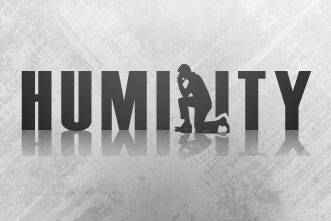
Arrogance/Humility

Many organizations prize leaders with an attitude of superiority manifested in an overbearing manner or in presumptuous claims or assumptions.

Typically the quality or state of being unassuming or moderate in the estimation of one’s abilities (i.e., humility) is considered negatively.   When acquiring an organizational leader they need to be the best.

Perception versus Reality

While we perceive the need for a leader to be not only highly skilled and capable but to project the right image, that is not necessarily the case.

One definition of a leader is a person who holds a dominant or superior position within their field, and is able to exercise a high degree of control or influence over others.

This often get misinterpreted as needing some who is superior.  Arrogant people come of as superior, so they fit this interpretation of what a leader is.

In fact the key to effective leadership is the ability to  to exercise a high degree of control or influence over others.  Those with the ability to display  humility tend to earn their respect rather than force it (through arrogance).

Earned Power

Power that is earned, as opposed to granted or usurped, usually leads to better results.  Intuitively the militarily leader who commands the troops to charge because they say so (possibly to their death, as in the charge of the light brigade) is far more likely to fail than the leader who fights in front or at least along side the troops (i.e., setting the bar)

So build your earned power base, show a little humility.

Top down

Traditional theory categorizes group management as top down or bottom up.  In this model bottom up is considered a weaker approach and indicative of lack of cohesive strategy or direction.

Sadly, for those that consider this concept viable, it is in fact an ancient and outmoded perspective. Today’s management philosophy is clear, effective and proactive  leadership is neither bottom nor top centric.

The approach chosen, leading from behind or in front, coaching results or directing results, ( to compare two extremes ) all work.  It is the context that leads to success, that is choosing the best approach based on the circumstances.

Show me the way

Traditional group concepts place a leader in front.  The expectation is that the group will behave in a sheep like manner, expecting the leader to get in front and set the direction for all to follow.

The modern perspective revolves around strategic leadership.  Although intrenched in the English language,  in fact, leader is no longer a relevant word.

The catalyst for group success lies with expert facilitation.  Channeling the energy of a group, team or organization does not require anyone to be in front, nor is it neccesarily the best approach.

Bottom up/Top Down

From an organizational perspective these are obsolete concepts.  High performing groups look within and cooperate seemlessly without boundaries and preconcieved notions.

In these cases the exercise of power lies with everyone.  You earn it and use for the good of all.   You are not granted the power of leadership.


Earned Power

From a personal perspective, the capacity or ability to direct or influence the behavior of others or the course of events is the exercise of power.

Exercising power others have endowed on you through a role or title (e.g., policeman, manager, organizational leader) is more about others recognizing the authority granted to you.

This type of power is often supported by consequence or penalty if ignored.  For example, ignoring a judge could result in a fine or even imprisonmen ( contempt of court).

Granted power does have some limitations, the motivation for others behaviour is not necessarily a result of agreement but possibly fear of negative consequences.

Earned Power

The exercise of power, whether earned or granted has the same purpose.  The difference is in how the behavioural influence is initiated.

Dictorial behavior is an extreme exercise of granted power.  The person welding the power relies on obedience based on their authority.

In many ways this type of power is easier to weld.  Just do it, is the mantra.  And if you don’t, you’ll be sorry, is the threat.  Intuitively it is obvious this type of power can be the hardest to sustain over time.

Self Motivation

Earned power empathizes the value equation to motivate actions.  Those who exercise earned power create an understanding of the the results and what’s in it for you.

In brief, people follow the influence of earned power because  they want to.  As long as this desire continues, because it makes sense, the behaviour of others can be influenced and is more likely to be executed with passion.

A key attribute of good leaders is the exercise of earned power more frequently than granted.

Give me some Power

Your personal power is earned or granted.  There is no other kind.

Granted Power

Based on your position in an organization (e.g., manager, director) or role in society (e.g., politician, police person) you are granted a level of authority within which it is expected your directions will be followed.  This positional or role based power is granted under certain conditions and the level of enforcement varies.

Granted power is largely exercised through recognition of the authority and associated respect for it.  The expectation is that the rules of governing body, that is a government, political, business or social organization will be respected.

In some cases penalties exist if the rules are not respected (resisting a police officer can lead to arrest) and tools can be authorized to be used assist in the enforcement of the rules (e.g., guns).

In other cases there can be consequences like being dismissed from your job or given a stern talking to but these are softer and sometime the negative results of disrespecting authority are ignored and sometimes not even fully enforceable.

In general though, granted power is easier for those who have it to exercise as there is some level of consequence associated with ignoring instructions from those who have granted power over you.

Earned Power

If are able to get others to act or take direction without the benefit of granted power you are exercising your earned power.  Those taking the directions are following you because you earned their respect.

Which is more powerful

Many studies have show a balanced combination of earned and granted power is most efficient in both achieving long term results as well as the immediate.

On it’s own granted power is the least effective and always has the downside that if the circumstances resulting in your granted power are removed you could be in trouble  (the dictator is overthrown).

How can this knowledge help?

Whether collaborating or leading others, consider the best way to achieve the desired results.  The directions you give must be clear enough and carry the ring of authority to be respected (granted) but also must include elements of empathy, ownership and respect of others to get their buy in.