Category Archives: Random thoughts – keeping you on your toes

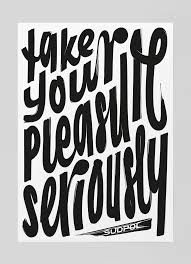
Maximizing Pleasure

A life without purpose or meaning probably results in a low level of motivation to act.  When there is no reason to do anything (purpose or meaning) so one does nothing.

The exception to this is when doing nothing is your goal, i.e., it is what motivates you and so your behavior is geared to enabling you to do nothing.  If this meets your purpose, it is perfectly fine.

Your goal is yours to select, however, there is a primal driver that overrides your choice of purpose, meaning or lack thereof.  “Pleasure”.

Seeking Pleasure

Pleasure is simply a term to describe a state in which you have a feeling of happy satisfaction and enjoyment.  That is, pleasure feels good.

I theorize that pleasure is the primal driver forming the underpinning of my own personal motivation (and probably that of most people).  Simplistically, seeking maximum pleasure is a component of everything we do (i.e., feeling good).

It’s all about me

Pleasure seeking does come with some constraints.  If someone else is suffering at my expense I do not feel pleasure.  Fortunately, this is true for most of us.

Those who derive pleasure without regard to context are usually labeled as deviant even criminal in their nature.   Intrinsic to the human condition is a level of empathy.

Some are more empathetic to the plight of others, possibly influenced more by nature over nurture.   Generally though (excepting the aforementioned deviants and criminals) everyone exhibits some level of empathy toward others.

Embrace your inner desire to seek pleasure

For me, seeking maximum pleasure (as long as it’s not at the expense of others) is natural behavior and there is no reason not to both recognize but also embrace it.


Your inner light

You can glow in the brilliance of the light inside you.  Just turn it on.  The decision to both be brilliant and perceived as brilliant is a personal choice.

Skills and Capabilities

Each of us has a unique set of skills and capabilities.  These can limit our results but not our ability to shine.  While everyone cannot win an Olympic gold medal, you can feel that way.

Most people are sensitive to the how you feel.  From your demeanour to body language to speech you are constantly telegraphing your status.

If you inner light is off, others will recognize it.

Self Check

Your underlying inner status is comprised of both concious and unconcious parts.  That is, some of how you feel is top of mind but like the iceberg a lot is under the surface.

Knowing whats up with your feelings enables you to conciously make a change, assuming of course you want to.  Sometimes you might not want to shine the light brightly.

This process is pretty simple.  Just ask yourself “self talk”.  How am I feeling?  Thats the start.  You may find hidden fears or anxieties, or you are uncomfortable about external stimuli.

Being on top of your game, light shining brightly is the objective.  Understanding whats holding you back, if anything, allows you to adjust your behaviour so people will sense how alive and happy you are.


Prioritizing effort

You might have an idea of your overall goal associated with a specific strategy.  At a very top level, it could be something like; attaining the most recognized brand,  having total customer loyalty (100%) or the most efficient operations (profitable).

Next

The next step is to determine the objectives that support your goals and the associated implementation activities.  You can blue sky the objective gathering and hope for the best or you can be a bit more rigorous in your methodology

Blue Sky

Innovation and creativity are typically present when there is no bad idea.  Just gather up all the thoughts, throw them in the wide opening of the funnel and hope they don’t get stuck on the way down.

Of course this method, while it is highly collaborative, is not efficient.  It can work where efficiency is not a priority, creativity is.  The result might really knock the overall goal out of the park once it oozes out of the neck of the funnel.

In many cases though analysis paralysis and too many cooks collaborating without direction leaves the output wanting.

Planned and Controlled

Filtering the ideas and objectives, through the use of defined filtering criteria, before they get into the funnel, improves the flow through the neck of the funnel.

These might not be highly innovative and creative ideas but they will work and it is a good probability the overall goal can be attained.

Guns, Guns, Guns

I had a couple of interesting conversations today, both about guns. This was a bit unusual as this is not a regular topic for me and in fact it was one discussion just after the other.

Sharpshooting

It started with a colleague and I just chatting ideally after a meeting.  Turns out he is an International Practical Shooting Confederation black badge instructor.

He shared a video of him shooting through a course that looked just like a first person shooter video game only it was real.  Wow, impressive.

Bullets

Shortly after I was part of another conversation with a colleague who shared an interesting experience they had this weekend.

On Saturday at around 3:00 am they were awoken by a noise.  On investigation all seemed fine and it was back to sleep.

In the morning glass crunched undefoot as they entered the kitchen. The cause was a bullet hole in the window.  The bullet crossed the kitchen and lodged itself in the door opposite the window.

The police were summoned and a full CSI was conducted, over several hours.  The police officer noted this type of incident was rarer than a lightening strike.  Comforting.

It is not clear of the cause but unempeeded bullets can travel great distances.  If shot upward and sideways they can travel in a parabolic curved path, while ultimately assisted by gravity it will come down.

Again wow.  Today I recieved some very interesting information shares,  I guess the unexpected occurs more often than you might expect.

Writing formats

My daily posts are structured in a realtively free format, adhering to grammar and punctuation,  but following my own preference as to style.

Generally I do three lines and a break.  I use headings to break up the text, highlighted in a special font.  Occassionally I use indents and bullets.

Various publications have a variety of style guides, often specific to the publisher.   ( i.e, newspapers, magazines, novels, technical guides)There are however some written communication forms with more restrictive rules.

Today’s post explore three of these.  The examples I use are all kerrzone originals.

Haiku

A haiku is a poem made up of three lines which are formatted 5 syllables, 7 syllables, 5 syllables.  This is no rhyme scheme.  Here is an example.

Truth exists today, Seeking right does mitigate, Adopt and accept

“Haiku” is a traditional form of Japanese poetry and is usually written about things that are recognizable to the reader.  Many focus on nature but this is not an exclusive topic.

Haiku is a mood poem and it doesn’t use any metaphors or similes. In it’s simplest form, creating a Haiku simply requires adherence to the structural rules.

Syllogism

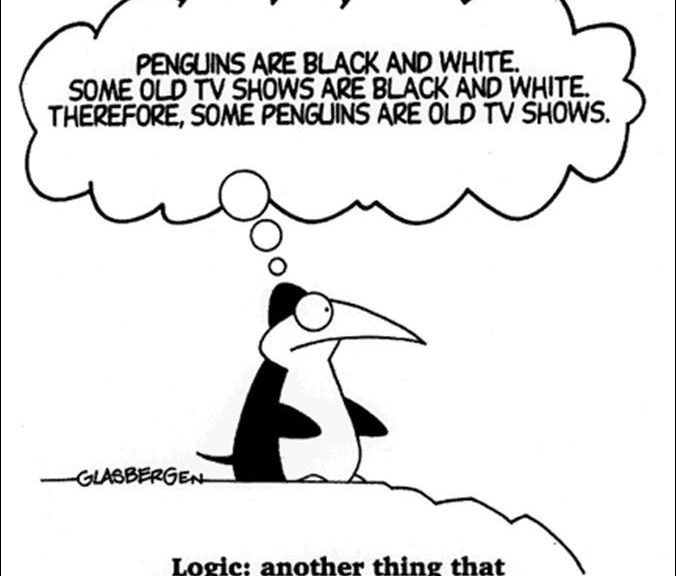
These are a three line logic puzzle, and a lot of fun. The first two lines  share a common term and the third is a conclusion.  The conclusion is drawn (whether validly or not) from two lines given or assumed propositions.  For example:

Bloggers write about a unique topic regularly, Writing about a unique topic requires intelligence,  Bloggers are intelligent.

Limerick

These are 5 line poems with a strict rhyme scheme, AABBA. Typically they are humerous and sometimes obscene.  Here is an example:

There was a young man who wrote, With intent to get people’s goat, Which made them sad, And sometimes mad, He rarely got a positive vote.

WIC

Acronyms can make a simple thought or activity seem more meaningful than it is.  They are also not bad for grabbing attention.  Today I an going to explore WIC.

What is that you say.  Whose In Charge? (WIC).  This can be the bain of collaboration.  Even for the most effective collaborative efforts, failure is on the horizon if WIC is unknown.

Everyone or No One

The extreme cases are the issue, as is so often true.  If the answer to WIC is at either extreme (everyone or no one) little will be accomplished.

To be clear, without a full understanding of the leadership model there might be a lot of churn and burn and as a result solutions or outcomes will be etherial.

This is not to condem either dictating or anarchical approaches, both might have some validity in some context (although I can’t imagine when).

Rather, as is so often the case, a balanced approach is needed.  Albeit the question as to who is in charge, whether shared or through consensus or even a third party, must be clearly understood and bought into by all.

Everyone is important

Understanding who is in charge does not overrride the key principle of collaboration, that is “Everyone is Important”.  The key is focusing the energy and drawing out the best in everyone.

This is not to imply the leader is better or more important than anyone else but rather just to say the action of “herding the cats” is critical to achieve results.

The cat herder is necessary but not of special importance.


Using Power Wisely

There is an interesting battle underway between the Albertan oil Corporations and the University of Alberta.  The educational instittue has chosen to recognize an enemy of the oils sands through the granting of an honorary degree.

The Corporations which operate and develop  oil sand operations have threatened to stop donating to the University and even requesting some funding to be rebated or stopped before completion.

Exercising Power

The Corporations are fully within their rights to decide whether to donate or not.  Of course stopping previous committment or retrieving past donations raise the spectre of broken promises and there are some integrity issues with that.

Exercising your power using the money card to achieve your goal, that is stopping the recognition of David Suzuki (dyed in the wool environmentalist) is fair.  After all few donations are for truly altruistic purposes, they are a means to an end.

The University considers this to be an abuse of power directly impacting their independence.  As public institutions they are beholden to act according to the publics wishes.

To do this in a way that is not only fair but is perceived as fair, major institutional decisions are undertaken by the independent board of governors.  In this way the faculties and research areas are isolated from these key decision (for example whom to award honorary degrees).

Under these circumstances, the Corporate donors recognize their threats are unlikely to change the decision around granting of an honorary degree to Dr. Suzuki.

Publicity

The  real objective of the Corporations is actually nothing more than gaining publicity around a key issue.  It is taking the opportunity to once again make a public case against allowing the environmentalists to mercilessly attack our economic well being.

After all, most stories do have two sides.  So I say, speak out, make your case but do be careful how you wield your financial power, using money as a lever really works against the capitalist philosophy in the same way political maneuvering works against the environmentalists.

Chill, why can’t we all be friends.


Solving Problems

I had a very interesting discussion today about the generic process for getting things done.  At a very high level, all objectives are problems to be solved.

Philosophically, whether you are performing a service, investing, building products, communicating or any  other action focused on achieving a goal,  the outcome solves the problem that motivated the action in the first place.

So conceptually we are all problem solvers.

Basic Methodology

Step one is to gather information.  What do we know about the problem.  This is basic data gathering that enables us to formulate what we are going to do (our objective) to solve the problem.

This step in standard project methodology is the initiation phase.

Step two is to solution development.  What actions are we going to take to solvethe problem.  This step includes data analysis, feasibility, resource and scheduling.

This is the planning phase.

Step Three is executing the plan from the previous step.  This is the build phase where the work is undertaken  to develop/ produce whatever is needed to actually solve the problem.  This includes intangible solutions, like a service or intellectual property development.

In project methodology this is the execution phase.

The final step is completion.  That is releasing the solution so it is put in practice and the problem is solved.

This is known as the closing phase in project methodology.

Not neccessarily a project

Although I have made references to project methodology this generic problem solving process can be personalized effort, operational or any other underlying drive.  It might not be projectized but the methodology described is an orderly way to increase the probability that the problem will be solved, i.e., the goal achieved.


Strategy and Tactics

Strategy is a widely misunderstood term.  Simply put, strategies are directional and include the objective and the approach.  They are a guide but not the detailed recipe.

Todays post focuses on some exaggerated examples of strategy and tactics to illustrate the concepts.  These are a bit outlandish and only intended to frame the difference between strategy, tactics and the associated planning approaches.

How should I dress?

My approach to dressing starts with a basic strategy.  This can range from bare bones (naked) to fully dressed and all  points in-between.  The strategic statments could be things like:

  • Our strategic approach to dress, is to be free and unencumbered.  Minimal use of garments is both environmentally focused, cost effective and beautiful.
  • Our strategic approach to dress is to be fully clothed protecting our bodies from the weather and other naturally occuring hazzards that could be harmful.  Our beauty is expressed through our clothing.

Tactics

To implement these strategies we may proposes activiites like purchasing black wool pants and comfortable sweaters.  These form the requirements to achieve the objective.

Obviously the specific clothing requirements support the second strategy whereas tactics in support of the first might include finding tanning saloons that can be leveraged to enhance the beauty of the exposed body.

Planning

Both the strategies and the tactics can have plans outlined activities, schedule and resources.  The main difference in strategic and tactical plans is the level of detail.

The value equation

Strategies, tactics and underlying plans form the recipe for sucess.  Without them you might create a tasty dish, but with them the probability of a successful meal is higher.

Structure

In its verb form structure is very much about creating an arrangement or organization of interrelated elements.  The structure forms the underlying foundation.

Unstructured activities are more on the innovative or creative side but have a greater risk of failure. When a structure is in place progress is planned, governed and results are far more likely to be both consistent and sustainable.

Governance

Rules, regulations, policies and processes are all structural components of any organization.  Without these in place to some degree, governance is not possible.

Governance practices are guided by the level of structure. The greater the flexibilty or lack of structure the harder it is to control the outcomes.

For example, if the plan is to complete an objective within six months or a year, versus a clearly defined exact six months, it is hard to measure,track and be confident the objective will be achieved as schedule. (It is hard to govern the result)

With the lack of structure the outcomes become a bit of a moving target.  Of course the flexibility increases the chance of being able to claim a successfull achievement.

Structured Process

How an activity or task is completed, the way the goal is attained can  be well defined or loosley structured.  If, for example, the structure requires documentation and validation the likelihood of producing consistent outcomes is enhanced.

To Structure or Not to Structure?

Sounds like structure has value, on the other hand the greater  effort, time and reduction in creativity can belie the positive benefits.

Like most practices a concious carefully balanced approach to the amount of structure exercised is ultimately the best approach.  One option, very structured or very unstructured and every thing in between, is rarely optimal.

Consider the desired results, pro’s and con’s and customize your structure to best feet the environmental requirements.