Tag Archives: humility

Don’t Tell Me What to Do!

While many of us will not voice it explicitly, our inner voice often screams “Don’t tell me what to do”.  This stems from basic human nature,  that each person is unique and we are proud of it.

Our individuality is at the core of our humanity.  The key to effectively expressing your individuality is doing so in the context of society (i.e, without offending others).

Managing your Individuality

When others give you the gift of direction, they tell you what to do, the best approach is to digest before reacting.  Often the things being asked of you are worth doing.

Reacting quickly and negatively can just set you in a bad stead.  If the direction is inappropriate or frustrating take some time to let it percolate before acting in a way that might make you feel better but won’t necessarily lead to resolution.

That is a solution acceptable to all parties.

Attitude

A key to flying straight and true so you reach your destination without unpleasant incident is attitude.  We live in a world populated with millions of other humans.

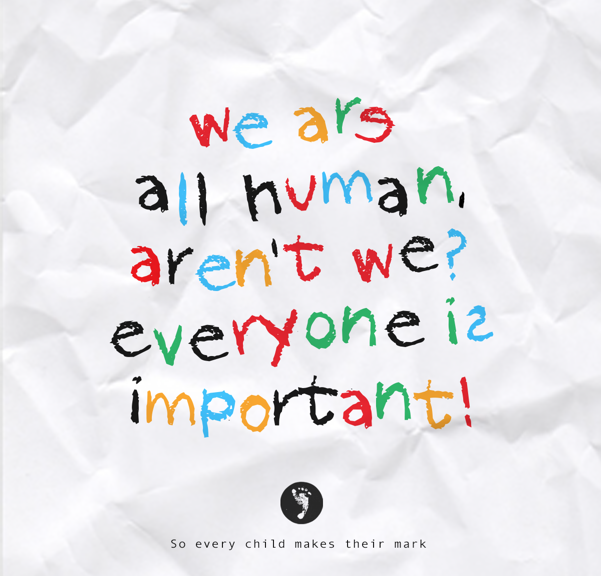
It is in all our best interest to get a long.  Let your attitude, and associated behaviour, reflect your understanding that everyone is important.

If someone is overly directive in their interactions with you, or even demeaning remember not everyone understands the value of not telling others what to do.

Take a deep breathe and figure out a way to proceed which will meet their needs and yours.  ( They are important but so are you.).

Arrogance/Humility

Many organizations prize leaders with an attitude of superiority manifested in an overbearing manner or in presumptuous claims or assumptions.

Typically the quality or state of being unassuming or moderate in the estimation of one’s abilities (i.e., humility) is considered negatively.   When acquiring an organizational leader they need to be the best.

Perception versus Reality

While we perceive the need for a leader to be not only highly skilled and capable but to project the right image, that is not necessarily the case.

One definition of a leader is a person who holds a dominant or superior position within their field, and is able to exercise a high degree of control or influence over others.

This often get misinterpreted as needing some who is superior.  Arrogant people come of as superior, so they fit this interpretation of what a leader is.

In fact the key to effective leadership is the ability to  to exercise a high degree of control or influence over others.  Those with the ability to display  humility tend to earn their respect rather than force it (through arrogance).

Earned Power

Power that is earned, as opposed to granted or usurped, usually leads to better results.  Intuitively the militarily leader who commands the troops to charge because they say so (possibly to their death, as in the charge of the light brigade) is far more likely to fail than the leader who fights in front or at least along side the troops (i.e., setting the bar)

So build your earned power base, show a little humility.

I have personal conceits and I am proud of it

I often wonder why people view conceit as a negative trait.  For me it is hard to understand why having an excessively favorable opinion of ones own ability, importance and wit could be considered a personality flaw.

Circular Argument

Using constraint about expressing your ability and importance (humility) is considered a positive trait.   If you are able to practice humility, that is you have the ability and skill to do so you should be proud of yourself (a conceit).

And so, the argument circles, if you are conceited it means a lack of humility, however a lack of humility leads to low levels of conceit.

Be Proud, Stand Tall

I am proud of my capabilities, not in comparison to others but as they relate to me  (Sometimes it really is just about me).  To operate and integrate with other people I need to balance conceit and humility but inwardly I do not view strong self confidence as a bad thing (an internal conceit if you will).

Only you control what you are, not what others think

There is an argument that is “I believe I am, then I am”.  This philosophy has been expressed by many groups in many different forms through out human kinds history.

It is conceptual.  Consider for example that I believe I am selfless.  I might not be viewed by others that way.  My road to being selfless though starts with my own conscious belief.  Without that personal internal foundation it really is unlikely I will become selfless.

Of course on the other hand, believing I am selfless does not make it so.

In the End

Balance in all of these traits – self confidence, conceit, humility and dozens of others – is the real key.  Although it is a bit of a trite saying “too much of anything is not a good thing”.

The key point I am trying to make though, is don’t let others drive you to false humility.  When you need a personal conceit, go for it (although never at the expense of others).