Category Archives: Random thoughts – keeping you on your toes

Sincerity

Good customer service requires more than just saying the appropriate phrases and satisfying the customers requests. The quality of being free from pretense, deceit, or hypocrisy must both be true and perceived as such.

I had an interesting experience today well making some adjustments to my policy with a large ensurer.  Although I was assured I was a valued customer and the agents goal was to treat me as such, I perceived this not to be the case.

Make it Real

Today,  I quickly felt the agents script to be phony, geared not at truly satisfying me but more as a screen to prove he was doing his job as prescribed (in case the call was monitored) .

I was just one more call to be walked through smoothly using stock phrases and answers.  On the surface the interaction was polite but really felt unnatural.

Truely satisfactory service requires a high degree of empathy between the responder and requestor.  Key to a positive service experience is understand how you feel and guaging responses on that basis.

Make a Connection

It might  be a bit surprising to say, even if the  objective of your request is met, without experiencing the human connection, (i.e., the agent or advisor really gets you) your overall  satisfaction level will not be great.

When dealing with others remember the best results will always come when you have chemistry with each other (to coin a common acting term.)

Even when encountering a stranger, as a service interaction so often is, focus first on knowing your customer and second on results.  The results actually will flow naturally with this approach.
 

Your only Old Once

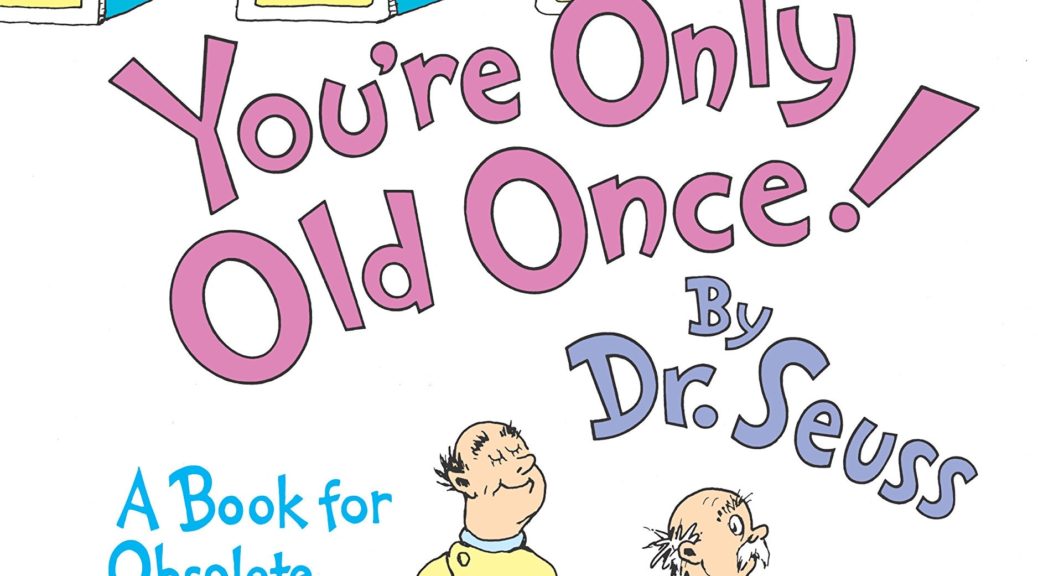
Dr. Suess, amazing children’s author extraordinaire did also write and illustrate a handful of books for an adult audience.  I was pleasantly surprised to be gifted with “You’re only old once” by D.r Suess the other day.

The same whimsical sentiment of his children’s tombs was used to send a simple and straightforward message.  Getting old will happen.  You will be probed and prodded and stuff will wear out.

Attitude

It is critical not to forget old age is as critical as youth and middle age to the cycle of life.  It is your choice and the attitude you adopt that makes each time period enjoyable.

You only get old once, don’t waste it.  This idea  is just as appropriate as the more common “You are only young once don’t waste it”. Whichever period of life you are in make the most of it, have the time of your life.

Fond Memories

As a child Dr.Suess booms were by far my favorites and even today my first choice to read to the grand children is any Dr. Suess book.  Whimsical and wildly creative I don’t know of many better ways to send a message.

As children and even adults we often do nt even realize we are being coached.  It is subtle but goes right to our unconscious.  Once again the good doctor had me hooked.

But of course, physical ailments aside, aging is just another phase to be embraced, things are different but really it is not over yet.  Dr. Suess was well over eighty when he wrote the book I was recently gifted (and illustrated it) but man oh man, he’s still got it.

Retirement Musings

I retired today from my paid work with the University of Alberta.  After 43 continuous years in the workplace (post University) I am no longer “working for the man” (A sixties expression that has hung with me).

However, lots of unpaid work beckons me, actually looks like my spouse has been compiling the post retirement “to-do” list for the last 43 years.  That could take awhile to finish.

Attitude

As the baby boomer generation begins to retire, around the globe, we see a lot of studies and associated recommendations for how to succeed in retirement.

I am not really looking to achieve any specific aim or result so for me retirement does not have any success or failure criteria.  It is just another moment in time to be happy, enjoy and bask in the pleasure of life, albeit a different context.

I found my own attitude to retirement attitude is clearly stated on a quote from Mr. Rogers of children’s TV fame,  “Often when you think you’re at the end of something, you’re at the beginning of something else.” – Mr. Rogers

Leverage the Opportunity

Most importantly, retirement is best viewed as an opportunity.  It is a new beginning in which you can choose to partake of even greater happiness and pleasure from life.

Human life is a gift (I know this is a very trite statement).  The key to having the best possible retirement experience is to continue to explore all the opportunities the gift of life offers us.

Sadly, for many of my loyal readers as I move into retirement I do plan to keep posting to this blog, although perhaps not daily, so you will still need to put up with my very random musings (if you so choose),


Leveraging Humor

Though technically wit is defined as mental sharpness, inventiveness and keen intelligence I personally associate it with a special kind of humor as well as everything else.

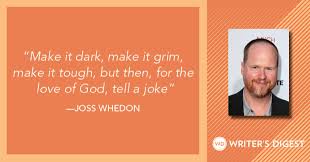
The quick wit’s I normally encounter display the quality of being amusing or comic in the way they behave.  Their feedback might be pointed but it is usually presented in a very acceptable way.  Humor is a great way to make a point.

Feeling Good

When I am amused I feel good and get pleasure out of the message even if overall the content is not optimal for me.  Presentation really matters and using your wits to communicate in ways others can chuckle about leads to more sustainable results.

One wit in the crowd can breakout a 1000 smiles, happiness will reign, so put your talent to use when you have the chance. Whether a formal meeting or a chance conversation inflecting humor makes everything seem lighter and more palatable.

Leadership is Serious

I am surprised on occasion when friends and colleagues express the need to be serious as the best way to accomplish a goal.  They are missing a key point about humor, it can contain messages and define actions just like the direct communication can but it is easier to take.

Leaders have a serious role.  They must use careful consideration to arrive at the best options, that is approach the role seriously, but how they communicate to others can often be more effective when underpinned by good humor, not ridiculous but certainly practical.

So, take every opportunity to laugh with others, everyone will feel better.

Circumstance or Choice

It is likely most of us will experience situations or events that cause us great fear or worry.   These dire circumstance  may drive us into a specific course of action.

Usually our desire for positive change becomes stronger as a result of dire circumstances.  These could cause us to act precipitously.  Which in turn could actually worsen the situation.

Take the Time you Need

Making an informed choice that maps to your own perceptions and values will require some dedicated time during which you focus on your needs and wants, it is after all your choice.

Or the pressure of dire circumstances could result in you feeling there is no choice and you will be swept along by the tsunami created by the situation.

While it is true some things external to you are out of your control, your own reaction and actions are always exclusively within your control – you are in charge regardless.

Expediency

Choosing to act according to convenience and practicality despite possibly being outside your value system or personal standards is often a result of giving in to dire circumstances.

My own personal observation is not taking the time to resist, consider options and plan actions accordance with your personal choice rarely ends up with optimum results, in fact just the opposite.

It’s not possible to overcome every adverse situation you encounter reversing the negative and achieving positive results but it is always possible to make the attempt.

The choice is yours

Regardless of circumstances, dire or otherwise, the accountability for your actions and how you behave always lies with you.

Leading Change

One of the biggest dilemmas is how to best communicate major changes to their followers.  Specifically what to communicate and when is a  tough choice.

In fact, this can put the leader in a very difficult situation, and often each option looks equally bad.  This can appear like a problem with no satisfactory solution.  Tell too much and people might react inappropriately, too little and fear and uncertainty set in.

I don’t know

During my working career, I have experienced many major changes within the organization I have been a part of.  Also significant changes in government and culture have occurred over time.

In each case, my observation is the worst possible response for leaders of the change is “I don’t know, haven’t figured it out yet”.  While this may be accurate it is very disconcerting to the followers and usually erodes trust and creates additional anxiety.

The dilemma in this situation is often about disclosure.  Perhaps it is too early to disclose all you know and you don’t want to lie or perhaps you really don’t know.

How you say it

I agree lying or making stuff up to calm people at the moment is the worst possible tactic but straight-up waffling or giving political answers that really do not address the question to just saying I don’t know directly is really a bad approach.

There are many ways to communicate about things you don’t know or are unwilling to share at a given time that put a positive spin on the situation and most importantly do not imply the presence of secrecy ( secrecy can be very disturbing to followers).

So don’t prevaricate but also be clear about what and when you will disclose, listen closely to the messages of your followers and be empathetic to their needs in your responses.

No Regrets.

Sometimes we feel sad, repentant, or disappointed about something that has happened in the past, this can include a loss or missed opportunity (i.e., something that did not actually happen).
Regret is our emotional response related to a desire to revisit the past and make a different decision because the consequences of the decision were unfavorable. In this case, we believe a perceived opportunity was lost.

Mitigating the Risk of Regret

Regret can be avoided by validating your choices before committing to a course of action.  Choosing your course of action always includes a chance the results will not be as expected and may even be disappointing.
Confidence in your choice should be founded on your own internal acknowledgment that regardless of the outcomes, based on what you know at the time you decided, it was the right decision.
It is this confidence that will enable you to avoid regrets.  However, this should not be blind confidence, that is basically a determination that is not based on evidence or determined by reason but rather a confidence founded on thoughtful reasoning.

Avoiding Regret

Regret will never be missed and provides you will little value.  What is done (or not done) in the past cannot be changed.  That is not to say there are no redo’s, there often is the opportunity to try again.  This is an option you may choose.
The key is to be confident in the path you choose works at the moment and if it does not work out in final denouncement then fine, and that is time to just move on (no regrets).
Accepting your choice, being comfortable with what happens, good or bad allows you to remain in good spirits, regardless.   After all, it is your choice.

Understanding Failure

To know if you have failed you must first understand what it means to succeed. Basically failure is associated with a lack of success.  If you don’t know what success looks like you can never know if you have failed.

This concept is really about objective setting or defining yours goals.  Success requires planning.  This starts with a clear understanding of what is to be achieved.

Measurable

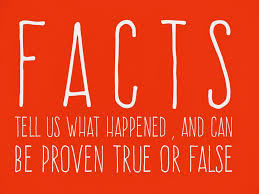
The best way to measure success is through the use of facts, that is something that is known or has been proved to be true.  Facts are objectively determined.  It is or it isn’t.

Our goals can contain some subject components and while they may be valid aspirations determining success or failure can be somewhat judgmental.

For example, on entering a confectionary shop you charge yourself with selecting (and consuming) the best tasting chocolate in the store.  Taste is a very subjective measure and as such, claiming success (or failure) can change for each person.

Defining Failure

Being able to know when you have failed (because success was clearly understood) is an invaluable skill.  Without clearly believing and accepting failure we are unlikely to re-plan and try again, perhaps with a different approach.

In essence after undertaking a challenge you may just decide to live with the results (to your detriment) and ignore the fact you did not actually succeed, i.e., you failed.

Taking Action

Clearly understanding what you want to achieve also enables you to decide when and how to change course, perhaps modify the goal or even drop it entirely.

Knowing whether you failed or not is a prerequisite for this.

I comprehend

The difference between comprehension and understanding is a very fine line with the basic meaning of each term broadly overlapping.  However there is some subtlety to be applied when using these terms.

I would highlight this by noting, true comprehension requires much more than just  understanding.   Comprehension is generally broader and more holistic.

While understanding is at it’s core, comprehension includes the ability to conceptualize the broader context.  Fitting the various pieces together to form a broader and greater understanding, comprehension is really the next level.

Subjective

Understanding contains a subjective component.  I understand is all about you.  Your understanding might not match that of others but if not confusion can certainly arise.

Comprehension implies the broader context of taking others views into account, i.e., the bigger picture and translating this to a universal meaning that is not self centric.

Piecing together all the information rather than focus on a single point of understanding is the only way to be in a position to truly comprehend the situation.

Avoid Misconception

Understanding based on your own personal conception is common.  It is the baseline and how the majority of us develop conclusions.  Taking the time to fully comprehend can lead to avoidance of misunderstanding.

This is not a silver bullet.  Believing you have full comprehension in a particular circumstance does not mean that is so, validation is still needed.  Take the time to build a fact based objective foundation.

Working to fully comprehend both implies and requires looking more broadly and the situation and combining individual understanding into a cohesive whole.

Breaking Routine

Typically each of us has a sequence of actions which we regularly follow, these can be mundane everyday tasks or a fixed program.  The time and method of completion is usually relatively the same.

Most of us find meaning in these routines and to different degrees can become distressed when they are disturbed.  Practicing the familiar does bring comfort and promotes emotional stability.

Practice Balance

Caution is recommended though to avoid becoming too reliant on your routine.   Having regular tasks can be very useful but without care can become stifling.

Creativity requires change and stepping outside of the standard practices.  The safety of daily routine is definitely not an incubator of innovation.

Each of us has an individual preference relative to the mix between the expected and the spontaneous however being too structured or too wild can have less desirable results.

Manage your comfort zone

The ordinary and routine tasks will almost always fall well within your comfort zone.  Pushing on the edges and breaking out of the ordinary can be very fulfilling but one should adhere to personal preference.

Breaking out of your comfort zone hard and fast can result in a great shock, personal panic, discomfort, and ultimately the results are unlikely to be to your likely.

Select Your Opportunities

It is of great value to use introspective techniques to help understand your own limits and how best to stretch them in positive ways that will be beneficial to you.

Self-analysis leads to understanding what works best and enables you to break out and expand your routines and comfort zone in a way that will both result in self-improvement but without detrimental effects (e.g., the shock of strong and unwelcome change)