Tag Archives: enjoyment

Leveraging Humor

Though technically wit is defined as mental sharpness, inventiveness and keen intelligence I personally associate it with a special kind of humor as well as everything else.

The quick wit’s I normally encounter display the quality of being amusing or comic in the way they behave.  Their feedback might be pointed but it is usually presented in a very acceptable way.  Humor is a great way to make a point.

Feeling Good

When I am amused I feel good and get pleasure out of the message even if overall the content is not optimal for me.  Presentation really matters and using your wits to communicate in ways others can chuckle about leads to more sustainable results.

One wit in the crowd can breakout a 1000 smiles, happiness will reign, so put your talent to use when you have the chance. Whether a formal meeting or a chance conversation inflecting humor makes everything seem lighter and more palatable.

Leadership is Serious

I am surprised on occasion when friends and colleagues express the need to be serious as the best way to accomplish a goal.  They are missing a key point about humor, it can contain messages and define actions just like the direct communication can but it is easier to take.

Leaders have a serious role.  They must use careful consideration to arrive at the best options, that is approach the role seriously, but how they communicate to others can often be more effective when underpinned by good humor, not ridiculous but certainly practical.

So, take every opportunity to laugh with others, everyone will feel better.
Friday Yet?

Many of us work for others and receive compensation for doing so.   A common full time work schedule is Monday to Friday 9:00 am to 5:00 pm.

There are of course multitudinous variations to that schedule and variances in employment types from part-time, contract to seasonal only.  This post focuses on the common but applies to all the situations.

Working for the Weekend

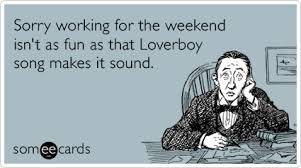
Throughout my working career I would occasionally run into those who asked on Monday; Is it Friday yet?  Or of course, I oft encountered those who practiced the mantra TGIF (Thank god it’s Friday).

For the majority of people working for fiscal compensation whether derived from others or directly from your own efforts is standard practice.

Don’t Waste It

Work (in this context)  usually takes up a large percentage of our waking hours (40% to 50% for most) and goes on usually from your early twenties to mid to late sixties.  (65% to 70% of your life).

Given the majority of our lives are spent working we are far better off to both enjoy and derive pleasure from it.  To do otherwise draws into question (at least for me) what our life goals or purpose is.

To detest the work we have chosen to do such that we are just working for the weekend (analogous to working for time-off) and for the money deserves a real wake-up call.  You need to get out and make a change.

There is no excuse for not enjoying what you spend most of your time on, it is a choice.  At the most basic level choose to enjoy what you are doing.  It is totally within your capability to do so.

OR

Make a change to doing something you enjoy doing, life is too short to do otherwise.

Enjoying what you do

There are reams of material around the value of enjoying how you use your time.  Roughly speaking we can divide our time into three categories:

  • leisure – free time which is not constrained by a need to act in a certain way
  • working. – any time your actions are at the disposal of your employer (including self-employment). This includes paid and voluntary employment
  • sleeping -the voluntary absence of wakefulness associated with the loss of consciousness (different from “sleeping with” which refers to sexual relations)

Whatever you are doing, regardless of the focus or category almost all studies indicate you do it better the more you enjoy it.  Although a bit subjective enjoyment is broadly considered things we perceive as pleasurable.

Without Joy

I ask myself if the activity I am doing brings no joy, why am I doing it.  Obviously we have needs that go beyond constantly seeking pleasure alone but those are the ones to avoid whenever you can.

Whether at work, leisure, or sleeping the absence of joy makes the activity less likely to be performed with vigor and enthusiasm.  So what’s the point?

Hedonistic

Being engaged solely in the pursuit of pleasure characterized by sensual self-indulgence is not what I am advocating here.  Enjoying or deriving pleasure from all you do is a strategy not an absolute.

Considering others and building them into your personal pleasure profile is tantamount to achieving the objective.

The purpose of this post is to highlight the value of seeking to enjoy all you do whenever possible.   This is perhaps a form of hedonism but I would not classify it as hedonistic behavior.

Stand Alone

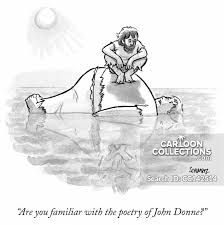
Poet John Donne observed, “No man is an island”.  Today this is probably more politically correctly stated as no person is an island. Regardless the sentiment is accurate, humans are a social animal.

Sometimes we prefer to live on a virtual island of our choice from time to time.  This particularly applies to those with personalities leaning toward the introverted.

Balance your isolation

Choosing moments of isolation is best for yourself and often and can be best for those around you; However, if not carefully balanced and practiced in the situational context you could frustrate others.

If people think you are ignoring them or being aloof at times when this not appropriate (i.e., they expect you to be engaged) you might be viewed in a negative light.

The key is determining the context of the situation before wandering off to your island forsaking humanity for long enough to recharge.  Think it through, will your period of isolation disaffect others, probably something to be avoided.

Don’t Overstay

Time spent on your personal virtual island can be relaxing and fulfilling.    For some, it is a preferred location.  It’s important to remember we (humans) are inherently a social animal and staying on the island too long is not a good plan.

As Donne observed we are members of a group whether we like it or not and participation is really not optional.  We need others and they need us.

Balancing alone time with people time is a critical skill in managing and ensuring you maintain an even keel and maximize your life happiness and enjoyment.


Wasting Time

In simple terms devoting time to a useless activity is a waste of time.  I would expand this to include time and effort spent on low priority, low impact items.

In our lives, when we wait another day we waste another moment.  Everyone’s lives will end, your moments are limited.  It is trite to say so but make every moment count.

Recharging

It is important to acknowledge those moments we spend recharging (e.g, sleep, meditation, inactive) are as important as those active moments when we are challenging, stretching, searching, learning, growing.

These moments, when in essence we are recharging our batteries, are not wasted time.   The balance between living to the fullest and be ready to live to the fullest (i.e., resting) is different for everyone.

Focus on the Mostest

Given our limited number of living, moments will expire choosing how to spend your time should focus on your personal goals.  For most people, this entails some form of achieving maximum pleasure.

Things that make us happy, provided they don’t make others unhappy provide the greatest value.  Sometimes we can’t be sure what the value of something will be, these things we should not shy away from.

However, mundane tasks we choose to undertake to fill time are often just a waste of time.  Is that something we really want to do?  Instead of wasting time, maybe we could just undertake a recharging activity (perhaps a moment of rest and silence).

This recharging prepares us to charge forward and seize the moment and opportunity to experience the joys life offers when we can.

If your happy and you know it …….

A childrens ditty from my childhood, simple as it seemed, actually contained some real insight. Happiness is a state of mind, however, to be happy this state of mind must be both acknowledged and accepted.

Situations or material things may influence your state of mind but in and of themselves they do not constitute happiness. Only you can do that by embracing the associated positve emotions.

No Clapping, No Happiness

The childrens song encourages you to acknowledge your state of happiness by clapping. This is a symbolic lyric. The key is acknowledgement.

Happiness is personal (it is about you after all) but letting others know how joyous you are feeling is all part of the condition. Being happy shows and if it does not you are probably not truly happy.

Pursuit of Happiness

The active seeking of happiness, although enshrined as a right in the U.S. constitution has always fallen flat for me. Happiness is not an object or treasure to be sought.

Rather it is a state of being, you don’t find it , recieve it or have it given to you, happiness is attained. You must consciously arrive at a state of happiness through mental processes.

Of course the physical world, other people and your own condition will affect your state of mind and could make achieving a state of happiness difficult, but it is never impossible.

You are in Control

You, and only you, can determine the conditions that lead to a state of happiness. While is is not always obvious how to create these conditions, it is always possible.


Winning Strategies

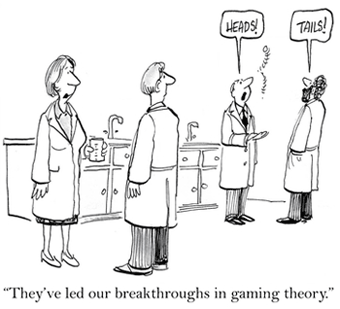
Most peoples lives are structured like a game.  Games are a form of play with rules and different levels of competitiveness.  The goals typically determine how competitive the game is.

Consider, throughout your life you are measured whether through tests at school, or for skills and competency (swimming, driving), performance at paid work or even unpaid work and the list goes on.

Judged Against Others

Most of these tests or assessments are to judge you against others.  That is you are competing against other people and your results determine if you win.

Think of competing for a job or a post secondary education, a spot on a professional sports team.  All these are competitive activities, based on rules and result in winners or losers.

How important is it?

Some of the games we play are not particluarly critical and our desire to win may be low or even non-existant but pretty well everyone gets caught up in a game that really matters to them from time to time.

So, whats a good strategy to win the game?   Before I consider playing to win, I wonder why I am playing at all and if it is the best thing for me.

Do I need to compete to achieve my personal goals and what is the impact on doing so?  Largely over time I have come to the conclusion I am personally better off not playing.

My competitive moments are not against others but against myself. Its not a game because there are no other players and the winning determination is soley at my discretion.

This is not to say I don’t play games, I do, they are only for fun and enjoyment.  My life is not a game, it is not a competition, it is not a series of achievements that enable me to label myself a winner.

My life is focused on my own enjoyment, as long as I don’t impinge on the enjoyment of others.


Seeing Answers

Our lives are a series of events.  We get to choose how to interact with, embrace or even ignore these occurrences.  And of course we can create them as well as just being a passenger along for the ride.

How you percieve the things that impact you, including those that are self initiated, is usually either optimistic or pessimistic or some balance of these two extremes.

Optimism

This is a preconceived belief in a successful outcome.  Your perspective focuses on solutions, that is sucessful outcomes.  What answer, when applied to this event will result in success.

Of coures this approach relies on your awareness of what answers support your goals and objectives.  Your own happiness and pleasure can be achieved only if you know what you seek (the answer).

Pessimism

Your perspective leans toward believing the worse will happen and your confidence in the future is low or non existant.  This is a choice that can reduce disappointment but it diminishes the opportunity for enjoyment and pleasure.

Positive Attitude

As commented in a recent post, attitude equals behaviour.  Your behaviour, ( how you act) defines you.  Simply put, a slight varience on the old saying “you are what you eat” becomes “you are what you do”.  This accurately depicts how others decide how to percieve us, it is based on behaviour.

Optimistic approaches to everything you encounter forces a positive attitude leading to exemplary behaviour and voila you are a star.

Relaxing

“Relax” is a verb refering to behaviour that results in you becoming less, tired tense or anxious.   I wonder if you avoided stress in the first place, whether relaxation activities would be required.

Relaxing can address the symptoms but eliminating the cause of tension or anxiety resolves the root cause and seems to be a more sustainable solution.

But Wait

Another consideration is whether stress has value.  If it does, eliminating stress before it occurs could create a different problem.  Perhaps the cycle of stress and relaxation in and of themselves are needed and contribute to your personal well being.

It is a kind of a circular argument, but, I like to relax.  if I was never worried or stressed out, making me tired I would have nothing to relax about.  So I need to be stressed.

With no reason to relax, I would miss this enjoyable activity.  That might stress me out.  The cycle of stress and relaxation would still proceed but in reverse.

Is there an Answer?

Stress is an important part of your life.  Eliminating stress (supposedly addressing the root cause of your tension and anxiety) is not a solution.

Embracing stress, leveraging the motivation and emotions it drives, to drive achievement and personal satisfaction is the answer.  And of course falling back on the enjoyment of just relaxing from time to time keeps everything in balance.


Relaxing

The act of relaxing entails engaging in an enjoyable activity so as to become less tired or anxious.  Like a vacation.  Some equate inactivity with relaxation but personally I think it is more about the kind of activity.

Boredom can be stressful.  Being able to occupy yourself in a  satisfying way is associated with enjoyment.  Waiting, wondering and not being sure what the future will bring, can be uncomfortable.

Enjoyment

Taking pleasure in something, i.e, feeling good, enjoying, is a key part of relaxation.  In fact, writing a song for profit or a wrting book or just practicing your profession can be relaxing.  (That is any profession ranging from accountant to swim suite model to doctor and all stops in-between).

Focusing on things that relax you is pleasurable.  A personal goal of mine is to seek maximum pleasure (as long as I don’t impinge on the pleasure of others).  Therefore doing things that are relaxing is something I seek out.

Keep on Moving

Sometimes the challenge is not about avoidance ( i.e., finding ways to not do stressful things).  The greater difficulty can sometimes be finding things that are pleasurable to do.

These can range from playing a video game to planting a garden.  Debating a topic or investing in the stock market.  There are a million activities humans can engage in.

An activity that provides maximum pleasure for one person might be an anathema to another.   For each of us, knowing what relaxes you and seeking it out, is an important part of living your life to the fullest.