Category Archives: Random thoughts – keeping you on your toes

I believe in better

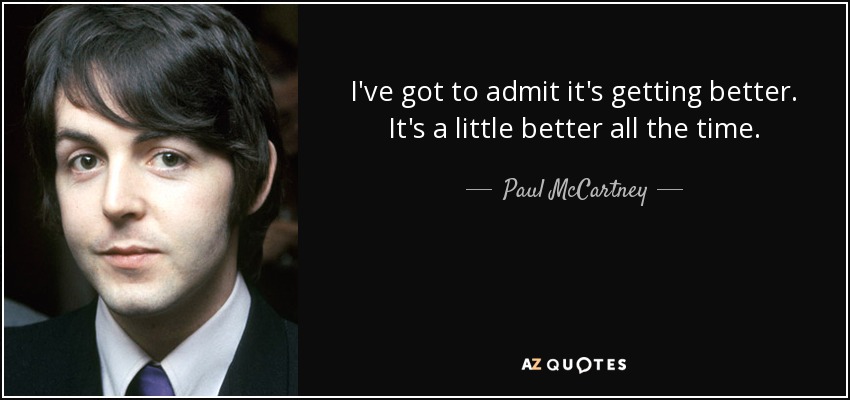
As a core personal value, I believe in continuous improvement as a base philosophy.  Back in 1967, the Beatles captured this sentiment perfectly on the song “Getting Better”

The line “Things are getting better all the time” is both clearly optimistic but also reinforces ones believe in the power and joy of life.  Why not embrace this concept, what is the downside?

It’s Attitude

Blindly believing things will get better is very different from an underlying attitude that it is possible to make everything better over time.  The behaviors you practice, based on a positive attitude are more likely to make things better.

Success 

Believing better will happen magically is not the point of this post.   As a foundation to what you do, believing success is achievable (i.e., a positive and optimistic attitude) is a key to achieving positive change, but not an absolute guarantee.

Visualizing the goal, accepting it is achievable and than making it happen is a standard path to improvement, also an approach more likely to be successful than otherwise.

If you don’t believe in “better” the chances of driving improvement are diminished.  Having faith does not equal execution but not having faith probably leads to failure.

Desire

Coupling a desire for improvement with recognition that things are continually getting better dramatically increases your opportunity to be part of continuous improvement.

Ultimately, believing in better, having a desire for improvement will lead you to joyous outbursts of song.

It’s a little better all the time”

Lennon/McCartney

Taking or Making Opportunities

When a set of circumstances  make it possible to do something, it is an opportunity.  Do opportunities arise because we create them or are they present and we only need to decide to take them.

Of course it is a bit of both.  Creating your own opportunities can be both challenging and rewarding.  Recognizing the presence of an opportunity  and then acting on it is not as easy as it sounds it requires self awareness.

You shiold be atuned to the potential for an opportunity to appear at any time.

Embracing the Possible

Whether engineering your own opportunities, that is influencing circumstances in a way that enable you to do the thing you want to do, or just taking advantage of a chance opportunity, the motivation lies in the outcome.

That is the opportunity itself, the thing that is being made possible entices you because it is something you desire.  While something may become possible if it is not desirable it is not really an opportunity from your perspective.

Take Advantage

When something you seek becomes possible, don’t hesitate to embrace  the chance.  Do not ponder or wonder why the something you seek is now possible, rather, simply procced.

Good fortune in the form of opportunity, whether self created or providential is not omnipresent and so should not be ignored. When the opportunity arises, embrace it.

An opportunity missed is an opportunity wasted.

Managing Emotion

One of the most forceful influences on human behaviour is emotion. Emotions are both natural and instinctive.  They are a state of mind derived from one’s circumstances.

Our interractions  with others or things that happen or we think will happen define our mood.  Happiness, sadness, fear, anxiety, anger are just a few examples of the pelthora of English words we use to describe our mood setting emotions.

Regretting your Behaviour

Most often,  the behaviours we regret most are those which arise from strong emotional moods.  A key attribute of emotions is the way they shut down the logical thinking centers of the brain.

This makes it harder to make a good decision because the analytic functions are shut down.  Often the focus of the emotions, (anger, hurt, humiliation etc) result in very focused behaviour, not focused on the root cause but rather on resolving the emotion.

Reasoned analysis enables a weighing of benefits while balanced against negative consequences of your actions.  This is likely to reduce the risk of you having regrets later.

Managing your emotions

For each of us, the techniques best used to allow emotions to subside before responding are unique.  That is ever individual needs to customize their appoach to holding a resonse to circumstaces until it can be a reasoned one.

The commonalities for everyone is to first recognize your emotional state, second deal with your emotions yourself, third consider a reasoned response and finally, act.

What should I do?

The best time to ponder what to do is not when in the midst of the action.   Urgency can impact the quality of decisions.  Determining what to do in a calm and reasoned way is more likely to be successful.

While it is not always possible, figuring out what to do well before you plan to do it is by far more satisfying and more importantly less stressful.

It’s a Pattern

The first question should not be what to to do but rather about the objectives.  This does not have to be specific or detailed but rather directional, where are you going?

It is a simplistic thought, but if you don’t know where you are going you have no way of knowing when you have arrived.  Put another way it is critical to understand what done looks like.

So the pattern to follow is to first set set the direction then ask what should I do?  The question is taken in the context of where you are and where you are going.

React to Circumstance

Of course in reality the unexpected can occur at any time so you don’t want to be locked into a firm course based on where you are going.  You do need to be ready to adjust and ask  what should I do now?

The principle of what done looks like should be adhered to.  This will enable you to put the unexpected into context and changing course will be less stressful than if based on a complete surprise.


Taking and Giving Accountability

When you are expected to make and standby either a decision or ensure an activity is completed to everyone’s satisfaction you are accountable.

Accountability is the condition of being accountable and it is either taken on (by choice) or given to you.  When assigned you may technically have the choice to accept or decline but in reality, this is not always the case.

Self Motivted

Choosing to take accountability, whether for your own actions or those of others ultimately you are the one making the decision or ensuring the successful completion of an action.

Taking accountability without being assigned or requested to do so is a leading indicator of a high level of initiative.   Typically this is recognized as a positive behavior although it needs to be balanced so as not to appear arrogant or authoritarian.

Self-motivation is a critical attribute for high performing groups.   Whether it be a Corporate, non-profit or even a family context when members take the accountability to make sure decisions are made and activities completed the outcomes are easier to achieve and of a higher quality.

Encouraging Initiative

Sometimes it is difficult to let others take accountability.  Our natural tendencies are for control and to take charge.  Allowing others to take accountability, particularly when we are in a leadership role can be difficult.

There is a risk, but it is a risk well worth taking.  The greatest way to motivate others to take accountability is quite simple, let them do it. The key here is making sure the culture is clear,  everyone is empowered.

Don’t tell me what to do!

Have you every felt like telling someone, very firmly, “don’t tell me what to do”.   Often the phrase is just sallowed internally and not voiced out loud, but the resentment lingers.

Effectively interacting with others, whether as a leader, manager or peer to peer, you definitely don’t want them to ask you not to tell them what to do.  It’s a  bad signal.

 Pre-cognition, Independence or Trust

Whether this retort is an example of someone anticipating what you are going to tell them, or feeling you are encroaching on their independence or demonstrating a lack of trust in them, it is not a positive response.

If your actions lead to such a frustrated response you should pause and re-think.  Directive or dictoral approaches may work, once, but the are definitely not sustainable.

Encourage and Support

When others believe you are not willing to let them think for themselves, they loose faith in you.  This is not to say feedback is not welcome, how it is presented really affects how well it is received.

The sweet spot is about adding value to what others do.  Most importantly the main judge of the value add should be on the receiving end.  You may think you have added value but it is only true if the other person believes it.

Telling people directly how to act or behave is rarely received by them as a value add.  Helping them see the way themselves is a much more powerful and effective approach.

How do you see yourself; How do others see you?

From birth to death everything we do is a form of behavior. The way you act is your behavior.  It defines you. Your behavior is not in isolation and most often the context for behaviour interpretation is how you conduct yourself toward others.

Categorizing your behaviour

Would there be value in interpreting your behaviors in terms of the impacts they have?  Do your thinking style and associated actions support personal effectiveness and satisfaction.

That is, what are the behaviors that define your lifestyle and what is their impact?   Of course, this question depends on perspective.  Your answer might differ from that of others.

Simply stated how you view yourself could be different from the way others perceive you.  To get real value from a behaviour analysis you need to get both what you believe and what others think.

Human Synergisitics

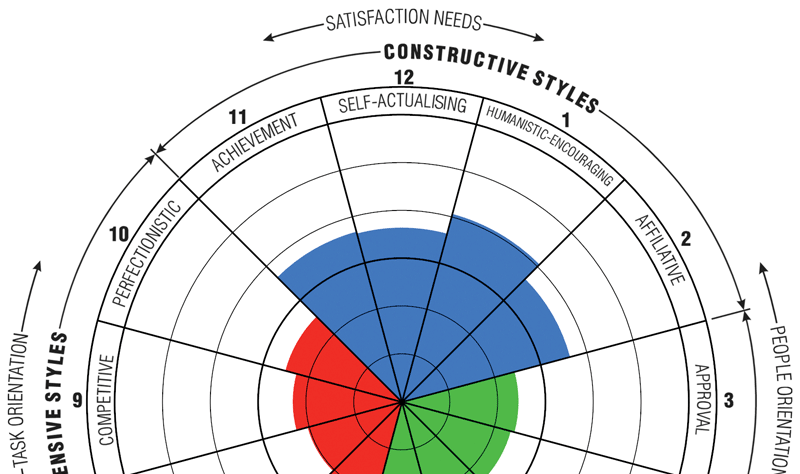
The best way to get information about your behaviour styles, both from you and others is through an anonymous web questionarire crafted by researchers who have developed questions that can be translated  to behavioural styles.

While no one can be 100% certain the results are accurate, if the consultants that administer the survey are supported by years of study and supporting data it is likely to have a high degree of alignment to reality.

I had the good fortune to have an assessment performed on me by Human Synergistics  and I found the results very useful to determine behaviour changes I wanted to make and ideas on how to execute the changes.  They do both lifestyle and leadership assessments.

Disclaimer – This post is not an endorsement of HumanSynergistics  ( they are just an example I used out of familiarity) Rather the post is intended to get you thinking about the value of having your behaviours assessed.

That is, to help you understand what others think of you and adjust your styles if you want to.


Facilitation

Completing a task can be a rewarding experience.  For example, after you mow the lawn, sitting in the yard drinking a beer, you happily ponder the results of your work thinking “What a great looking lawn.”

You are proud of the accomplishment, it feels good.  What about the cases where you do not participate in the activity directly but are a key catalyst in getting the reaction started.

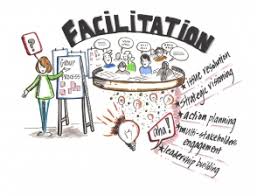
When the work you do focuses on helping other people deal with a process or reach an agreement or solution without being directly involved in the task, you are facilitating.

Making it Happen

Achieving a goal, particularly through the use of teamwork (i.e., collaboration) can sometimes require independent assistance.  That is,  help to focus on the goal from someone who is not invested in how the results are achieved, but rather focused on their achievement.

This is the role of a facilitator.  Facilitators do not actually have the rewarding feeling of personally completing a task, however, in many cases without facilitation the task will not be completed.

Like the catalyst that initiates a reaction without actually participating the facilitator enables others to get the job done.   A job that could (even would) fail otherwise.

Observe, Facilitate

Everyone can and should act as a facilitator when it is needed.  This a a great way for groups to get things done.  It is an attribute of high performing teams, any team member steps in to facilitate (seemlessly) when it’s apparent a liitle help is in order.

How do I know?

I have found a very useful quality check hinges on the answer to a single query.  The question can be applied to a product, service or process.

First, identify the outcome.  For example, if building airplanes, one outcome might be the plane can fly to its destination without mishap.

Question then Validate

The questions become things like.  How do we make sure this plane can fly the expected distance?  How do we make sure things don’t break in flight?

The plan to test the answers to the questions and make sure they are correct represents validation.

This simple process of repeatedly answering the question, (i.e.., how, ………….? ) while not infallible is a very valuable technique to determining quality, efficiency and effectiveness.

High Quality Outcomes

This simple questioning process is a great way to ensure outcomes will be what you expect (proactive) and then are what you expect (reative).

Asking the “ how do I know …..?” question reduces risk and increases predictability.  Based on the answers we can be condident that the process,service and ultimately the products will be consistent, reaptable and issues or deliberate attacks will be identified and can be avoided or at least mitigated.

Objective Measure

How do I know this blog is readable?  I use automated grammar and spell check tools.  I read the post at least three times before publishing.  I use feedback to improve quality of future posts.

My list actually goes on.  The point is, I am able to consistently produce a high quality post because I am always validating the outcomes using the how do I know questions.

How do I know the topic is interesting?  Hmmm.

Anniversary Post

I started musings.kerrzone.com blog back on July 19th, 2015 so yesterday was my three year anniversary.  There have been 770 blog posts, an average of 255 per year, so virtually every business day.

From the humble beginning of just 3 to 5 readers for the first couple of months, I now regularly have 50 to 100 readers each day.  My focus has been on interesting random ideas.

Of course the intent was more for my own pleasure in being able to freely say what I think, that is I am not focused on the reader, however, it is nice to know a few find the ideas amusing.

Not everyone agrees

It has not been a surprise to me that not everyone agrees with my random thoughts and ideas.  This has been expressed through the feedback I receive and is always welcome.

Interestingly though, some do agree occasionally.

Running Out of Ideas

Looking back over three years of posts I wonder how I was able to keep on going.  Where do all this random thoughts and ideas arise from.

I must pass a heartfelt thanks to my colleagues at U of A.  Without the robust discussions we engage in regulary I often would have been bereft of ideas. .

Also my readers often passed on their thoughts about this and that and many a post arose from their feedback.  To everyone thank you and I hope you have been enjoying reading these short missives as much as I do creating them .

Hopefully I will soldier on for a while though it will be completely dependent on whether I continue to have something to muse about.